Artwork
Kåde heste
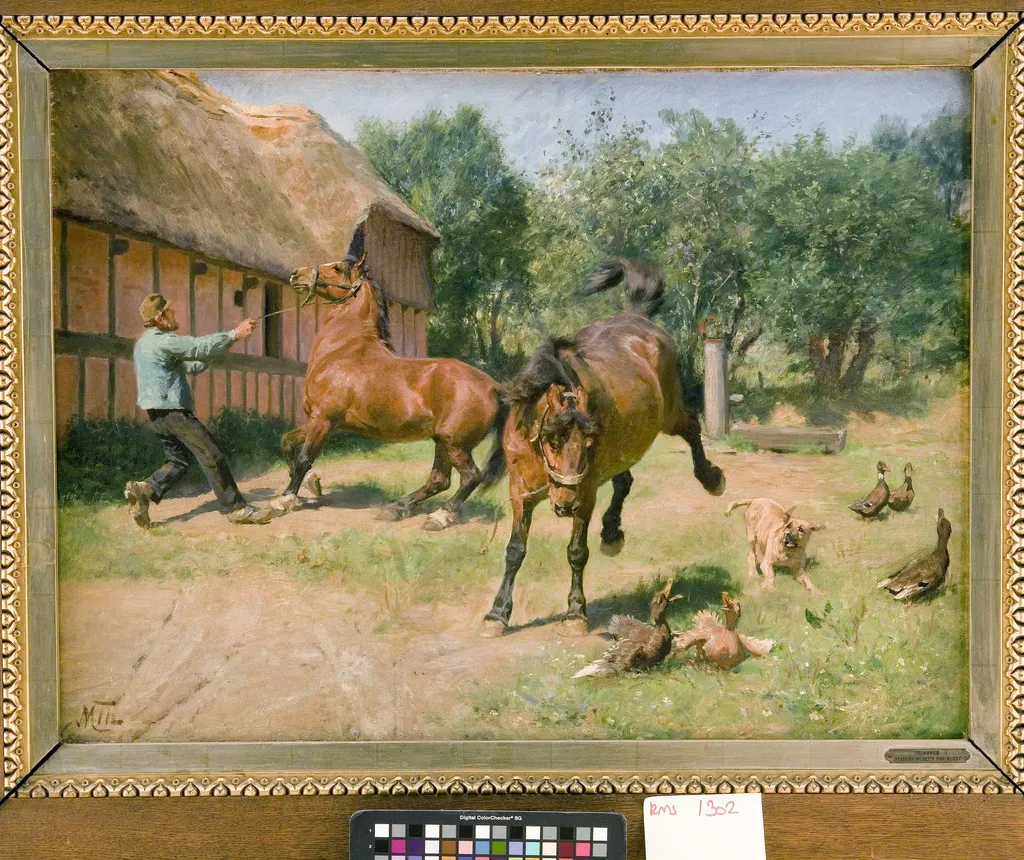
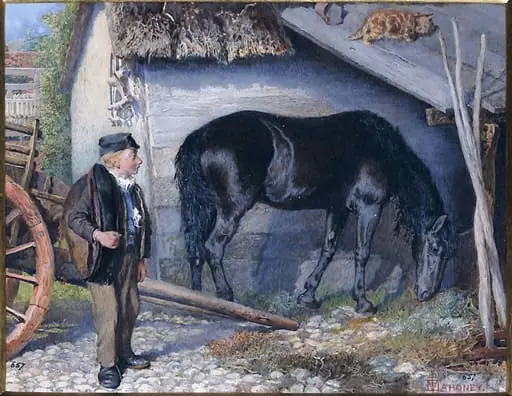
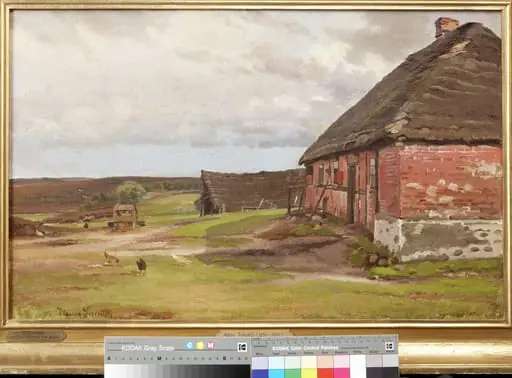
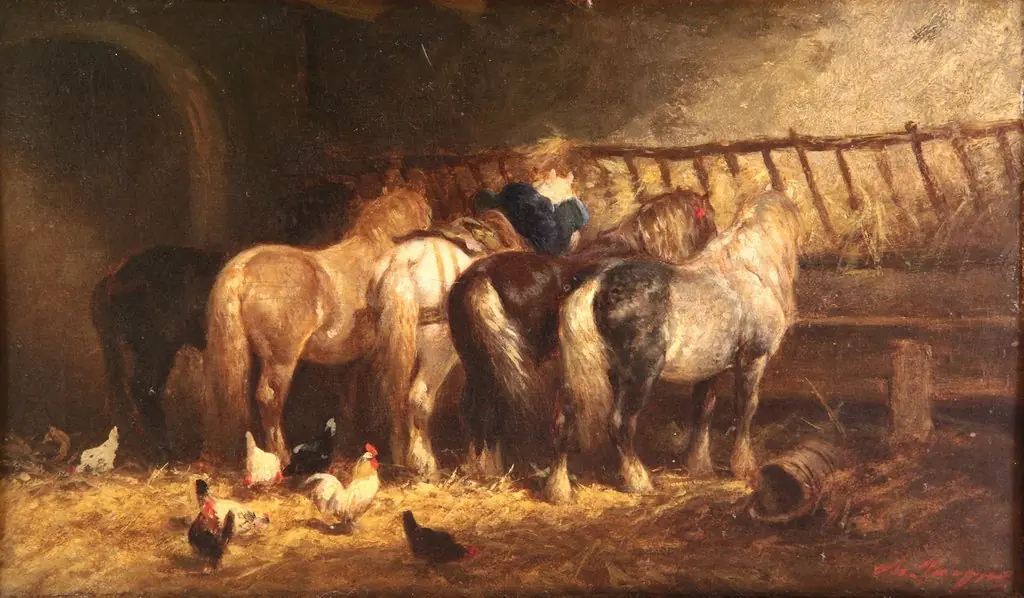
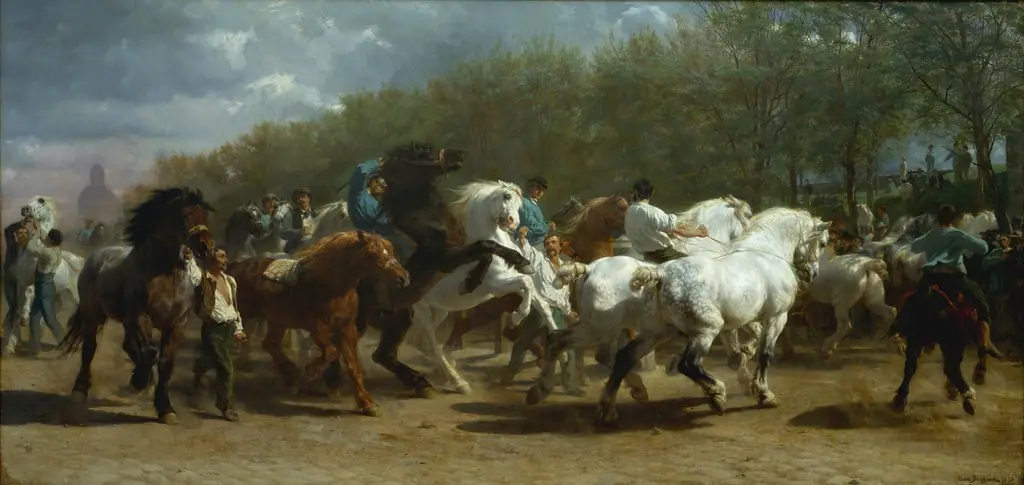
Kåde heste is a photography by Unknown. It dates from 1850 and is held in the collection of the Statens Museum for Kunst.
About this work
Overview
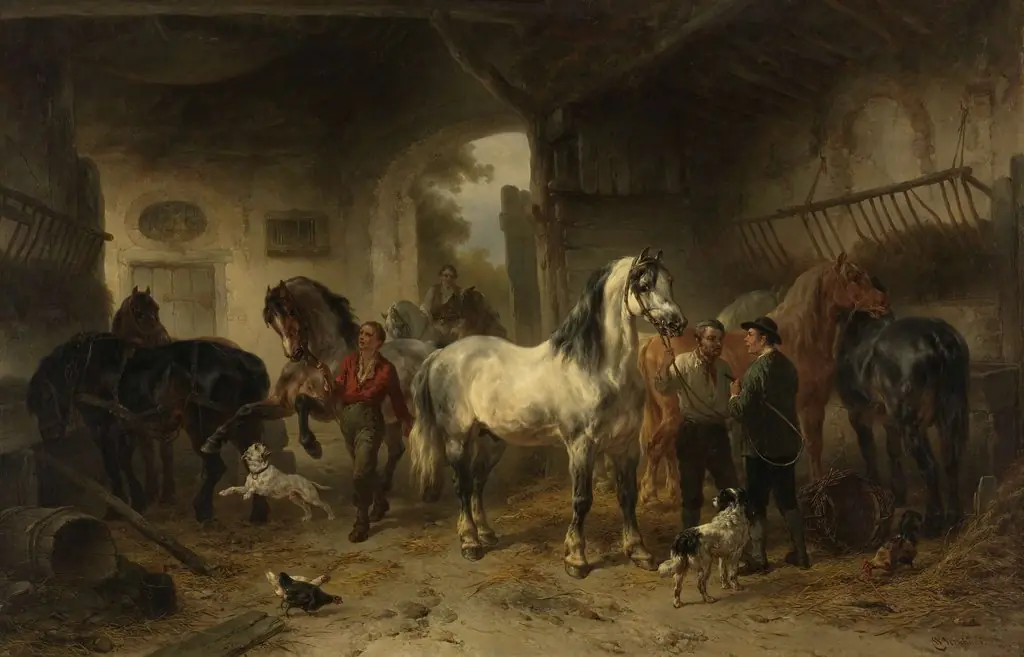
The scene includes a thatched barn, scattering chickens, and a resting dog, all rendered with attention to the immediacy of movement.
Created around 1850, Kåde heste is a photographic image attributed to 1245_person. It depicts a rural Danish farmyard in dynamic motion, capturing a man pursuing two galloping horses. The scene includes a thatched barn, scattering chickens, and a resting dog, all rendered with attention to the immediacy of movement. The work resides in the Museum of Ethnography, where it serves as a record of everyday rural life in mid-19th-century Denmark.
Subject & Meaning
The image portrays a common agricultural moment: the effort to control livestock. The horses’ wild motion contrasts with the stillness of the barn and the dog, emphasizing the unpredictability of animal behavior in a domestic setting. The scattered chickens and kicked-up dust suggest urgency and disorder, reflecting the physical realities of farm life rather than idealized pastoral scenes.
Technique & Style
The photograph uses natural daylight to accentuate the texture of dust and the blur of motion, creating a sense of kinetic energy. The composition is unposed, with figures and animals positioned to convey spontaneity. While not employing chiaroscuro, the image relies on direct illumination to clarify spatial relationships and highlight the physicality of the scene, typical of early documentary photography.
History & Provenance
The work was likely made during the early decades of photographic practice in Denmark, when cameras began to document everyday rural existence. It entered the collection of the Museum of Ethnography, where it was preserved as an ethnographic record rather than an artistic object. Its origin as a personal or commissioned image remains undocumented, but its preservation suggests recognition of its cultural value.
Context
In mid-19th-century Denmark, photography was emerging as a tool for recording social conditions. Kåde heste aligns with a broader trend of documenting peasant life, often in response to urbanization and industrial change. Unlike painted agricultural scenes, this image offers a direct, unembellished view of labor and animal husbandry, reflecting the practical aims of early photographic documentation.
Legacy
The image remains a valuable artifact for understanding rural Danish life before widespread mechanization. It contributes to historical studies of agrarian society and the evolution of photographic practice in Scandinavia. While not widely exhibited outside ethnographic contexts, it continues to inform scholarly work on visual records of 19th-century rural labor and animal management.
Artist & collection

 Domestic Scene
 Giacomo and Cardinal Marco, investing Andrea, Abbot of San Zeno, with his Benefice
 The Nymph of Fontainebleau
 Portrait of a Woman
 Madonna and Child with Saints in the Enclosed Garden
 Venus and Minerva
 Family Group of Four on Sofa
 Wall painting from Room H of the Villa of P. Fannius Synistor at Boscoreale