Artwork
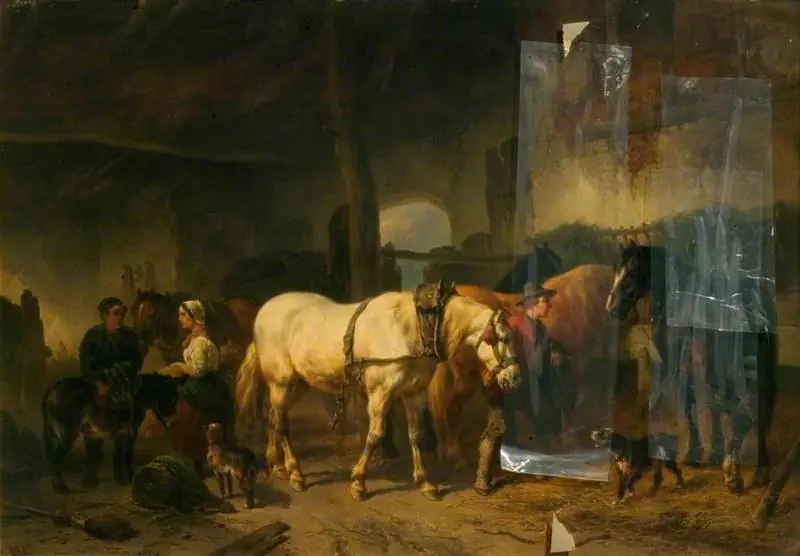
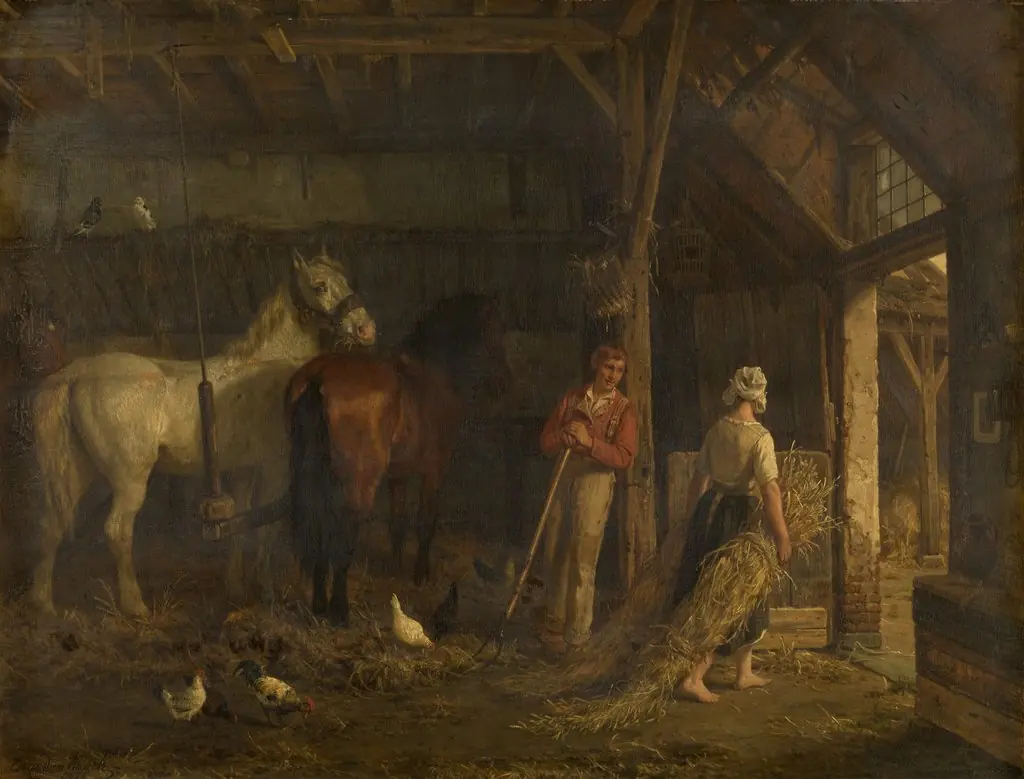
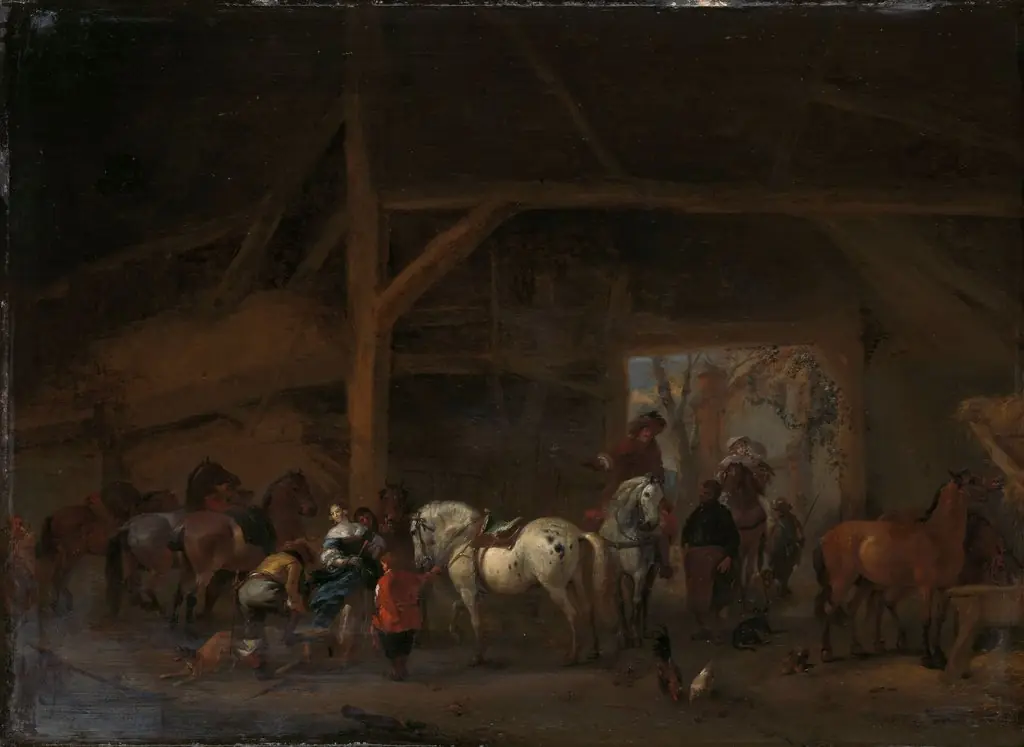
Interieur van een stal met paarden en figuren
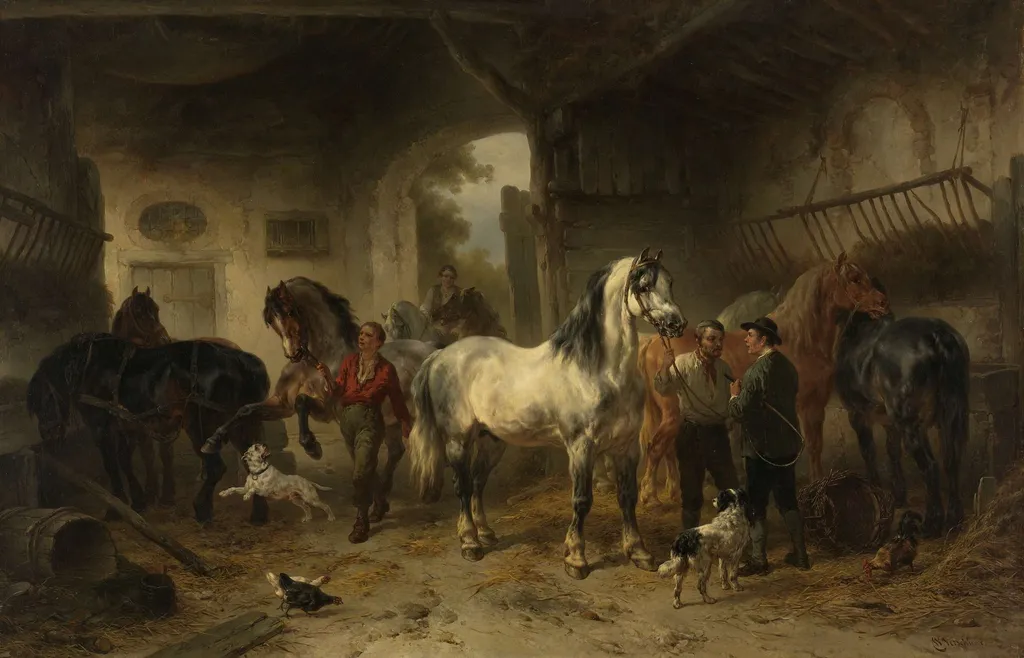
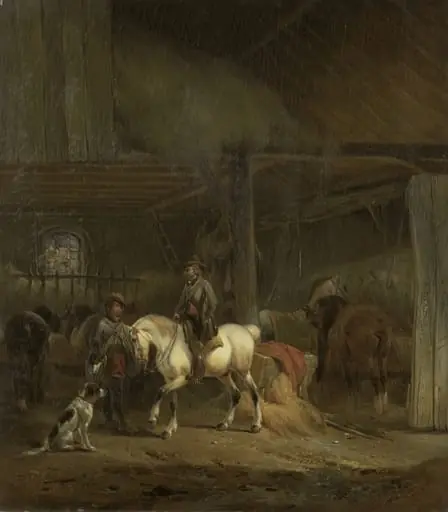
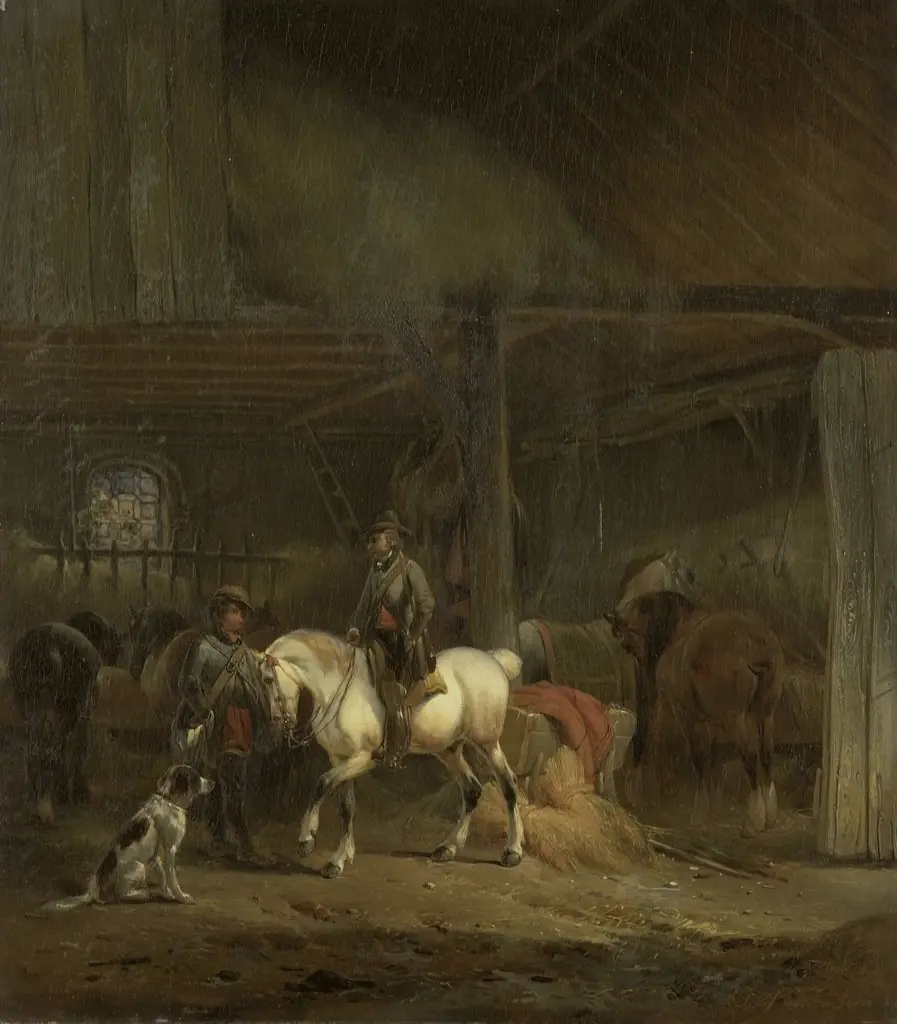
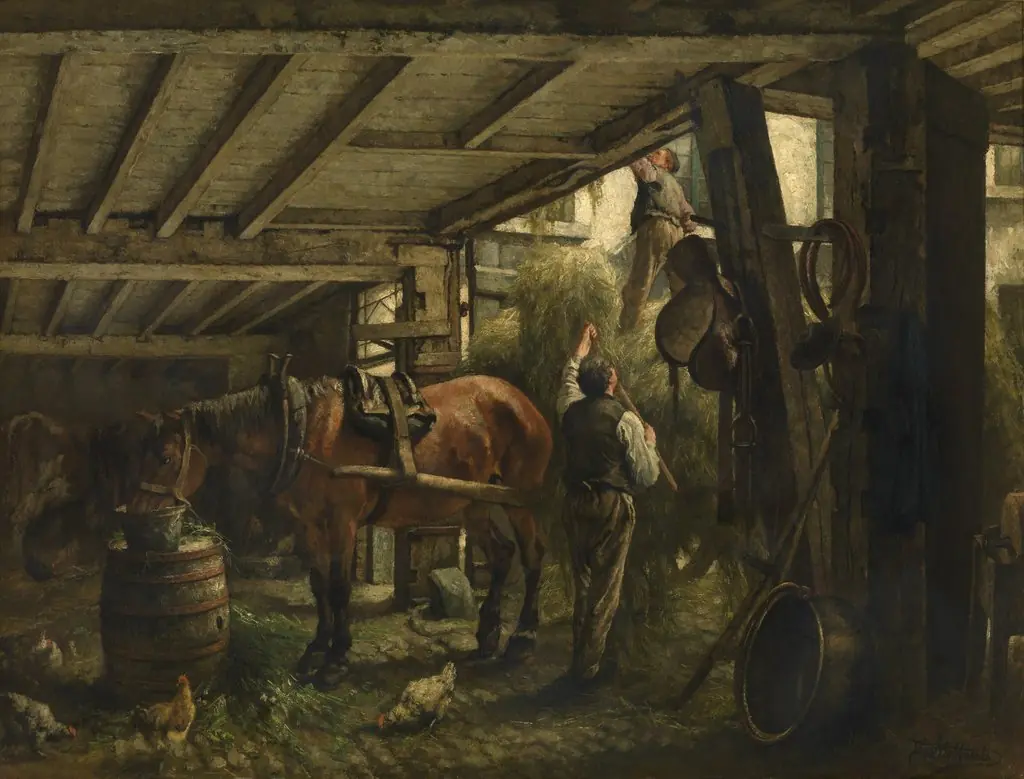
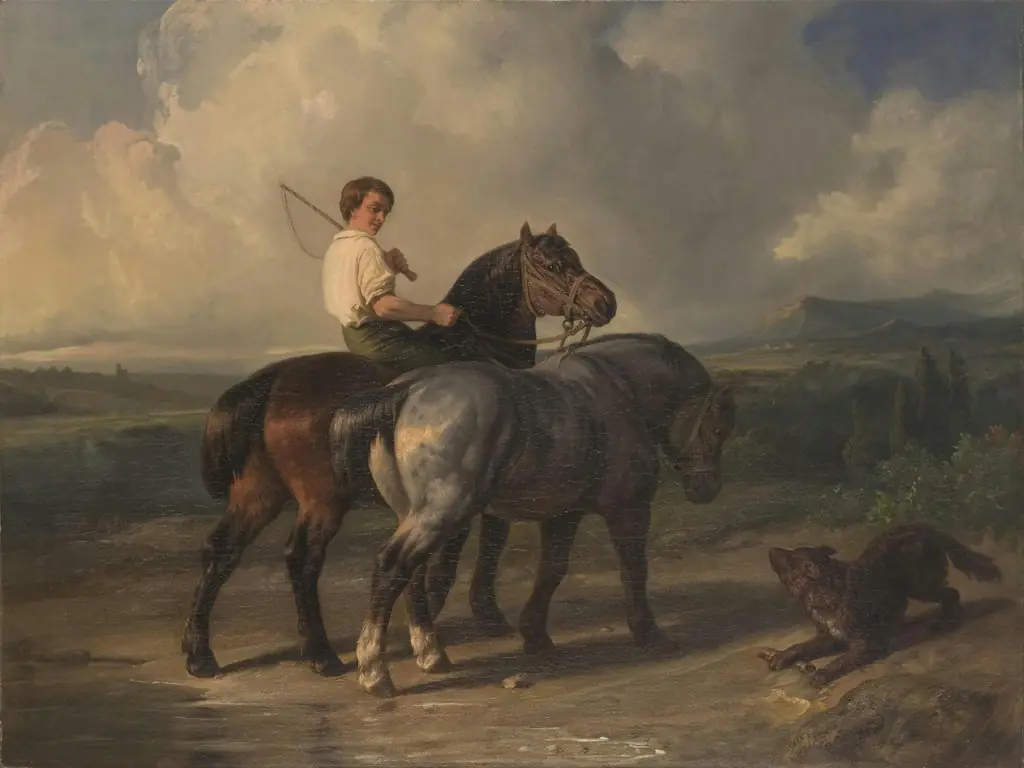
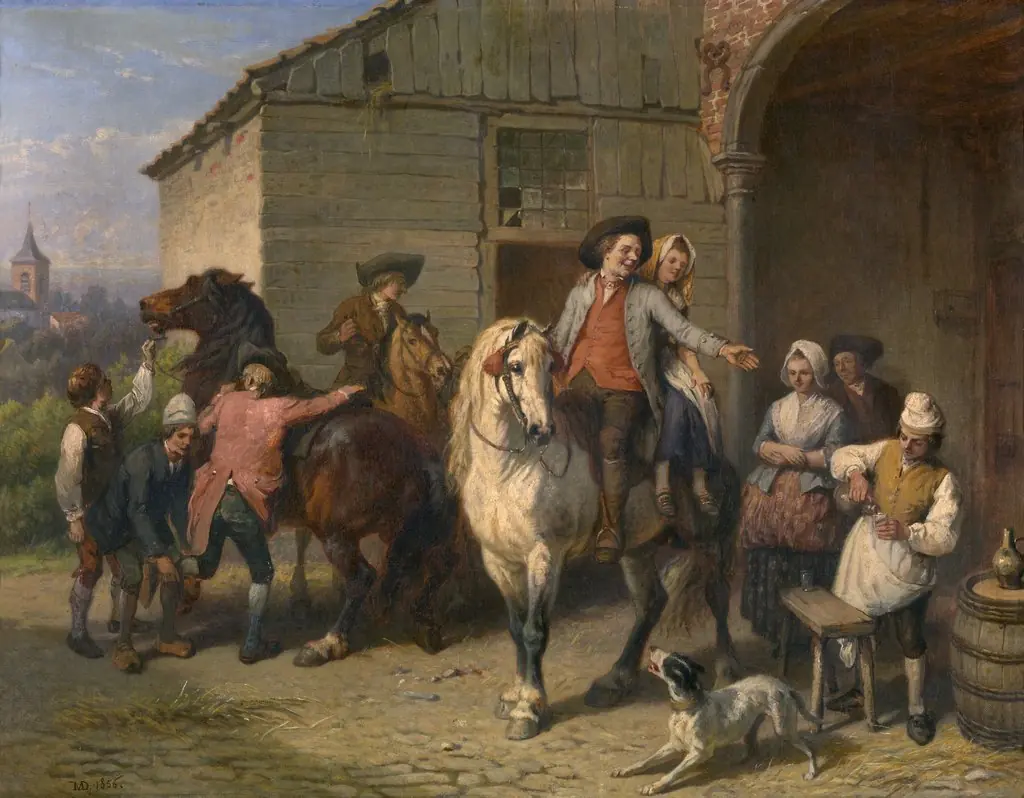
Interieur van een stal met paarden en figuren is an oil painting by Wouterus Verschuur. It dates from 1862 and is held in the collection of the Rijksmuseum.
About this work
Overview
The painting is part of the Rijksmuseum’s collection, where it represents 19th-century Dutch realism rooted in observational detail.
Painted in 1862 by Dutch artist Wouterus Verschuur, this oil-on-canvas work depicts an interior of a working stable. It belongs to the genre of rural scene painting and reflects the artist’s sustained interest in animal subjects. The composition captures a quiet moment of daily labor, with horses and humans coexisting in a dim, weathered barn. The painting is part of the Rijksmuseum’s collection, where it represents 19th-century Dutch realism rooted in observational detail.
Subject & Meaning
The scene portrays six horses restrained along the walls of a rustic stable, accompanied by four laborers and two animals—a dog and a chicken—moving freely across the dirt floor. No single narrative dominates; instead, the painting conveys the quiet rhythm of farm life. The figures engage in routine tasks: adjusting tack, conversing, or resting. The absence of drama or idealization suggests an emphasis on authenticity over sentiment, aligning with late Romanticism’s focus on everyday truth.
Technique & Style
Verschuur employed careful observation to render the varied textures of the horses’ coats—some gleaming, others matte—using layered oil glazes to capture how light interacts with fur and skin. The interior’s wooden beams and uneven floor are rendered with rough, tactile brushwork. A single window provides a weak, directional light that highlights the white horse’s flank, creating subtle contrast against the shadowed corners. The palette is muted, dominated by browns, grays, and earth tones, reinforcing the setting’s utilitarian character.
History & Provenance
Created in 1862, the painting entered the Rijksmuseum’s collection shortly after its completion, likely through acquisition or donation typical of Dutch institutional practices in the late 19th century. Verschuur’s reputation as a specialist in animal subjects ensured his works were recognized by contemporary collectors and museums. Its continuous presence in the museum’s holdings reflects its status as a representative example of Dutch genre painting from the period, rather than a singularly celebrated work.
Context
In mid-19th-century Netherlands, rural life remained a subject of artistic interest even as industrialization advanced. Verschuur’s work emerged within a tradition of Dutch realism that valued accurate depiction over romanticized nostalgia. His focus on livestock and farm settings aligned with broader European trends, yet retained a distinctly local character—rooted in the agricultural practices and architecture of the Dutch countryside, far from urban centers.
Legacy
Though not widely known beyond specialist circles, Verschuur’s paintings contribute to the understanding of 19th-century Dutch visual culture. His attention to animal anatomy and stable environments offers insight into the material conditions of rural labor. The painting remains a reference point for studies of genre painting’s evolution in the Netherlands, valued more for its documentary precision than for stylistic innovation.
Own this work as a print
Artist & collection
Artist
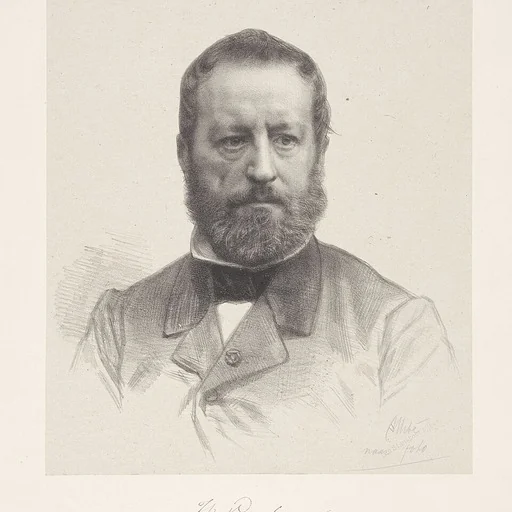
Wouterus Verschuur (11 June 1812 – 4 July 1874) was a Dutch painter of animal subjects – mainly horses – and of landscapes. He is one of the later representatives of Romanticism in Dutch art.