Artwork
Et ellekrat
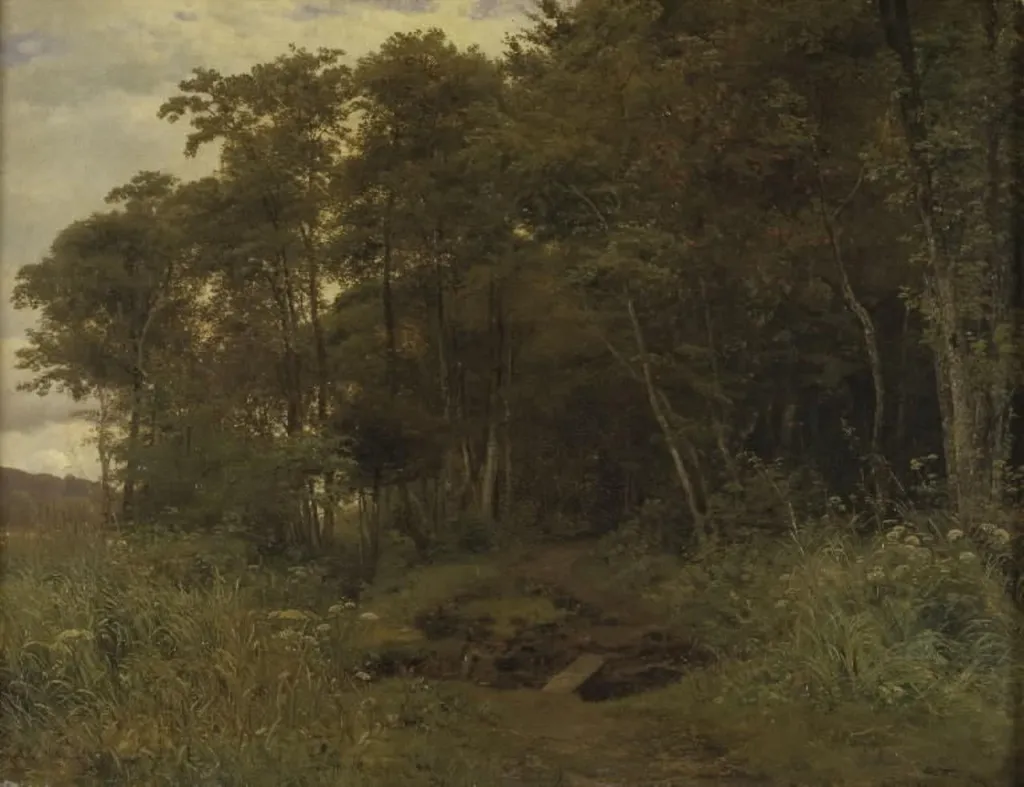
Et ellekrat is a photography by the Impressionist artist Unknown. It dates from 1861 and is held in the collection of the Statens Museum for Kunst.
About this work
The photo was taken in 1861, making it one of the earliest examples of landscape photography.
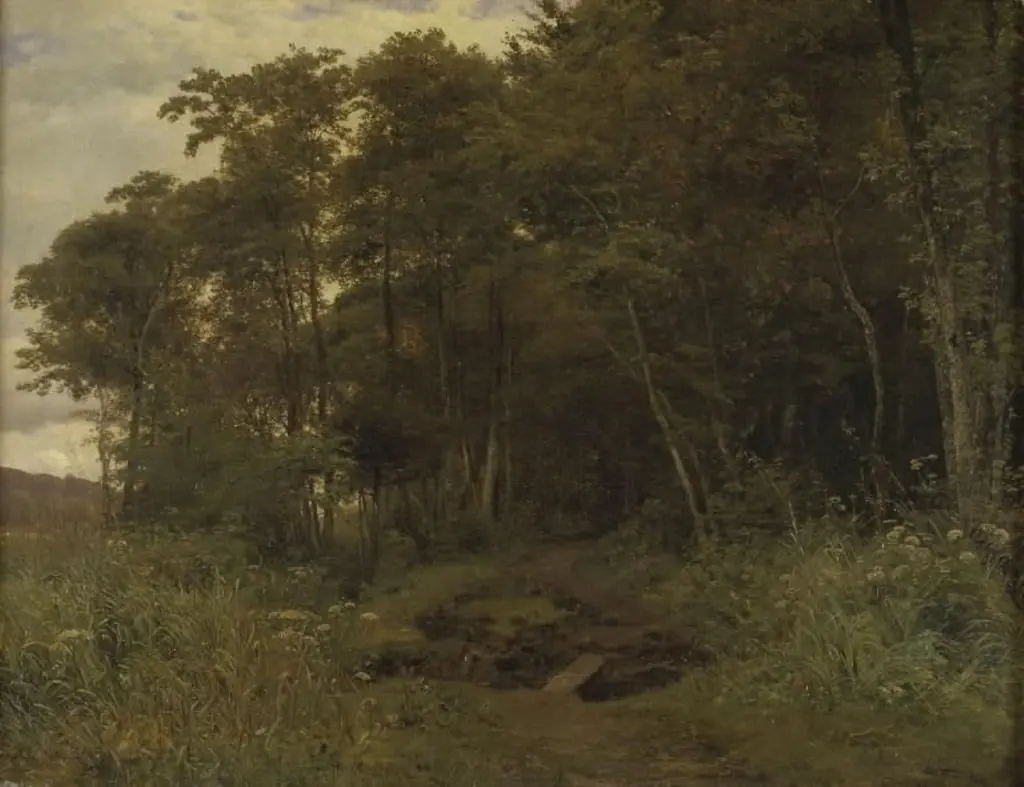
This photo shows a dense forest with tall trees and thick underbrush. The light filters through the leaves, casting soft shadows on the ground. A narrow path winds through the greenery, leading deeper into the woods.
The photo was taken in 1861, making it one of the earliest examples of landscape photography. The artist focused on real details rather than idealized scenes.
Look up Impressionism to see how this style later used light and color in paintings.
Overview
Et ellekrat, produced in 1861 by the photographer recorded as 1305_person, is a photographic image preserved in the collection of the Museum of Ethnography. The picture presents a tightly packed woodland scene, emphasizing natural forms and the play of light within a forested environment.
Subject & Meaning
The composition depicts a dense stand of trees with a thick understory, through which a narrow trail snakes deeper into the foliage. Sunlight filters through the canopy, creating a pattern of soft shadows on the forest floor, inviting contemplation of the secluded, unaltered landscape.
Technique & Style
Captured with the photographic processes available in the early 1860s, the image prioritises precise detail over romanticized scenery. The photographer’s attention to the subtle gradations of light and texture reflects a documentary approach that predates later artistic movements which would manipulate light and colour for expressive effect.
History & Provenance
Created in the same year it was photographed, Et ellekrat entered the Museum of Ethnography’s holdings as part of its early acquisitions of photographic material. Its presence in the museum underscores the institution’s interest in documenting natural environments through emerging visual technologies of the mid‑nineteenth century.
Context
While the work remains grounded in realistic representation, it anticipates concerns later explored by Impressionist painters, who would emphasize fleeting light and atmospheric conditions. Et ellekrat therefore occupies a transitional position, linking early photographic realism with the evolving aesthetic preoccupations of the late nineteenth century.
Artist & collection

 Domestic Scene
 Giacomo and Cardinal Marco, investing Andrea, Abbot of San Zeno, with his Benefice
 The Nymph of Fontainebleau
 Portrait of a Woman
 Madonna and Child with Saints in the Enclosed Garden
 Venus and Minerva
 Family Group of Four on Sofa
 Wall painting from Room H of the Villa of P. Fannius Synistor at Boscoreale
 Aften ved Bondedammen i Hellebæk
 Aften ved Bondedammen i Hellebæk
 Sommerlandskab. Horneland ved Fåborg
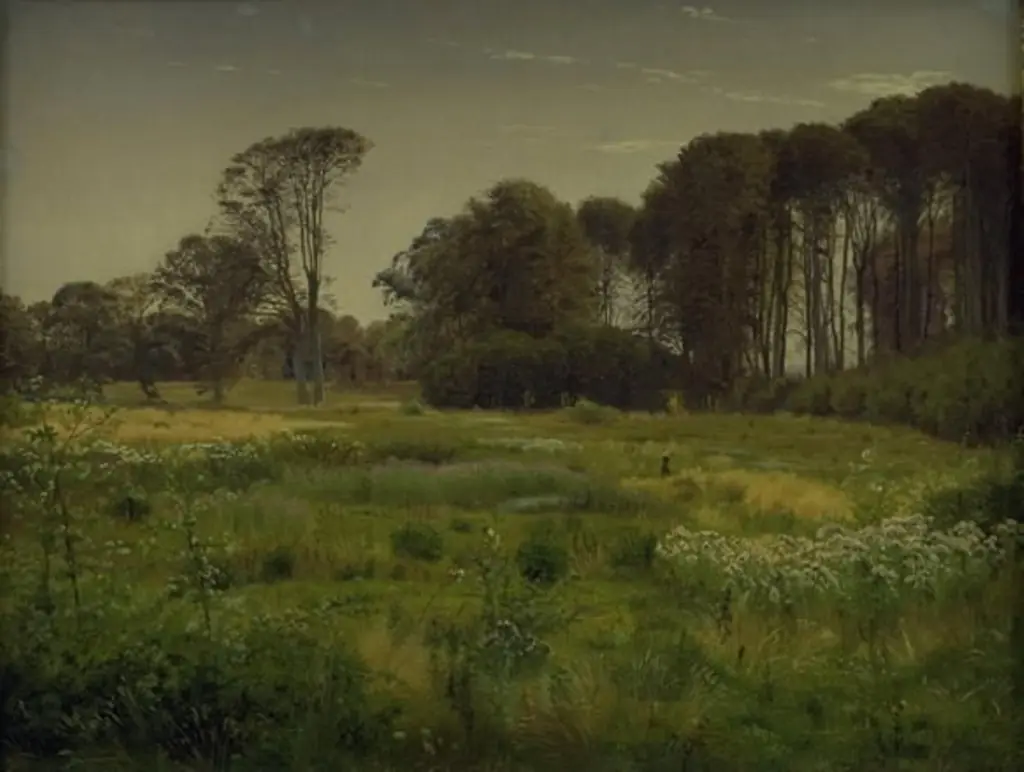 Sommerlandskab. Horneland ved Fåborg
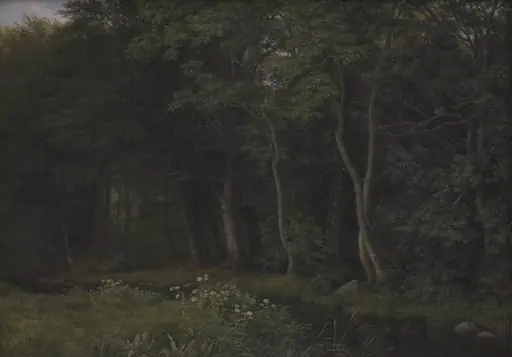 Twilight Setting in a Wood near Iselingen Manor, Zealand
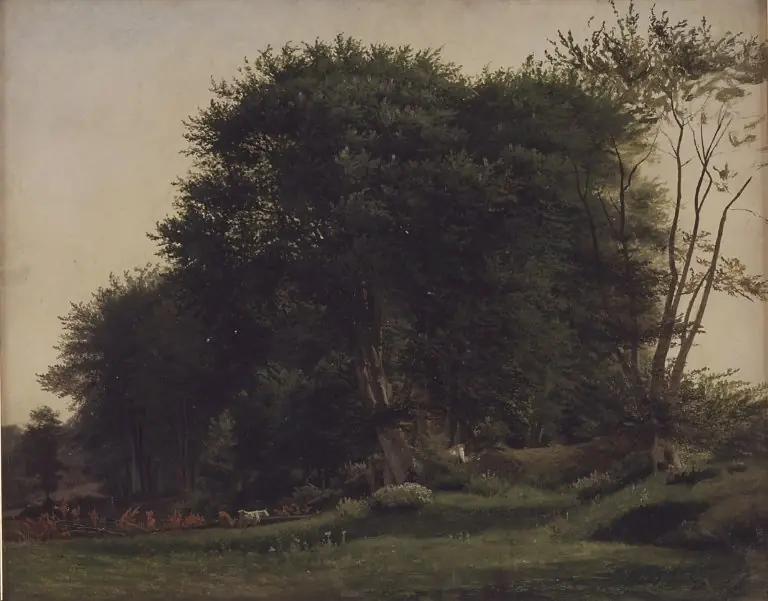 Skovlysning med kvæg
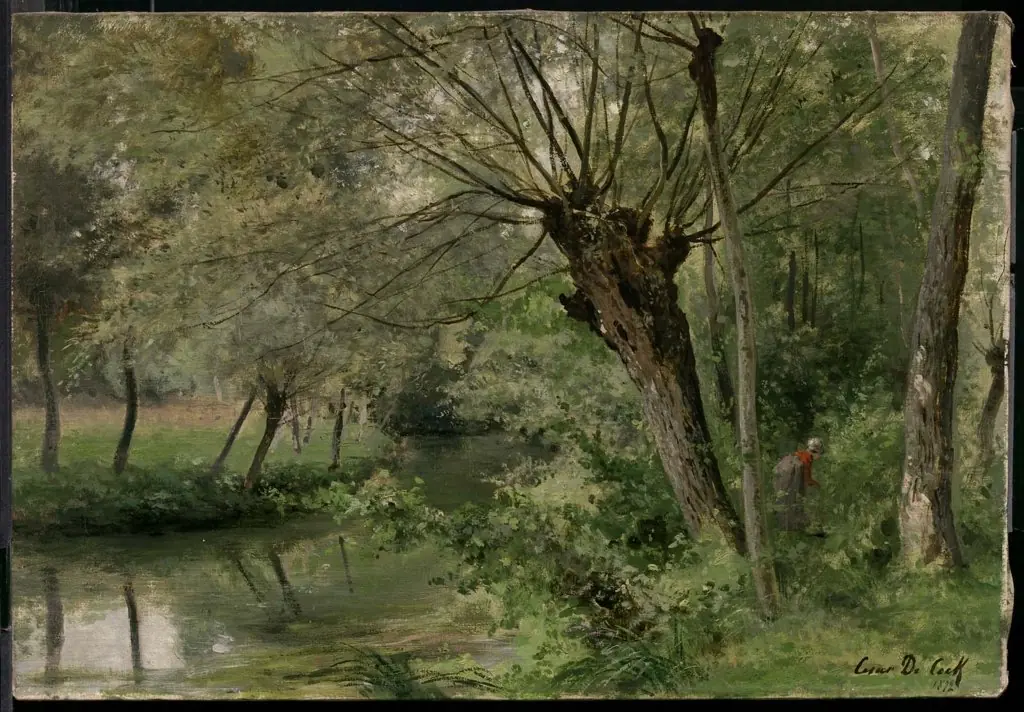 Stream through the Forest
 Skovlysning med kvæg
 Inde i skoven
 Der stille Waldwinkel
 Et skyggefuldt sted i Hestehave ved Frederiksborg
 Et ellekrat