Artwork
Landsbyskrædderen
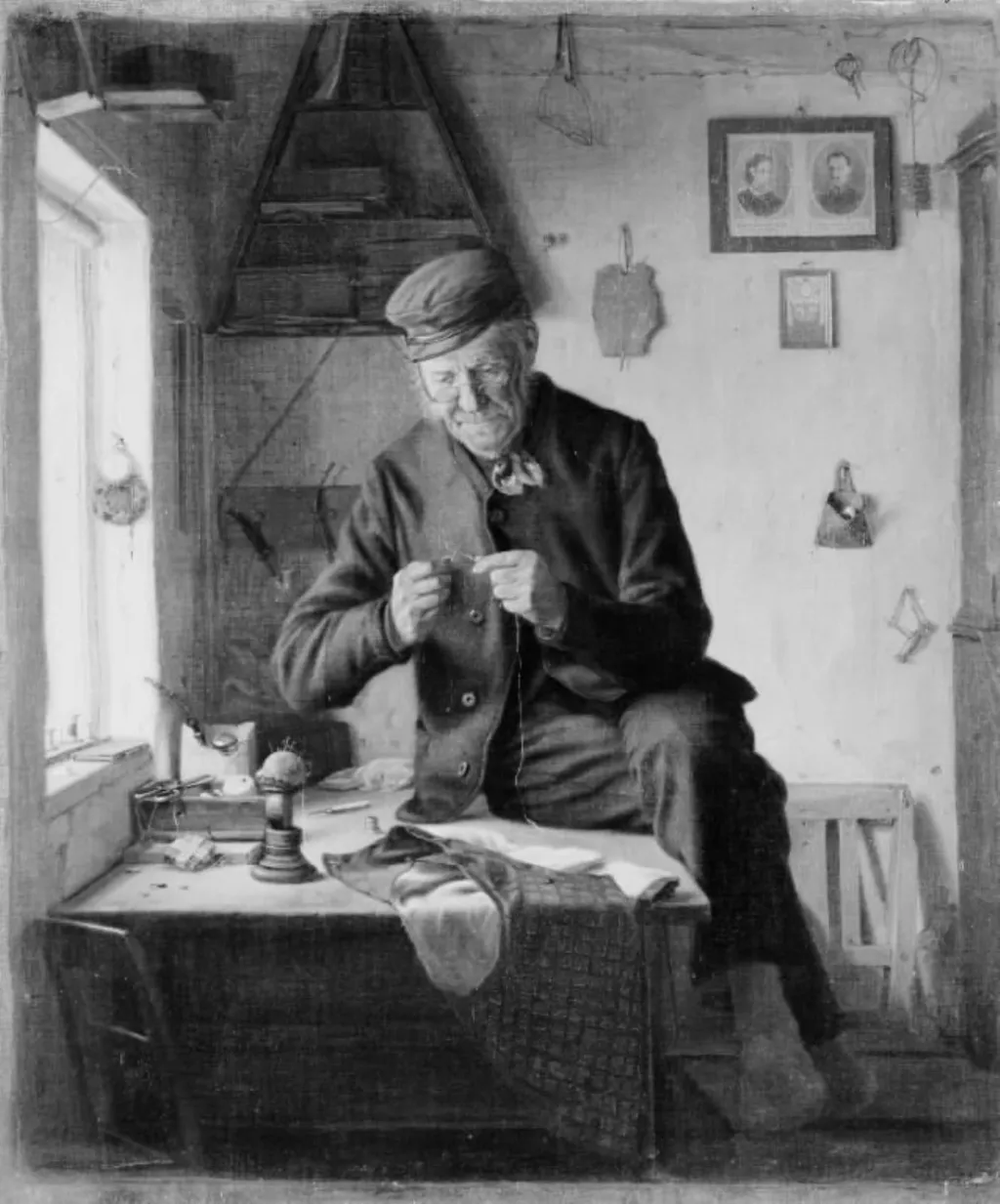
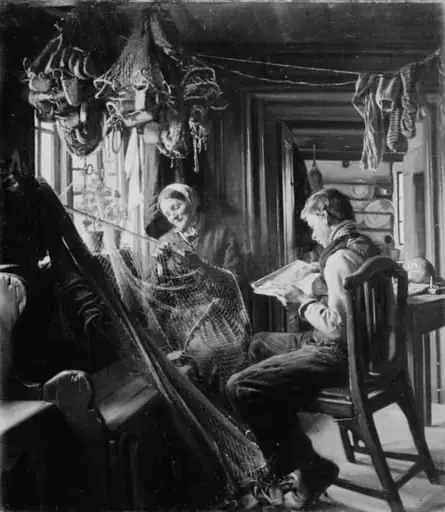
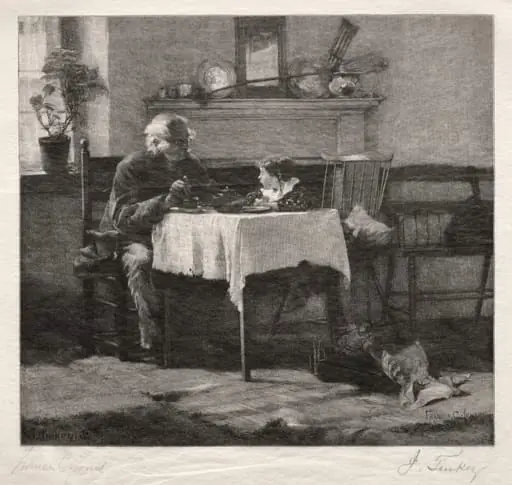
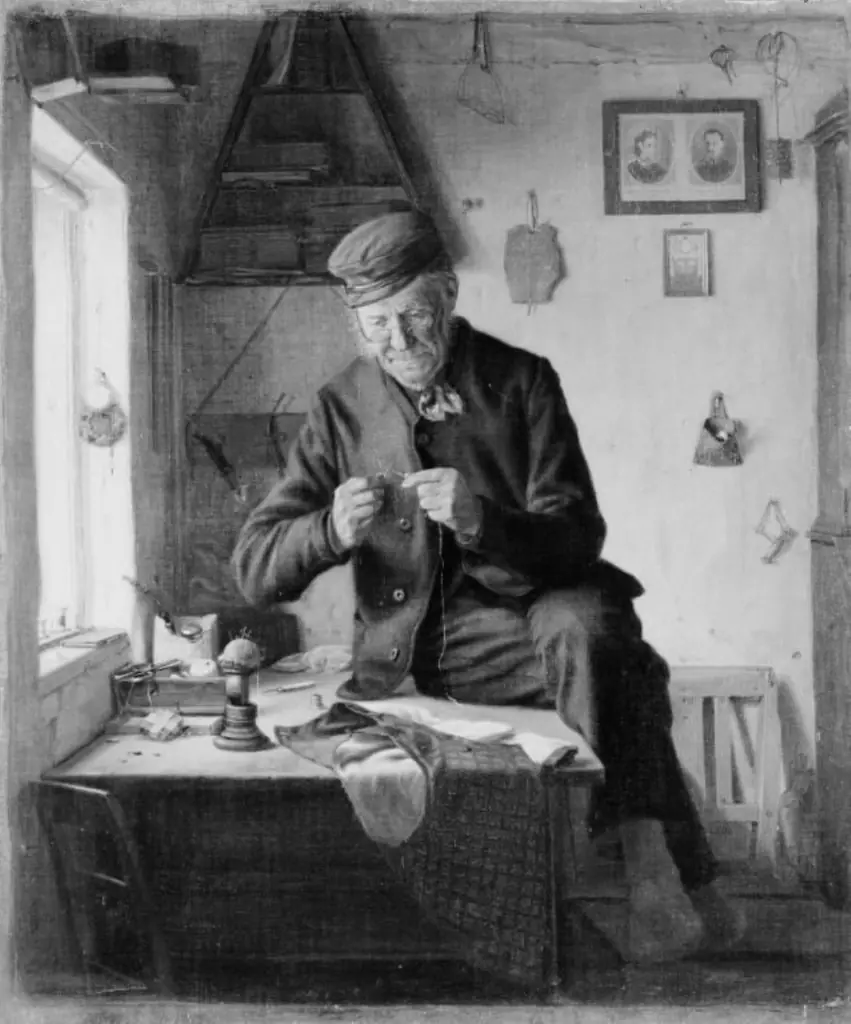
Landsbyskrædderen is a photography by Unknown. It dates from 1865 and is held in the collection of the Statens Museum for Kunst. Created around 1865, this black-and-white photograph depicts a rural tailor at work in his modest home.
About this work
Overview
Created around 1865, this black-and-white photograph depicts a rural tailor at work in his modest home. The image is part of the Museum of Ethnography’s collection and reflects a quiet moment of daily labor in 19th-century rural Denmark. The composition emphasizes stillness and routine, capturing the tailor’s focused attention as he repairs fabric by natural light from a nearby window.
Subject & Meaning
The image conveys dignity in labor, portraying not an idealized figure but a real individual embedded in the rhythms of domestic and artisanal life.
The subject is an elderly man engaged in the quiet, repetitive task of mending clothing—a common occupation in rural communities where professional tailors served localized needs. His worn attire and the humble surroundings suggest a life of modest means. The image conveys dignity in labor, portraying not an idealized figure but a real individual embedded in the rhythms of domestic and artisanal life.
Technique & Style
The photograph employs soft, directional lighting to model the tailor’s face and hands, creating subtle contrasts between light and shadow. This use of chiaroscuro draws focus to his concentration and the texture of his clothing and tools. The unposed setting, with cluttered surfaces and natural decay, avoids theatricality, reinforcing the authenticity of the scene through restrained composition and tonal gradation.
History & Provenance
The photograph was likely taken during a period of growing interest in documenting rural life in Denmark. It entered the Museum of Ethnography’s collection in the late 19th or early 20th century, possibly as part of a broader ethnographic survey. Its origin as a studio or field photograph remains undocumented, but its preservation suggests early recognition of its cultural value.
Context
In mid-19th century Denmark, rural tailors often worked from home, serving nearby villages with handmade garments and repairs. Industrialization had not yet reached these areas, and such artisans represented a fading way of life. This image aligns with contemporaneous efforts to record traditional crafts before they disappeared under urbanization and mechanization.
Legacy
The photograph endures as a quiet record of pre-industrial craftsmanship and domestic labor. It contributes to historical studies of rural Danish society and the visual anthropology of everyday work. Though not widely exhibited, it remains a reference point for understanding how ordinary lives were documented during the early era of photographic ethnography.
Artist & collection

 Domestic Scene
 Giacomo and Cardinal Marco, investing Andrea, Abbot of San Zeno, with his Benefice
 The Nymph of Fontainebleau
 Portrait of a Woman
 Madonna and Child with Saints in the Enclosed Garden
 Venus and Minerva
 Family Group of Four on Sofa
 Wall painting from Room H of the Villa of P. Fannius Synistor at Boscoreale