Artwork
Oude vrouw met haar katten
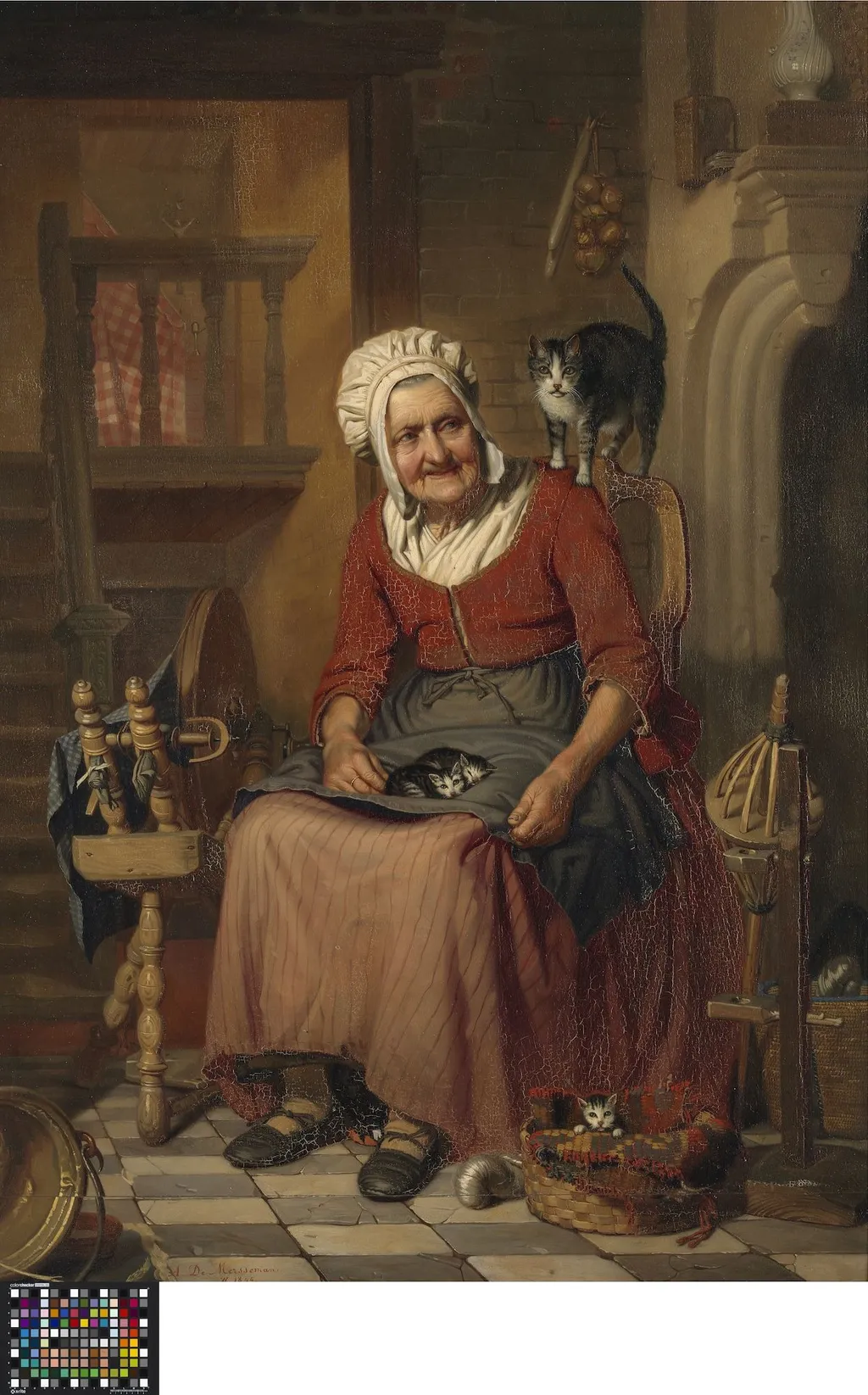
Oude vrouw met haar katten is an oil painting by Auguste-Joseph De Mersseman. It dates from 1844 and is held in the collection of the Groeningemuseum.
About this work
Overview
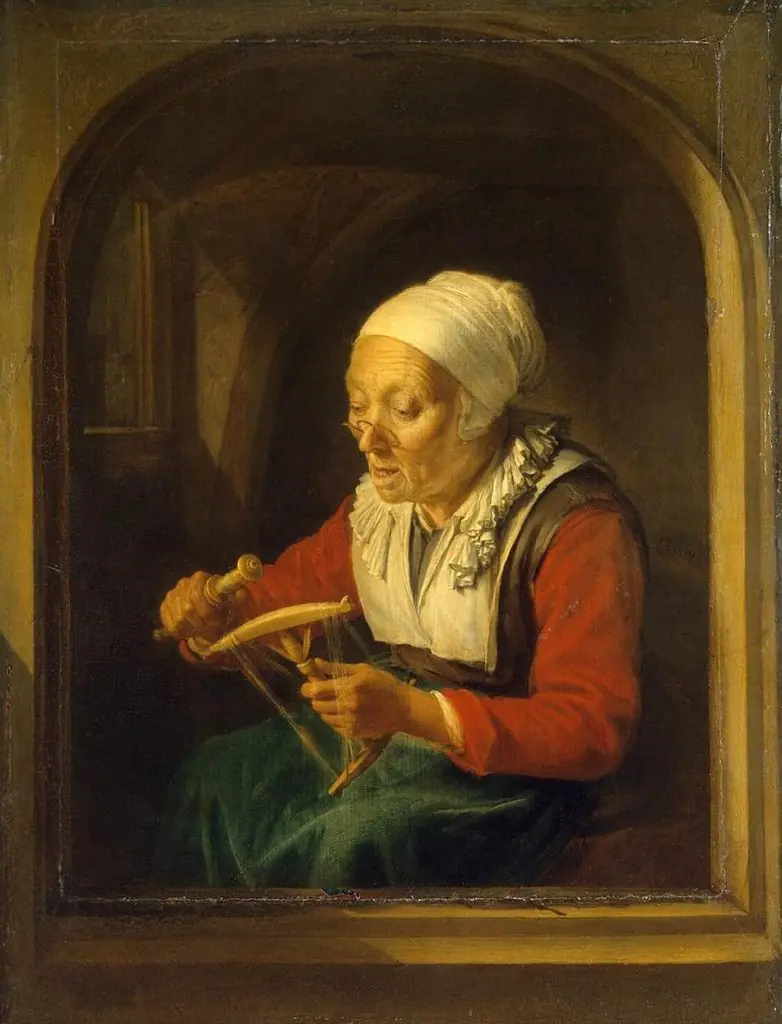
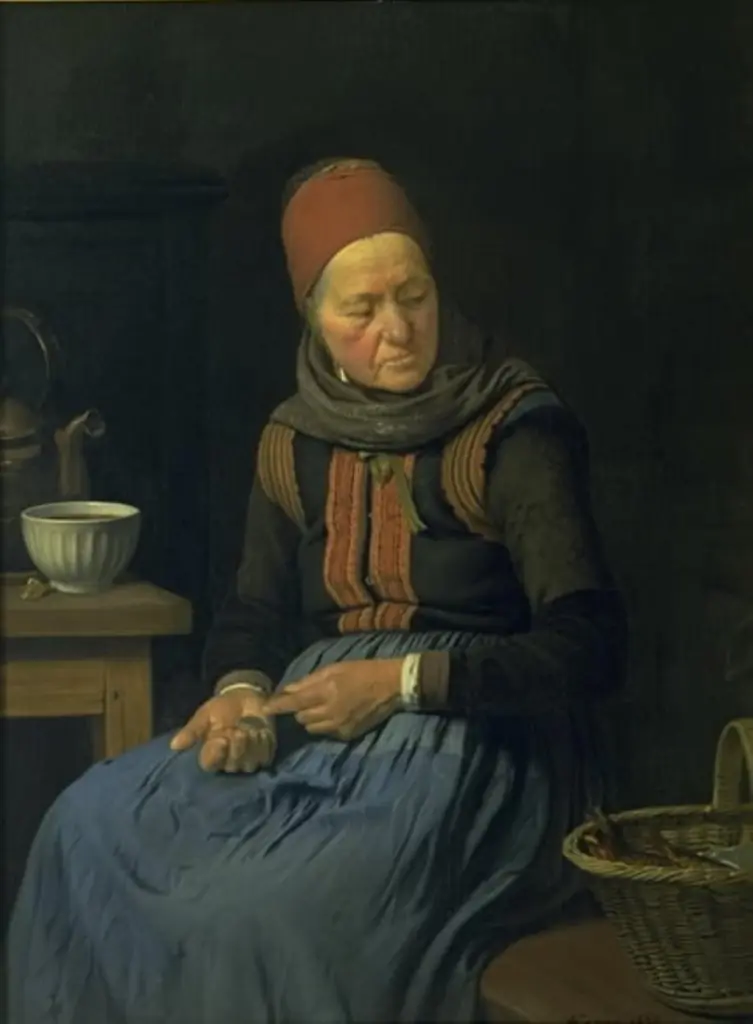
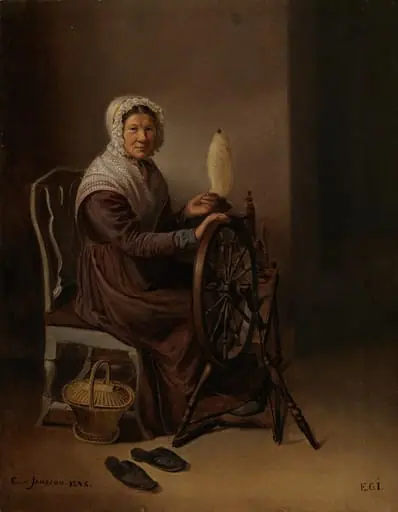
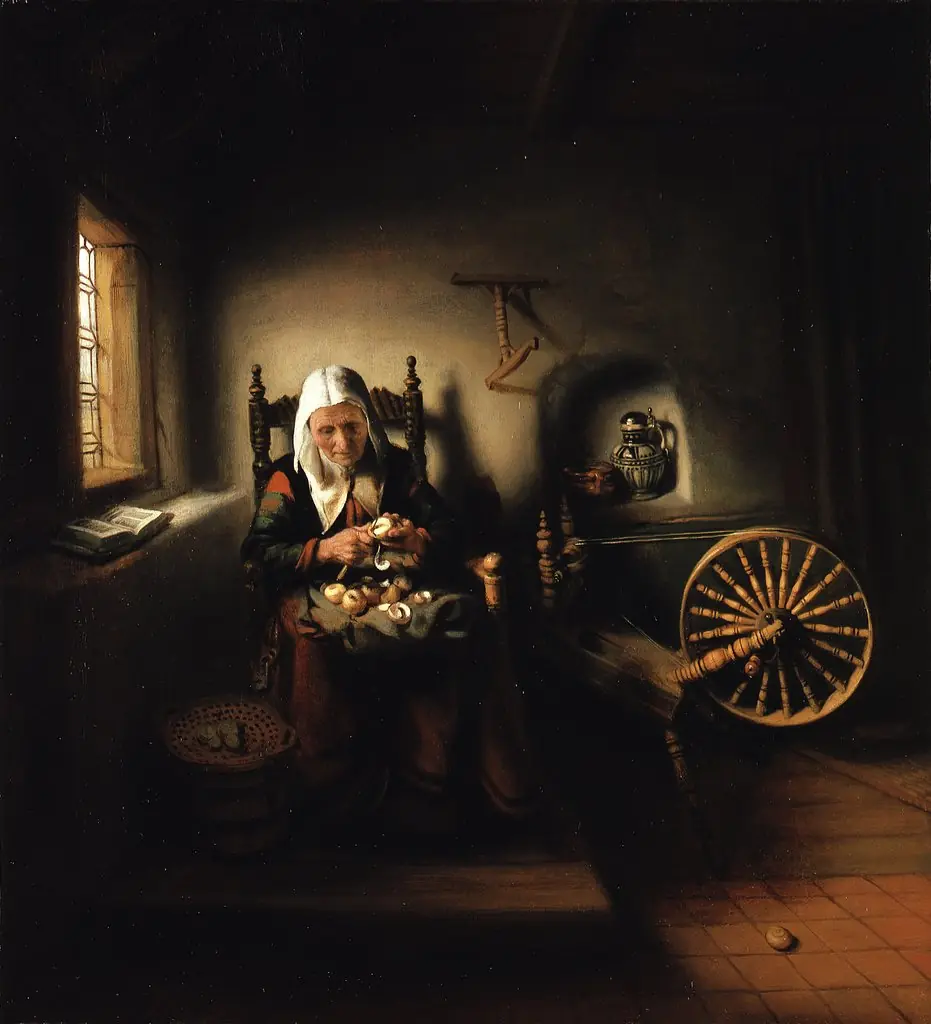
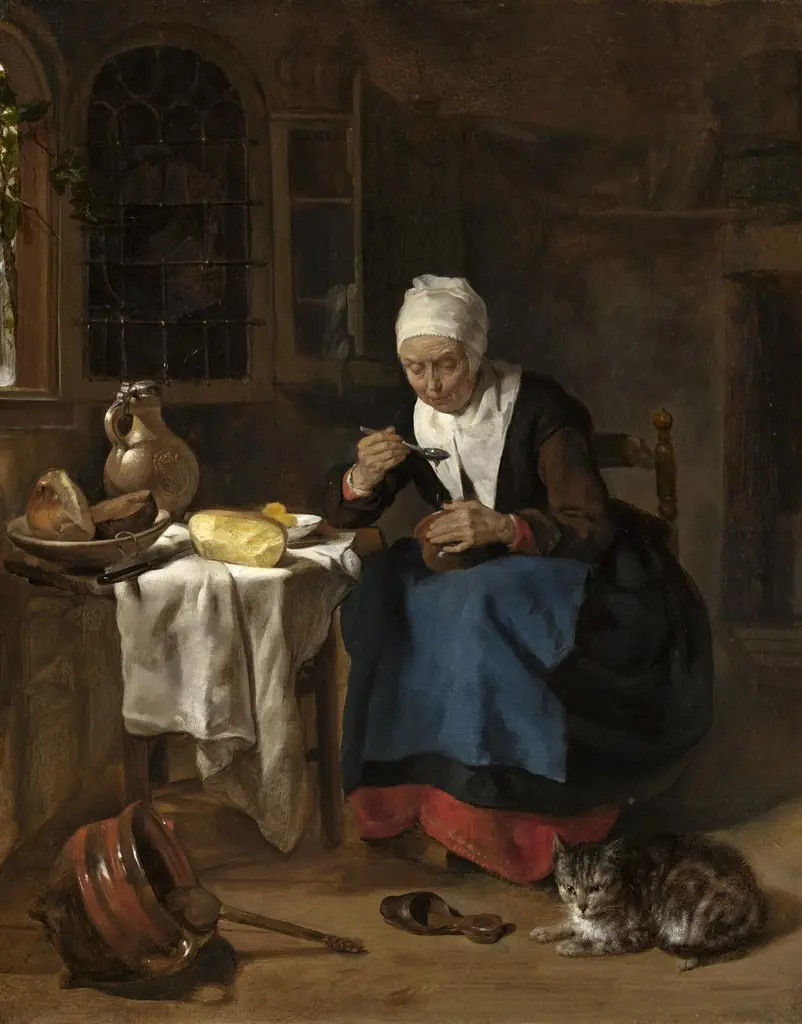
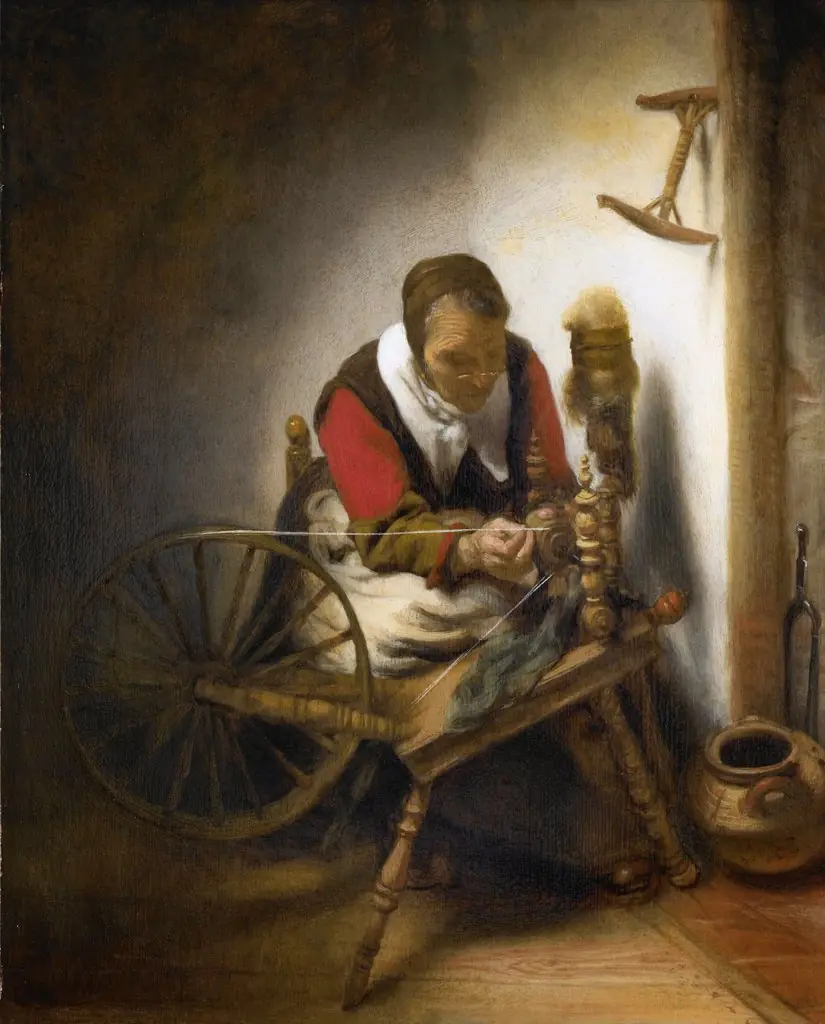
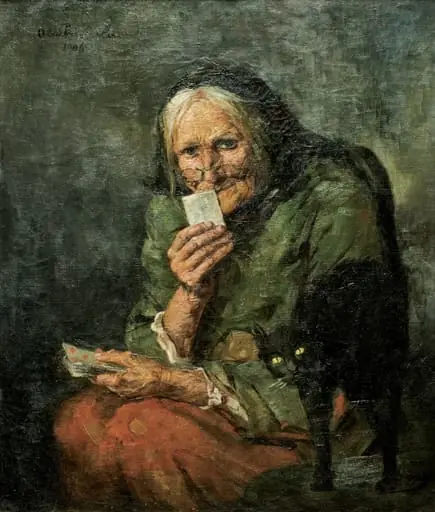
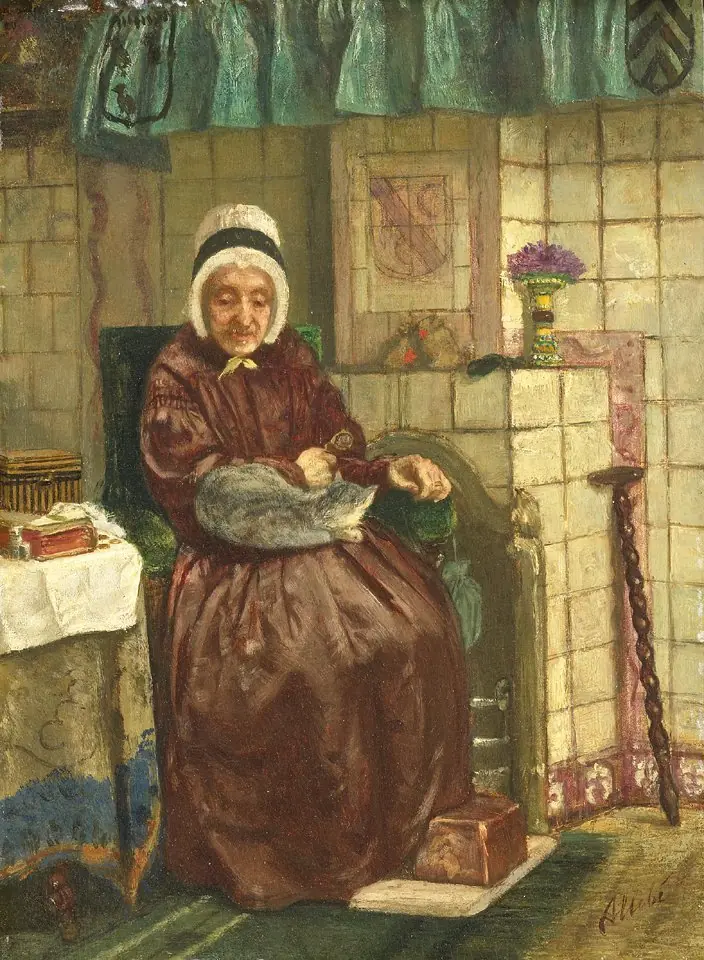
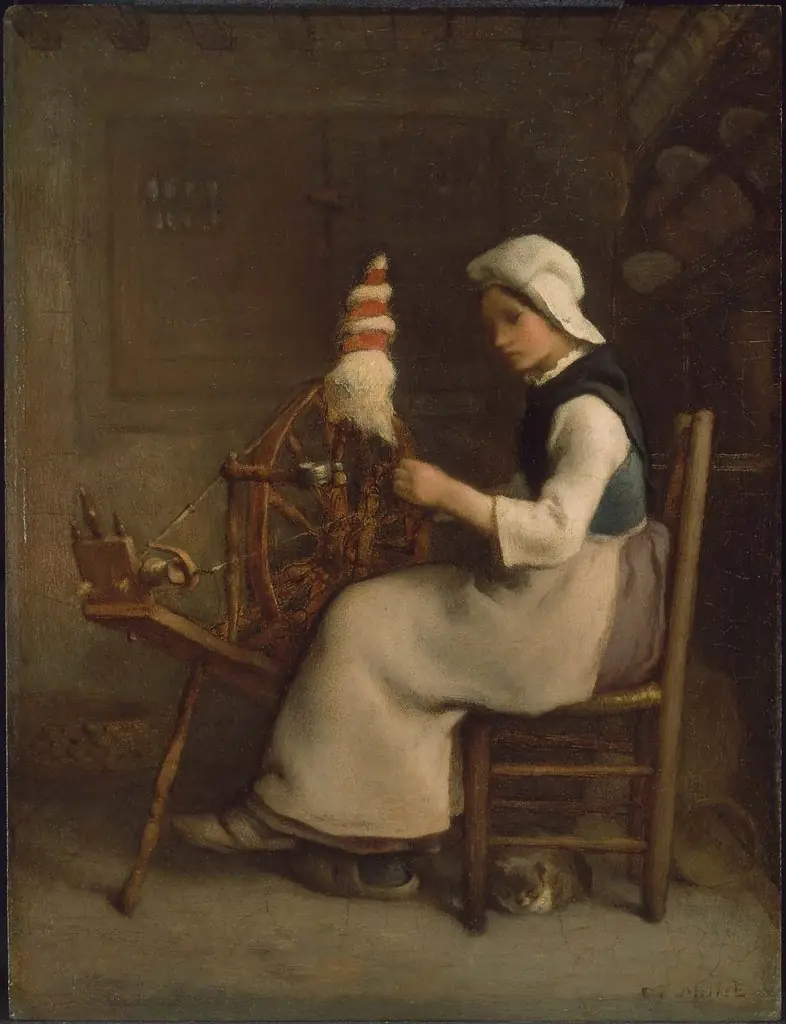
Painted in 1844 by Auguste-Joseph De Mersseman, this oil on canvas portrays an elderly woman in a quiet domestic interior. She is seated at a spinning wheel, surrounded by three cats, in a composition that emphasizes stillness and routine. The work is part of the collection at the Groeningemuseum in Bruges, where it reflects 19th-century Flemish interest in intimate, everyday scenes.
Subject & Meaning
The woman, dressed in a red gown with a white head covering, engages in the quiet labor of spinning yarn, a task associated with domestic endurance and age-old female roles. Her calm demeanor and the presence of the cats suggest companionship in solitude. The scene avoids sentimentality, instead conveying dignity in routine, with the animals serving as quiet witnesses to her daily life.
Technique & Style
De Mersseman employs soft, muted tones to render the interior, with warm highlights on the woman’s dress and the fireplace’s glow.
De Mersseman employs soft, muted tones to render the interior, with warm highlights on the woman’s dress and the fireplace’s glow. Brushwork is precise yet unobtrusive, focusing on texture—wool, fabric, fur—without dramatic contrast. The composition is tightly framed, drawing attention to the woman’s stillness and the cats’ natural postures, reinforcing the painting’s intimate scale and quiet realism.
History & Provenance
The painting was completed in 1844 and entered the Groeningemuseum’s collection in the 19th century, likely through acquisition or donation. Its provenance remains largely undocumented beyond its museum record, but its preservation suggests early recognition of its quiet merit within regional art circles. It has remained in the museum’s holdings without significant public exhibition history.
Context
Created during a period when Belgian artists increasingly turned to domestic and rural subjects, the painting aligns with a broader trend of genre scenes that valued authenticity over grand narrative. While not overtly political, it reflects a cultural moment where ordinary life—especially of women and the elderly—was seen as worthy of artistic attention, distinct from academic or religious themes.
Legacy
Though not widely known outside regional collections, the painting endures as a modest example of 19th-century Flemish genre painting. It contributes to the understanding of how everyday rituals were rendered with quiet respect, offering a counterpoint to more theatrical or idealized depictions of the period. Its continued presence in the Groeningemuseum affirms its role in documenting domestic life of the era.
Own this work as a print
Artist & collection
Artist
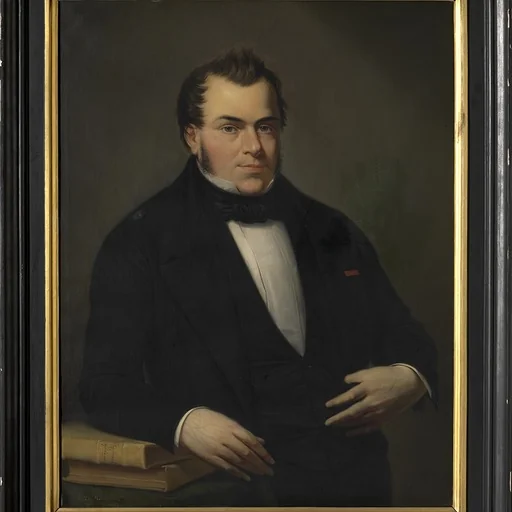
Auguste-Joseph De Mersseman (1808–1880) was an artist, born in Bruges.