Artwork
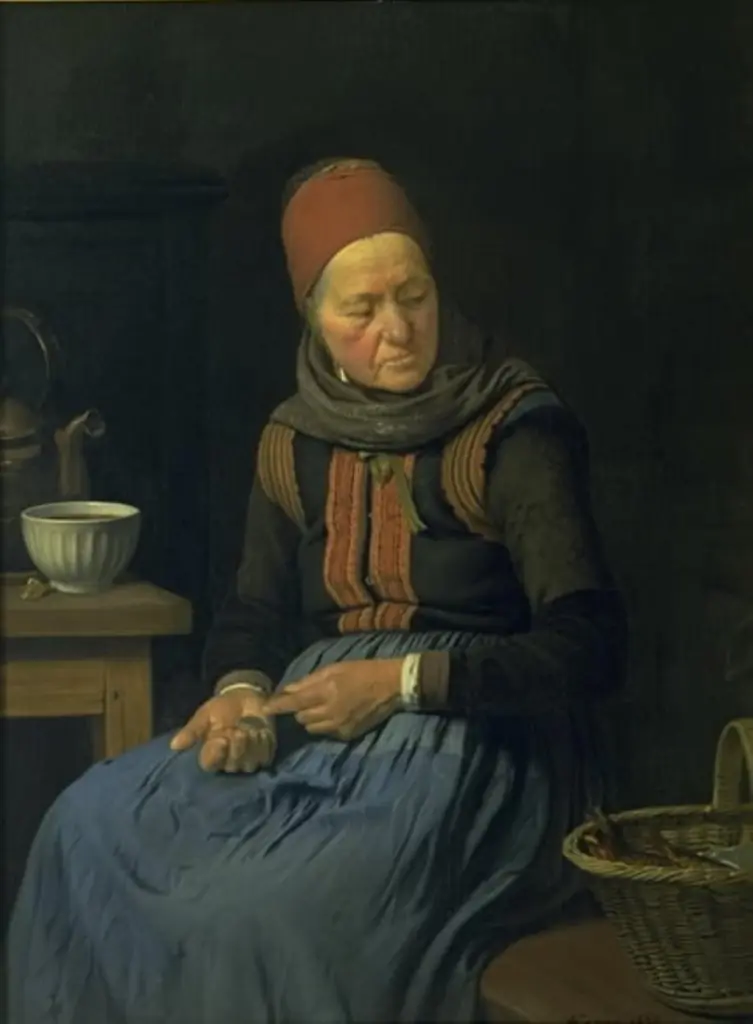
En amagerkone
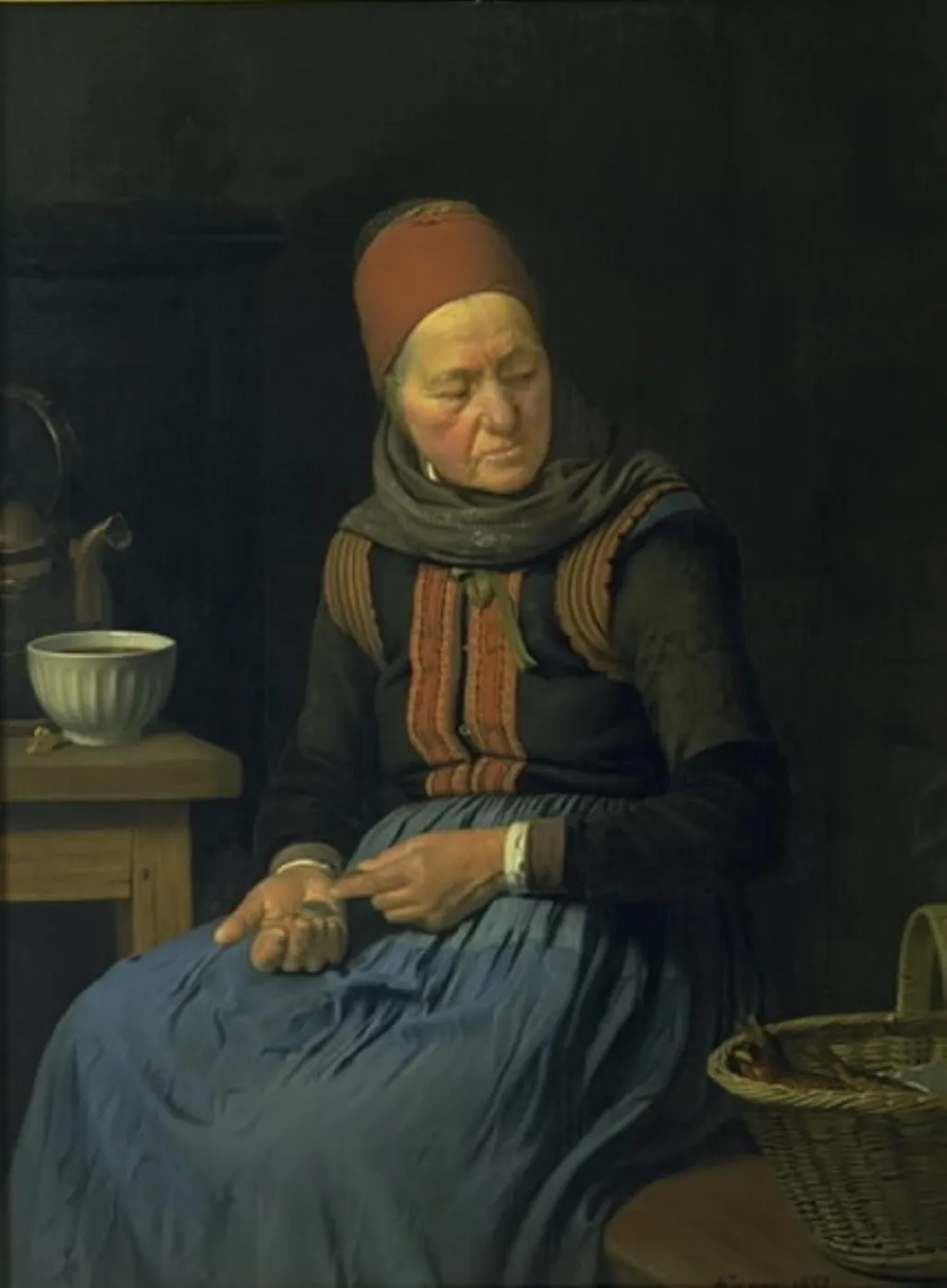
En amagerkone is a photography by the Impressionist artist Unknown. It dates from 1852 and is held in the collection of the Statens Museum for Kunst. Created in 1852 by 292_person, this image captures a quiet domestic scene from Amager, a rural area near Copenhagen.
About this work
Overview
Created in 1852 by 292_person, this image captures a quiet domestic scene from Amager, a rural area near Copenhagen. The work is part of the Museum of Ethnography’s collection, where it is preserved as a record of everyday life in mid-19th-century Denmark. Its unadorned composition and attention to ordinary details align it with emerging realist tendencies in Scandinavian visual culture.
Subject & Meaning
The bowl on the table and the basket of bread or cloth nearby imply routine domestic tasks, elevating the mundane into a subject worthy of observation.
The woman, dressed in a dark striped sweater and blue skirt with a red cap, sits in a dim interior, intently handling a small object. Her weary expression and deliberate gestures suggest a moment of quiet labor—perhaps mending, sorting, or preparing food. The bowl on the table and the basket of bread or cloth nearby imply routine domestic tasks, elevating the mundane into a subject worthy of observation.
Technique & Style
The image employs soft, diffused lighting to emphasize texture and form without dramatic contrast. The background recedes into shadow, focusing attention on the woman’s hands and the objects within her reach. The composition avoids idealization, favoring natural posture and unembellished detail, reflecting a deliberate move toward realism in depicting working-class life.
History & Provenance
The work entered the Museum of Ethnography’s collection shortly after its creation, likely as part of a broader effort to document regional customs and material culture. Its preservation suggests early institutional interest in vernacular life rather than elite or ceremonial subjects. No significant alterations or reattributions are recorded in its documented history.
Context
In the 1850s, Denmark saw growing interest in rural traditions amid urbanization and industrial change. Artists and ethnographers began recording daily routines as cultural artifacts. This image aligns with that movement, offering a non-sentimental view of peasant life that contrasts with romanticized portrayals common in earlier art.
Legacy
Though not widely exhibited outside ethnographic circles, the image contributes to a visual archive of Danish domestic life in the mid-19th century. It remains a reference point for scholars studying the transition from folk tradition to modern social documentation, influencing later photographic and painterly studies of labor and gender.
Artist & collection

 Domestic Scene
 Giacomo and Cardinal Marco, investing Andrea, Abbot of San Zeno, with his Benefice
 The Nymph of Fontainebleau
 Portrait of a Woman
 Madonna and Child with Saints in the Enclosed Garden
 Venus and Minerva
 Family Group of Four on Sofa
 Wall painting from Room H of the Villa of P. Fannius Synistor at Boscoreale
 Old Woman seated on a Chair
 Old Woman Unreeling Threads
 Old Woman Spinning
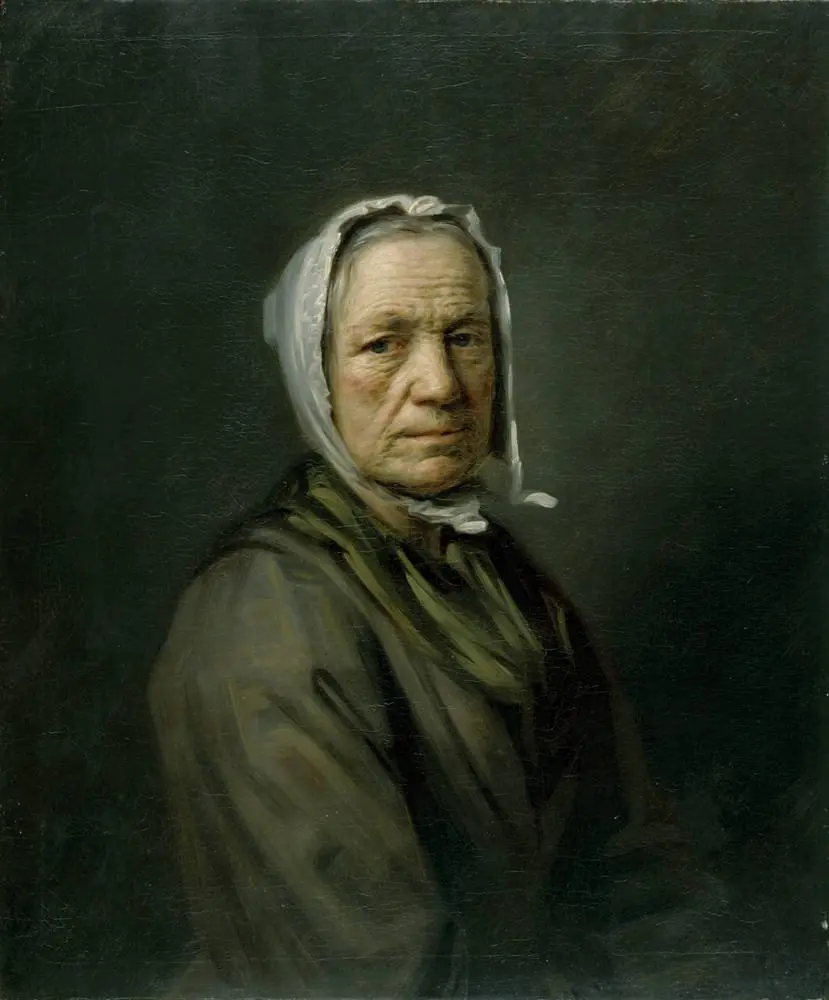 Bejahrte Frau mit weißer Haube
 Bătrână cu coș pe braț
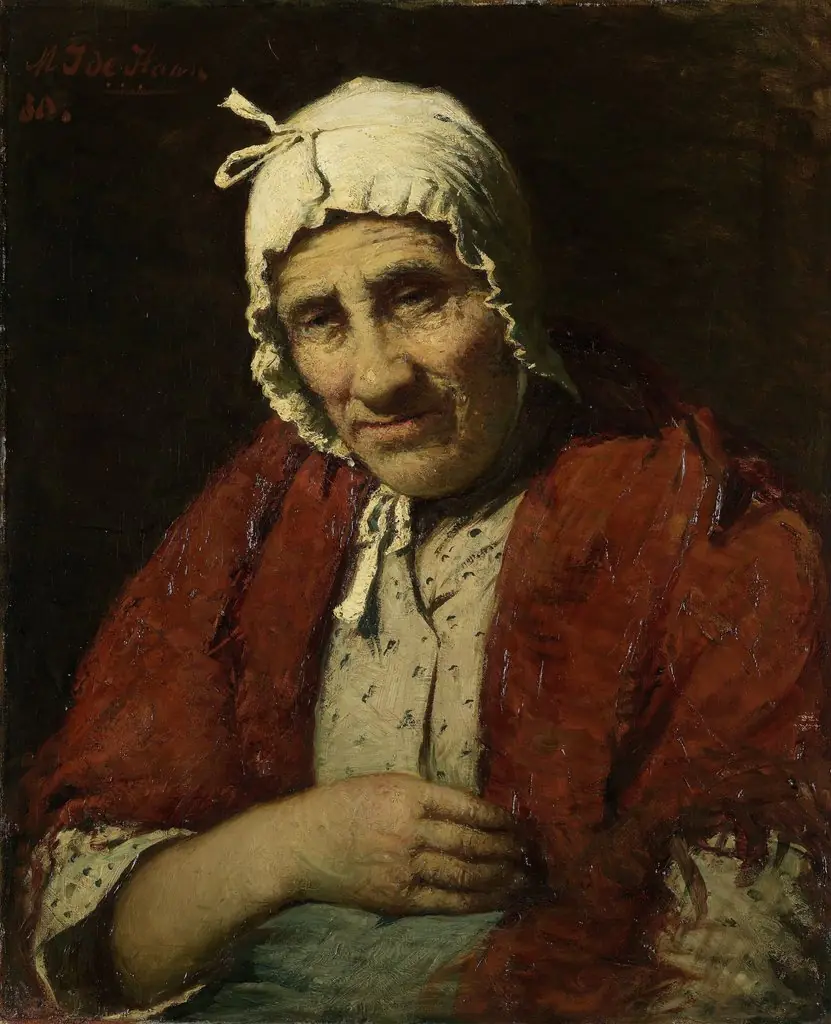 Old Jewish woman
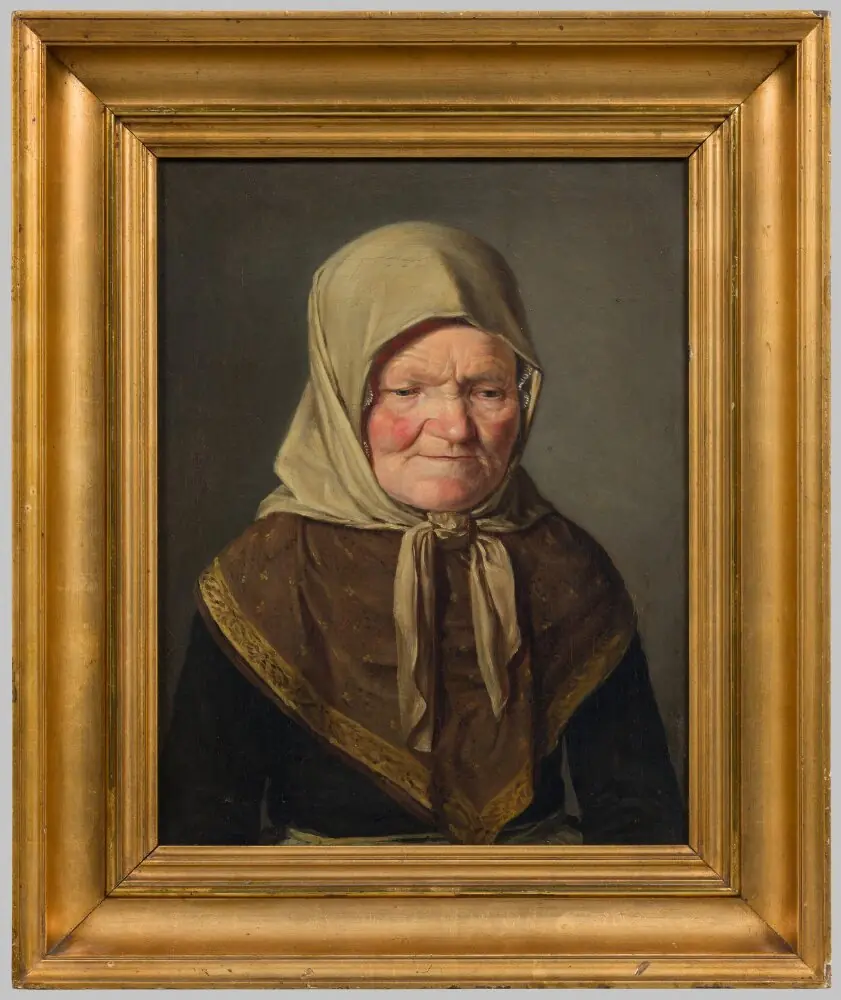 Study of an Old Woman with a Huckle and a Shawl
 Old woman with jead lowered
 Portrait of an Old Woman, Wife of Christian Jacobsen Drakenberg, née Bagge (?)
 Portrait of an Old Woman, Wife of Christian Jacobsen Drakenberg, née Bagge (?)
 Oude vrouw met haar katten
 En amagerkone