Artwork
A Dead White Cock
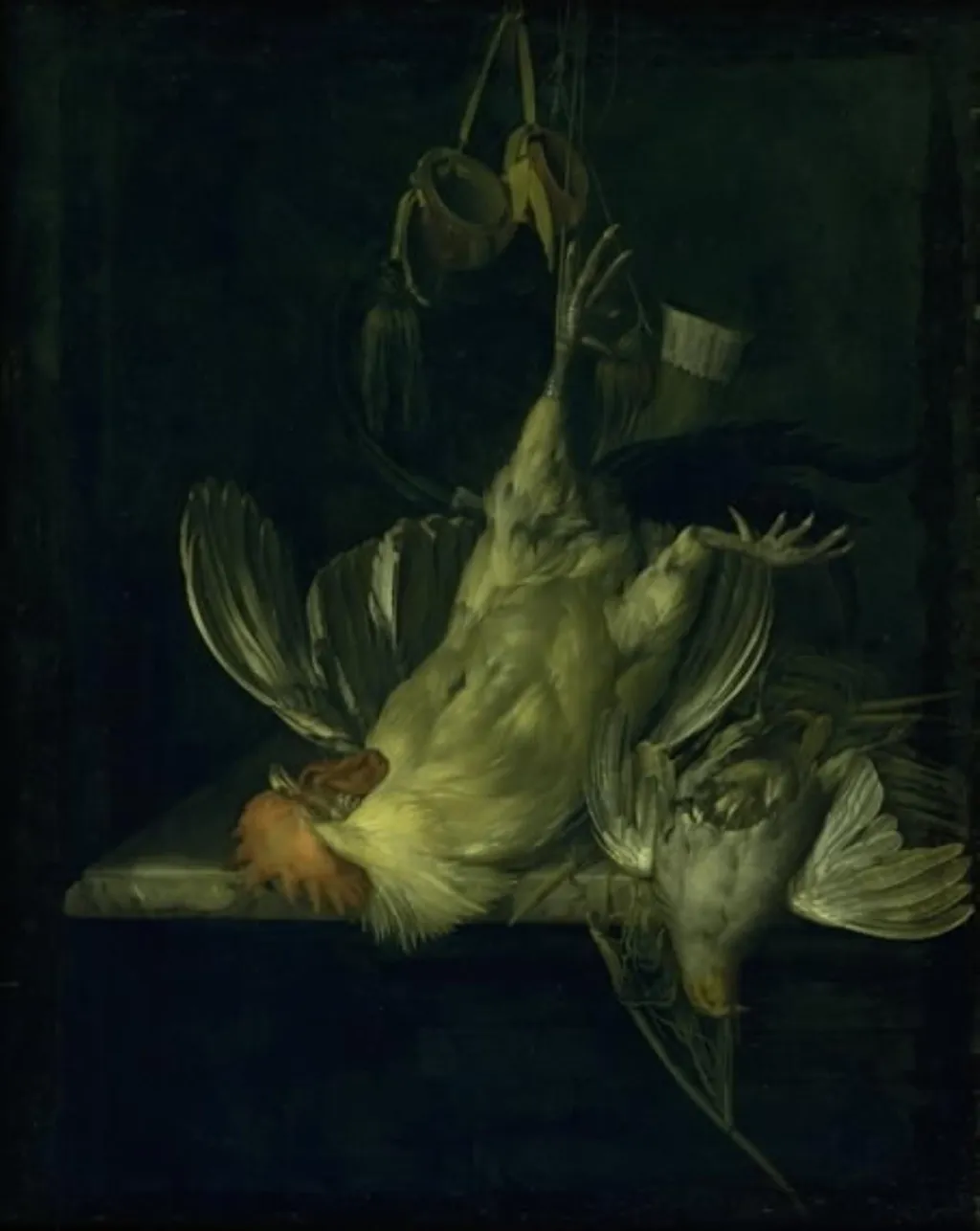
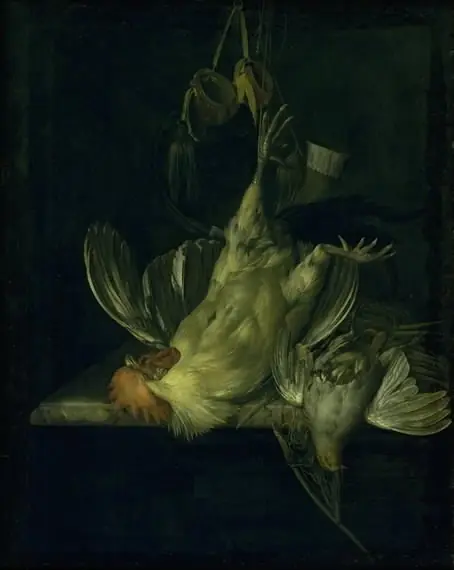
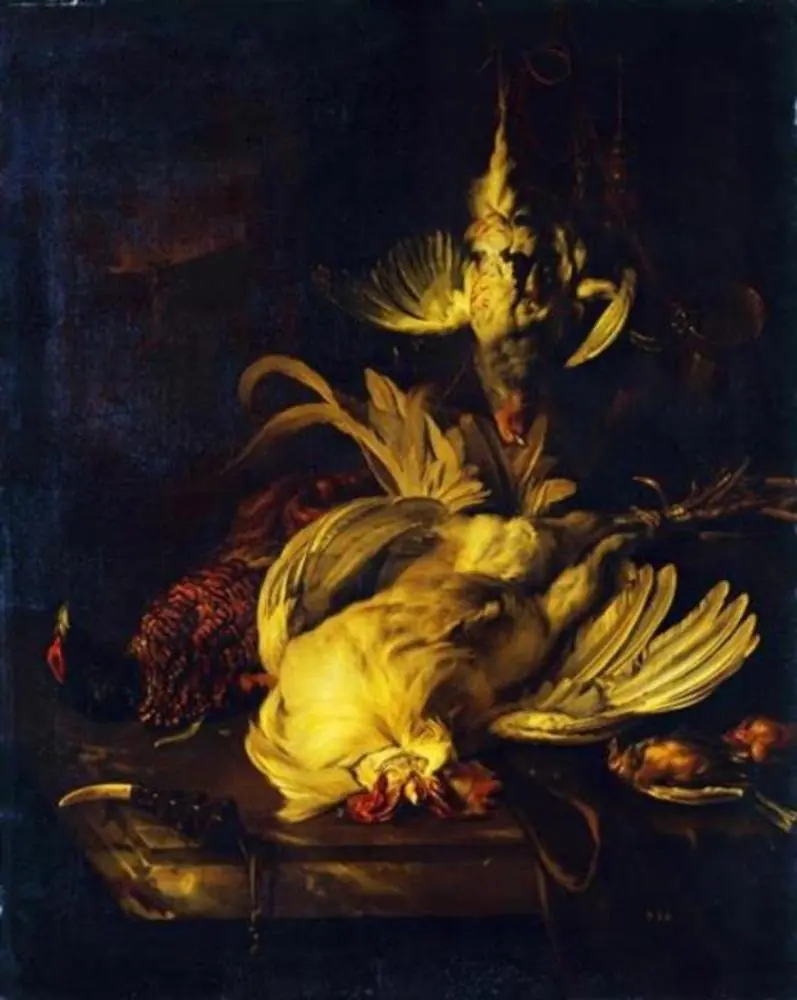
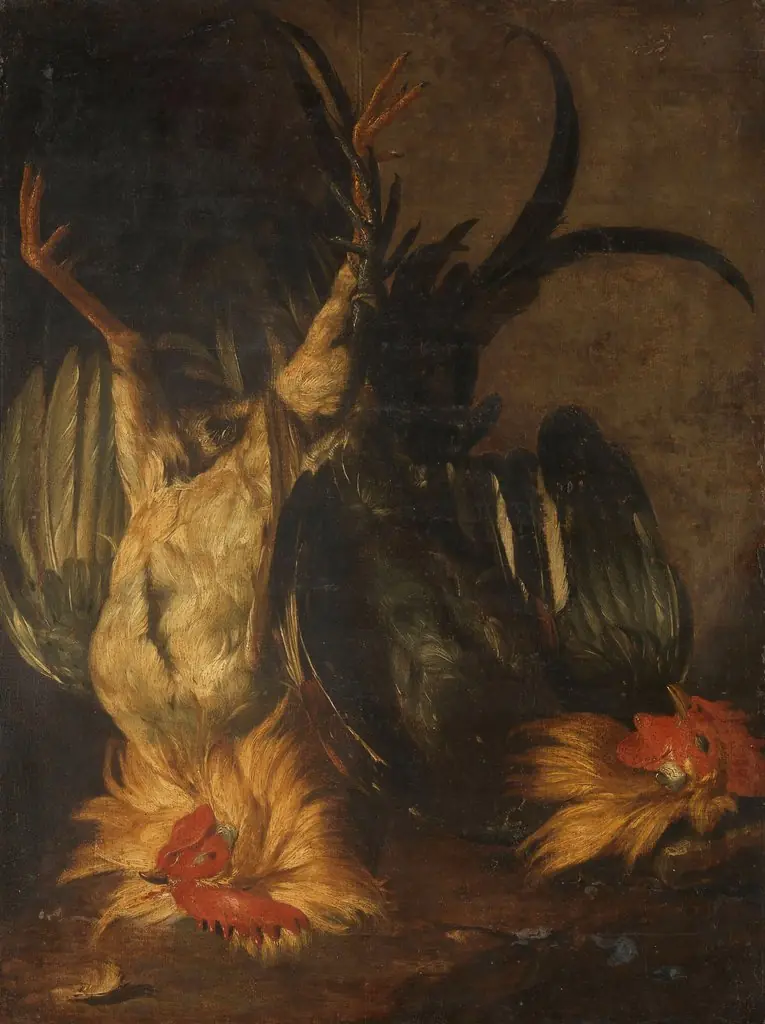
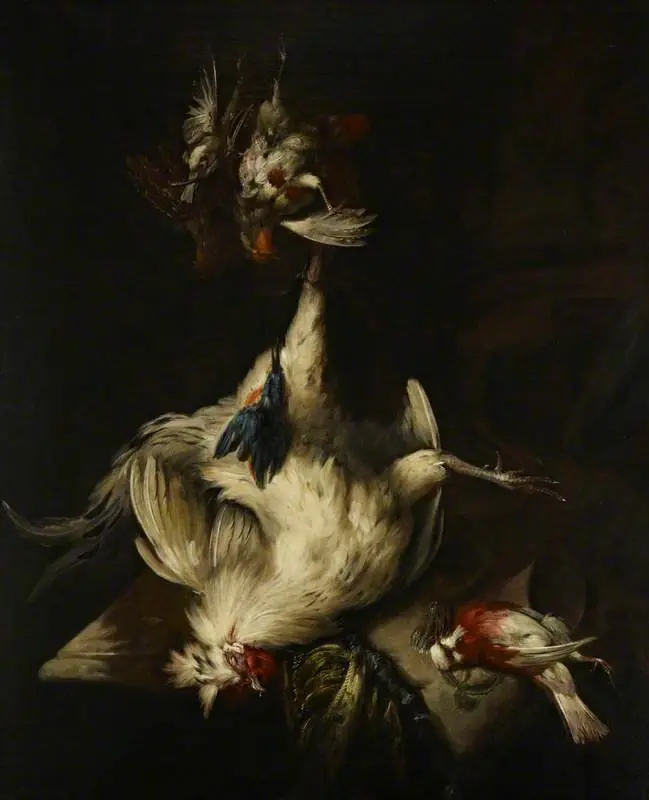
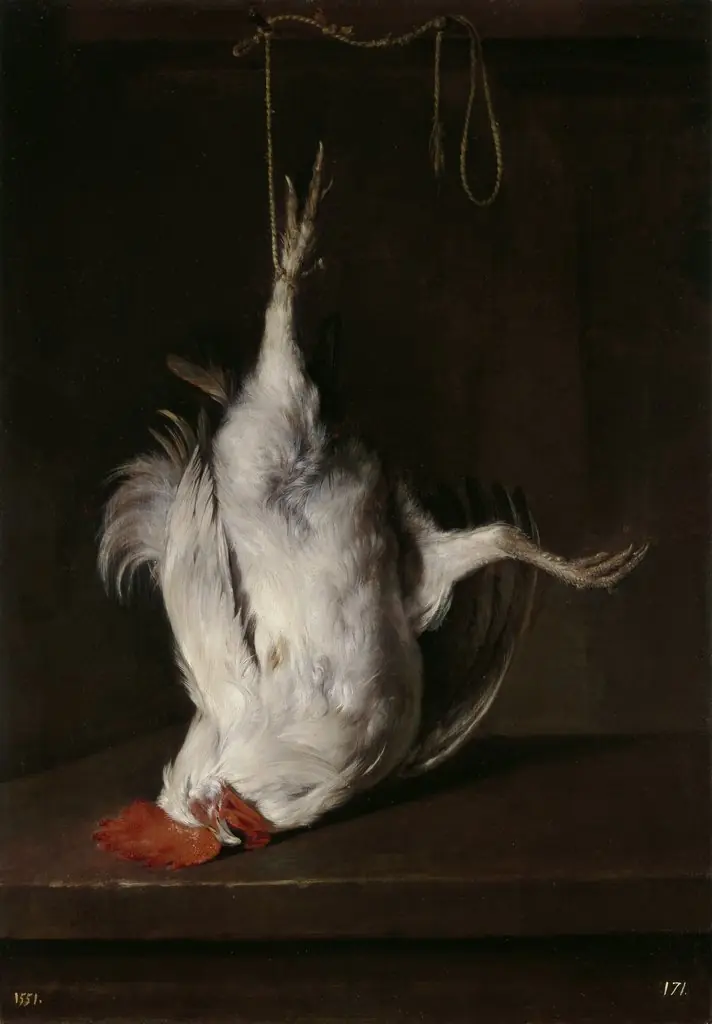
A Dead White Cock is a photography by Unknown. It dates from 1650 and is held in the collection of the Statens Museum for Kunst. Created around 1650, this painting depicts a single dead white chicken suspended by its feet from a hook.
About this work
Overview
The chicken’s body is rendered with close attention to anatomical detail, emphasizing its physical presence in a quiet, almost clinical manner.
Created around 1650, this painting depicts a single dead white chicken suspended by its feet from a hook. Rendered in oil on panel, the work is part of the collection at the Museum of Ethnography. The composition is stark and focused, with no background details or additional elements to distract from the subject. The chicken’s body is rendered with close attention to anatomical detail, emphasizing its physical presence in a quiet, almost clinical manner.
Subject & Meaning
The subject—a lifeless poultry bird—invites contemplation of mortality, domestic labor, and the transition from living creature to food. Its inverted position suggests preparation for butchery, a common practice in early modern households. The solitary placement and lack of context may imply a meditation on transience or the quiet dignity of everyday objects, rather than a symbolic or religious allegory.
Technique & Style
The artist employs chiaroscuro to model the chicken’s form, using sharp contrasts between light and shadow to define the curvature of its body and the layered texture of its feathers. Brushwork is precise, capturing the sheen of wet skin, the stiffness of wing feathers, and the delicate structure of the beak. The dark, empty background enhances the three-dimensionality of the subject, isolating it as if in a studio setting.
History & Provenance
The painting’s early history is undocumented, but it entered the Museum of Ethnography’s collection in the late 19th century. Its attribution to the artist 1431_person remains tentative, based on stylistic comparisons with other works from the period. No records of its original commission or ownership have been found, suggesting it may have been a private study or a work intended for personal reflection rather than public display.
Context
In mid-17th-century Europe, still-life paintings often included poultry as symbols of abundance or domestic life. However, this work diverges from typical ornate arrangements, focusing instead on a single, unadorned carcass. Its minimalism aligns with emerging trends in Northern European art that valued observation over symbolism, reflecting a growing interest in the material world as worthy of quiet scrutiny.
Legacy
Though not widely exhibited or reproduced, the painting contributes to a lesser-known strand of early modern naturalism. Its unembellished treatment of a common object anticipates later realist traditions in art. Scholars occasionally reference it in discussions of how everyday mortality was rendered without moralizing, offering a quiet counterpoint to more dramatic religious or allegorical imagery of the era.
Artist & collection

 Domestic Scene
 Giacomo and Cardinal Marco, investing Andrea, Abbot of San Zeno, with his Benefice
 The Nymph of Fontainebleau
 Portrait of a Woman
 Madonna and Child with Saints in the Enclosed Garden
 Venus and Minerva
 Family Group of Four on Sofa
 Wall painting from Room H of the Villa of P. Fannius Synistor at Boscoreale