Artwork
Dead Cockdkg
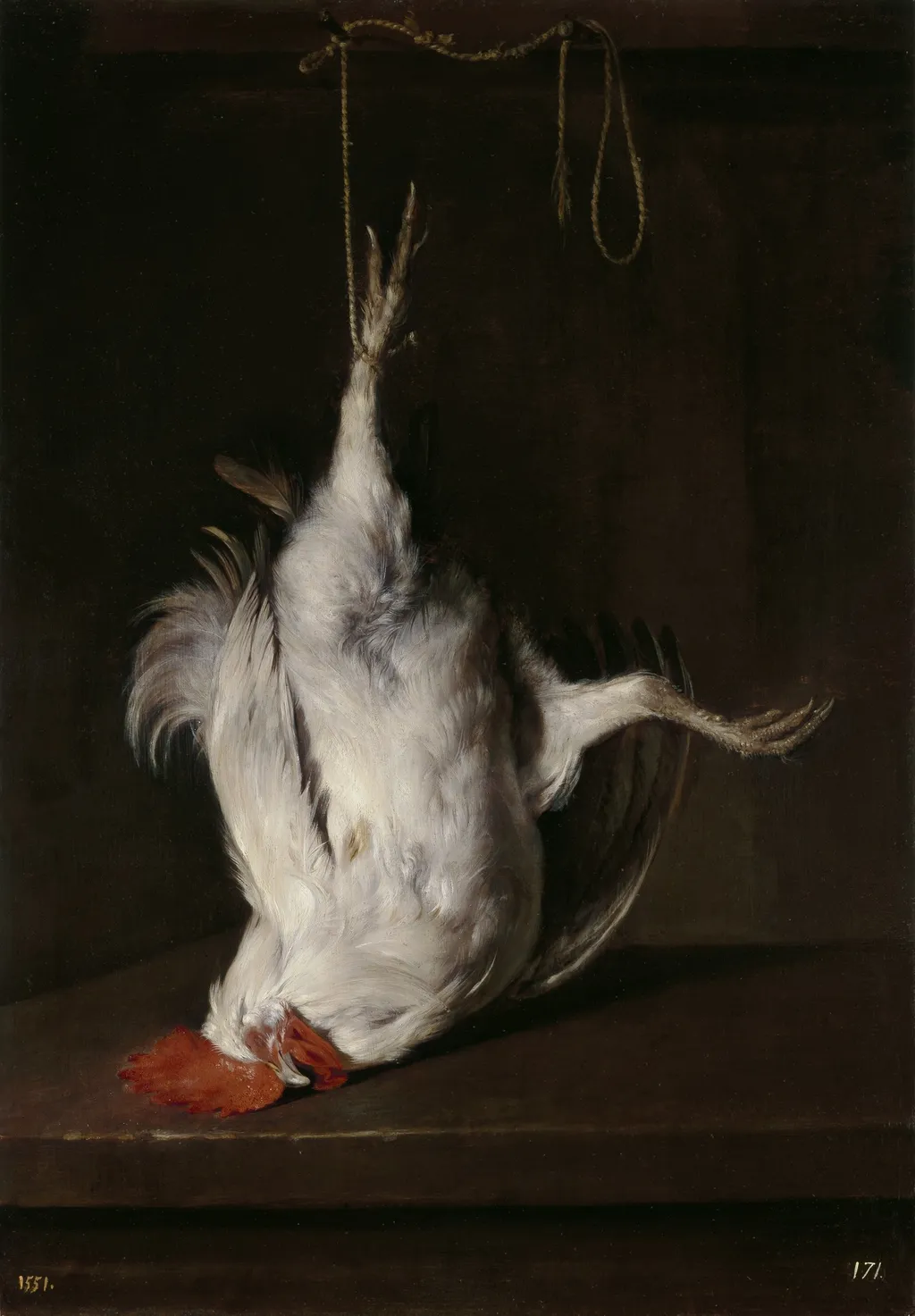
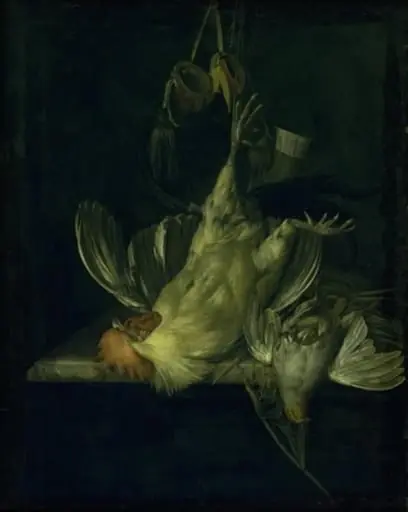
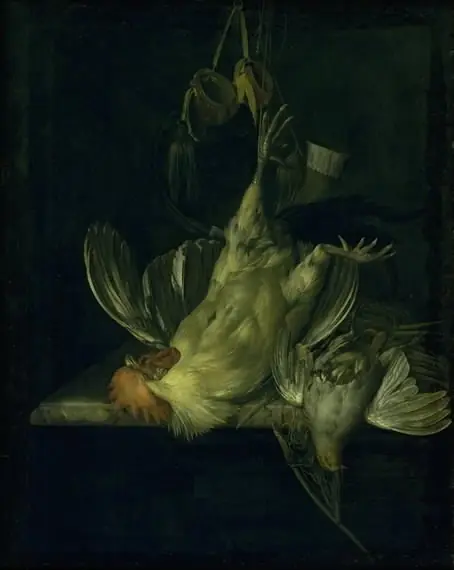
Dead Cockdkg is an oil painting by the Dutch Golden Age artist Gabriel Metsu. It dates from 1650 and is held in the collection of the Museo del Prado.
About this work
Overview
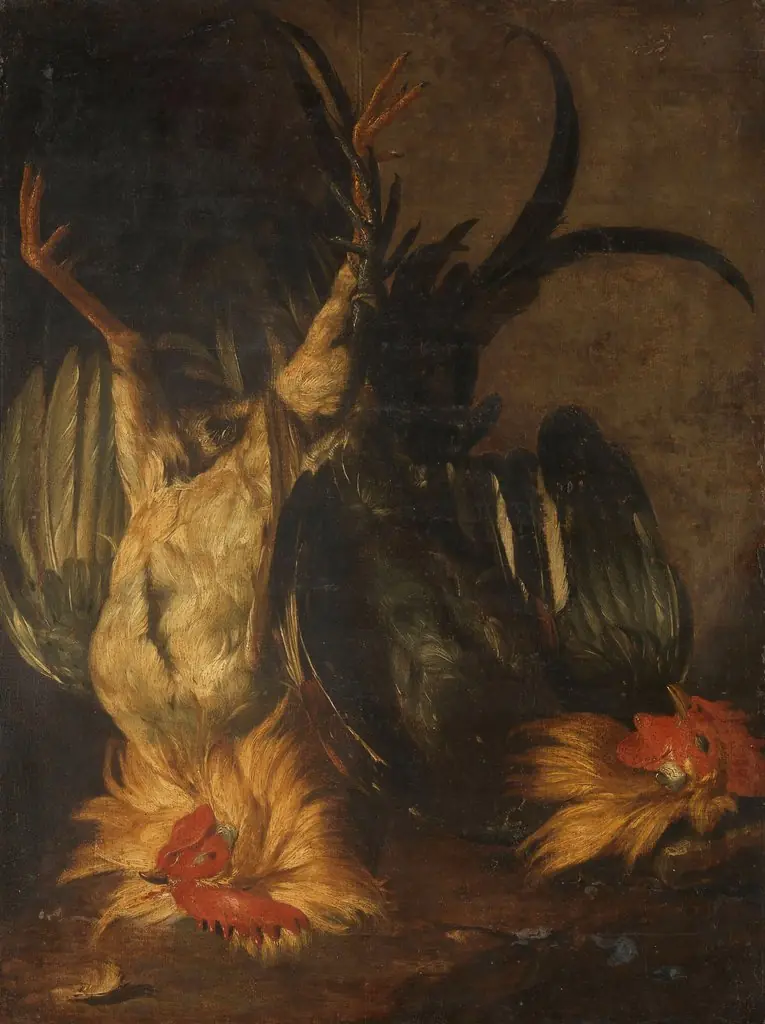
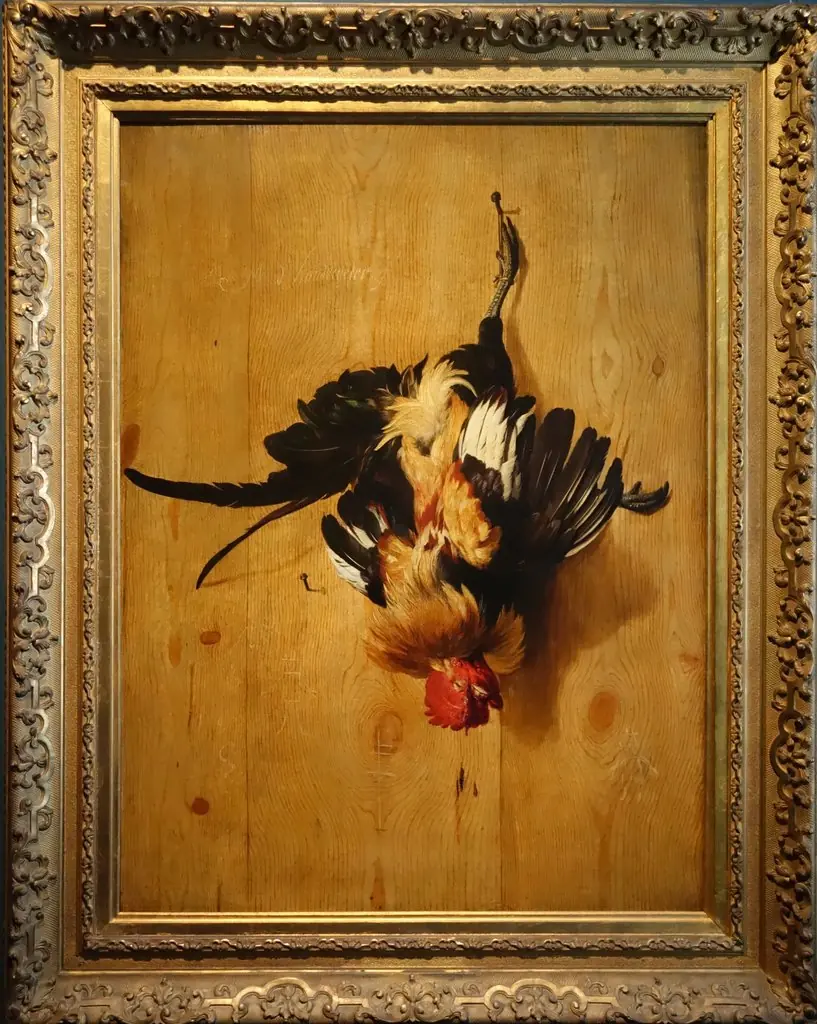
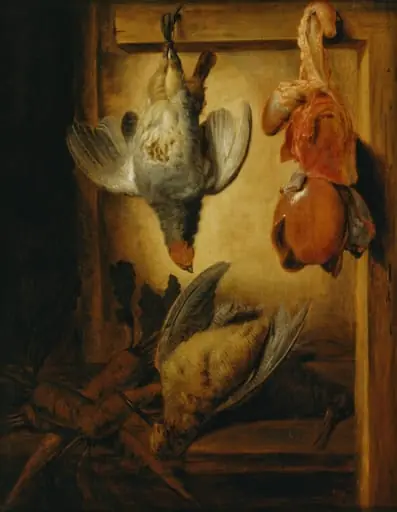
Created around 1650 by the Dutch painter Gabriel Metsu, this oil on canvas belongs to the still‑life tradition of the mid‑17th‑century Dutch Golden Age. The work presents a solitary, lifeless bird suspended by its feet against a nearly black background, with a red cloth beneath catching the blood that has dripped from its body. It is part of the collection of the Museo del Prado in Madrid.
Subject & Meaning
The composition centers on a recently killed rooster, its white plumage still puffed and its limbs dangling, while a few stray feathers protrude from its neck. The stark contrast between the animal and the dark backdrop emphasizes the material reality of the scene, reflecting contemporary interest in the honest portrayal of everyday objects and the fleeting nature of life.
Technique & Style
Metsu employs a pronounced chiaroscuro, allowing the illuminated feathers to emerge from deep shadows, creating a tactile sense of texture. The careful rendering of the bird’s down and the glistening blood on the red cloth demonstrates the artist’s skill in depicting surface qualities, while the limited palette focuses the viewer’s attention on the central figure.
History & Provenance
Although Metsu is better known for genre scenes and portraits, this still‑life illustrates his versatility across subjects. The painting entered the Spanish national collection in the 19th century and has remained in the Museo del Prado, where it is displayed as an example of Dutch still‑life painting within a broader European context.
Own this work as a print
Artist & collection
Artist
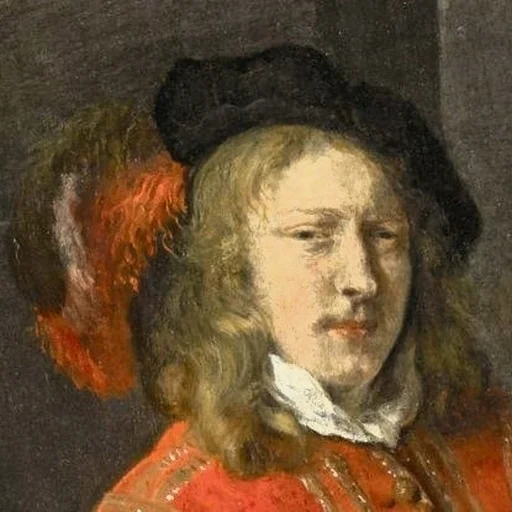
Gabriël Metsu (1629–1667) was a Dutch painter of history paintings, still lifes, portraits, and genre works.