Artwork
A Servant Girl Scrubbing a Brass Cauldron
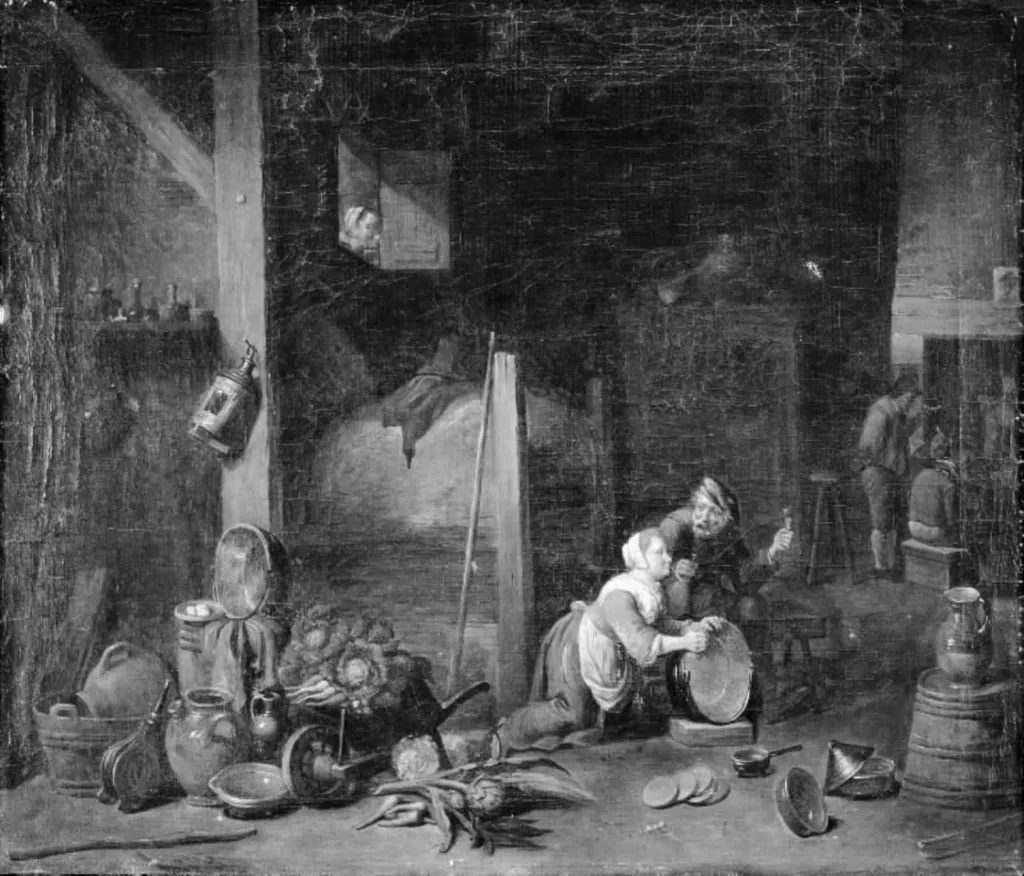
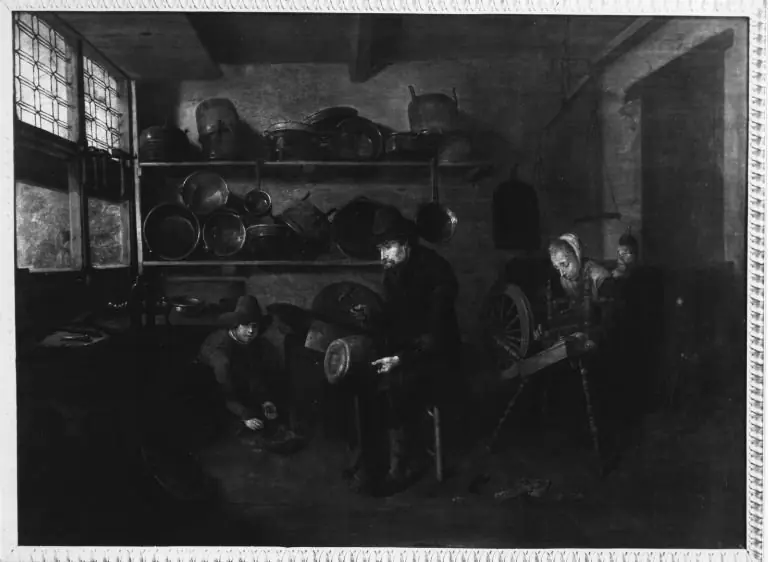
A Servant Girl Scrubbing a Brass Cauldron is a photography by Unknown. It dates from 1650 and is held in the collection of the Statens Museum for Kunst. This black-and-white photograph, dated around 1650, depicts a domestic labor scene in a cluttered artisan’s workspace.
About this work
Overview
Around her, tools, vessels, and unfinished objects fill the space, suggesting a working environment where craft and daily survival intersect.
This black-and-white photograph, dated around 1650, depicts a domestic labor scene in a cluttered artisan’s workspace. The image captures a woman kneeling as she scrubs a large brass cauldron, her posture and focus conveying sustained physical effort. Around her, tools, vessels, and unfinished objects fill the space, suggesting a working environment where craft and daily survival intersect. The composition avoids idealization, presenting an unvarnished moment of routine labor.
Subject & Meaning
The central figure is a servant engaged in the repetitive, physically demanding task of cleaning a utilitarian object. A child observes her silently, reinforcing the generational continuity of labor. The scene resists narrative drama, instead emphasizing the quiet dignity of unseen work. The presence of other tools and half-finished items implies that her labor supports a broader production system, making her role essential yet unacknowledged in the artistic record.
Technique & Style
The photograph relies on stark contrasts of light and shadow to define form and depth, a technique aligned with chiaroscuro principles. The dim, uneven illumination draws attention to the woman’s hands and the polished surface of the cauldron, while the surrounding clutter recedes into shadow. The lack of color and the sharp focus on texture—metal, fabric, wood—enhance the tactile realism of the scene, reinforcing its documentary character.
History & Provenance
The image is held in the collection of the Museum of Ethnography, suggesting its initial purpose may have been anthropological or ethnographic rather than artistic. Its origin as a photograph from the mid-seventeenth century is unusual, as photographic technology did not exist then; it is likely a later reproduction or reinterpretation of an earlier painted or drawn source. Its preservation reflects an interest in documenting labor practices of the period.
Context
In mid-seventeenth-century Europe, artisan workshops were often family-run spaces where domestic and productive labor overlapped. Servants and children frequently assisted in craft production, their roles rarely recorded in official art. This image aligns with a growing interest in depicting everyday life, particularly among northern European artists and collectors who valued authenticity over grandeur, even if the medium itself is anachronistic.
Legacy
Though its photographic nature is historically inconsistent, the image endures as a visual reference for pre-industrial labor conditions. It contributes to modern understandings of gendered and class-based work in early modern households. Its quiet realism has influenced later documentary photography and social history studies, offering a tangible glimpse into the material conditions of those whose labor sustained artistic and domestic economies.
Artist & collection

 Domestic Scene
 Giacomo and Cardinal Marco, investing Andrea, Abbot of San Zeno, with his Benefice
 The Nymph of Fontainebleau
 Portrait of a Woman
 Madonna and Child with Saints in the Enclosed Garden
 Venus and Minerva
 Family Group of Four on Sofa
 Wall painting from Room H of the Villa of P. Fannius Synistor at Boscoreale