Artwork
Casemate
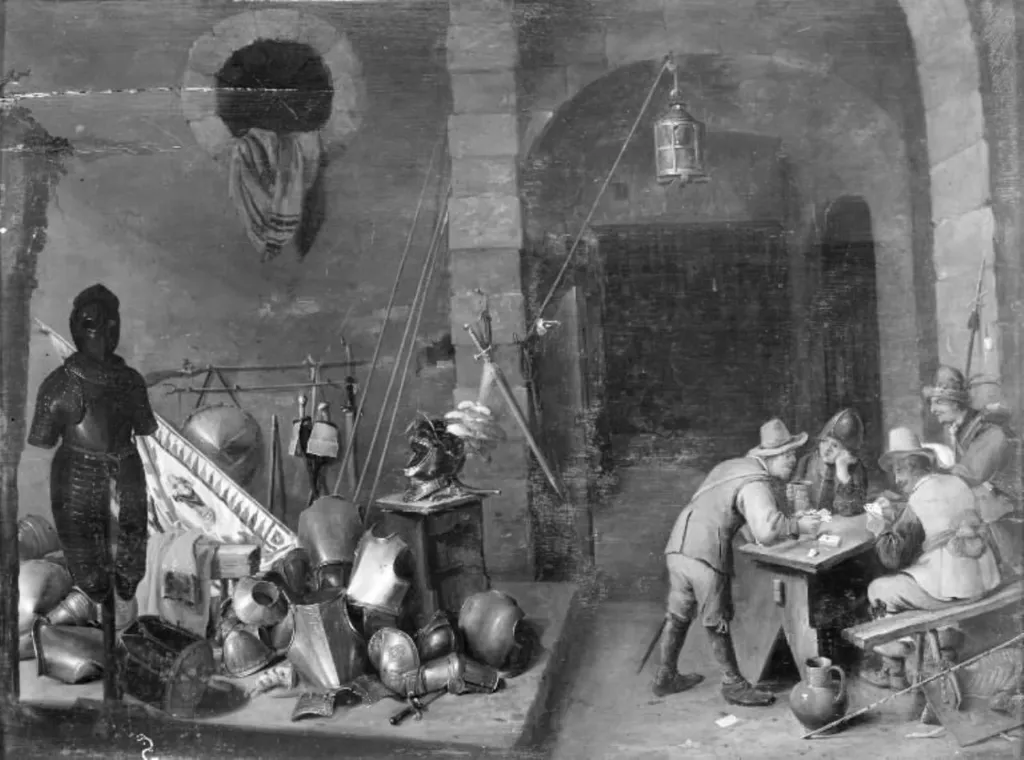
Casemate is a photography by Unknown. It dates from 1650 and is held in the collection of the Statens Museum for Kunst.
About this work
Overview
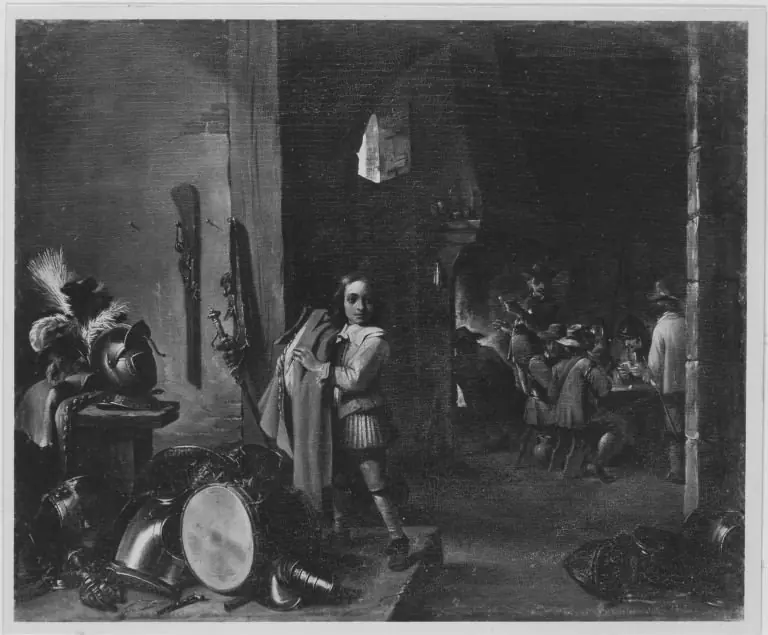
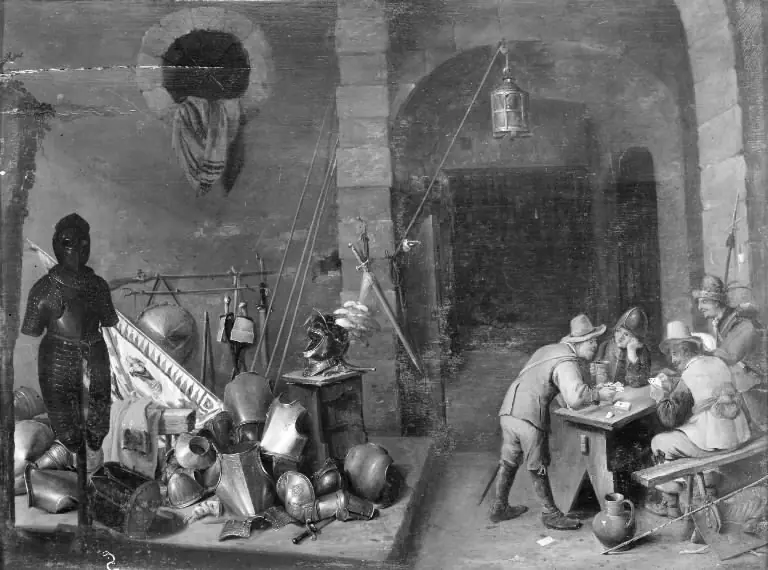
Created around 1650, Casemate is a black-and-white photographic image documenting a moment in a fortified interior space. The work is attributed to an artist active in 1978, though the scene depicted reflects an earlier era. It is preserved in the Museum of Ethnography, where it serves as a visual record of domestic and military activity coexisting in a confined setting.
Subject & Meaning
The presence of hats and helmets implies a blend of civilian and military roles, hinting at a community adapted to prolonged periods of defense or confinement.
The image captures a group of individuals engaged in routine tasks: some eat at a table, while one figure stands near the left edge holding a spear. Armor and weapons are scattered across the floor, suggesting a space used for both rest and readiness. The presence of hats and helmets implies a blend of civilian and military roles, hinting at a community adapted to prolonged periods of defense or confinement.
Technique & Style
Rendered in monochrome, the photograph relies on naturalistic lighting from a hanging lantern to delineate forms and depth. The composition is unposed, with figures arranged organically amid cluttered surroundings. The rough texture of the walls and the subdued tones emphasize realism over idealization, reinforcing the image’s function as a documentary record rather than a staged scene.
History & Provenance
The photograph was taken in the late 1970s and depicts a reconstructed or preserved interior believed to represent 17th-century conditions. Though the setting evokes early modern Europe, the image itself is a modern ethnographic study. It entered the Museum of Ethnography’s collection as part of an effort to document historical living environments through photographic reconstruction.
Context
Casemate reflects a broader 20th-century interest in reconstructing historical domestic and military spaces for educational purposes. The scene aligns with ethnographic practices of the time, which sought to visualize how people lived in fortified environments during periods of conflict. The image does not depict a specific historical event but rather a generalized representation of daily life under constrained conditions.
Legacy
As a photographic document, Casemate contributes to the study of material culture and spatial organization in early modern Europe. It is referenced in academic discussions on the intersection of civilian life and military readiness. Its value lies not in artistic innovation but in its role as a carefully composed ethnographic artifact, offering insight into how historical environments are interpreted and preserved.
Artist & collection

 Domestic Scene
 Giacomo and Cardinal Marco, investing Andrea, Abbot of San Zeno, with his Benefice
 The Nymph of Fontainebleau
 Portrait of a Woman
 Madonna and Child with Saints in the Enclosed Garden
 Venus and Minerva
 Family Group of Four on Sofa
 Wall painting from Room H of the Villa of P. Fannius Synistor at Boscoreale
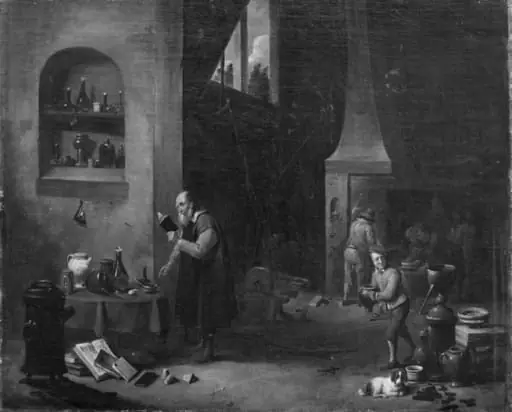 Laboratory Worker in his Laboratory
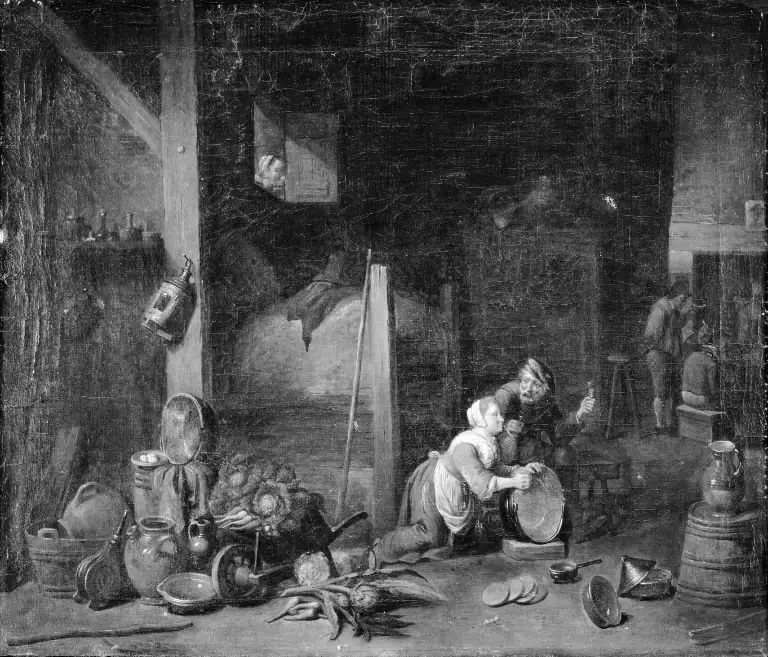 A Servant Girl Scrubbing a Brass Cauldron
 A Servant Girl Scrubbing a Brass Cauldron
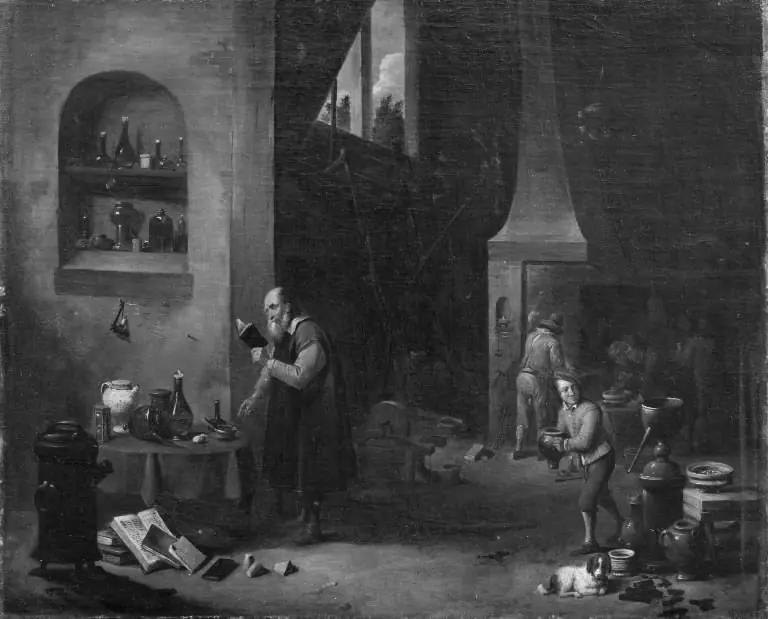 Laboratory Worker in his Laboratory
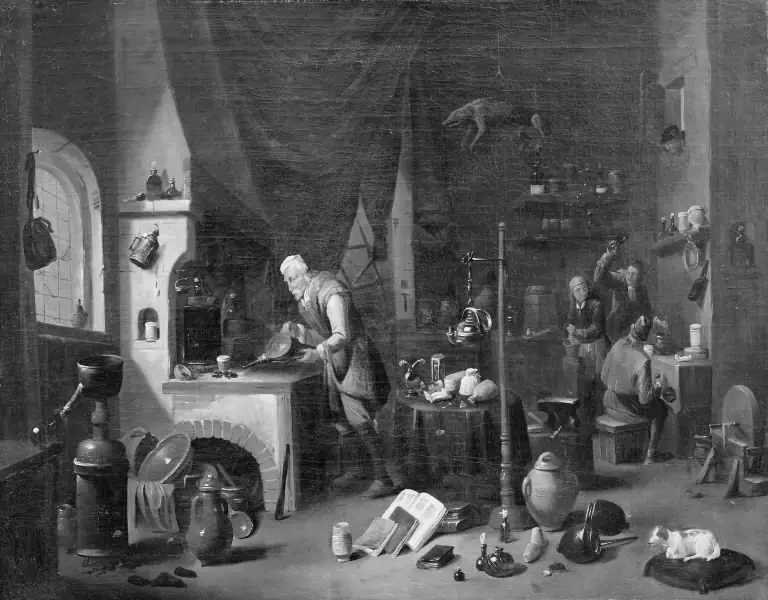 A Chemist in his Laboratory
 A Chemist in his Laboratory
 Wachtstube
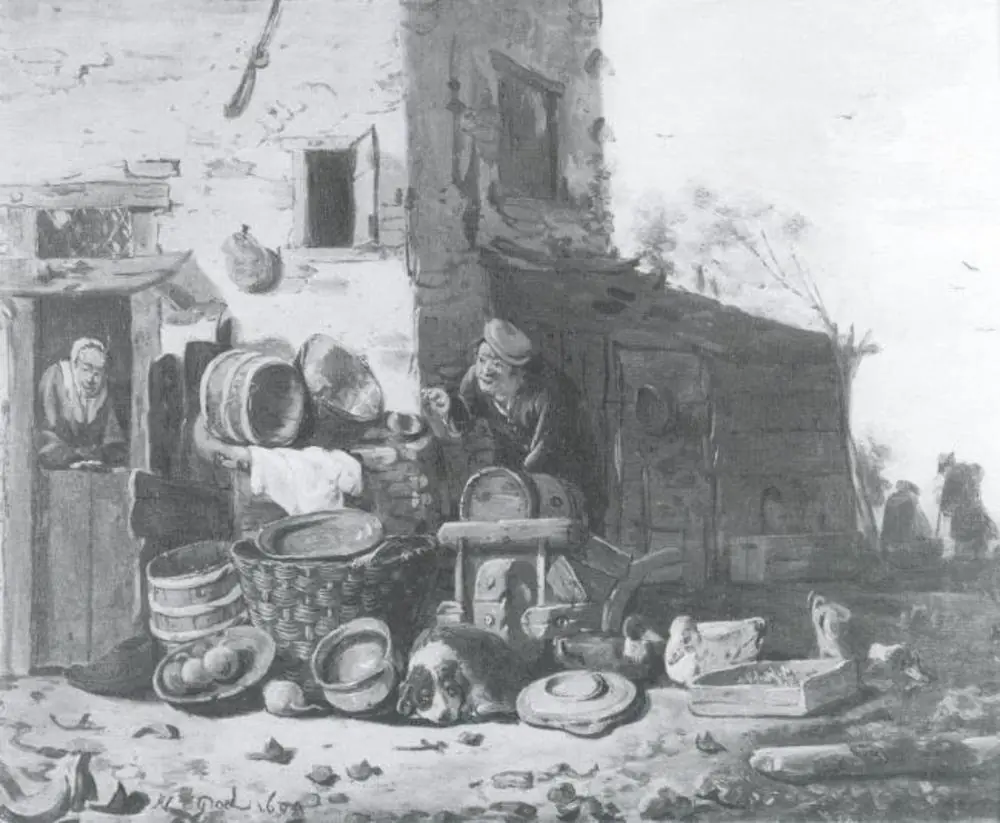 Outside a Decayed Cottage
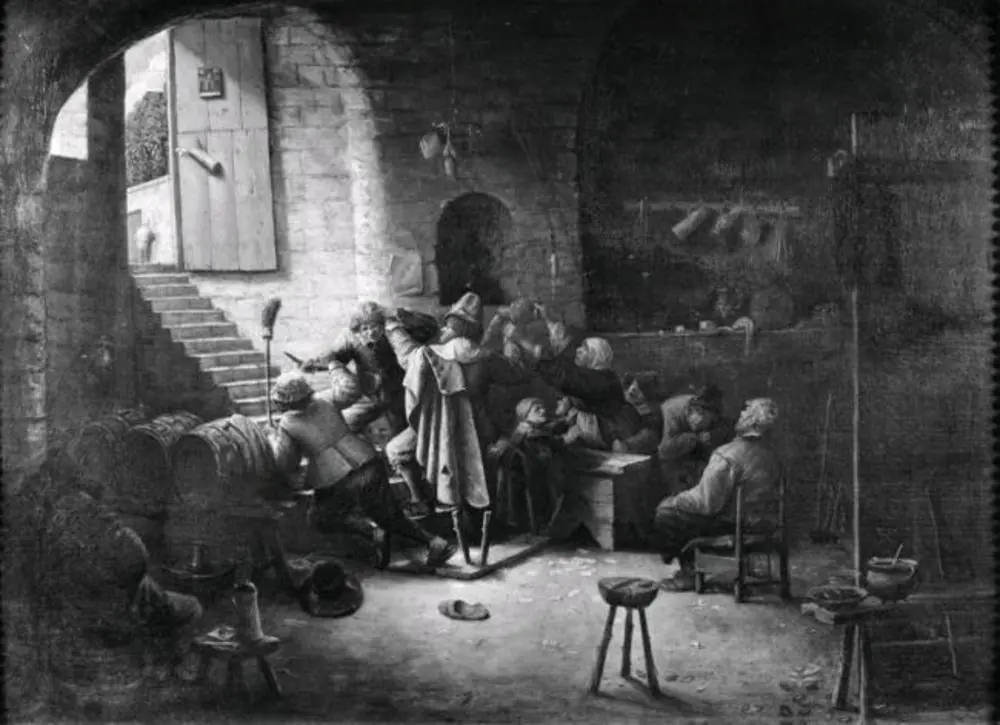 The Antwerp Arms", Tavern Scene
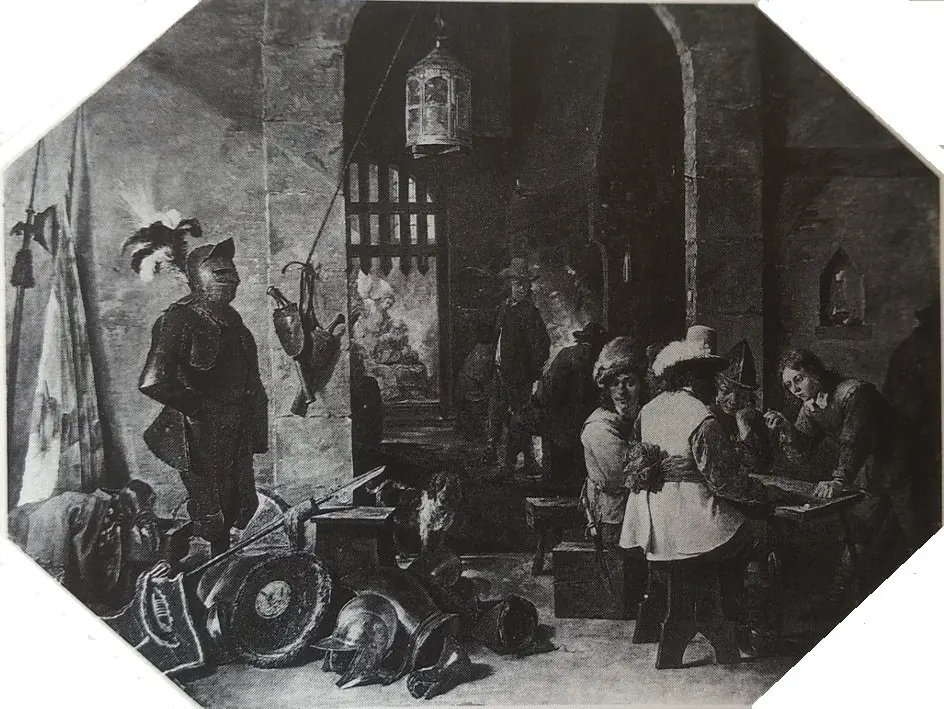 Guardroom with St Peter and the Angel
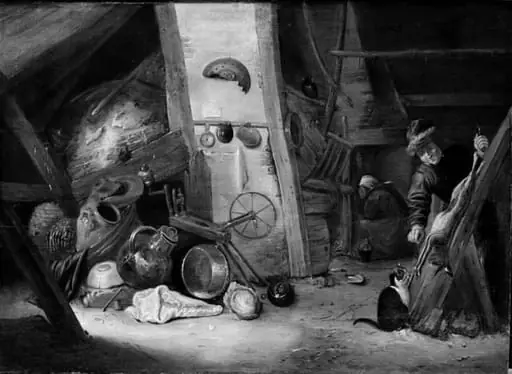 Interior of a Kitchen
 Casemate