Artwork
Vor dem Bauernhause
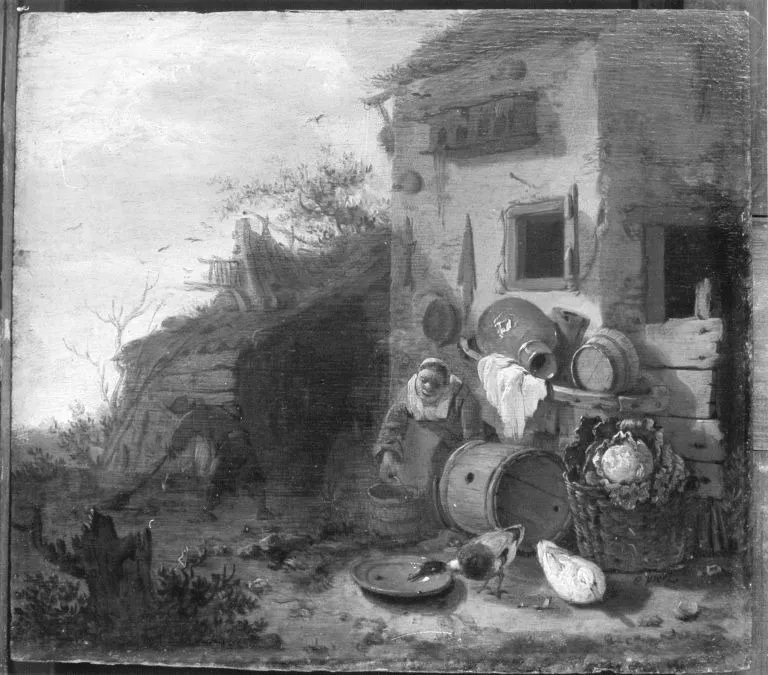
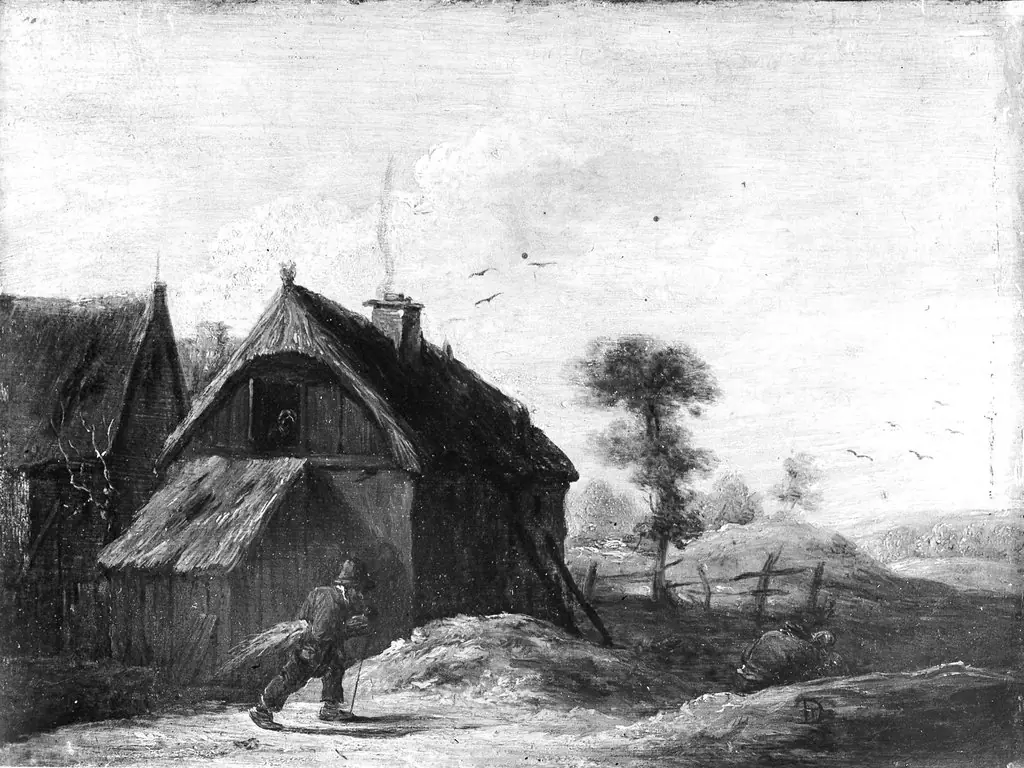
Vor dem Bauernhause is an unspecified painting by the Dutch Golden Age artist Egbert van der Poel. It dates from 1642 and is held in the collection of the Bavarian State Painting Collections.
About this work
Overview
Painted in 1642 by Egbert van der Poel, this work depicts a quiet rural moment outside a modest farmhouse. Executed in oil on panel, it is part of the Alte Pinakothek’s collection in Munich. The composition centers on a woman engaged in daily labor, surrounded by utilitarian objects, under a softly lit sky. The scene avoids dramatic action, favoring stillness and observation.
Subject & Meaning
The presence of a basket, barrel, and scattered objects suggests domestic routine.
The figure, dressed in a headscarf and bent in quiet motion, appears to be tending to household tasks—perhaps gathering items from the ground or organizing tools. The presence of a basket, barrel, and scattered objects suggests domestic routine. No narrative climax is offered; instead, the painting elevates ordinary labor into a contemplative act, reflecting values of diligence and simplicity in 17th-century Dutch life.
Technique & Style
Van der Poel employs subtle chiaroscuro to model forms and suggest spatial depth, particularly in the woman’s draped clothing and the shadowed eaves of the house. The sky is rendered with loose, airy brushwork, contrasting with the more defined textures of the ground and objects. Light falls naturally, enhancing the sense of an unposed, real moment without theatricality.
History & Provenance
The painting has been in the Alte Pinakothek since at least the early 19th century, likely acquired during the museum’s formative years as it expanded its Dutch and Flemish holdings. Its attribution to van der Poel has remained consistent, supported by stylistic parallels with his other known works from the 1640s, though its earlier ownership remains undocumented.
Context
Created during the Dutch Golden Age, the painting aligns with a broader trend of genre scenes that depicted rural and domestic life without idealization. Unlike grand historical or religious subjects, such works celebrated the dignity of everyday routines. Van der Poel’s focus on humble settings reflects the cultural shift toward valuing personal, local experience over aristocratic or biblical themes.
Legacy
Though not widely reproduced or celebrated in popular culture, the painting contributes to the understanding of how Dutch artists rendered quiet moments with emotional restraint. It stands as an example of how ordinary life was given visual weight during a period when realism and observation became central to artistic practice, influencing later genre traditions in Northern European art.
Artist & collection

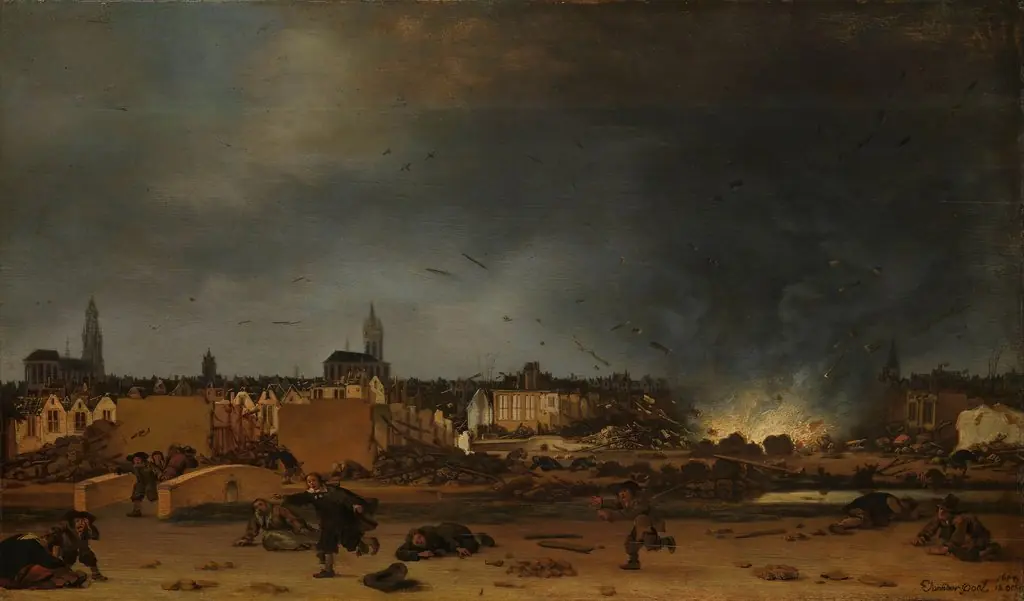 The explosion of the powder magazine in Delft, 12 October 1654
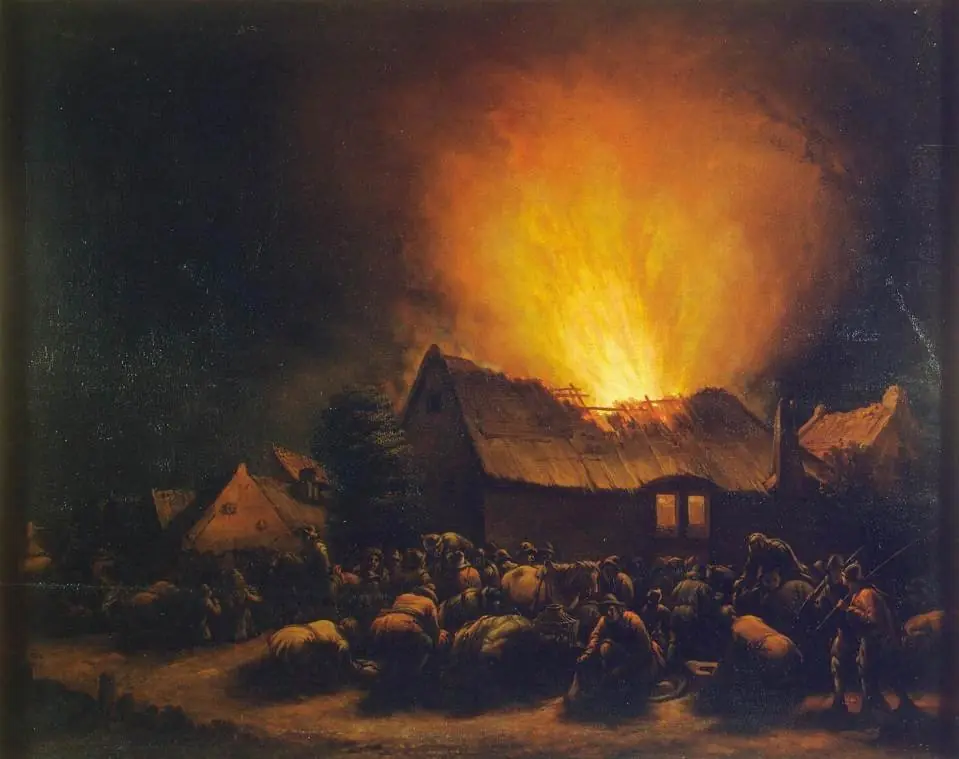 Fire in a Village
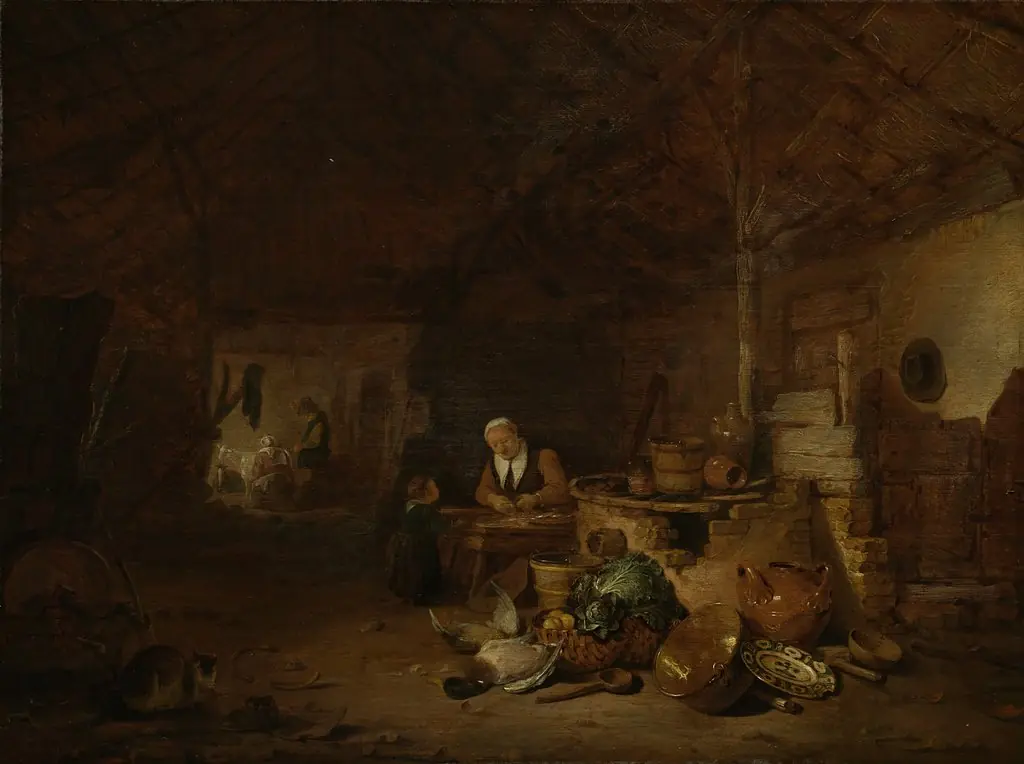 Interior of a barn
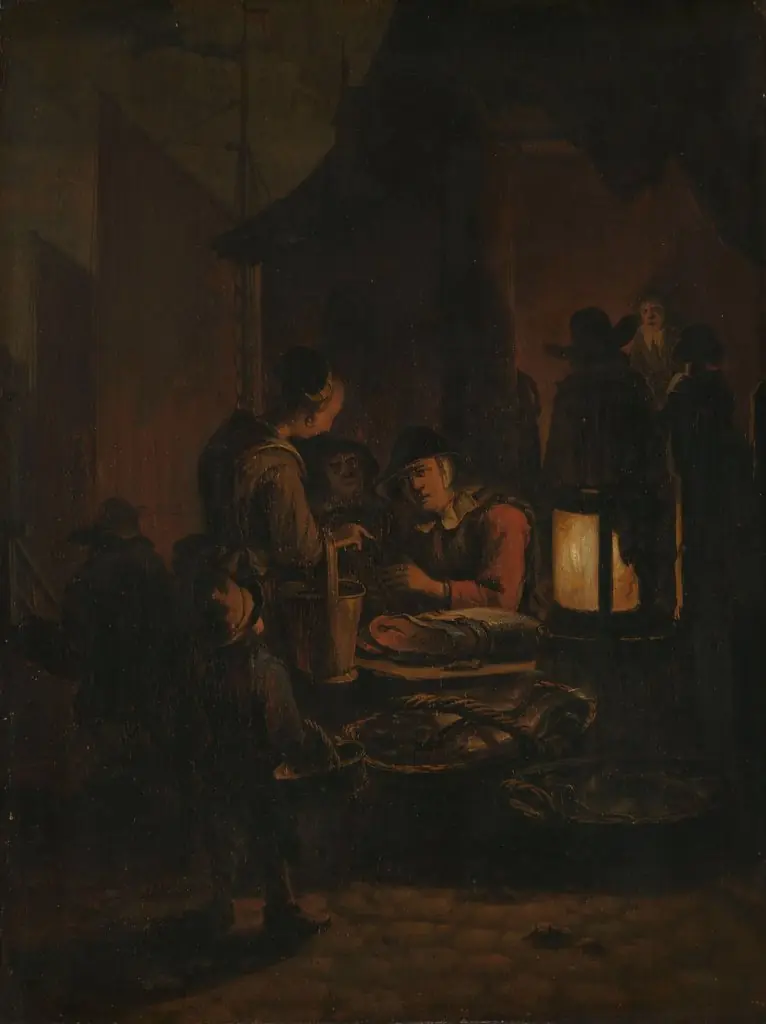 Fish market at night
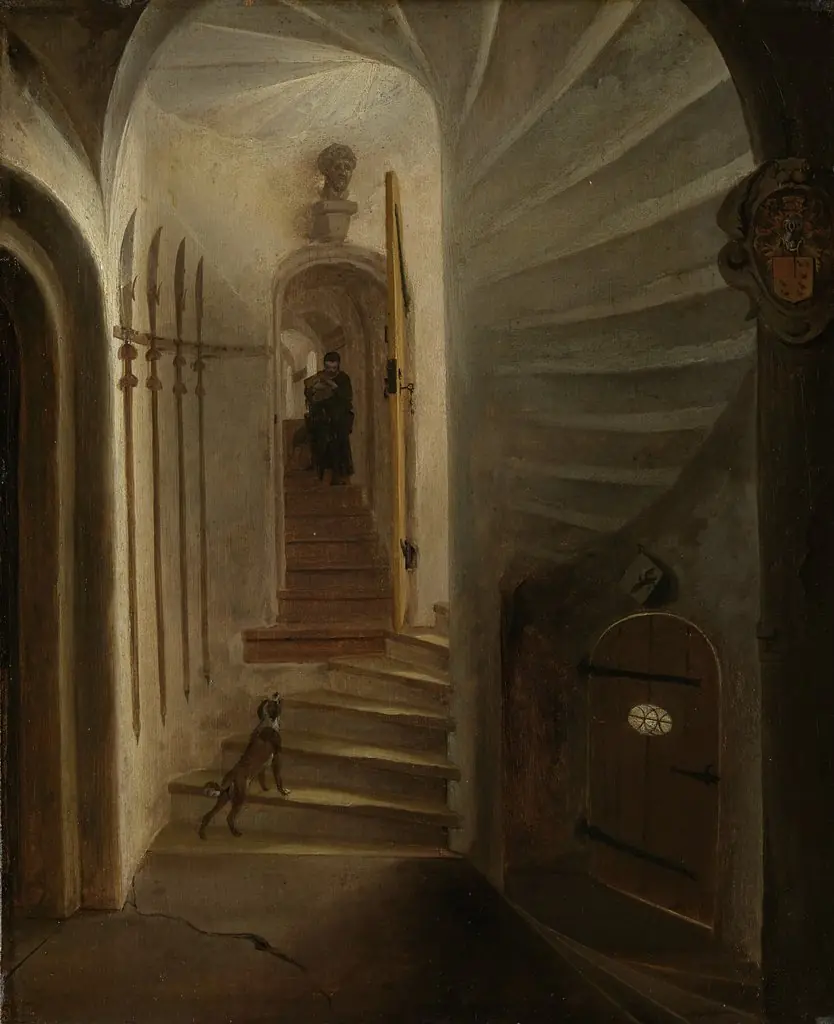 Portal of a stairway tower, with a man descending the stairs: presumably the moment before the assassination of William the Silent in the Ptinsenhof, Delft
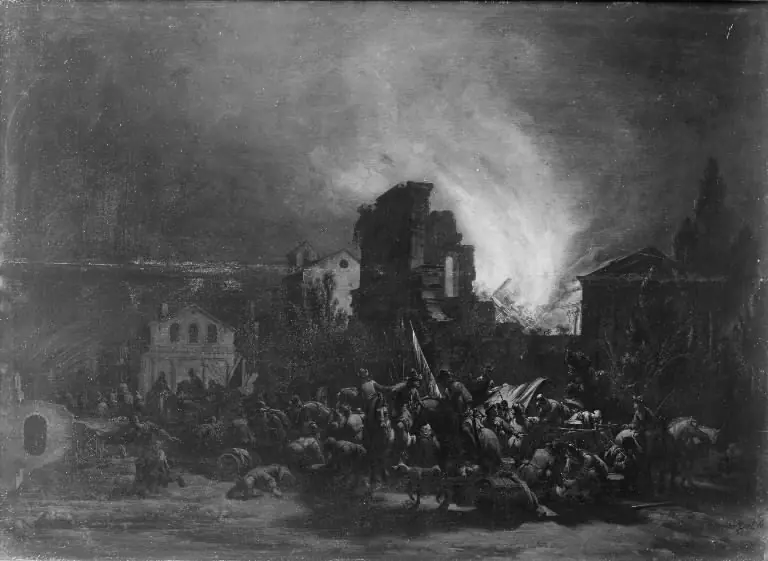 Nocturnal Fire and Looting in a Town
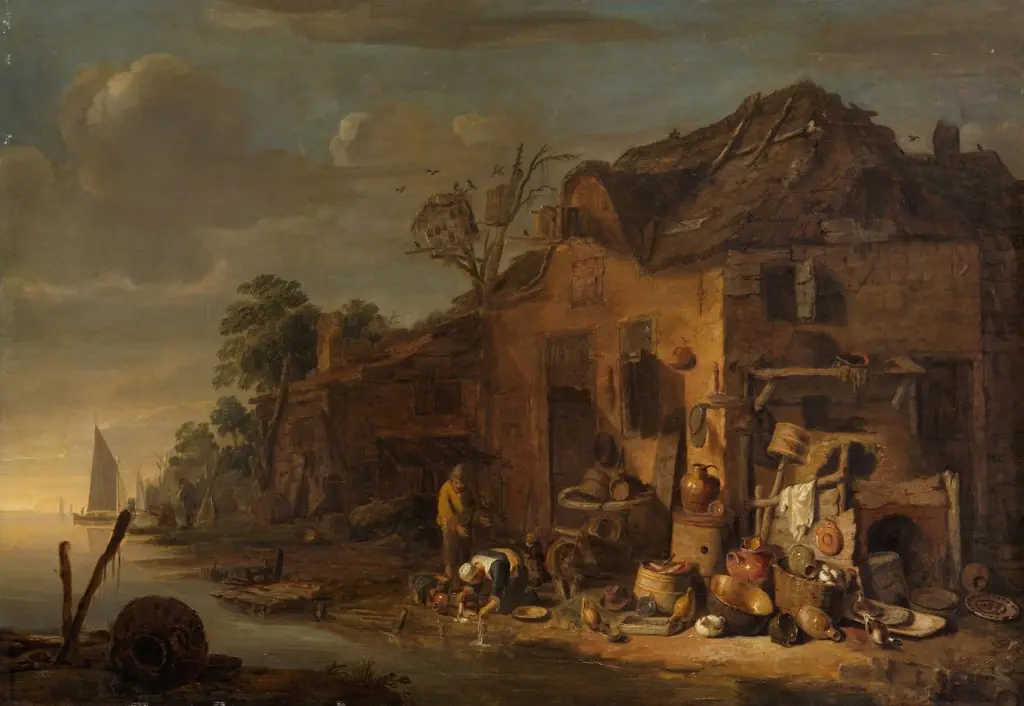 Landscape with farm at a river
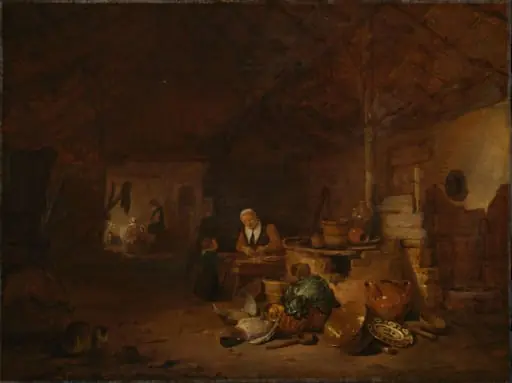 Interior of a barn
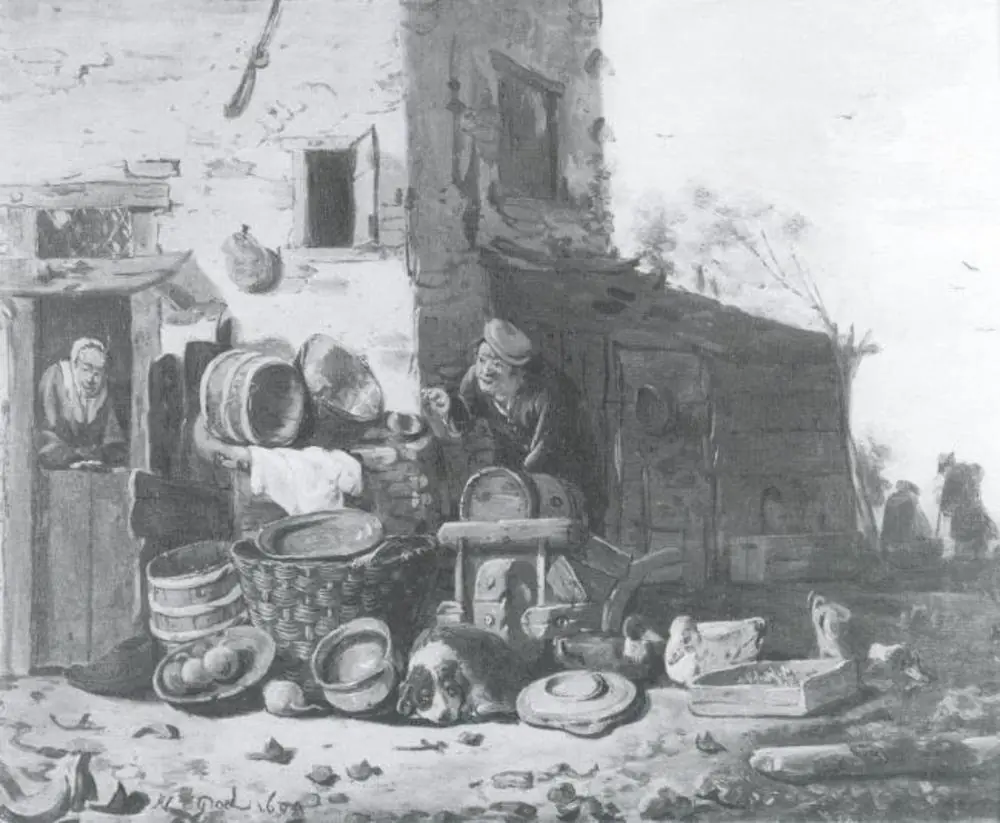 Outside a Decayed Cottage
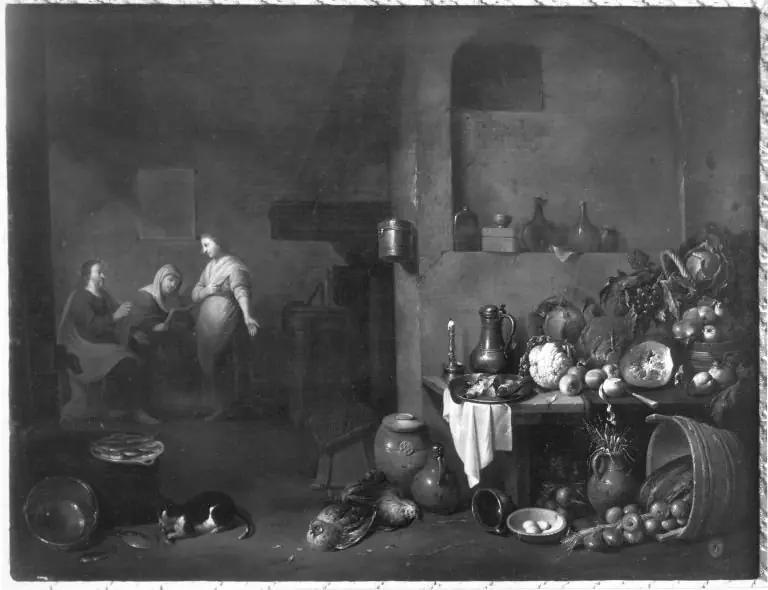 Christ in the house of Martha and Mary
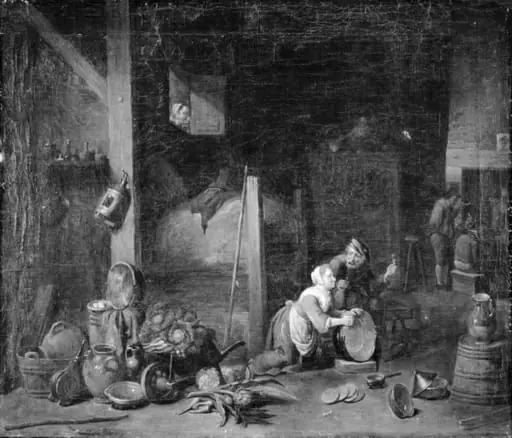 A Servant Girl Scrubbing a Brass Cauldron
 Interior of a Kitchen
 A Kitchen Maid at Work
 A Servant Girl Scrubbing a Brass Cauldron
 Interior of a Kitchen
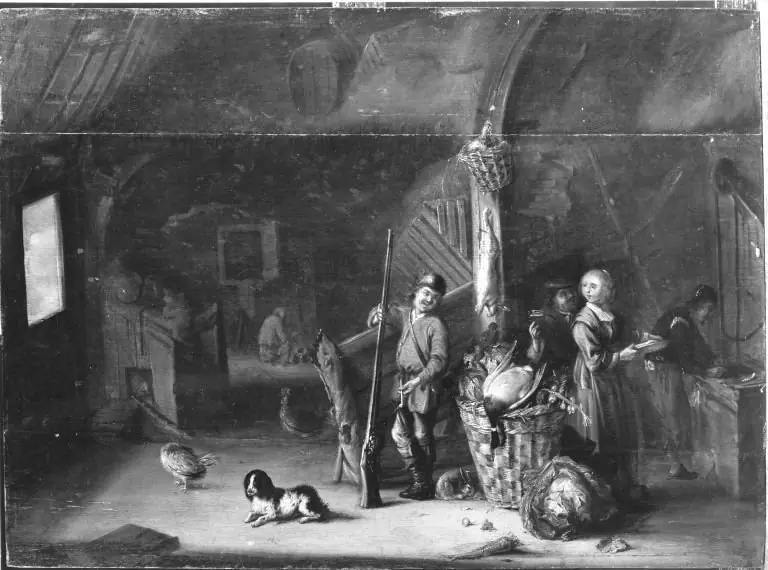 Jäger in der Küche
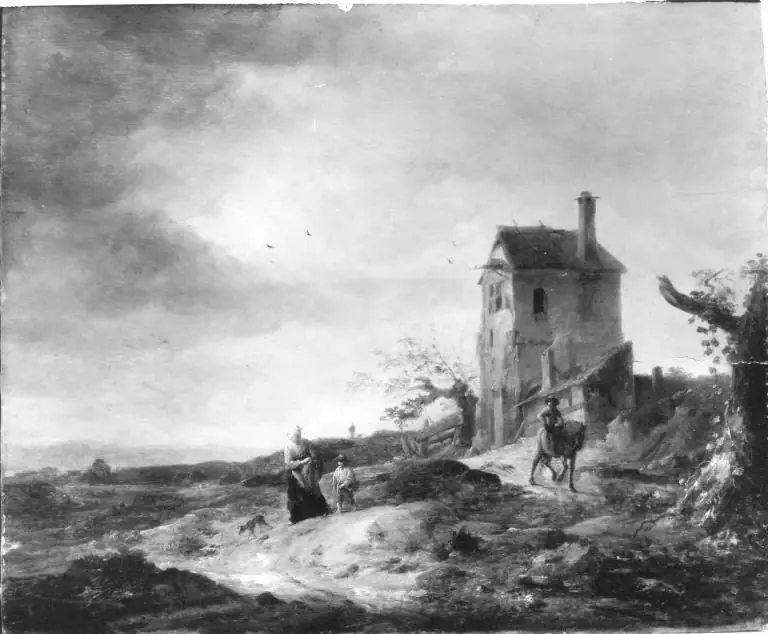 Baumlose Gegend mit Haus
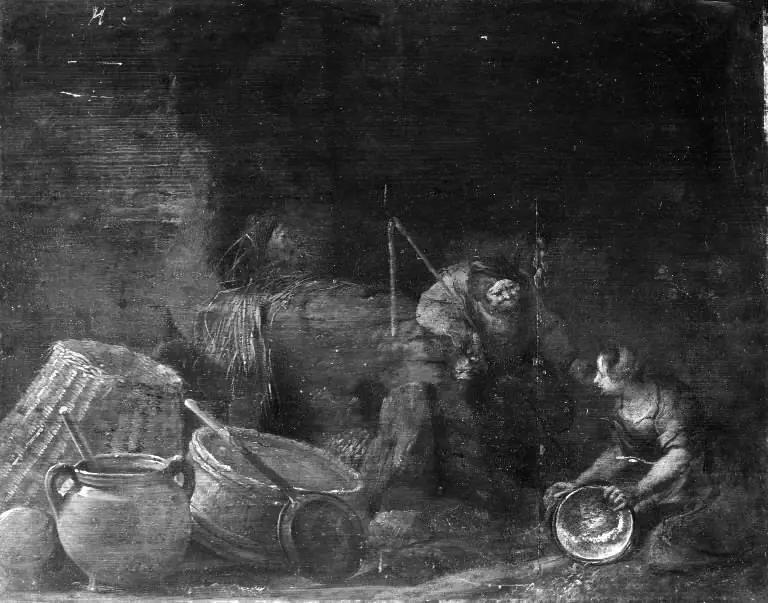 A Kitchen Maid at Work
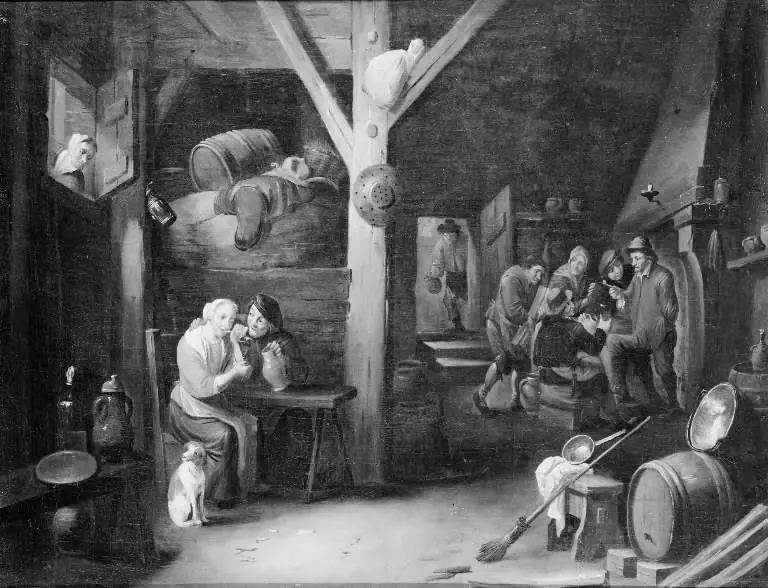 Dutch Farm Cottage
 Landscape with Thatched Cottages