Artwork
Flemish Peasant Family
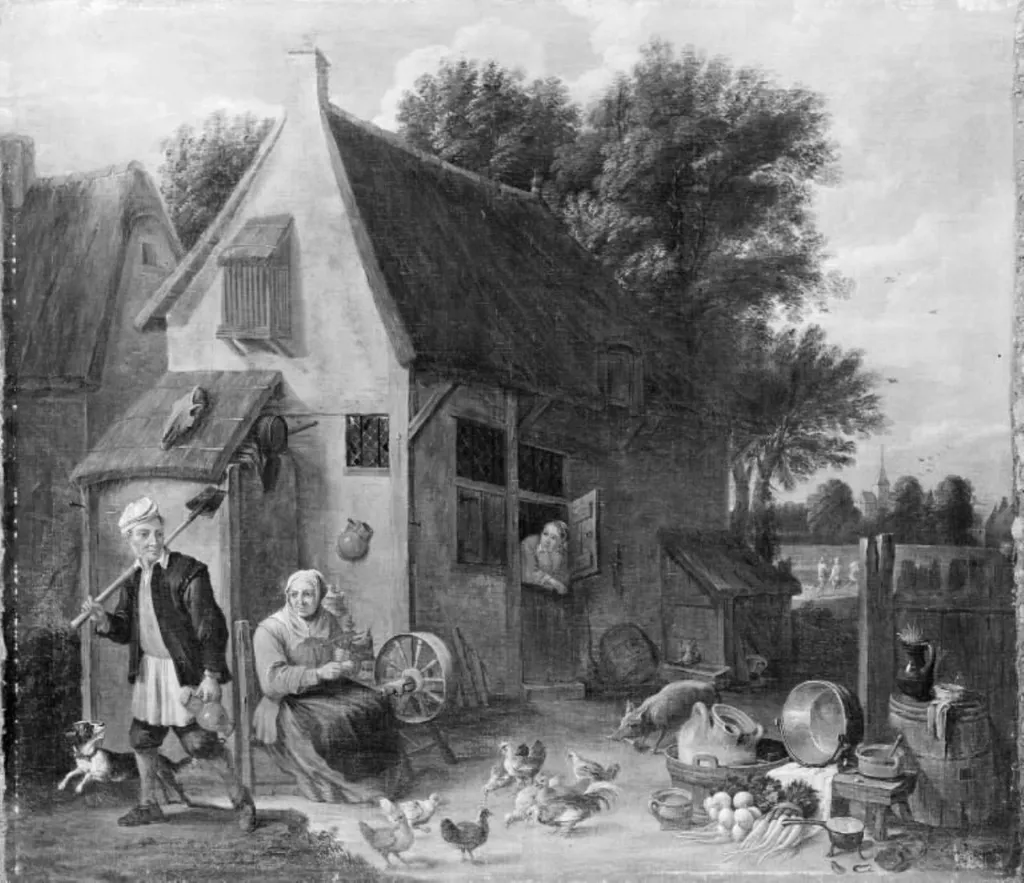
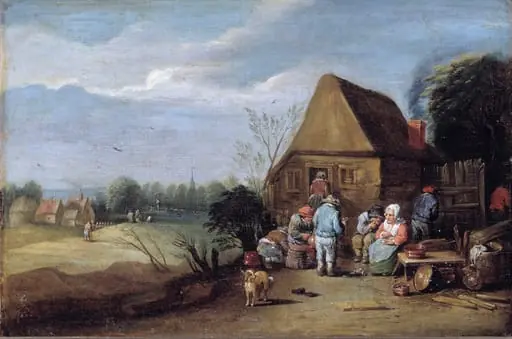
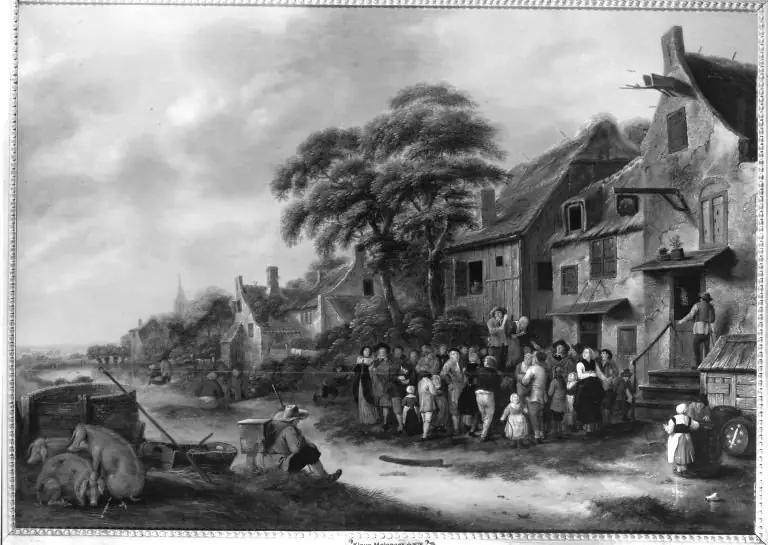
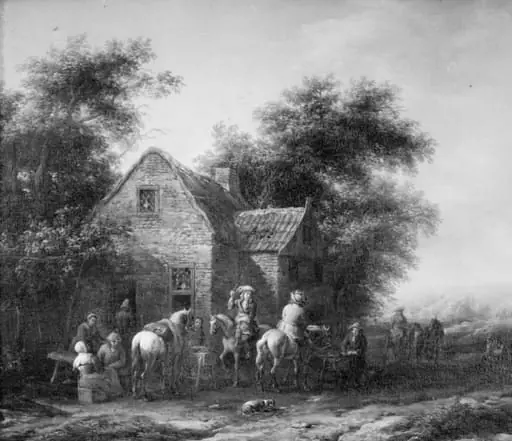
Flemish Peasant Family is a photography by Unknown. It dates from 1650 and is held in the collection of the Statens Museum for Kunst. This painting, dated around 1650, depicts a rural Flemish household in quiet daily rhythm.
About this work
Overview
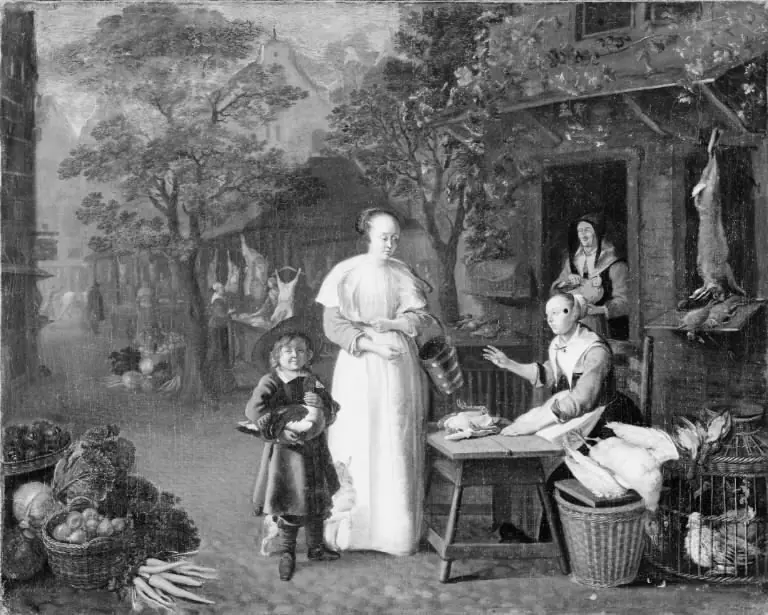
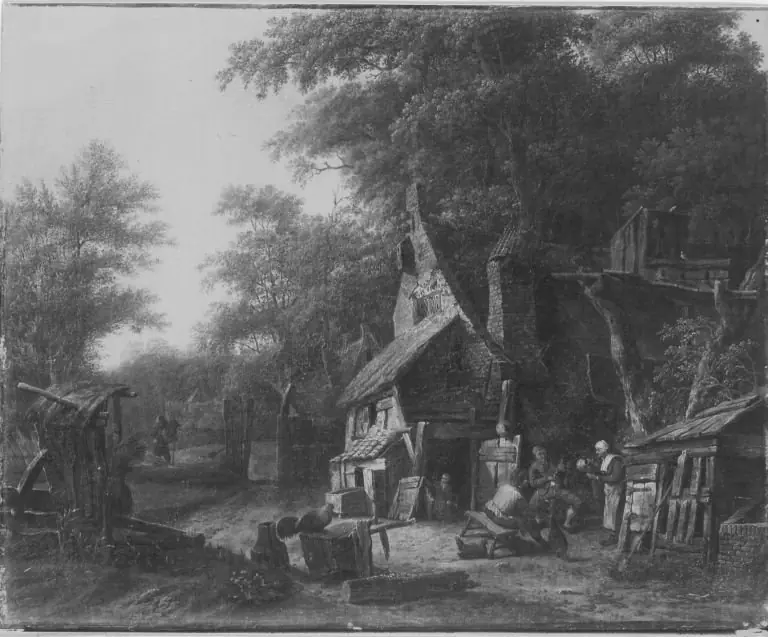
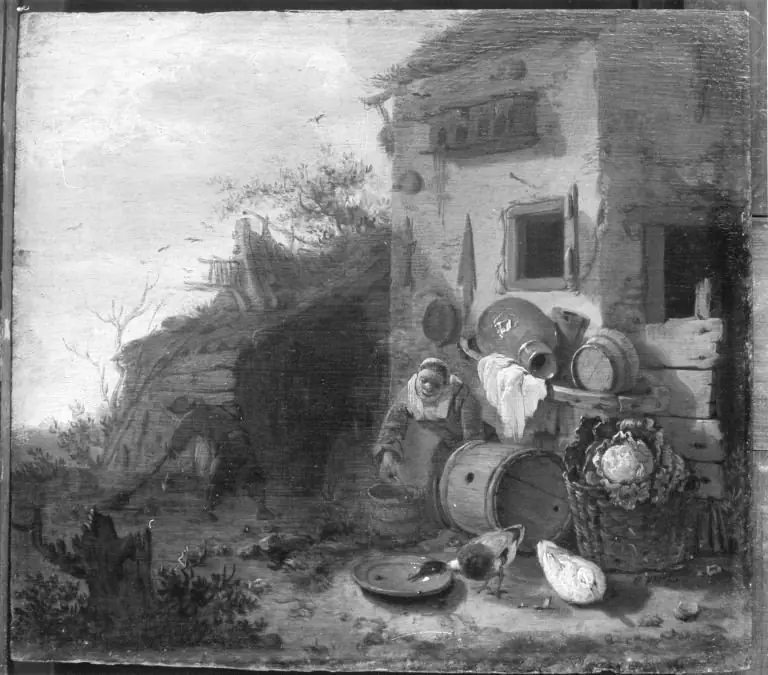
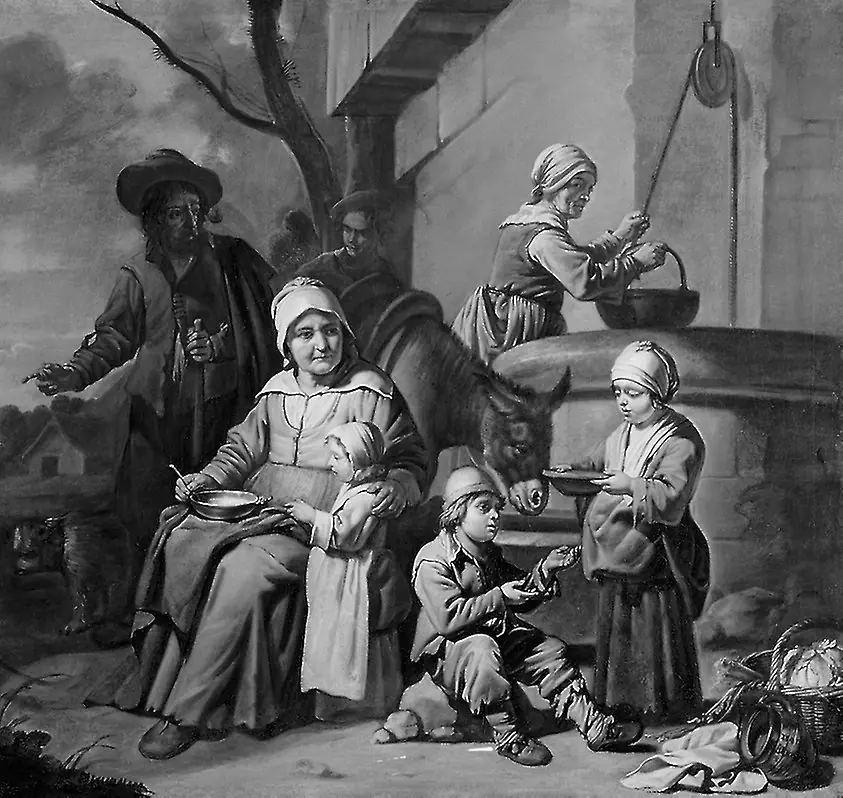
This painting, dated around 1650, depicts a rural Flemish household in quiet daily rhythm. Executed in oil, it captures a modest dwelling with a sloped roof and narrow windows, surrounded by domestic activity. The composition centers on a man holding a tool just outside, while a woman spins thread within. Chickens, a dog, and scattered household items frame the scene with unembellished realism.
Subject & Meaning
The man’s presence near his tool suggests agricultural work, while the woman’s spinning wheel implies textile production—both essential to household survival.
The scene presents labor and routine as the foundation of peasant life. The man’s presence near his tool suggests agricultural work, while the woman’s spinning wheel implies textile production—both essential to household survival. The chickens and eggs hint at subsistence farming, and the dog’s restful posture reinforces a sense of settled, unglamorous continuity. No grand narrative is implied; meaning lies in the dignity of ordinary tasks.
Technique & Style
The artist employs chiaroscuro to model forms with subtle gradations of light and shadow, lending volume to the figures and objects without theatricality. Brushwork is restrained, favoring texture over detail—rough walls, woven baskets, and woolen garments are rendered with quiet precision. The palette is muted, dominated by earth tones, reinforcing the scene’s authenticity and lack of idealization.
History & Provenance
The painting entered the collection of the Museum of Ethnography in the late 19th or early 20th century, likely acquired as part of a broader effort to document European rural life. Its attribution to a specific artist remains uncertain, and it was probably produced by a regional painter working within local traditions rather than a known master of the period.
Context
Created during the Dutch Golden Age, this work reflects the growing interest in secular, everyday subjects among Northern European artists. While urban centers flourished, rural communities remained the backbone of society. Paintings like this served not as propaganda but as observational records, capturing the rhythms of life outside the influence of aristocratic or religious patronage.
Legacy
Though not widely exhibited or studied, the painting contributes to a quiet tradition of Northern European genre scenes that valued authenticity over spectacle. It stands as a testament to the visual documentation of peasant life during a period when such subjects were rarely elevated in art. Its endurance in museum collections underscores its role as a historical witness rather than a celebrated work.
Artist & collection

 Domestic Scene
 Giacomo and Cardinal Marco, investing Andrea, Abbot of San Zeno, with his Benefice
 The Nymph of Fontainebleau
 Portrait of a Woman
 Madonna and Child with Saints in the Enclosed Garden
 Venus and Minerva
 Family Group of Four on Sofa
 Wall painting from Room H of the Villa of P. Fannius Synistor at Boscoreale