Artwork
Maalaiskapaikan edustalla
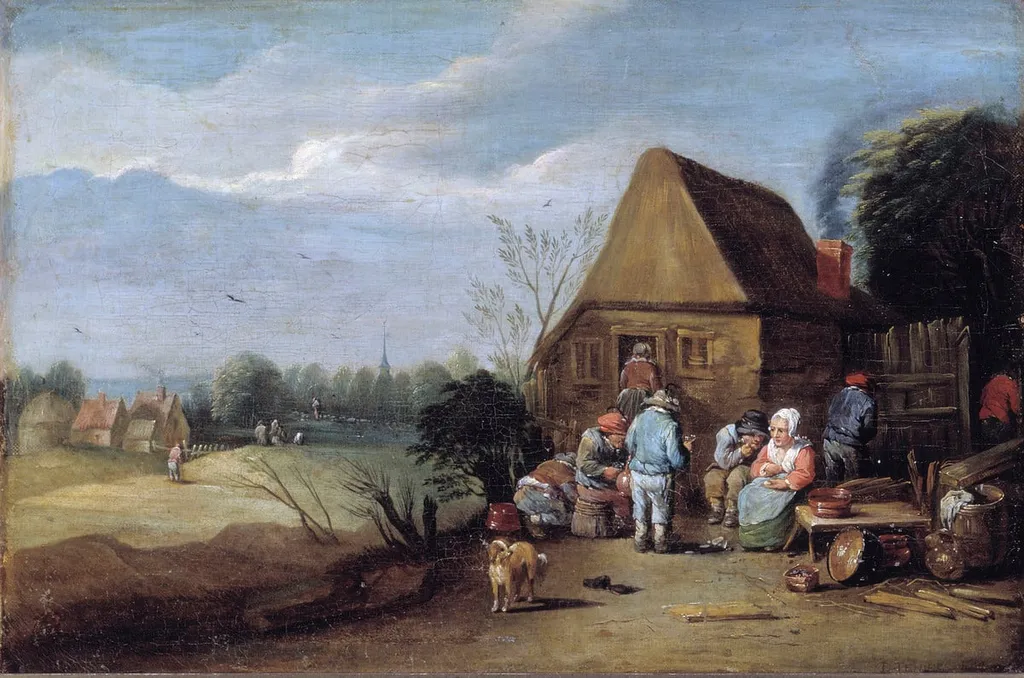
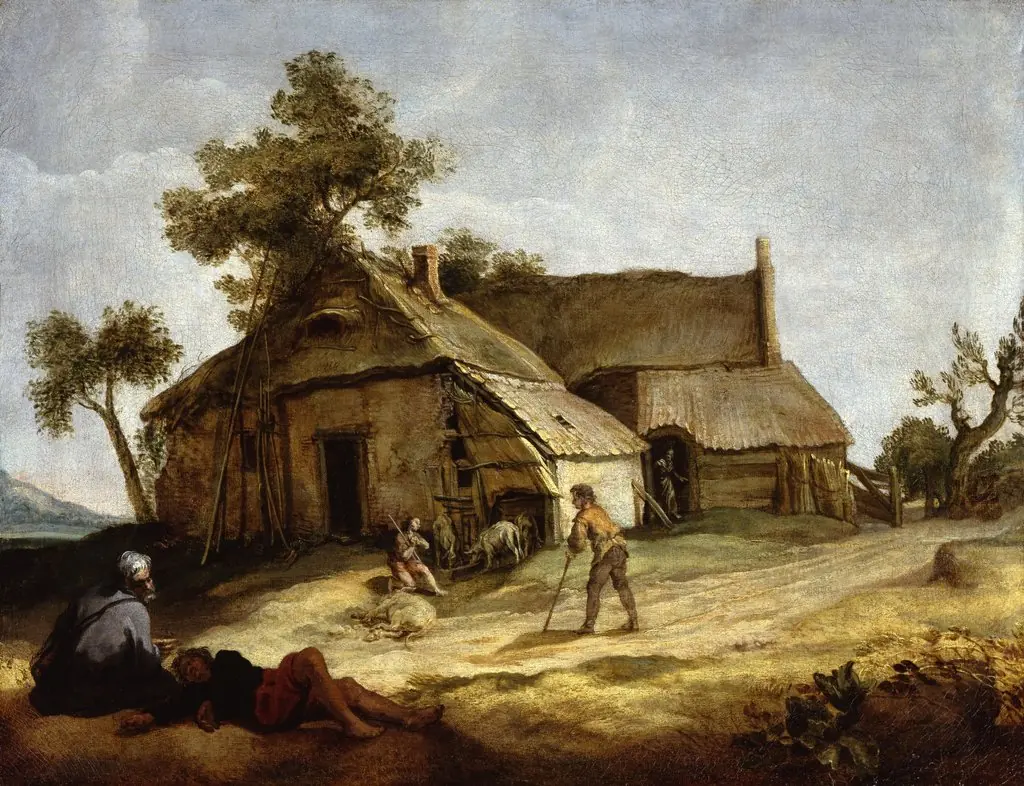
Maalaiskapaikan edustalla is an unspecified painting by the Dutch Golden Age artist David Teniers nuorempi / den yngre / the Younger. It is held in the collection of the Finnish National Gallery. This painting depicts a quiet rural moment outside a modest thatched dwelling.
About this work
Overview
The composition avoids dramatic action, focusing instead on stillness and ordinary presence, rendered with restrained detail and a muted palette.
This painting depicts a quiet rural moment outside a modest thatched dwelling. A small group of figures—some seated, others standing—interact subtly within a calm, sunlit yard. A dog rests near the threshold, and the surrounding landscape includes sparse trees and distant buildings. The composition avoids dramatic action, focusing instead on stillness and ordinary presence, rendered with restrained detail and a muted palette.
Subject & Meaning
The scene captures an unremarkable interlude in village life, emphasizing routine rather than narrative. The woman with the basket and the man in the blue coat suggest domestic or agricultural labor, while the others linger in passive observation. No clear event unfolds; the meaning lies in the quiet dignity of daily existence, framed without sentimentality or idealization.
Technique & Style
The artist employs soft chiaroscuro to model forms with gentle gradations of light and shadow, lending volume without harsh contrast. Brushwork is smooth and unified, avoiding fine detail in favor of atmospheric cohesion. Colors are subdued—earthy tones dominate, with minimal saturation—enhancing the sense of quiet realism. The lack of sharp outlines unites figures and environment into a single, hushed space.
History & Provenance
The painting’s origin is tied to a regional tradition of rural observation, likely created in the late 19th or early 20th century by an artist embedded in local life. Its provenance traces to private collections in the Nordic or Baltic regions, where such scenes were valued for their authenticity. No major exhibitions or documented ownership changes are recorded, suggesting it remained within local cultural circles.
Context
This work emerged during a period when artists across Northern Europe turned from grand historical themes to everyday rural life. Urbanization was accelerating, and depictions of village scenes became acts of cultural preservation. The painting reflects this shift, offering a quiet counterpoint to industrial progress through its focus on continuity, place, and unadorned human presence.
Legacy
Though not widely known outside regional collections, the painting contributes to a broader visual record of rural life in Northern Europe. Its restrained approach influenced later artists seeking to portray ordinary moments without romanticism. It remains a quiet example of how simplicity in composition and tone can convey enduring human experience.
Artist & collection
Artist
David Teniers nuorempi / den yngre / the Younger
David Teniers the Younger could spot a good joke in a flickering tavern light—or paint one in.

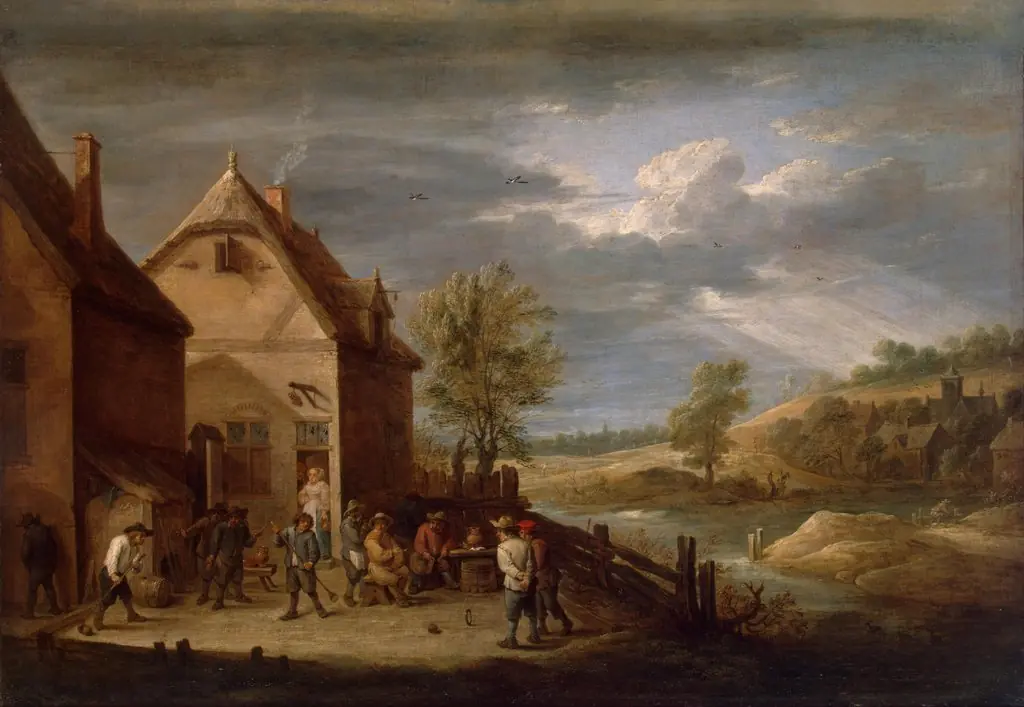 Landscape with Peasants Bowling
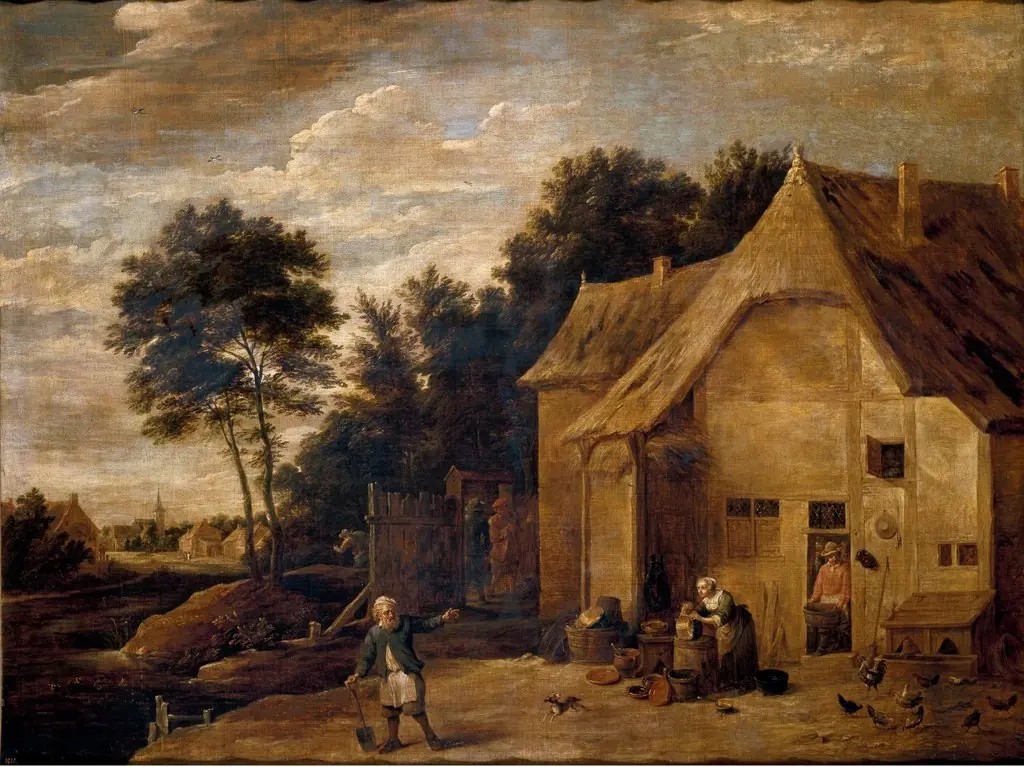 La casa rústica
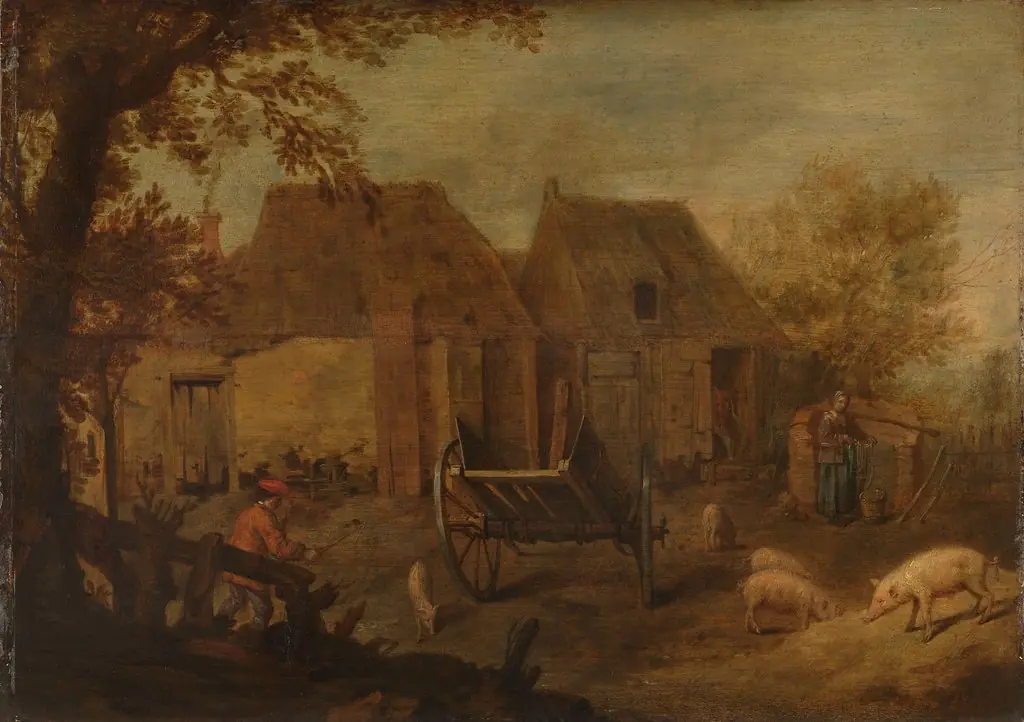 Farmyard
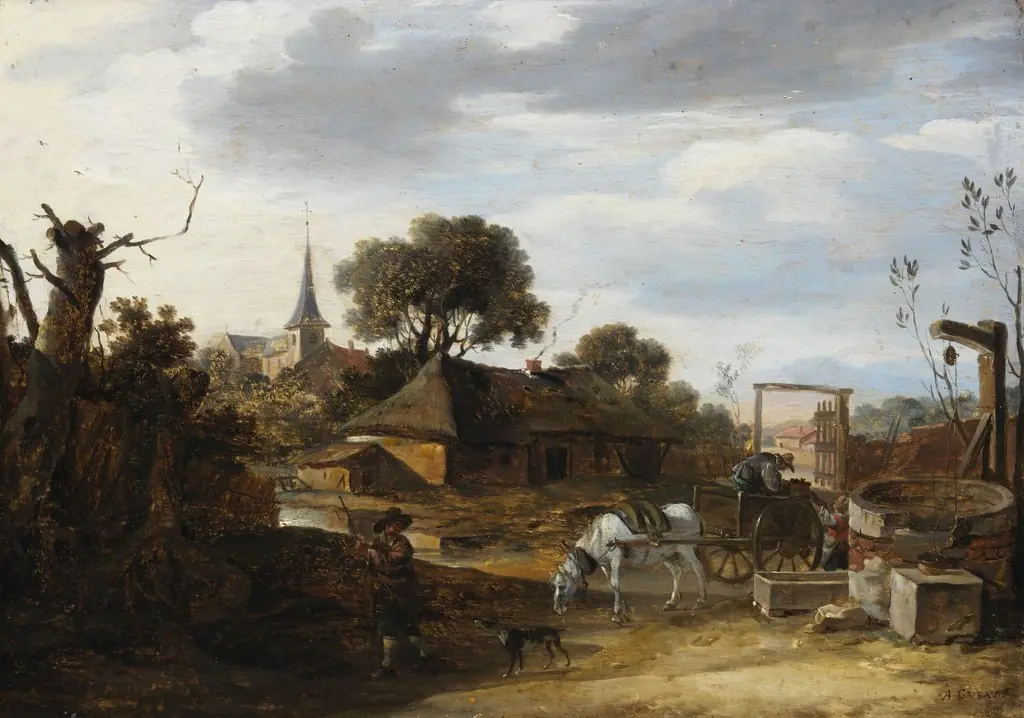 A Farmyard
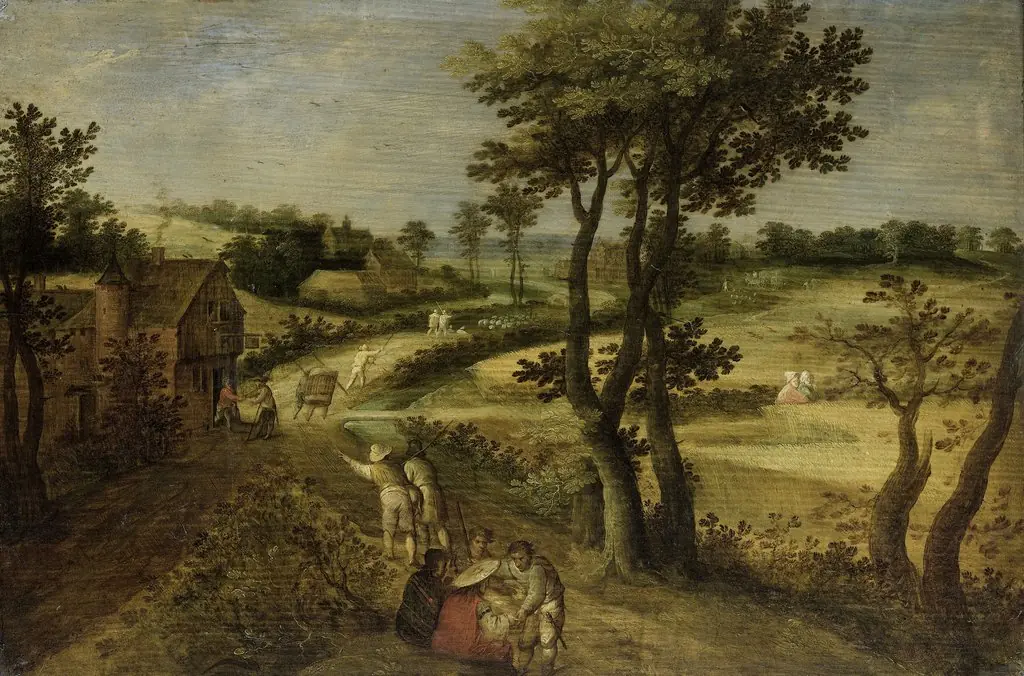 Landscape with Corn Fields
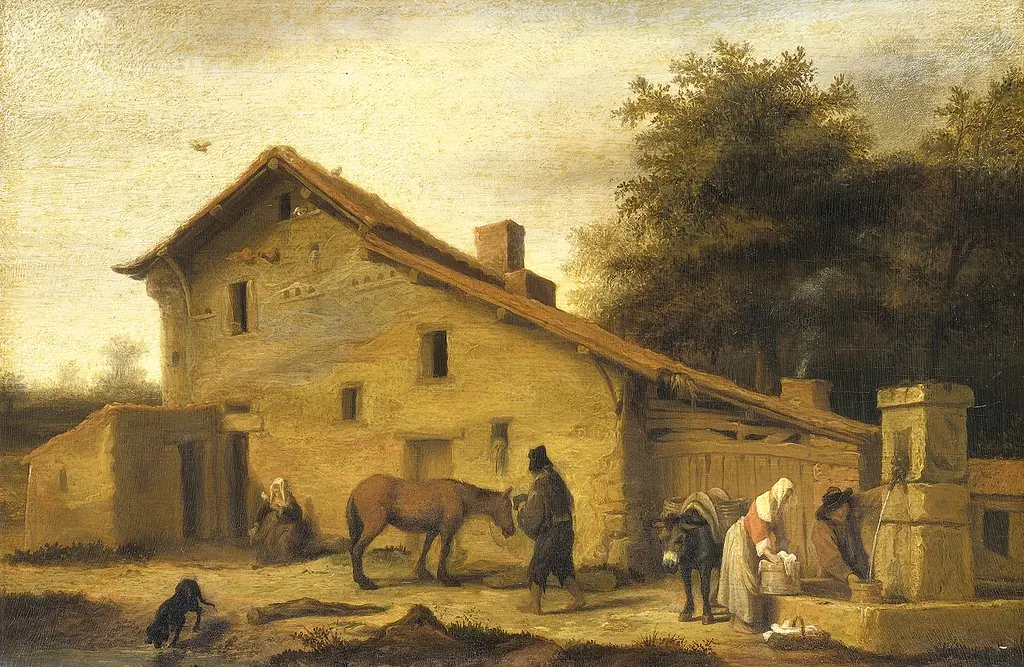 An inn in the neighborhood of Nantes
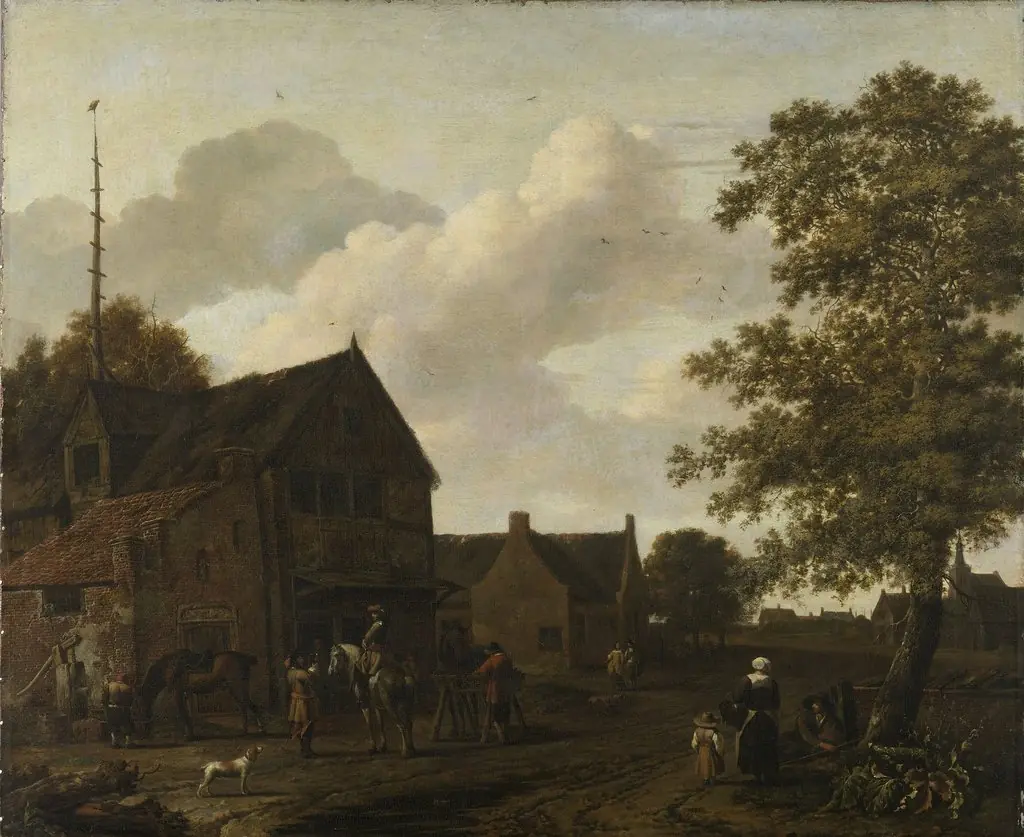 The watering place
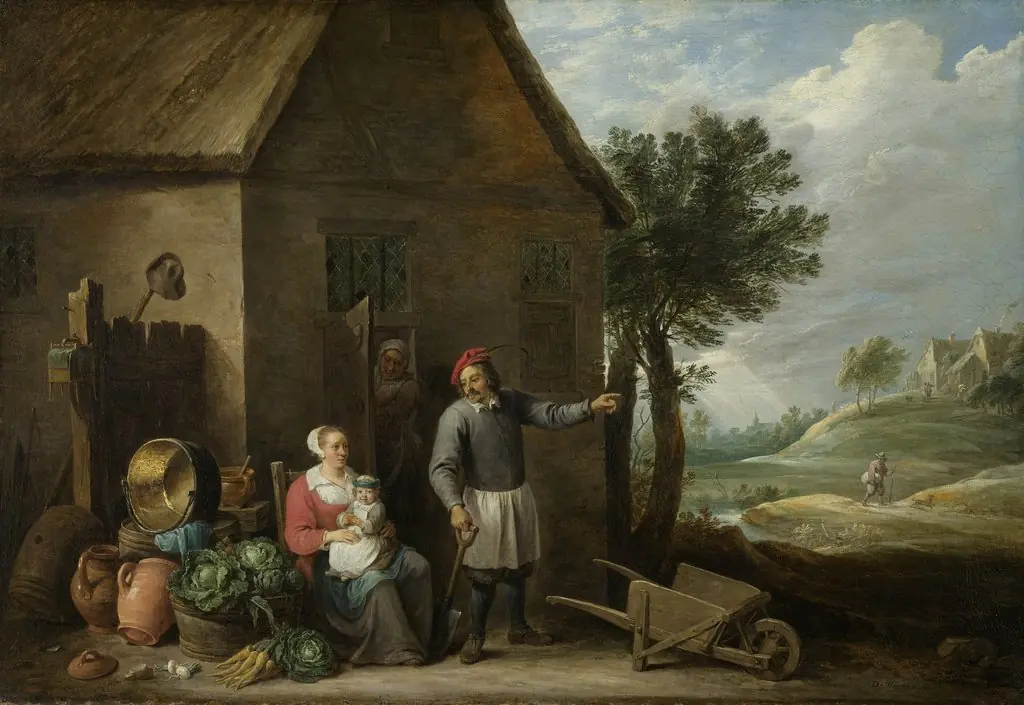 A peasant with his wife and child in front of the farmhouse
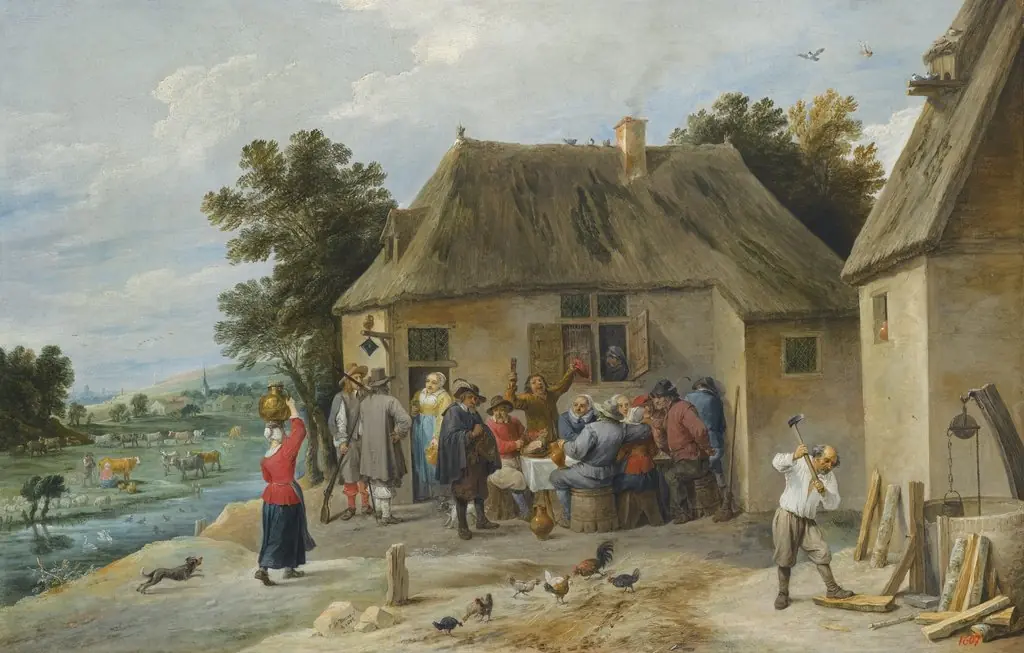 A Countryside Inn, with the innkeeper chopping wood
 Dutch Farm
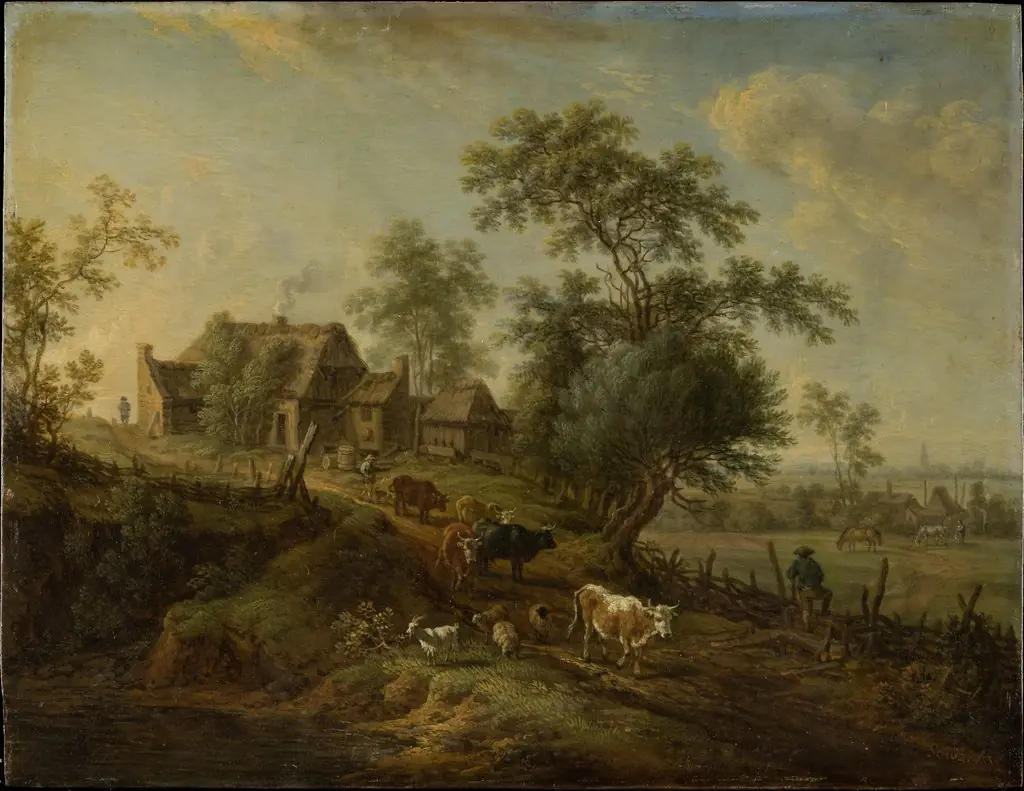 Landscape with Farm Animals on a Road
 Farmstead wit the Parable of the Prodigal Son