Artwork
The Banquet of the Gods. The Wedding of Peleus and Thetis
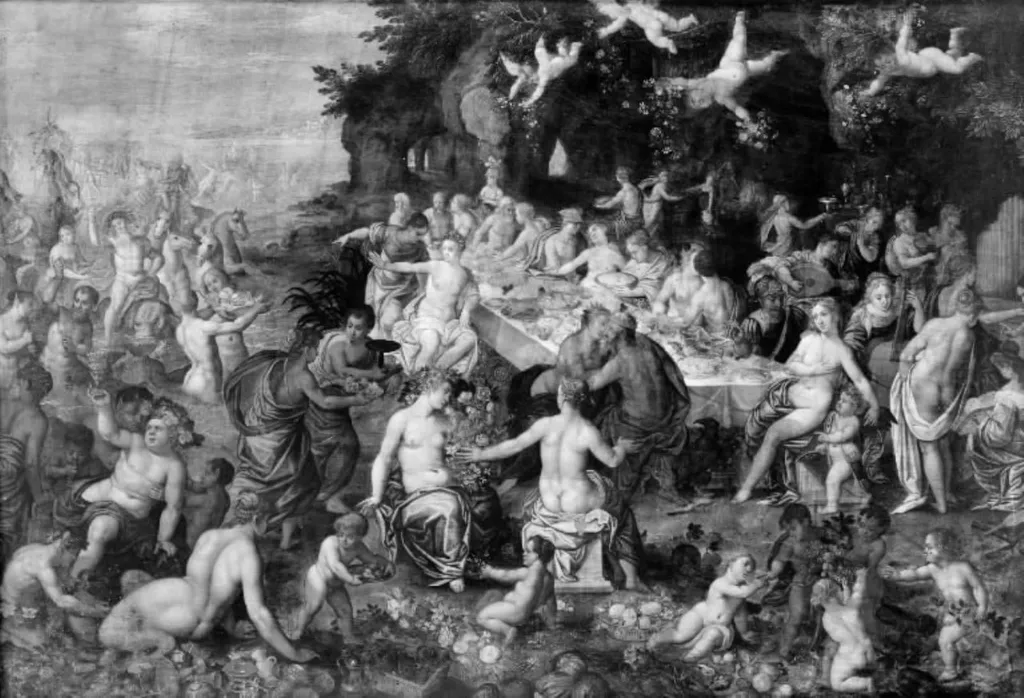
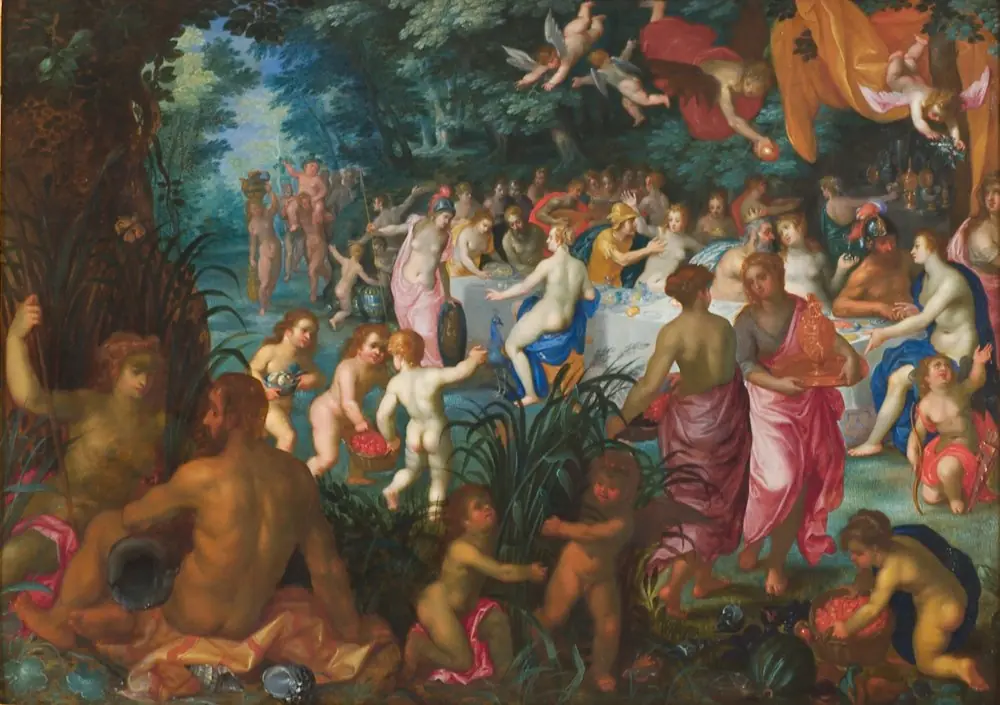
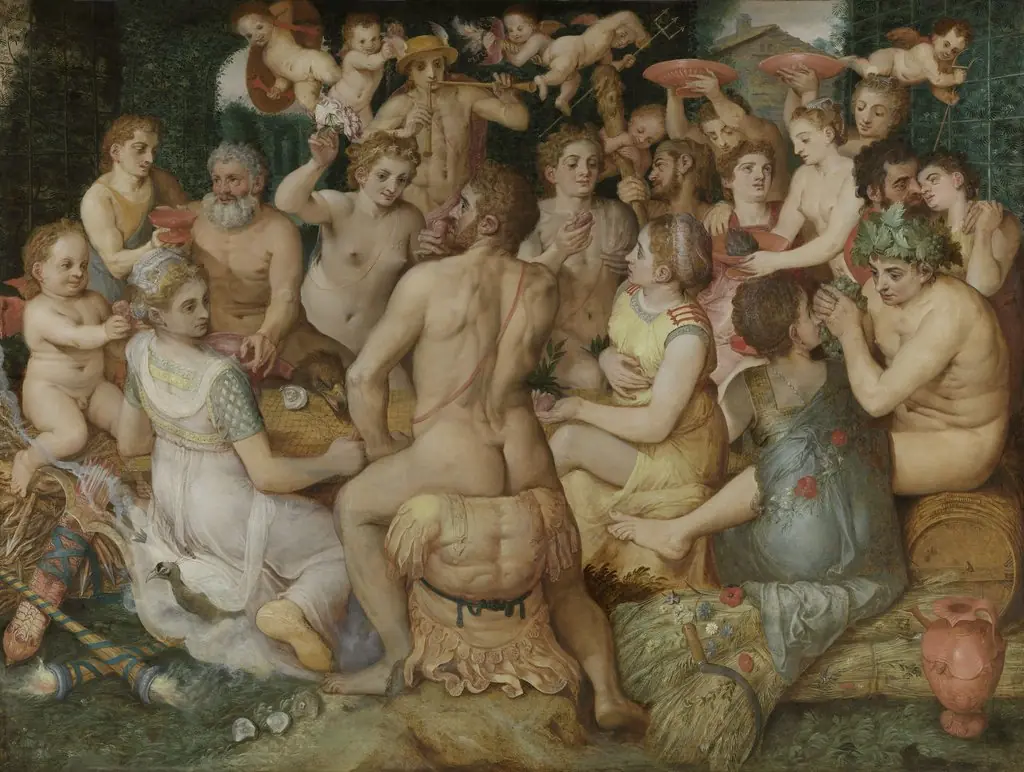
The Banquet of the Gods. The Wedding of Peleus and Thetis is a photography by Unknown. It dates from 1611 and is held in the collection of the Statens Museum for Kunst. Painted around 1611, this work depicts the mythological wedding of Peleus and Thetis, a gathering of deities and mortals in celebration.
About this work
Overview
Painted around 1611, this work depicts the mythological wedding of Peleus and Thetis, a gathering of deities and mortals in celebration.
Painted around 1611, this work depicts the mythological wedding of Peleus and Thetis, a gathering of deities and mortals in celebration. Executed in oil, it captures a dynamic, crowded assembly under a stormy sky. The painting resides in the Museum of Ethnography, where its theatrical composition and dramatic lighting draw attention to the blending of divine and human realms in classical narrative.
Subject & Meaning
The scene illustrates the union of the mortal hero Peleus and the sea nymph Thetis, a pivotal event in Greek myth that leads to the birth of Achilles. Gods and mortals mingle freely—dancing, feasting, and offering gifts—emphasizing the intersection of the mortal and immortal worlds. The central figures on the throne signify the honored couple, while the chaotic energy around them reflects the myth’s significance as a turning point in heroic lineage.
Technique & Style
The artist employs chiaroscuro to heighten the three-dimensionality of the figures, using stark contrasts between light and shadow to isolate forms against a dim, atmospheric backdrop. Brushwork is energetic, with fluid lines defining drapery and movement. The composition is densely packed, avoiding spatial clarity in favor of rhythmic motion, reinforcing the sense of a lively, almost overwhelming celebration.
History & Provenance
Created in the early 17th century, the painting entered the Museum of Ethnography’s collection in the late 19th or early 20th century, likely through acquisition or donation. Its attribution to the artist active in 1611 remains consistent with stylistic parallels from Northern Mannerist traditions. While its early ownership is undocumented, its preservation suggests it was valued for its mythological subject and technical vigor.
Context
This work emerged during a period when mythological themes were popular among European patrons seeking to align themselves with classical antiquity. The blending of divine and human figures in a festive setting reflects contemporary interest in allegory and the idealized past. The painting’s dramatic lighting and crowded composition echo trends in Flemish and Italian art of the time, particularly in depictions of celestial gatherings.
Legacy
Though not widely reproduced, the painting contributes to the broader tradition of mythological banquet scenes in early modern European art. Its emphasis on movement, chiaroscuro, and hybrid human-divine interaction influenced later interpretations of classical narratives in decorative and ceremonial painting. It remains a notable example of how myth was visually adapted to convey grandeur and emotional intensity.
Artist & collection

 Domestic Scene
 Giacomo and Cardinal Marco, investing Andrea, Abbot of San Zeno, with his Benefice
 The Nymph of Fontainebleau
 Portrait of a Woman
 Madonna and Child with Saints in the Enclosed Garden
 Venus and Minerva
 Family Group of Four on Sofa
 Wall painting from Room H of the Villa of P. Fannius Synistor at Boscoreale
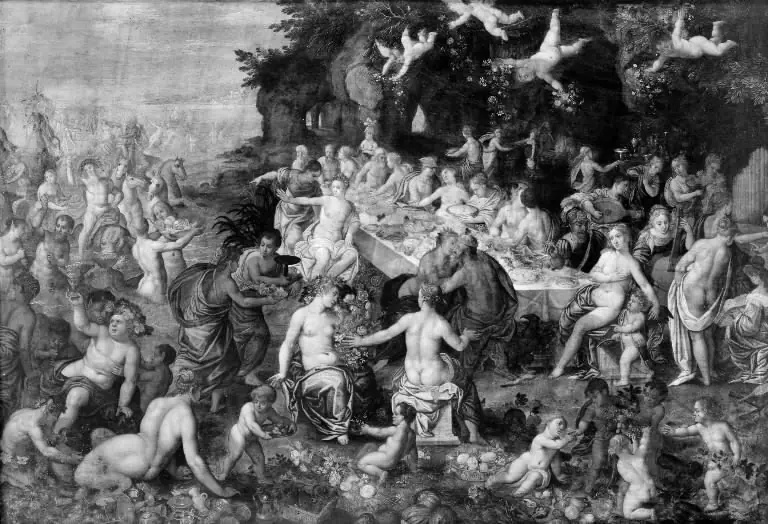 The Banquet of the Gods. The Wedding of Peleus and Thetis
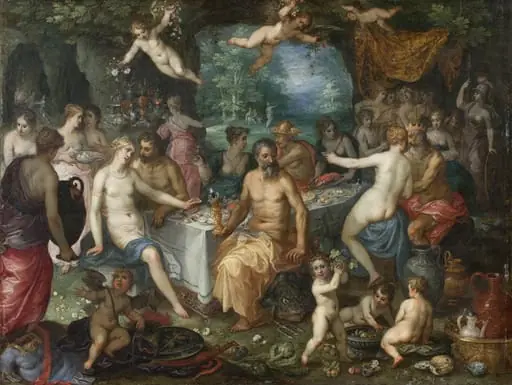 The Feast of the Gods. The Wedding of Peleus and Thetis
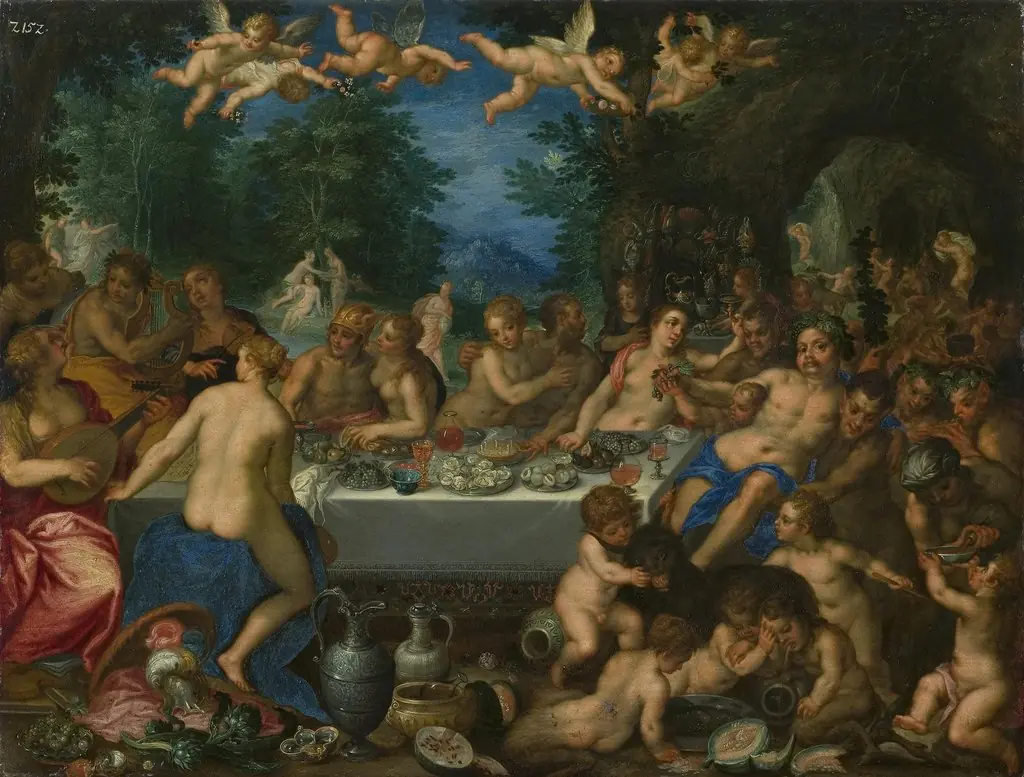 Feast of the Gods - The Marriage of Peleus and Thetis
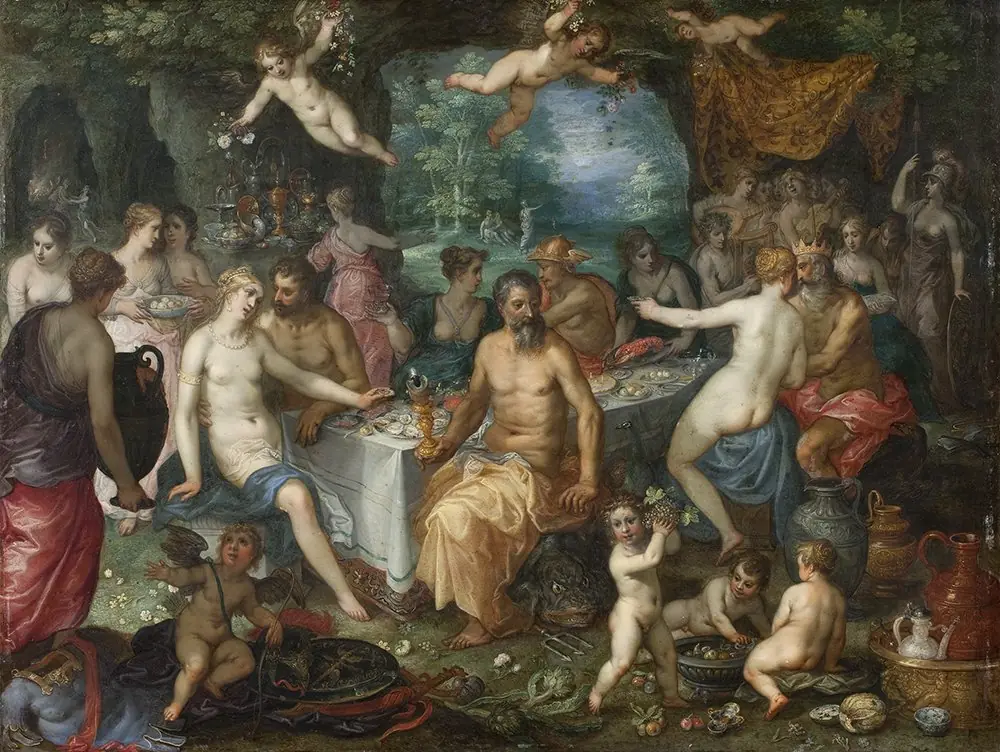 The Feast of the Gods. The Wedding of Peleus and Thetis
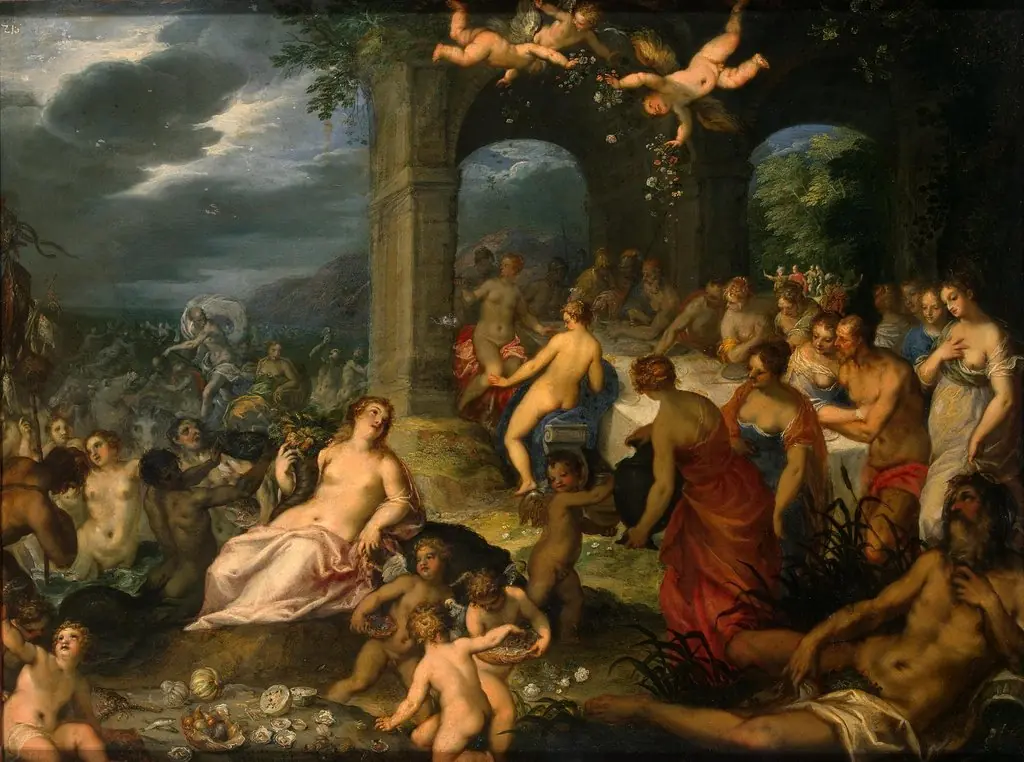 Feast of the Gods (The Marriage of Peleus and Thetis)
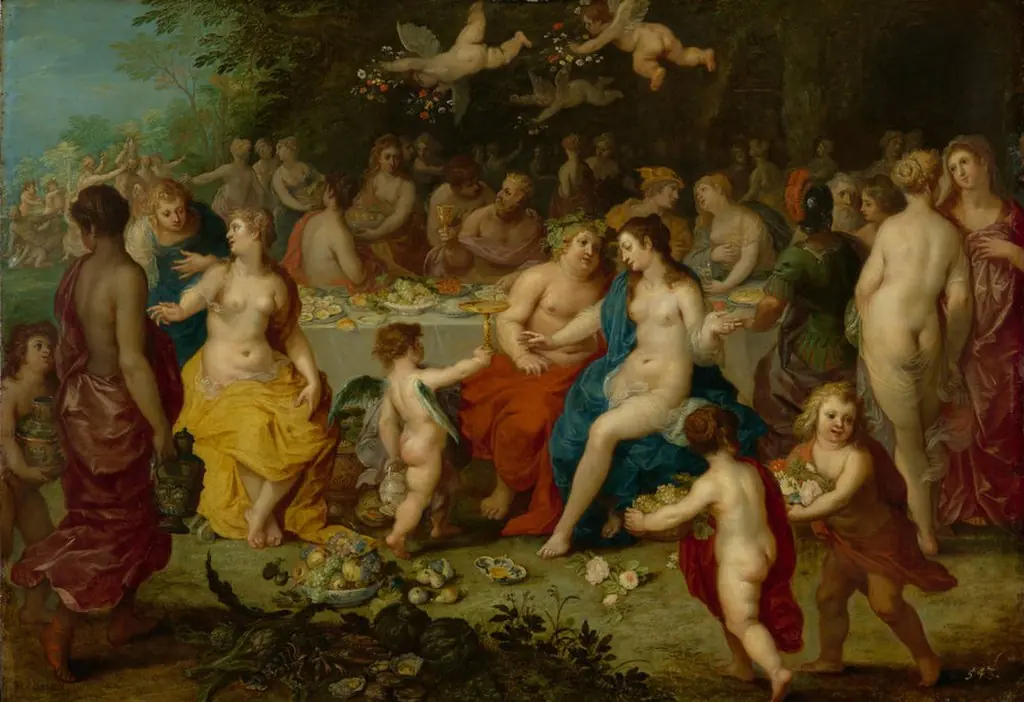 The wedding banquet of Bacchus and Ariadne
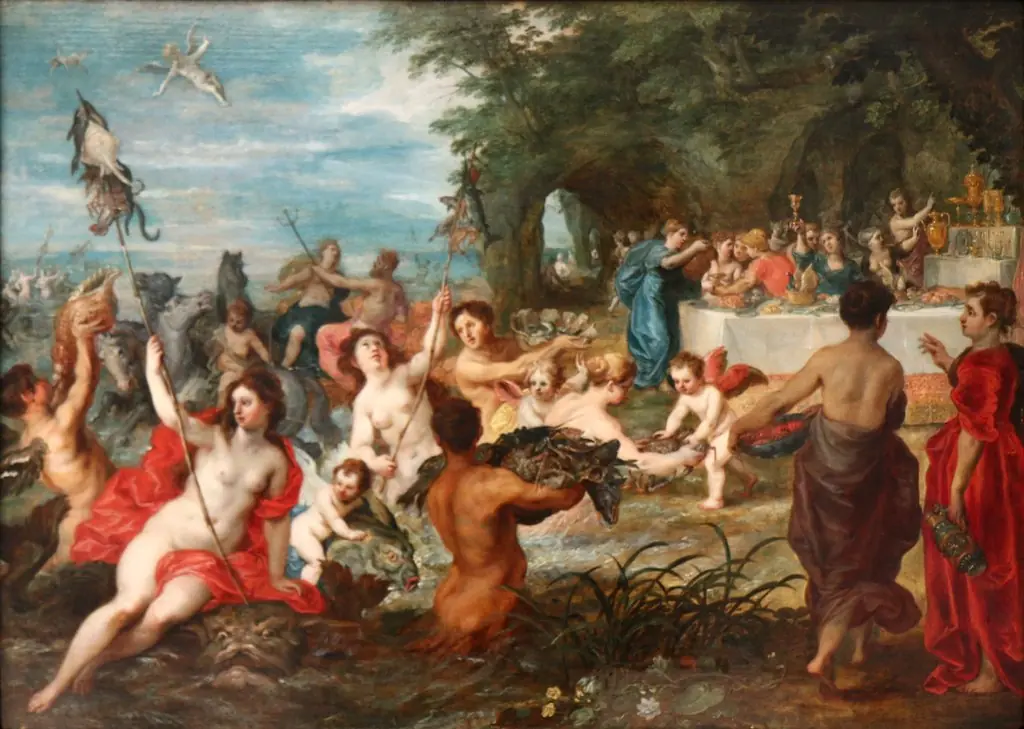 The wedding of Thetis and Peleus
 The Marriage of Peleus and Thetis
 The Feast of the Gods
 The Wedding of Peleus and Thetis
 The wedding of Thetis and Peleus
 Banquet of the Gods