Artwork
Evening Landscape with Wooded Rocks and Cattle
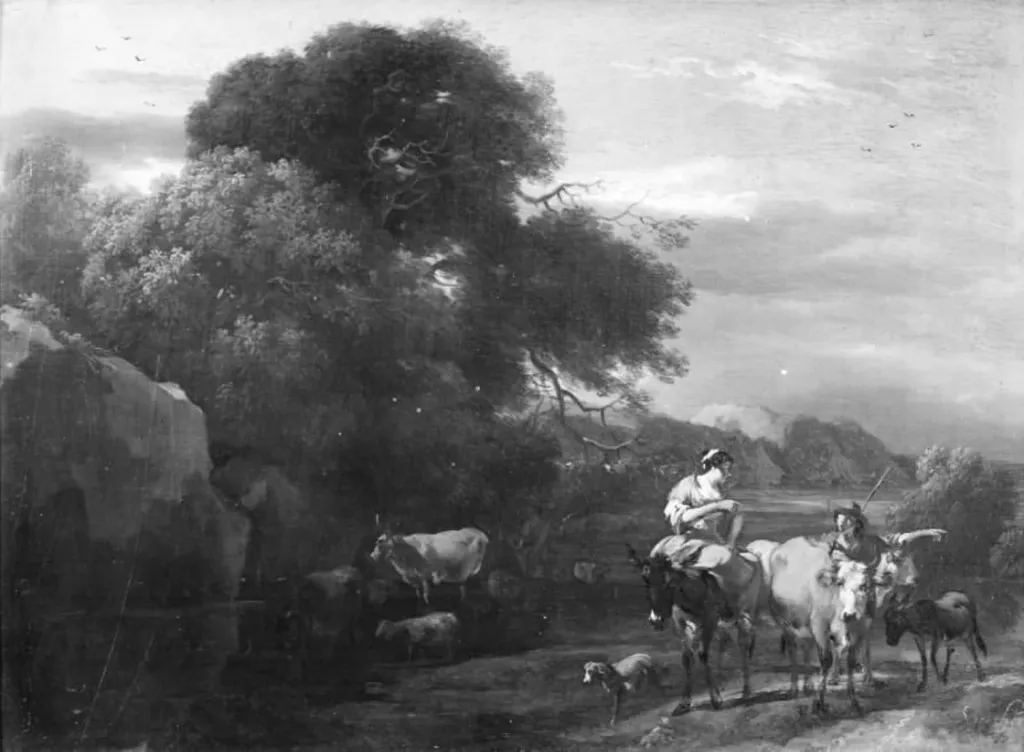
Evening Landscape with Wooded Rocks and Cattle is an unspecified painting by the Baroque artist Unknown. It dates from 1679 and is held in the collection of the Statens Museum for Kunst.
About this work
Overview
Painted in 1679, this landscape depicts a quiet rural scene at twilight, featuring a central tree, scattered cattle, and two human figures in the foreground.
Painted in 1679, this landscape depicts a quiet rural scene at twilight, featuring a central tree, scattered cattle, and two human figures in the foreground. The work is attributed to an artist active in the mid-to-late 17th century, though the name remains unverified in standard records. It is currently held in the collection of the Museum of Ethnography, where it is presented as an example of early Dutch-inspired naturalism in landscape depiction.
Subject & Meaning
The scene captures a moment of stillness between day and night, with figures engaged in quiet, unremarkable activities—sitting, standing, gesturing toward the horizon. The presence of cattle and the pastoral setting suggest an idealized view of rural labor, not overtly symbolic but grounded in everyday observation. The composition invites contemplation rather than narrative, emphasizing harmony between humans, animals, and the natural world.
Technique & Style
The artist employs chiaroscuro to model forms through subtle gradations of light and shadow, enhancing the volume of the central tree and the contours of the rocks. Brushwork is restrained, with soft transitions between the warm glow of the setting sun and the cooler tones of the encroaching dusk. The horizon is low, allowing the sky to dominate, while layered hills recede into the distance, creating a sense of spatial depth without dramatic perspective.
History & Provenance
The painting entered the Museum of Ethnography’s collection in the early 20th century, though its earlier ownership history is undocumented. Its attribution to a specific artist remains uncertain, as no signed works or archival records definitively link it to a known painter of the period. It was likely acquired as part of a broader collection of Northern European landscapes, valued for its atmospheric qualities rather than its authorship.
Context
Created during a period when Dutch and Flemish landscape traditions were widely disseminated across Europe, this work reflects a regional adaptation of those styles—emphasizing mood over topographical accuracy. While not part of a major artistic movement, it aligns with the growing interest in tranquil, everyday rural scenes among collectors and patrons seeking quiet, reflective imagery in an era of political and religious upheaval.
Legacy
Though not widely exhibited or studied, the painting contributes to the understanding of lesser-known landscape practices in late 17th-century Europe. Its preservation in an ethnographic museum rather than a fine arts institution reflects its role as a cultural artifact of rural life, valued for its depiction of human-nature interaction rather than its artistic pedigree.
Artist & collection

 Domestic Scene
 Giacomo and Cardinal Marco, investing Andrea, Abbot of San Zeno, with his Benefice
 The Nymph of Fontainebleau
 Portrait of a Woman
 Madonna and Child with Saints in the Enclosed Garden
 Venus and Minerva
 Family Group of Four on Sofa
 Wall painting from Room H of the Villa of P. Fannius Synistor at Boscoreale
 Wooded landscape with herd
 Landscape
 Landscape
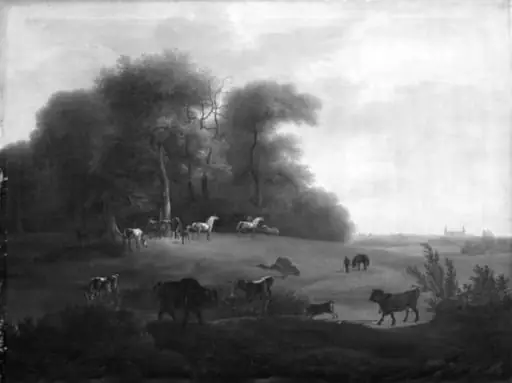 Keld Skov ved Frederiksborg med en del af det kongelige stutteri. I forgrunden schweizer- og tyrolerkvæg
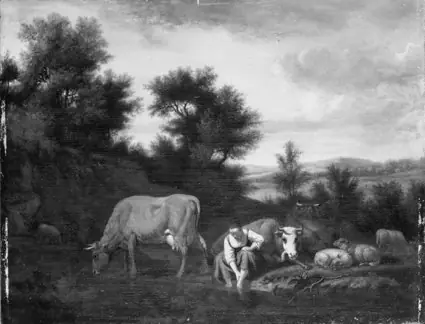 Shepherdess with Cattle
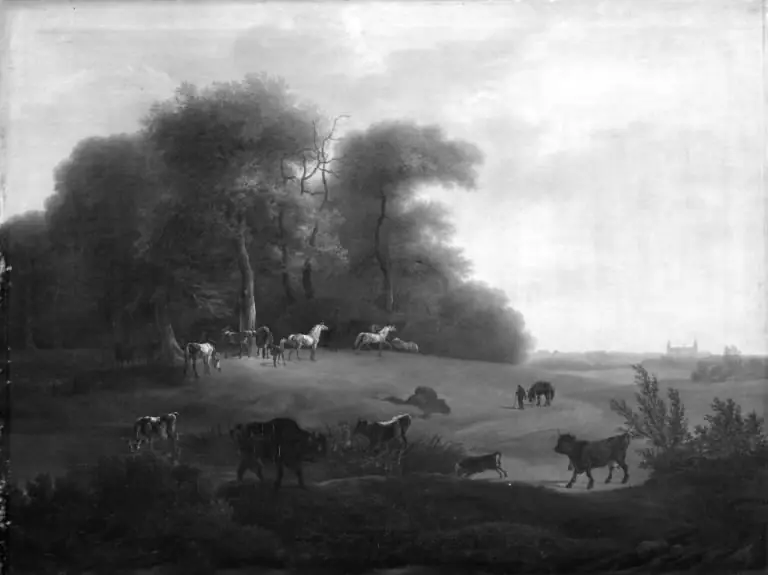 Keld Skov ved Frederiksborg med en del af det kongelige stutteri. I forgrunden schweizer- og tyrolerkvæg
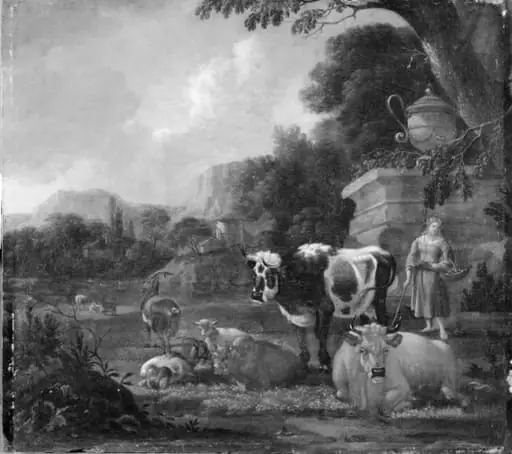 Shepherdess with her Cattle, Sheep and Goats
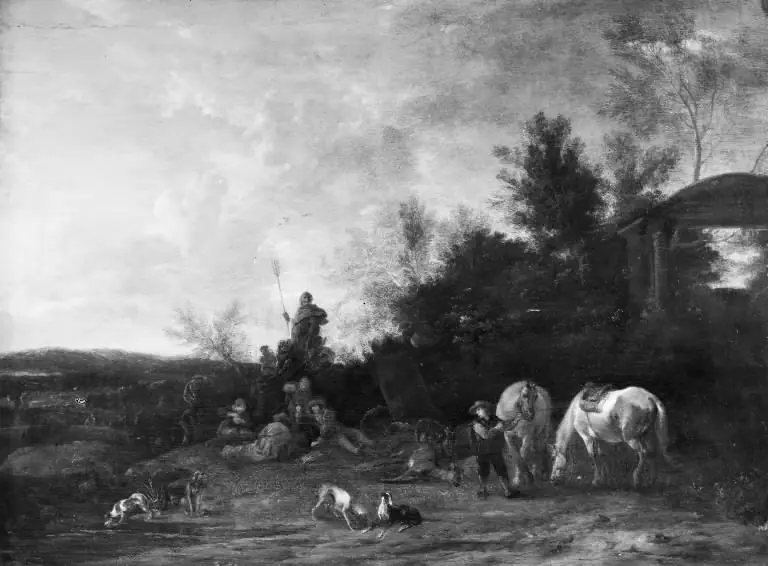 Evening Scenery with Resting Hunters
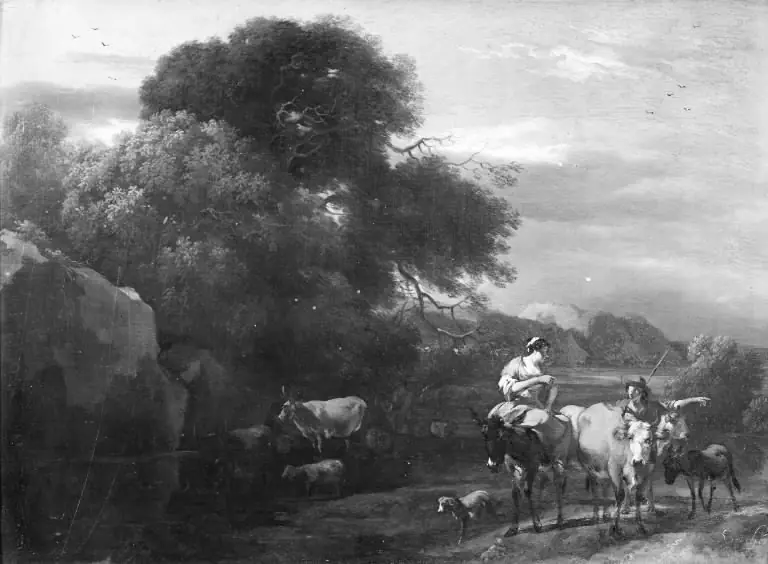 Evening Landscape with Wooded Rocks and Cattle