Artwork
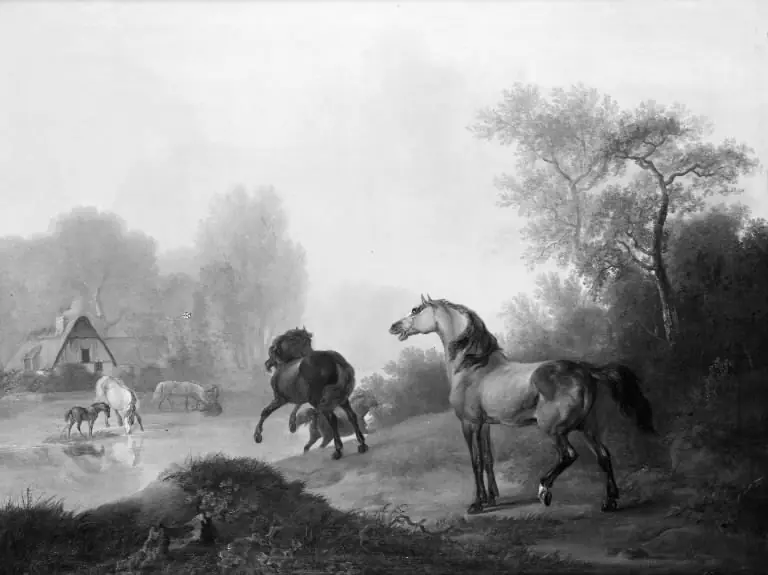
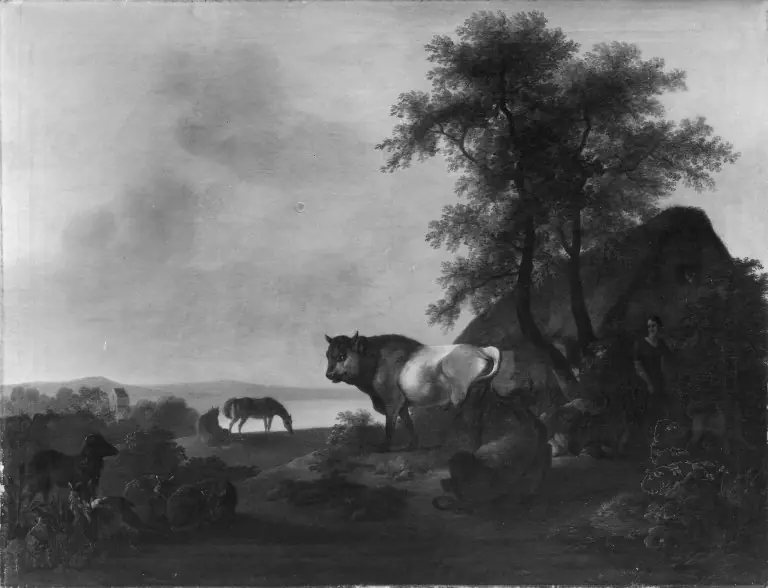
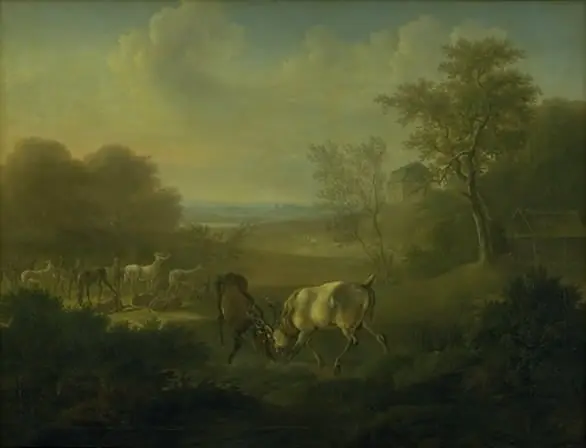
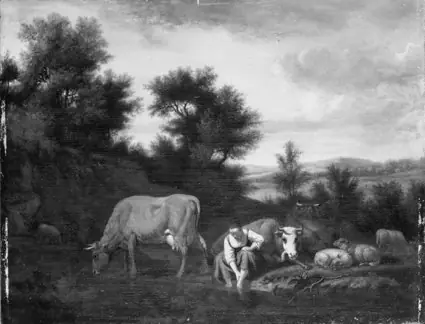
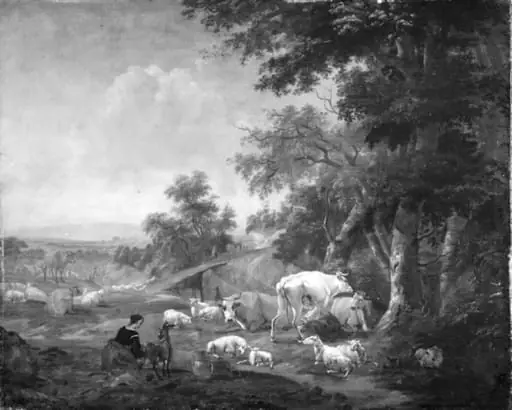
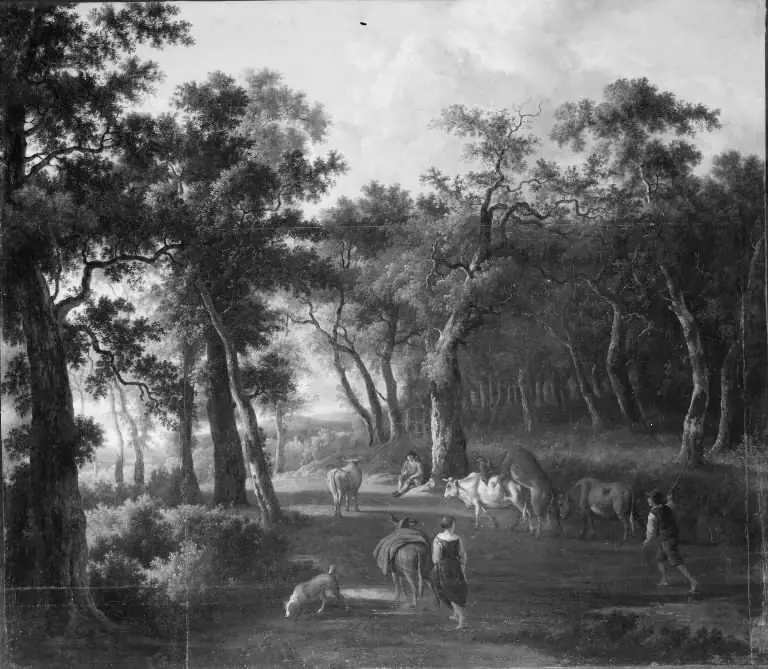
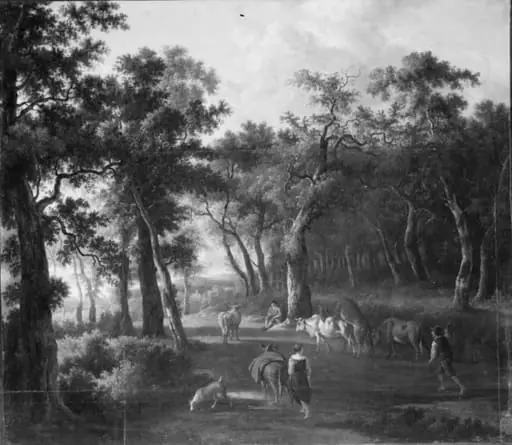
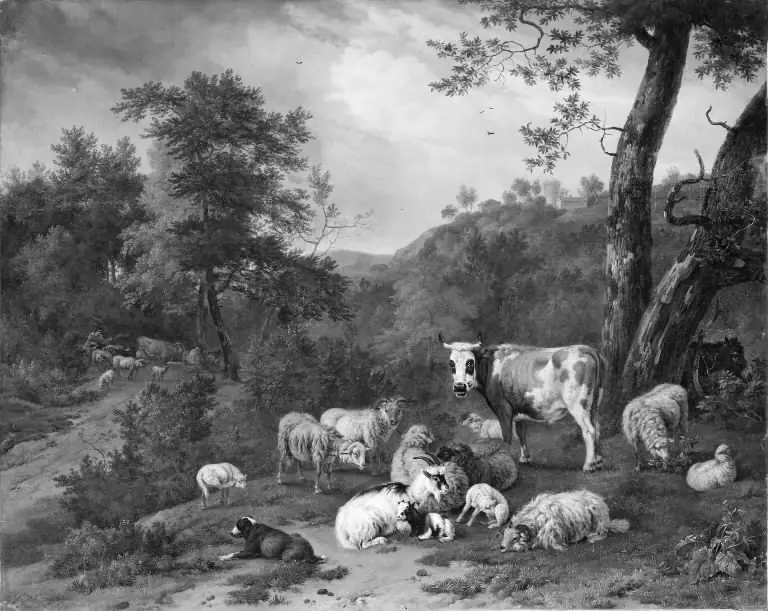
Keld Skov ved Frederiksborg med en del af det kongelige stutteri. I forgrunden schweizer- og tyrolerkvæg
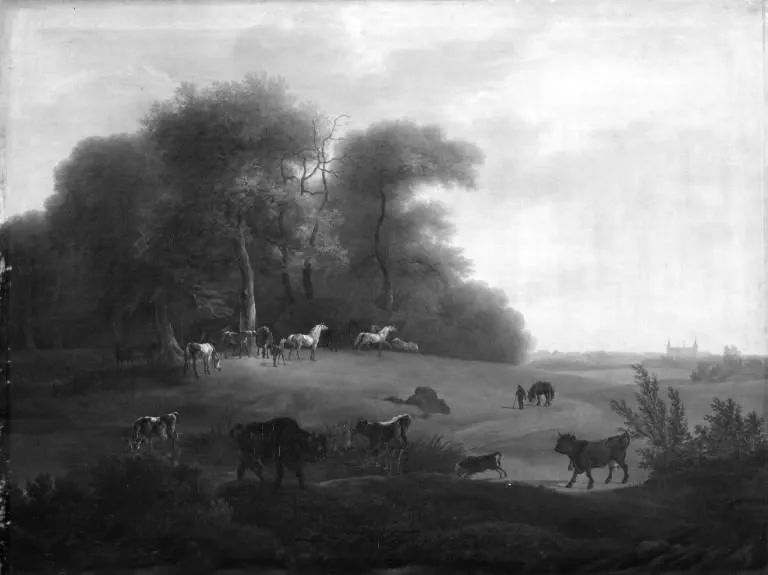
Keld Skov ved Frederiksborg med en del af det kongelige stutteri. I forgrunden schweizer- og tyrolerkvæg is an oil painting by the German Romanticist artist Christian David Gebauer. It dates from 1808 and is held in the collection of the Statens Museum for Kunst.
About this work
Overview
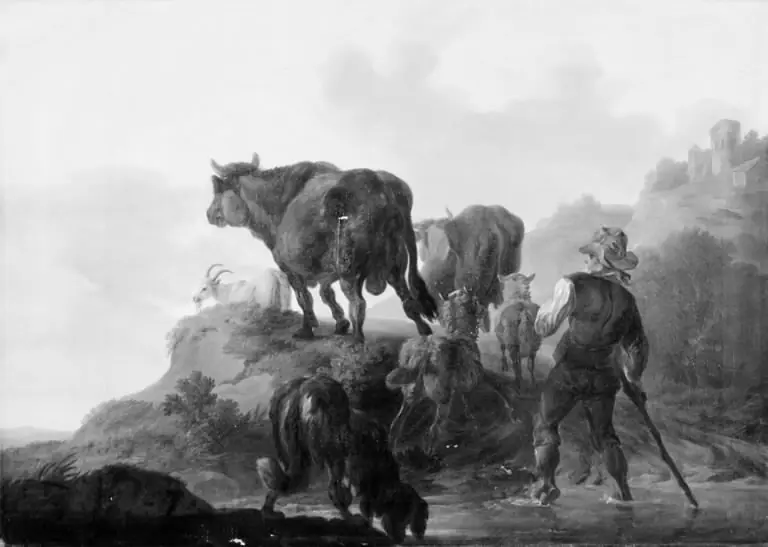
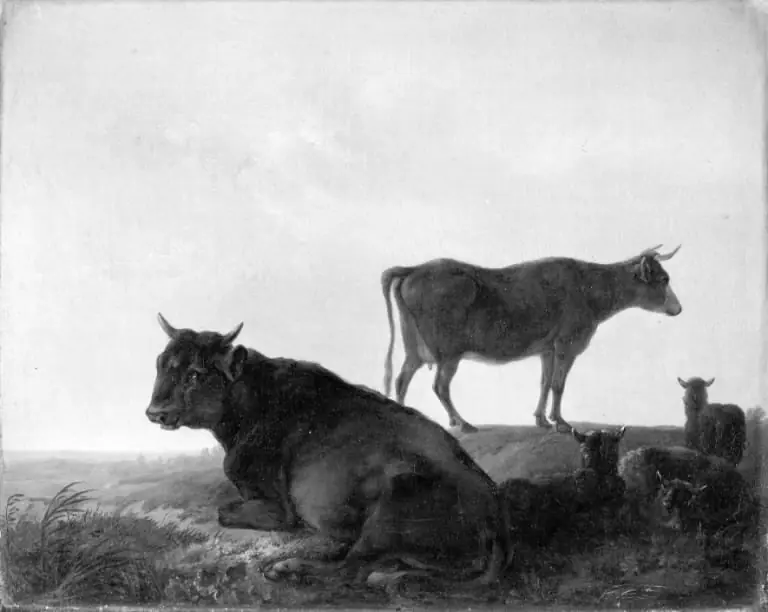
The foreground features a group of Swiss and Tyrolean cattle, their presence marking a deliberate interest in agricultural breeds.
Painted in 1808 by Danish artist Christian David Gebauer, this oil on canvas depicts a quiet woodland near Frederiksborg Castle, incorporating elements of the royal stud farm in the distance. The foreground features a group of Swiss and Tyrolean cattle, their presence marking a deliberate interest in agricultural breeds. Gebauer’s focus on natural detail and quiet observation aligns with early 19th-century Danish landscape traditions, blending topographical accuracy with subtle atmospheric tone.
Subject & Meaning
The painting presents a harmonious coexistence between nature and royal land use. The cattle, imported for their quality, signify Denmark’s interest in improving livestock through foreign breeds. The inclusion of the stud farm suggests an institutional presence without overt grandeur, emphasizing utility over spectacle. The scene’s calmness reflects a broader cultural appreciation for orderly, productive landscapes rather than dramatic wilderness.
Technique & Style
Gebauer employs soft, diffused light to model forms across the grassy expanse, with long shadows anchoring the animals and trees in space. Brushwork is precise yet unobtrusive, favoring clarity over expressive gesture. The composition balances foreground detail with a hazy background, creating depth without theatrical perspective. His approach is observational, rooted in the tradition of naturalist painting rather than romantic idealization.
History & Provenance
Created during Gebauer’s active years as a painter and etcher, the work entered the collection of Statens Museum for Kunst early in its history. It reflects the Danish state’s interest in documenting domestic landscapes and agricultural development during the Napoleonic era. No significant changes in ownership are recorded; the painting has remained in public custody since its acquisition.
Context
In early 19th-century Denmark, landscape painting increasingly served scientific and national interests. The depiction of foreign cattle breeds aligns with royal agricultural reforms aimed at modernizing farming. Gebauer’s work contributes to a genre that recorded rural life not as pastoral fantasy, but as a measurable, evolving reality shaped by policy and environment.
Legacy
Gebauer’s painting stands as a quiet example of Danish naturalism, bridging topographical record and artistic observation. While less celebrated than his etchings, this work exemplifies a period when art supported state interests through detailed, unembellished representation. It remains a reference point for understanding how landscape art engaged with agricultural modernization in Scandinavia.
Artist & collection
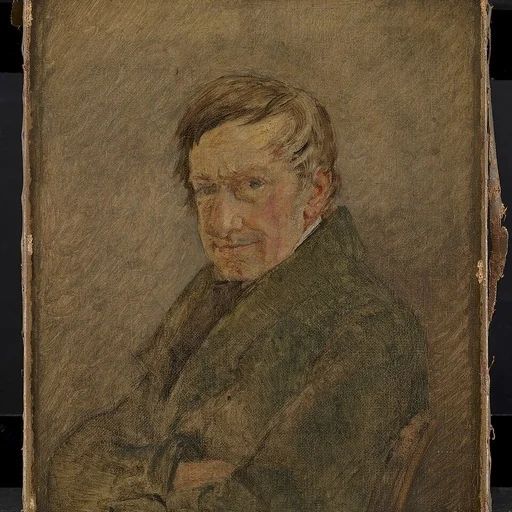
Artist
Christian David Gebauer (15 October 1777 – 15 September 1831) was a Danish animal and landscape painter. He was also known for etchings.