Artwork
The Holy Family
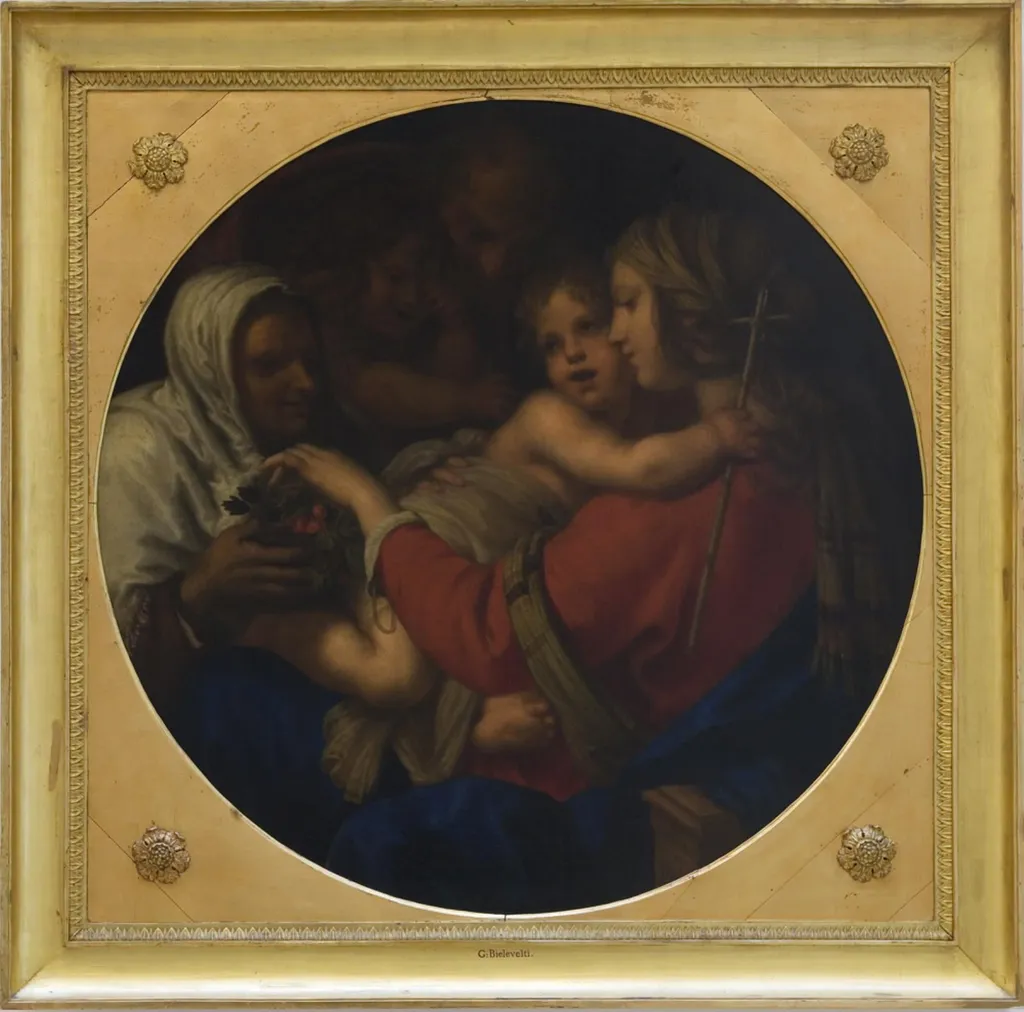
The Holy Family is a photography by the Baroque artist Unknown. It dates from 1644 and is held in the collection of the Statens Museum for Kunst.
About this work
Overview
The figures are rendered with careful attention to gesture and expression, set against a deep, unadorned background that heightens their presence.
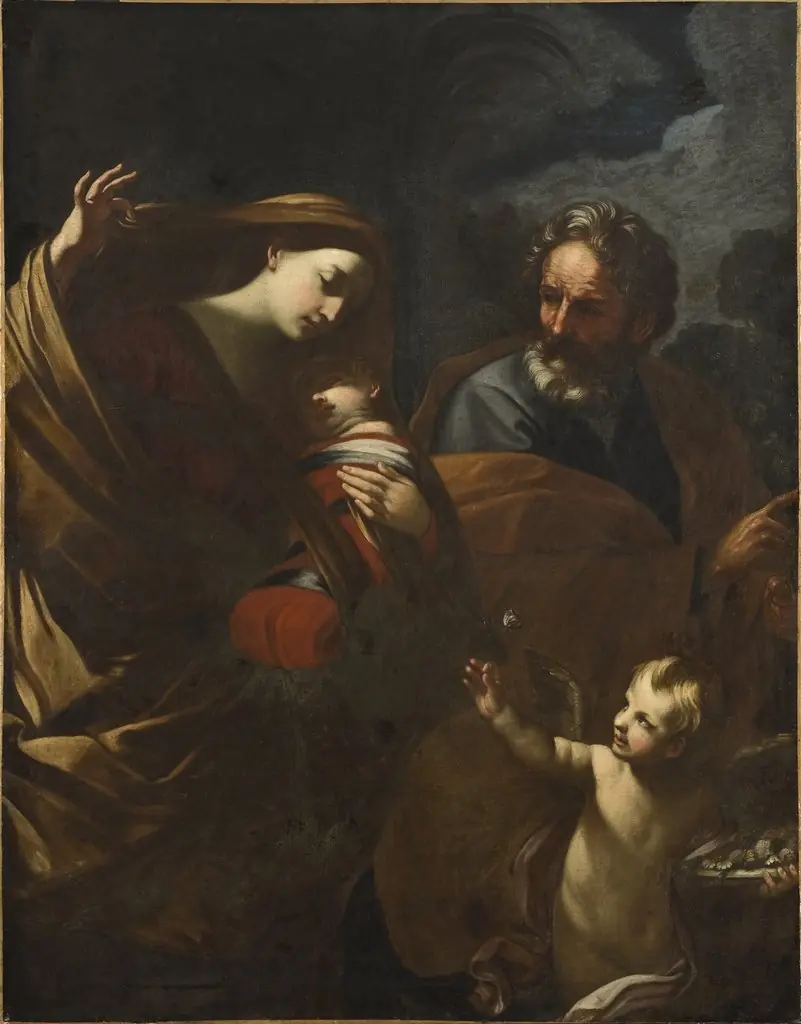
Painted in 1644, this religious work depicts the Holy Family in an intimate domestic moment. Executed in oil on panel, the composition centers on the tender interaction between Mary, Joseph, and the infant Jesus. The figures are rendered with careful attention to gesture and expression, set against a deep, unadorned background that heightens their presence. The painting resides in the Museum of Ethnography, where it is cataloged as part of a broader collection of devotional imagery.
Subject & Meaning
The scene portrays the Holy Family not as celestial figures but as a grounded, human unit. Mary cradles the child, Joseph stands protectively behind them, and all three gaze toward the infant, emphasizing filial devotion. The nudity of the child underscores vulnerability and divine innocence, while the quiet focus of the adults conveys reverence rather than spectacle. The work reflects a devotional tradition prioritizing emotional connection over theological symbolism.
Technique & Style
The artist employs fine brushwork to render fabric textures, particularly the folds of Mary’s red gown and Joseph’s blue robe. Facial expressions are subtly modeled, avoiding theatricality in favor of quiet introspection. The dark, neutral background isolates the figures, drawing attention to their physical closeness and the play of light across skin and cloth. The style aligns with early Baroque naturalism, favoring realism over idealized forms.
History & Provenance
The painting entered the Museum of Ethnography’s collection in the late 19th century, acquired as part of a donation of European religious art. Its attribution to the artist active in the mid-17th century is based on stylistic comparison with signed works from the period. No documentation of its original commission or early ownership survives, though its preservation suggests it was valued in private or ecclesiastical hands before institutional acquisition.
Context
Created during a period of religious upheaval in Europe, this image reflects a persistent Catholic emphasis on familial piety. While Protestant regions favored simpler devotional forms, Catholic communities continued to commission intimate portrayals of sacred figures in domestic settings. The painting’s quiet tone aligns with Counter-Reformation ideals that encouraged personal, emotional engagement with religious narratives.
Legacy
Though not widely reproduced or studied in major art historical narratives, the work remains a representative example of 17th-century devotional painting outside the dominant centers of artistic production. Its preservation in an ethnographic museum underscores its role as a cultural artifact of religious practice rather than a celebrated artistic achievement. It continues to serve as a quiet testament to domestic spirituality in early modern Europe.
Artist & collection

 Domestic Scene
 Giacomo and Cardinal Marco, investing Andrea, Abbot of San Zeno, with his Benefice
 The Nymph of Fontainebleau
 Portrait of a Woman
 Madonna and Child with Saints in the Enclosed Garden
 Venus and Minerva
 Family Group of Four on Sofa
 Wall painting from Room H of the Villa of P. Fannius Synistor at Boscoreale
 The Holy Family
 The Holy Family
 The Holy Family
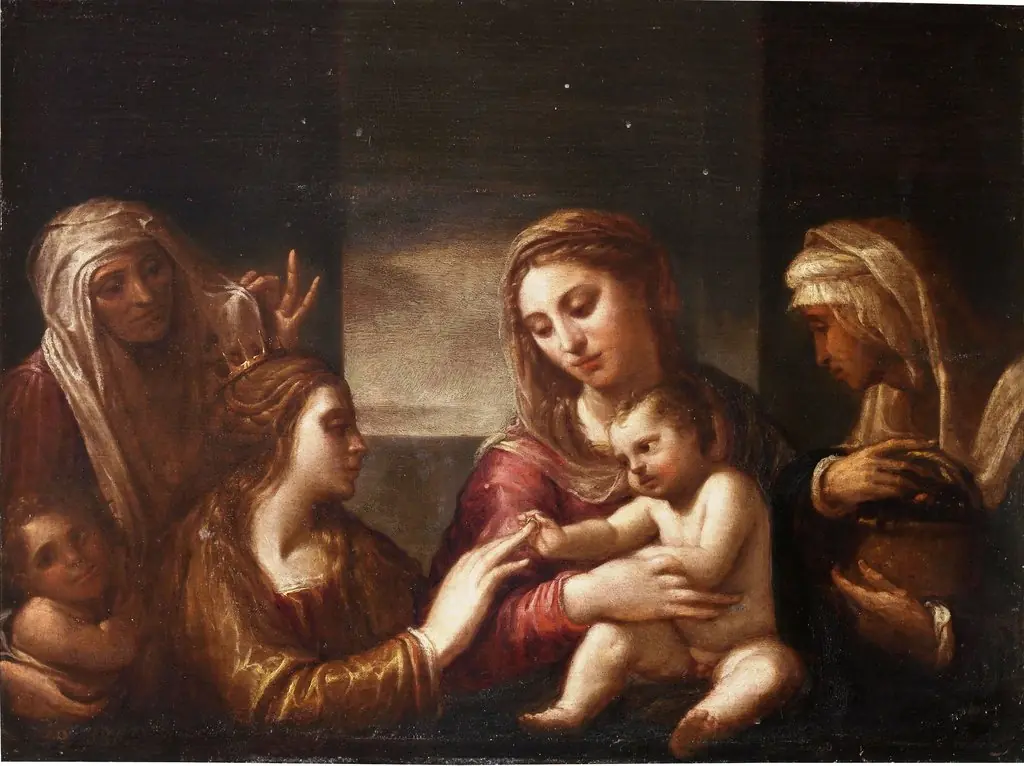 The Mystical Betrothal of Saint Catherine
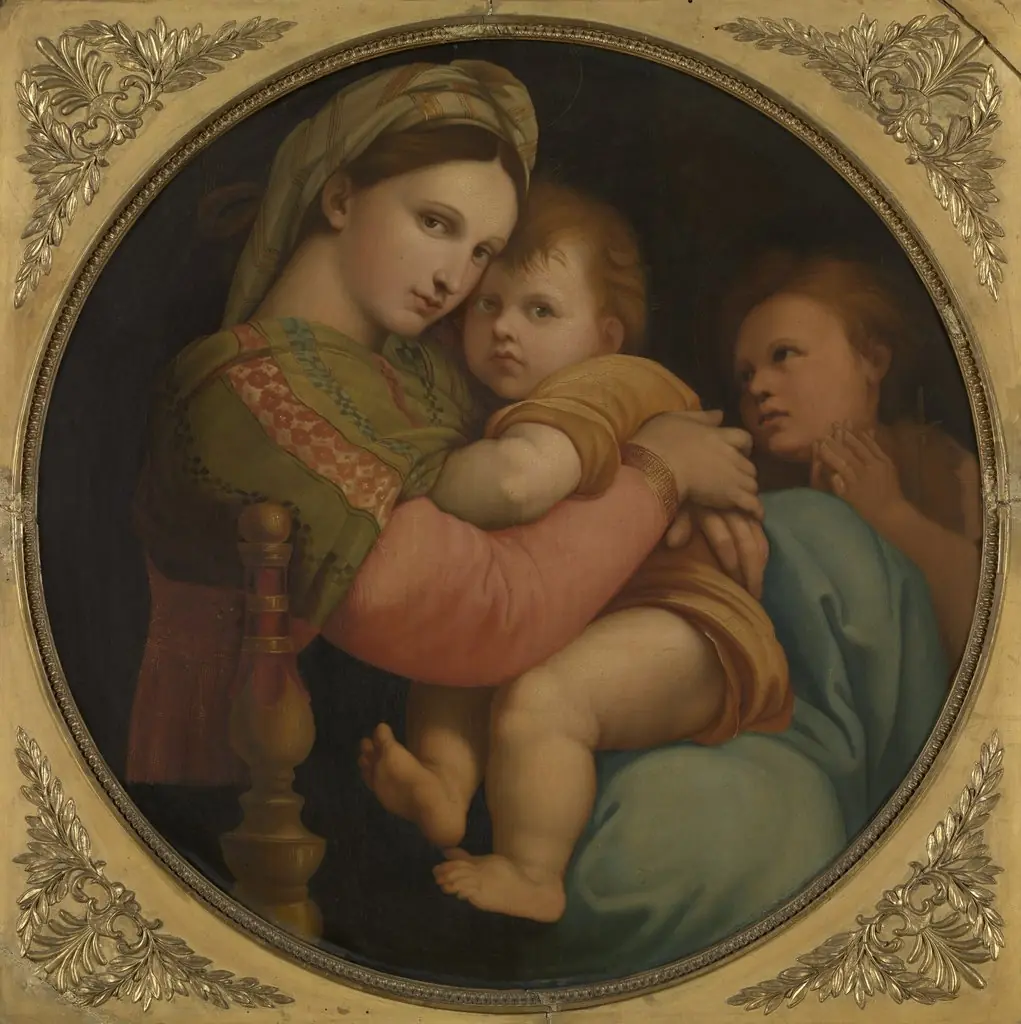 Madonna
 Madonna della Sedia, kopio Rafaelin (Raffaello Sanzio) mukaan
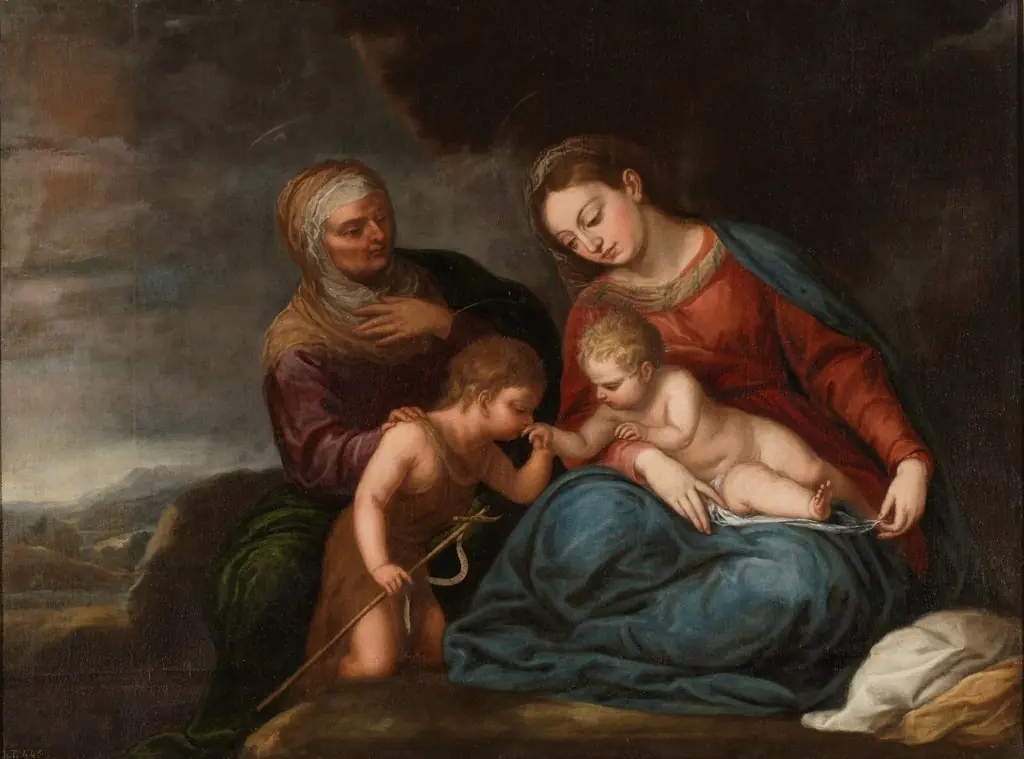 The Virgin and Child with Saints Elizabeth and John
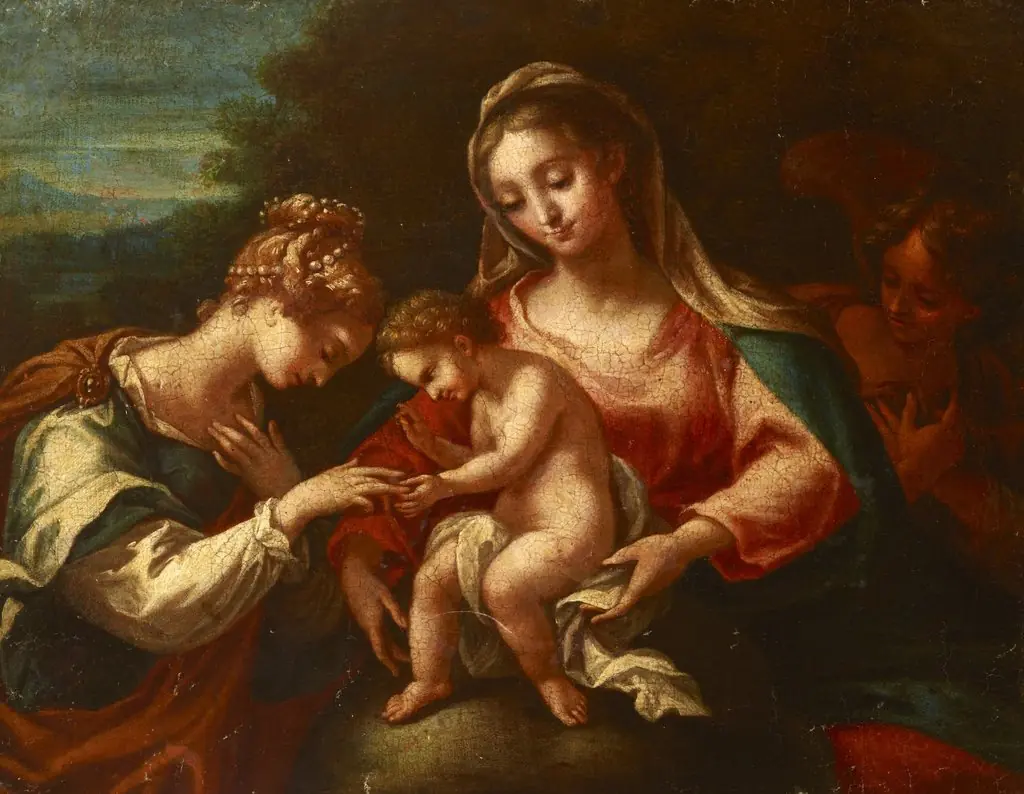 Mistic Marriage of Saint Catherine
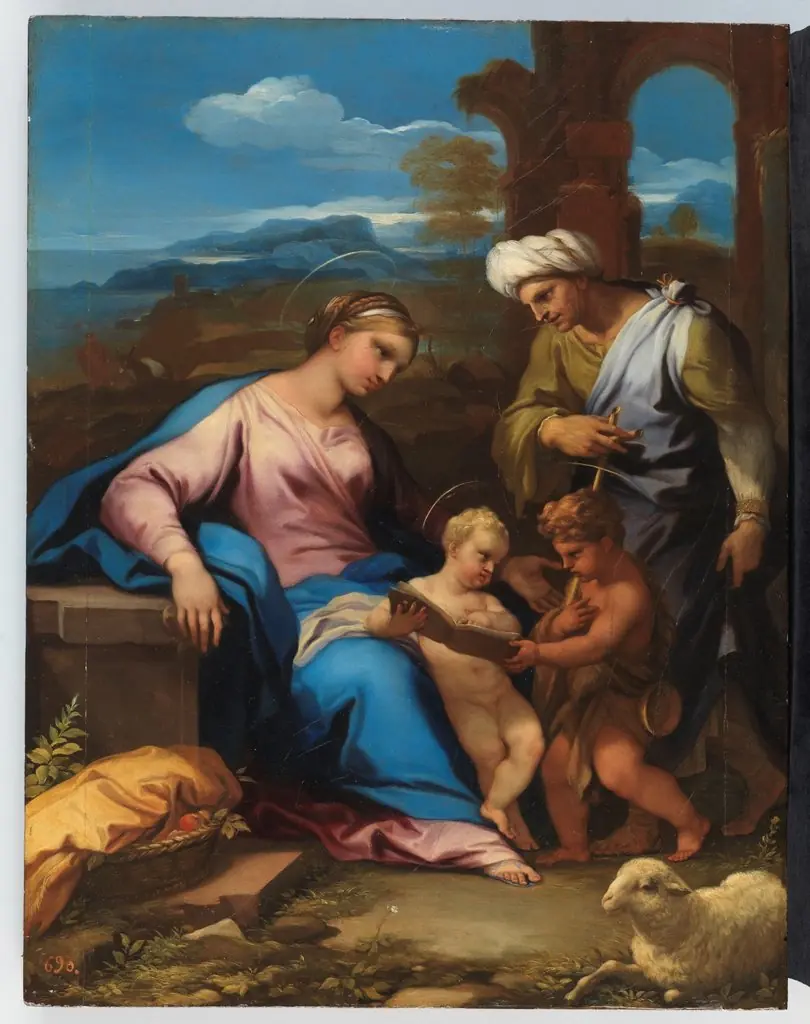 La Sagrada Familia con santa Isabel y san Juanito
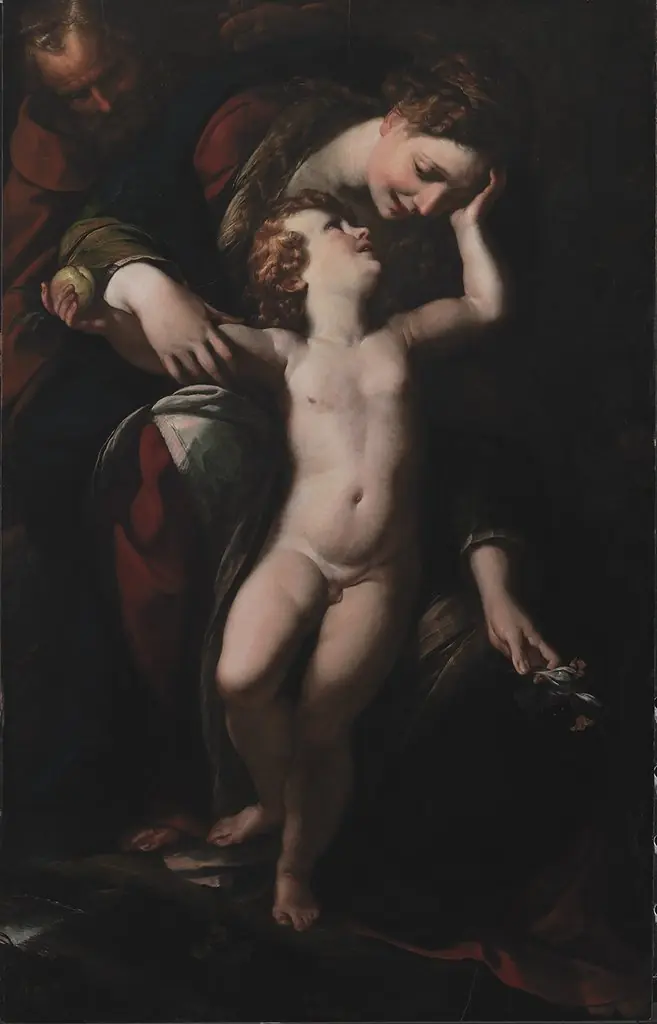 The Holy Family. The Rest on the Flight into Egypt
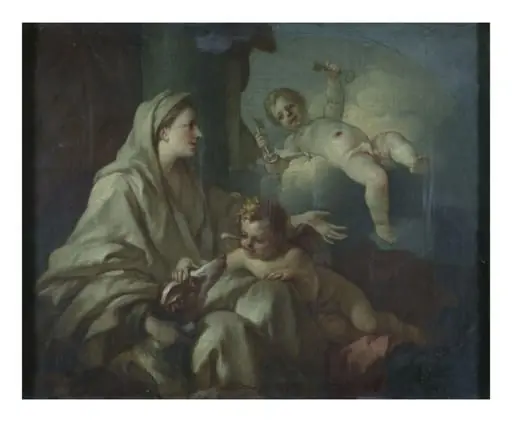 An Allegory
 The Flight into Egypt