Artwork
Fresh Breeze against a high Coast
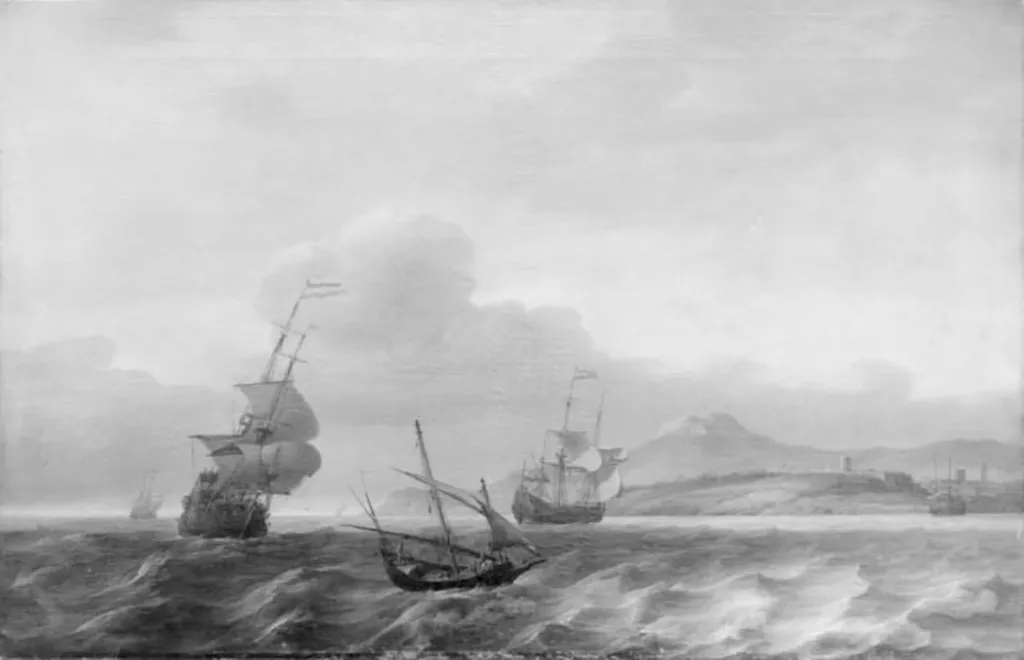
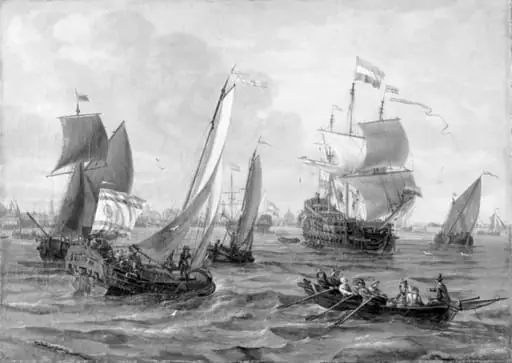
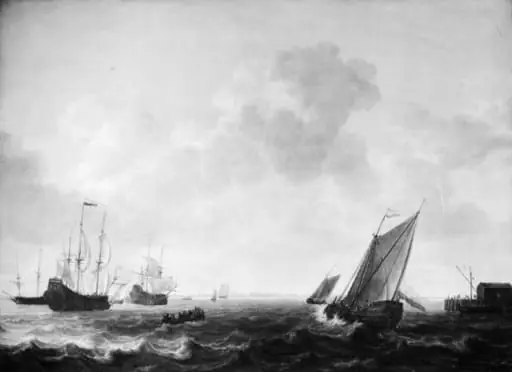
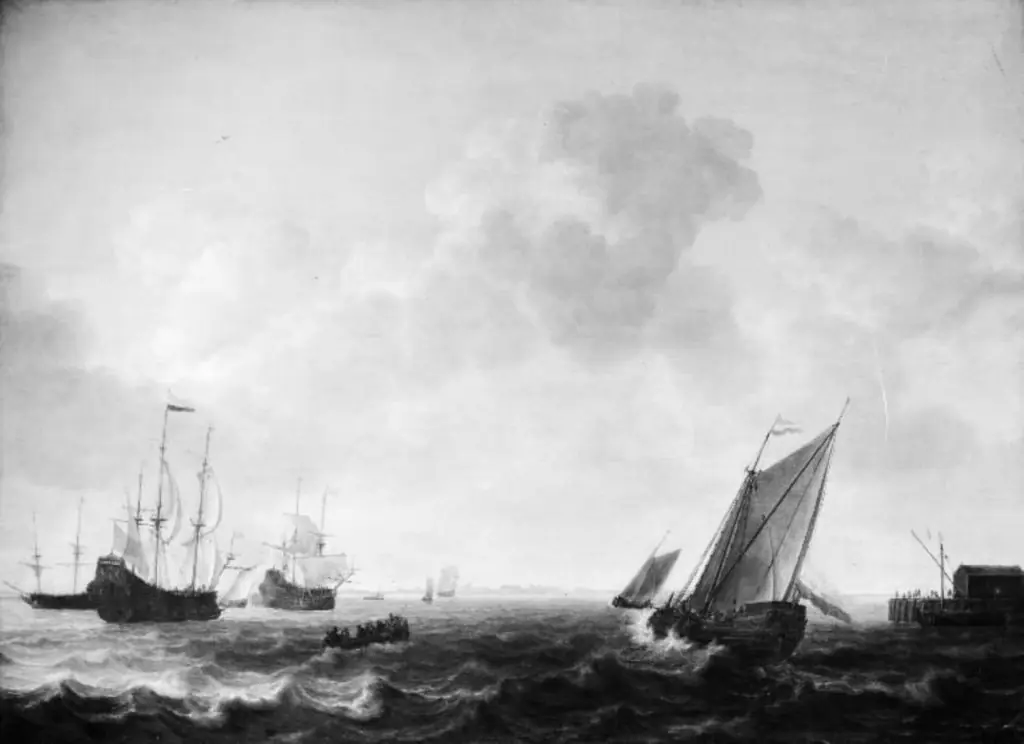
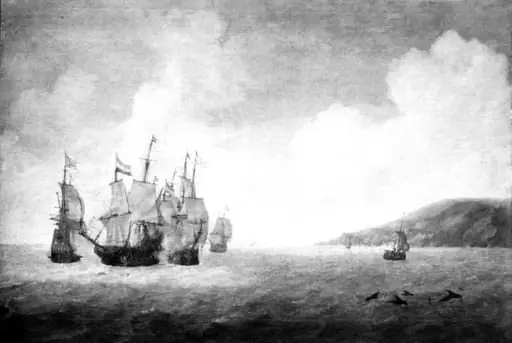
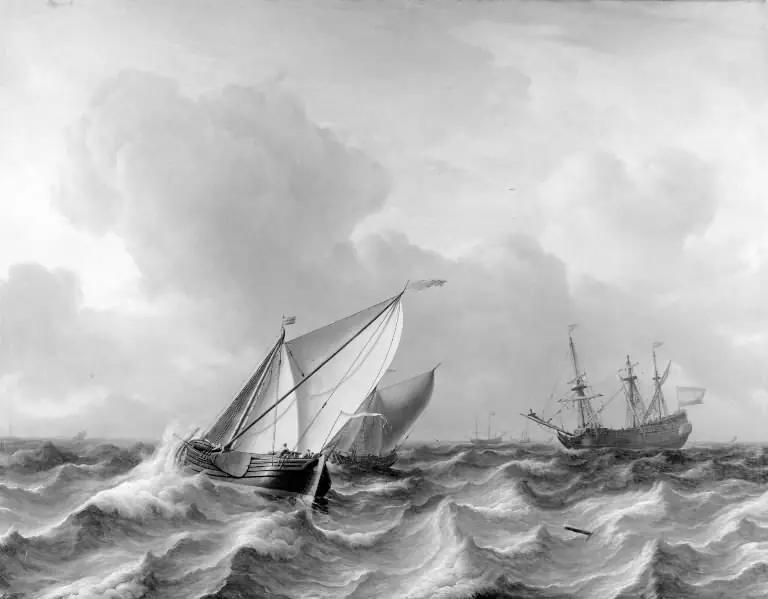
Fresh Breeze against a high Coast is a photography by Unknown. It dates from 1750 and is held in the collection of the Statens Museum for Kunst. Created around 1750, this maritime scene depicts three sailing vessels battling rough seas near a rugged coastline.
About this work
Overview
Created around 1750, this maritime scene depicts three sailing vessels battling rough seas near a rugged coastline. The work is attributed to an artist active in the mid-18th century, though the name remains unverified. It is currently held in the collection of the Museum of Ethnography, where it is preserved as an example of maritime visual culture from the period.
Subject & Meaning
The painting portrays ships in distress amid turbulent waters, with one vessel listing heavily and the others struggling to maintain stability. The distant, obscured coastline and dense fog suggest isolation and vulnerability. The scene evokes the peril faced by seafarers, emphasizing nature’s dominance over human endeavor without overt symbolism or narrative.
Technique & Style
The artist uses layered washes and muted tones to convey atmospheric depth, with fog diffusing the horizon and softening structural details. Wave forms are rendered with energetic brushwork, suggesting motion and force. Light is subdued and uneven, enhancing the sense of gloom and uncertainty, though no clear chiaroscuro contrasts are evident.
History & Provenance
The work entered the Museum of Ethnography’s collection in the late 19th or early 20th century, likely as part of a broader acquisition of maritime artifacts. Its origin prior to museum acquisition is undocumented. No exhibition history or documented ownership before the 1800s has been established.
Context
Produced during a time of expanding global trade and naval activity, the image reflects contemporary awareness of oceanic dangers. While not tied to a specific event, it aligns with broader 18th-century European interest in the sublime power of nature, particularly in coastal and seafaring communities.
Legacy
The painting remains a modest but evocative record of maritime hardship in the 18th century. It contributes to the museum’s collection of seafaring imagery, offering insight into how sailors’ experiences were visually interpreted, though it has not influenced later artistic movements or received scholarly attention beyond its archival value.
Artist & collection

 Domestic Scene
 Giacomo and Cardinal Marco, investing Andrea, Abbot of San Zeno, with his Benefice
 The Nymph of Fontainebleau
 Portrait of a Woman
 Madonna and Child with Saints in the Enclosed Garden
 Venus and Minerva
 Family Group of Four on Sofa
 Wall painting from Room H of the Villa of P. Fannius Synistor at Boscoreale