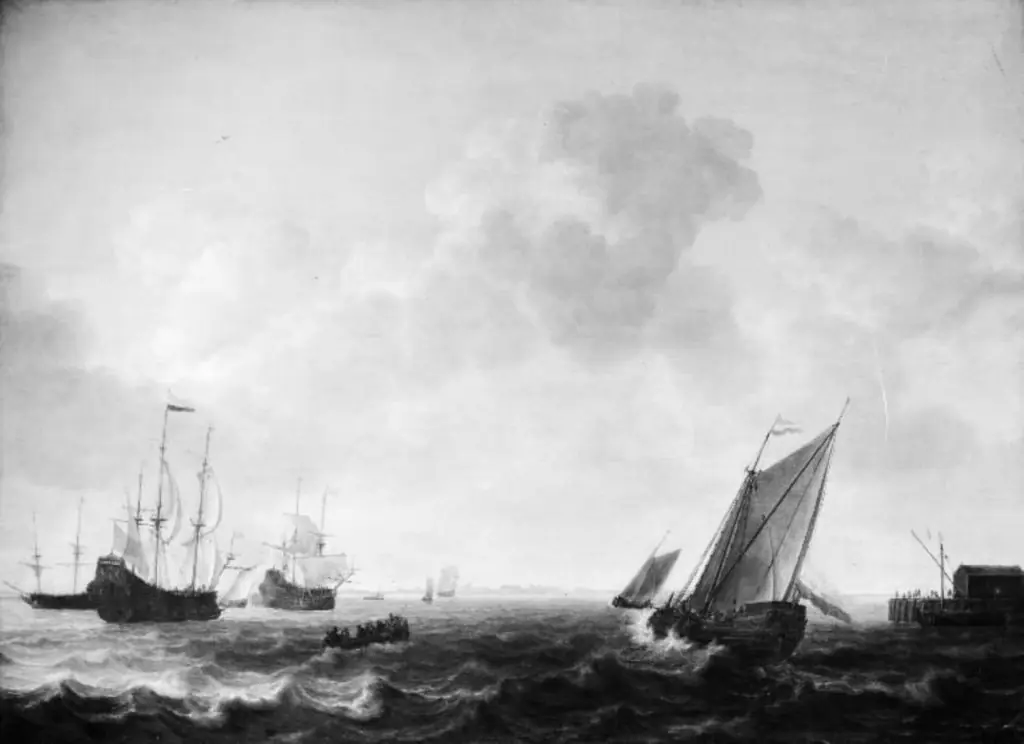
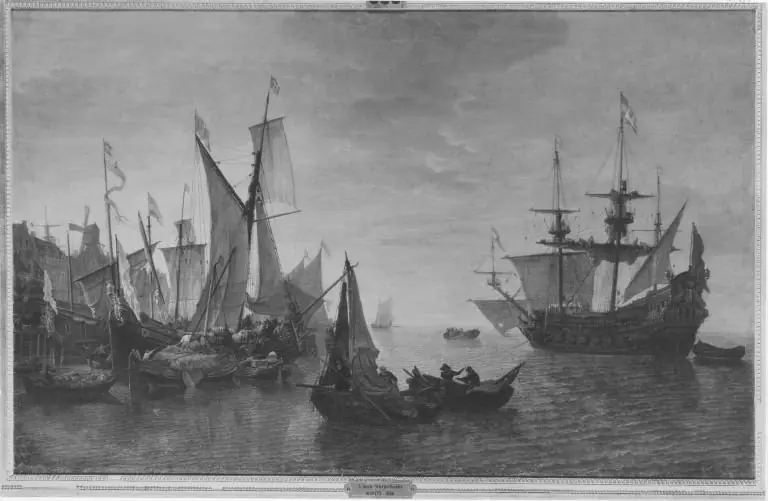
Artwork
Seascape
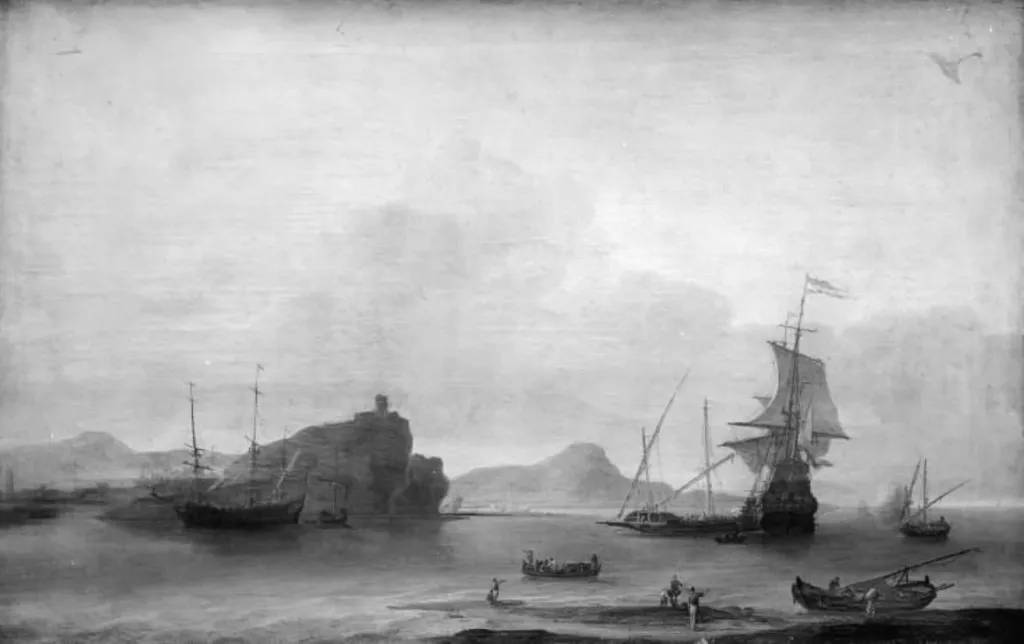
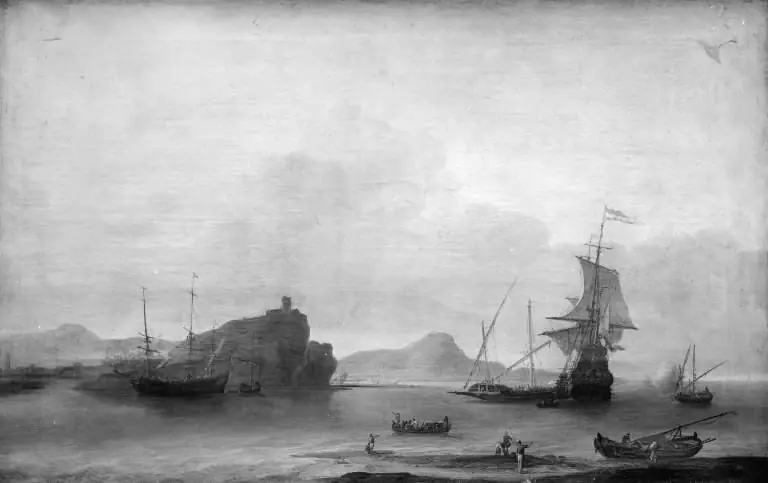
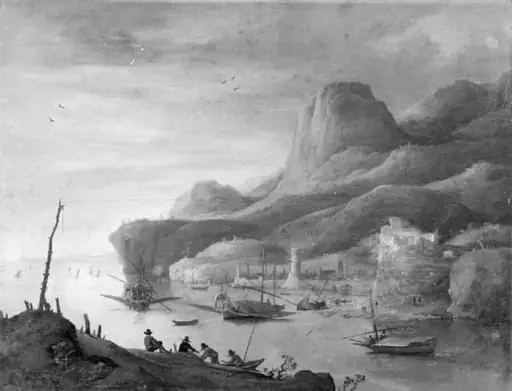
Seascape is a photography by Unknown. It dates from 1656 and is held in the collection of the Statens Museum for Kunst. This work, dated around 1656, depicts a tranquil harbor with three large vessels at anchor near a rugged coastline.
About this work
Overview
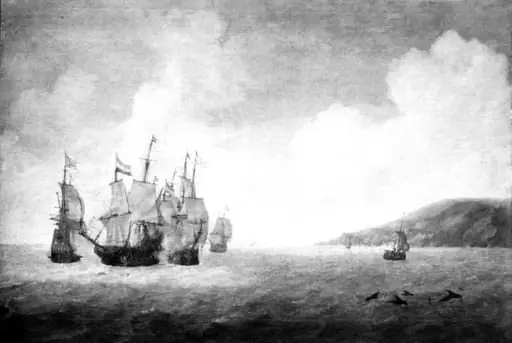
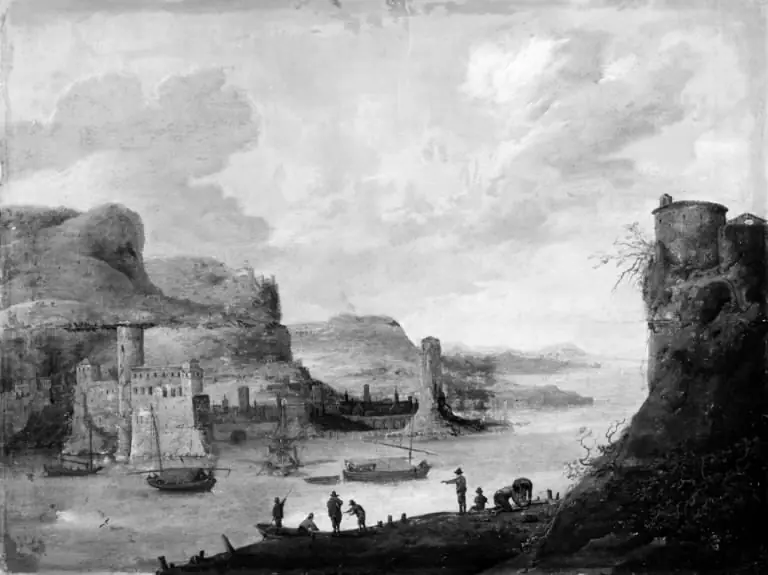
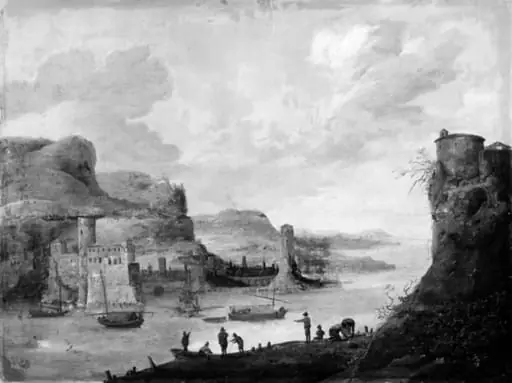
This work, dated around 1656, depicts a tranquil harbor with three large vessels at anchor near a rugged coastline. Smaller boats drift nearer the foreground, while figures on the shore and in the water suggest quiet daily activity. Though cataloged as a painting, its soft focus and muted tones resemble early photographic prints, raising questions about its medium and production method.
Subject & Meaning
The scene captures a moment of stillness in maritime life—ships at rest, small boats in motion, and solitary figures engaged in routine tasks. The absence of dramatic action or symbolic elements suggests a documentary impulse, perhaps recording a specific port or fleet. The faded quality evokes temporal distance, implying memory or the passage of time rather than idealized grandeur.
Technique & Style
The rendering lacks the sharpness typical of contemporary oil paintings, instead resembling early photographic processes.
The image exhibits a blurred, low-contrast aesthetic with indistinct details on sails and rigging. Colors are subdued, dominated by pale skies and muted grays and browns. The rendering lacks the sharpness typical of contemporary oil paintings, instead resembling early photographic processes. This stylistic choice may reflect experimental techniques or the degradation of the support material over centuries.
History & Provenance
The work resides in the Museum of Ethnography, though its origins prior to institutional acquisition remain unclear. Its classification as a painting is inconsistent with its visual characteristics, leading to scholarly debate over whether it is a painted surface, a photographic print, or a hybrid object. No documented commission or artist signature accompanies the piece.
Context
In the mid-17th century, maritime imagery often served commercial, military, or religious purposes. This work’s quiet, unadorned composition diverges from such norms, suggesting a more personal or observational intent. The possible use of early photographic technology, if confirmed, would place it among the earliest known attempts to capture marine scenes with light-sensitive materials.
Legacy
The work’s ambiguous medium and subdued aesthetic have made it a point of interest for scholars studying the transition from painted to photographic representation. Its presence in an ethnographic collection, rather than an art museum, underscores its perceived role as a cultural artifact rather than a fine art object, inviting reconsideration of how historical images are categorized.
Artist & collection

 Domestic Scene
 Giacomo and Cardinal Marco, investing Andrea, Abbot of San Zeno, with his Benefice
 The Nymph of Fontainebleau
 Portrait of a Woman
 Madonna and Child with Saints in the Enclosed Garden
 Venus and Minerva
 Family Group of Four on Sofa
 Wall painting from Room H of the Villa of P. Fannius Synistor at Boscoreale