Artwork
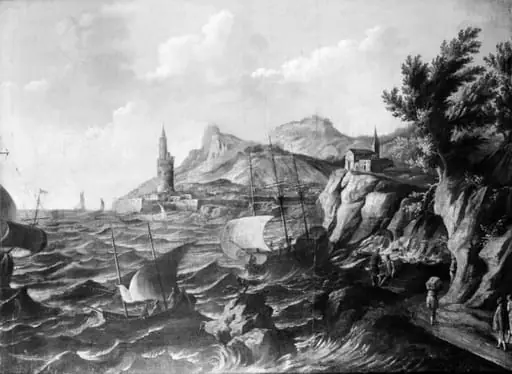
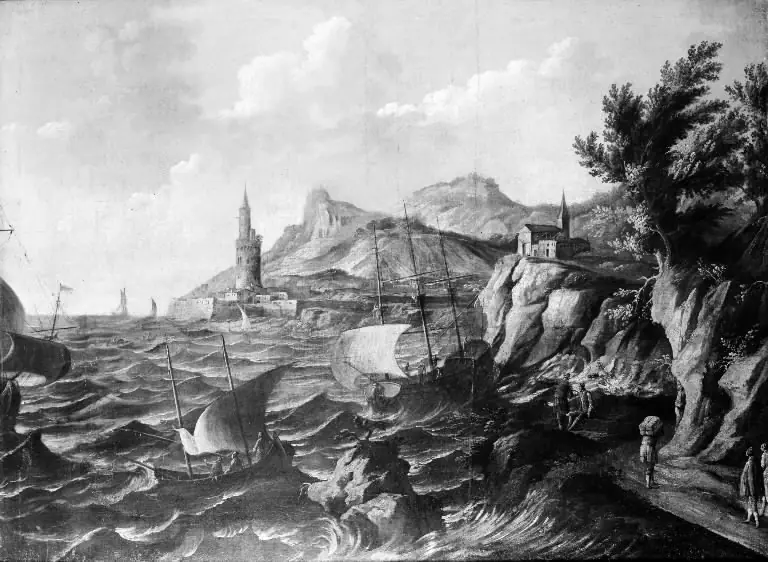
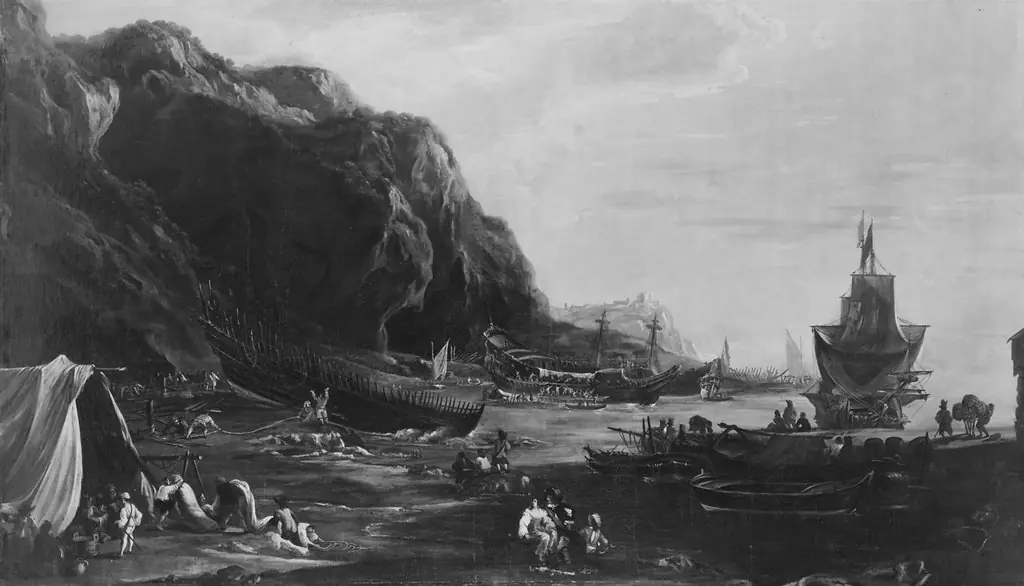
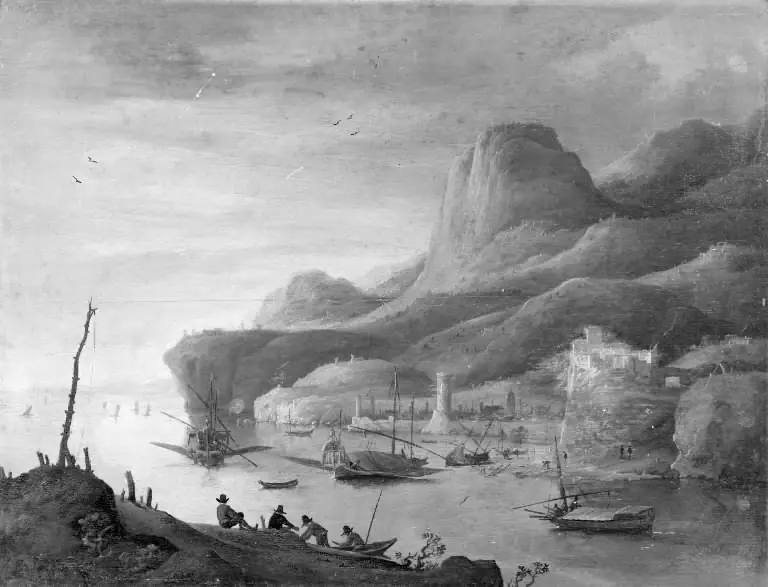
Ved høje bjerge ligger en italiensk søhavn med galejer og felukker
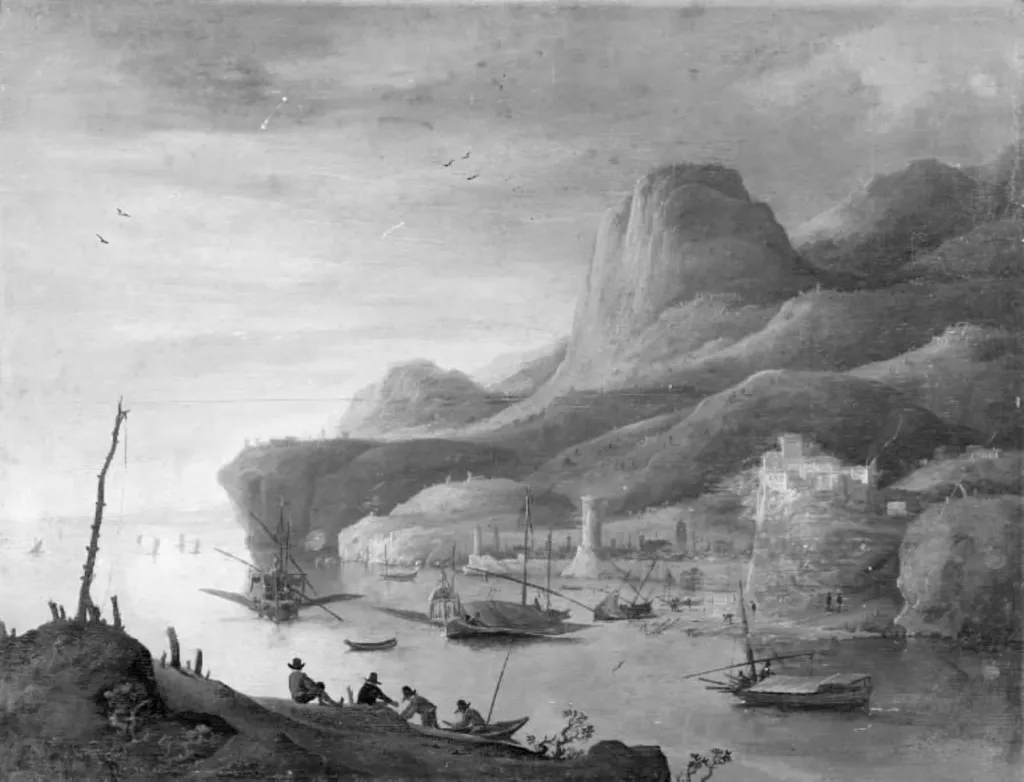
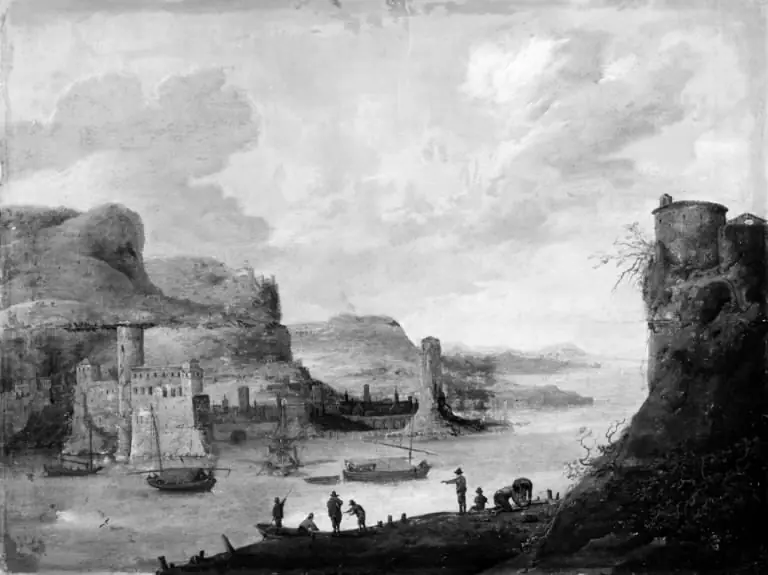
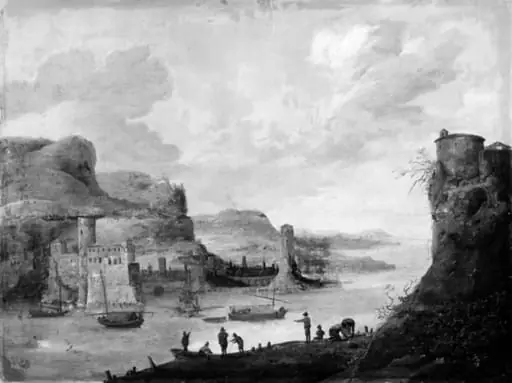
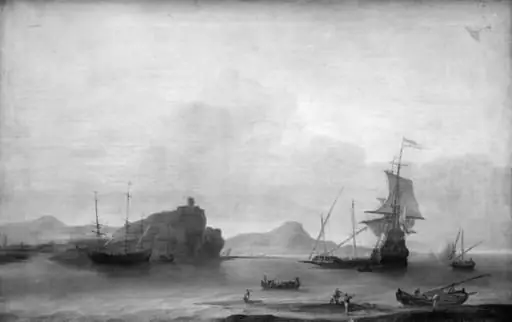
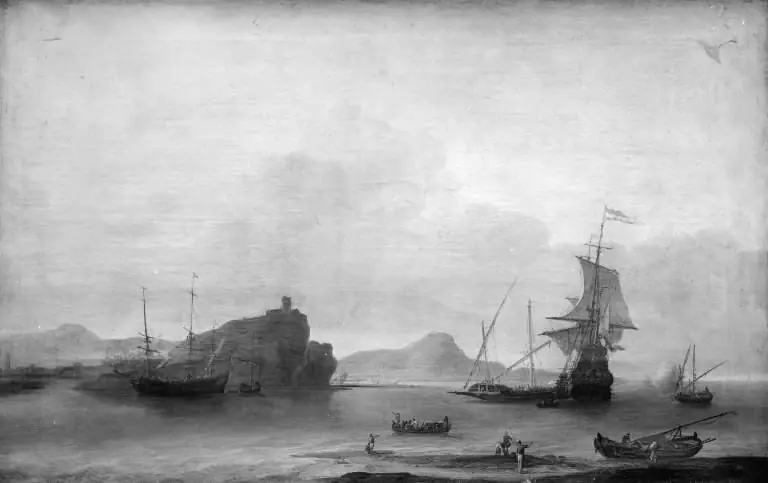
Ved høje bjerge ligger en italiensk søhavn med galejer og felukker is a photography by Unknown. It dates from 1644 and is held in the collection of the Statens Museum for Kunst. Created around 1644, this landscape painting depicts a secluded Italian harbor nestled between towering cliffs.
About this work
Overview
Created around 1644, this landscape painting depicts a secluded Italian harbor nestled between towering cliffs.
Created around 1644, this landscape painting depicts a secluded Italian harbor nestled between towering cliffs. The scene includes small rowboats, larger vessels, and clustered buildings clinging to the rocky terrain. It is held in the collection of the Museum of Ethnography, though its origins lie in the tradition of Northern European topographical painting rather than ethnographic documentation.
Subject & Meaning
The painting presents a tranquil maritime setting, free of dramatic action or narrative. The quiet presence of figures in a rowboat and the stillness of anchored vessels suggest a moment of pause, perhaps reflecting the rhythm of daily life in a coastal community. The emphasis on natural topography and modest human activity conveys a sense of harmony between settlement and landscape.
Technique & Style
The artist employs subtle tonal gradations to model form and suggest spatial depth, using chiaroscuro to define the contours of cliffs and buildings. Soft transitions between light and shadow avoid harsh contrasts, lending the scene a muted, atmospheric quality. Brushwork is restrained, favoring clarity of form over expressive detail, consistent with 17th-century Nordic landscape conventions.
History & Provenance
The work’s creator remains unidentified, though it is attributed to a Northern European artist active in the mid-17th century. It entered the Museum of Ethnography’s collection in the late 19th or early 20th century, likely acquired as part of a broader interest in regional European scenes rather than for ethnographic significance.
Context
During the 1640s, Northern European artists increasingly turned to Italianate landscapes as subjects, often based on travel sketches or secondhand accounts. This painting reflects that trend, blending observed detail with idealized topography. Unlike Italian contemporaries, the artist avoids grandeur, favoring quiet observation over theatrical composition.
Legacy
Though not widely exhibited or studied, the painting contributes to the understanding of how Northern artists interpreted Mediterranean scenes during the Baroque period. Its restrained aesthetic and focus on quiet realism offer a counterpoint to the more dramatic Italianate traditions, preserving a lesser-known strand of landscape representation.
Artist & collection

 Domestic Scene
 Giacomo and Cardinal Marco, investing Andrea, Abbot of San Zeno, with his Benefice
 The Nymph of Fontainebleau
 Portrait of a Woman
 Madonna and Child with Saints in the Enclosed Garden
 Venus and Minerva
 Family Group of Four on Sofa
 Wall painting from Room H of the Villa of P. Fannius Synistor at Boscoreale