Artwork
Roman Landscape with the Tiber and the Casino Belvedere
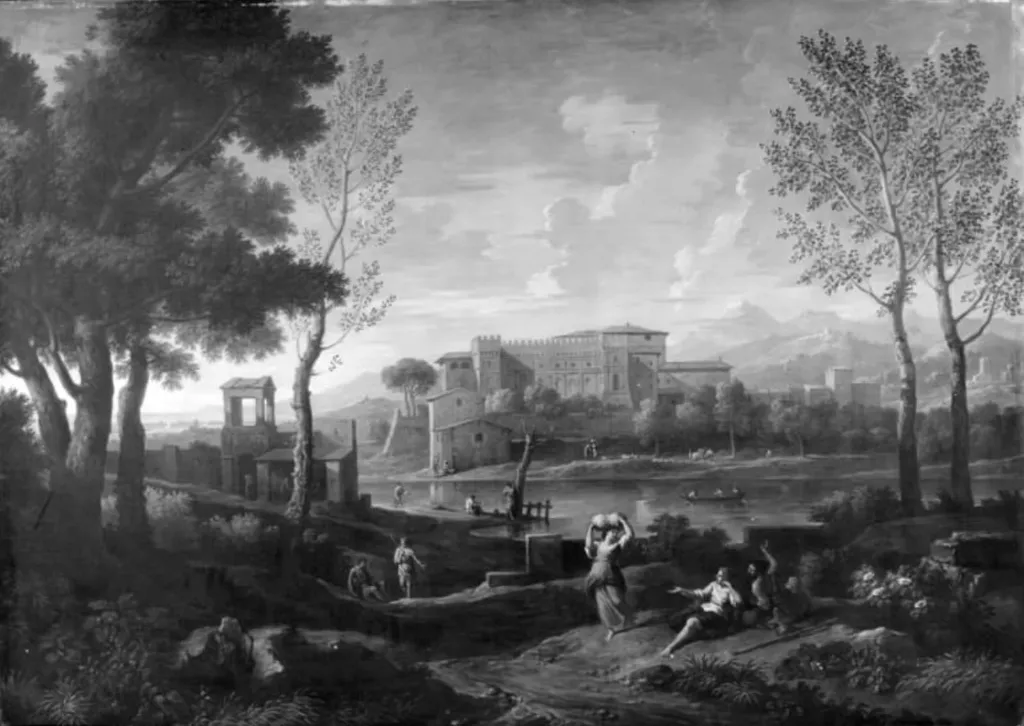
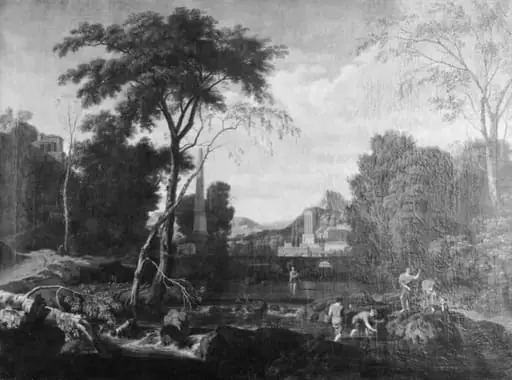
Roman Landscape with the Tiber and the Casino Belvedere is an unspecified painting by Unknown. It dates from 1750 and is held in the collection of the Statens Museum for Kunst. This landscape painting, dated around 1750, depicts a tranquil stretch of the Tiber River near the Casino Belvedere.
About this work
Overview
This landscape painting, dated around 1750, depicts a tranquil stretch of the Tiber River near the Casino Belvedere.
This landscape painting, dated around 1750, depicts a tranquil stretch of the Tiber River near the Casino Belvedere. The scene is rendered with quiet precision, focusing on the interplay of natural elements and modest human presence. It is currently held in the collection of the Museum of Ethnography, though its origins lie in the tradition of Italian topographical views rather than ethnographic documentation.
Subject & Meaning
The painting presents a serene moment of rest along the riverbank, with three figures arranged in relaxed postures: one standing, one seated, another reclining. Their presence is unobtrusive, suggesting a contemplative engagement with the landscape rather than narrative action. The distant Casino Belvedere and scattered buildings frame the scene as a record of place, not event, emphasizing harmony between human activity and the natural environment.
Technique & Style
The artist employs chiaroscuro to model forms through subtle contrasts of light and shadow, directing attention toward the figures by the water. Soft transitions between illuminated and shaded areas lend depth to the trees, river, and distant architecture. The brushwork is restrained, favoring atmospheric coherence over detailed ornamentation, aligning with the observational ethos of 18th-century landscape painting.
History & Provenance
The work was likely created during a period when Italian landscapes were sought after by collectors and travelers. Its current placement in the Museum of Ethnography reflects a later reclassification, possibly due to its depiction of everyday rural life, though its subject matter and style are rooted in the broader European tradition of topographical art rather than ethnographic study.
Context
Painted in the mid-18th century, the work emerges from a tradition of Italian vedute that documented the countryside around Rome. Unlike grand historical scenes, it captures the quiet rhythm of daily life near the Tiber, reflecting a growing interest in naturalism and the picturesque during the Enlightenment. The Casino Belvedere, a Renaissance villa, anchors the scene as a known landmark.
Legacy
Though not widely exhibited, the painting contributes to a body of work that shifted landscape art from idealized compositions toward observed reality. Its quiet composition and careful handling of light reflect influences from Dutch and Roman schools, offering a modest but significant example of how 18th-century artists documented the Italian countryside with sensitivity and restraint.
Artist & collection

 Domestic Scene
 Giacomo and Cardinal Marco, investing Andrea, Abbot of San Zeno, with his Benefice
 The Nymph of Fontainebleau
 Portrait of a Woman
 Madonna and Child with Saints in the Enclosed Garden
 Venus and Minerva
 Family Group of Four on Sofa
 Wall painting from Room H of the Villa of P. Fannius Synistor at Boscoreale