Artwork
A River Landscape
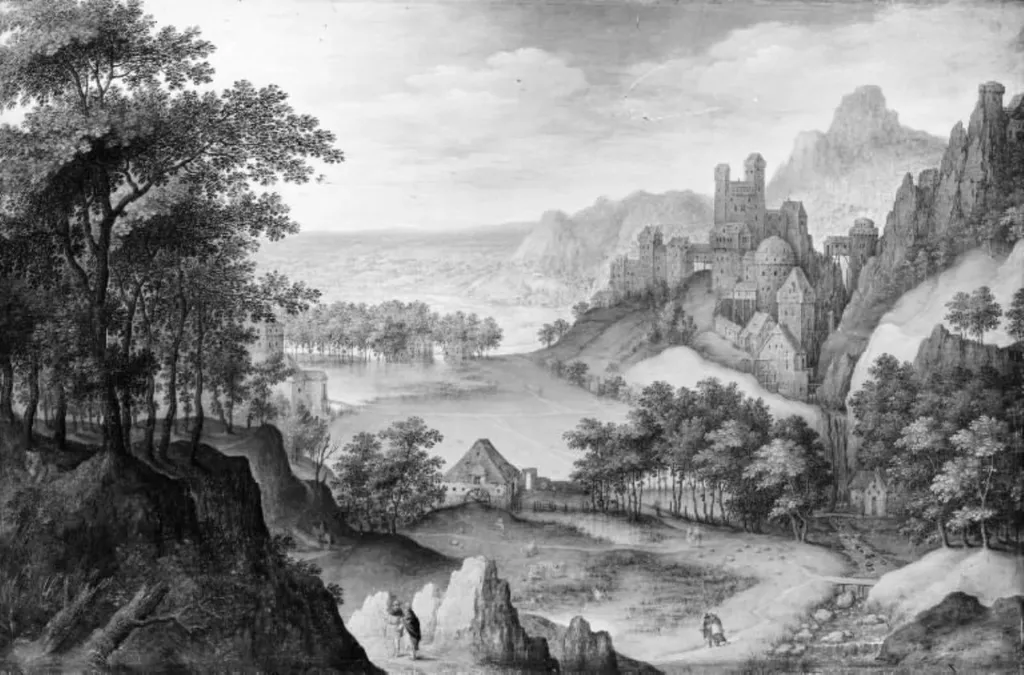
A River Landscape is an unspecified painting by Unknown. It dates from 1550 and is held in the collection of the Statens Museum for Kunst.
About this work
Overview
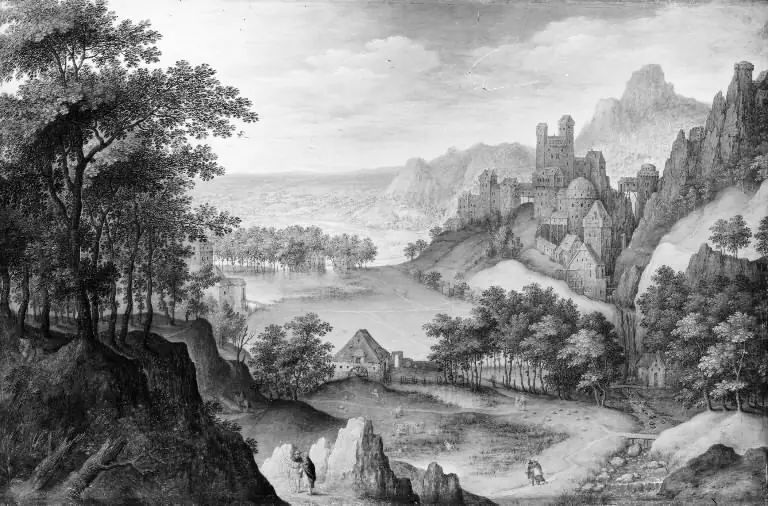
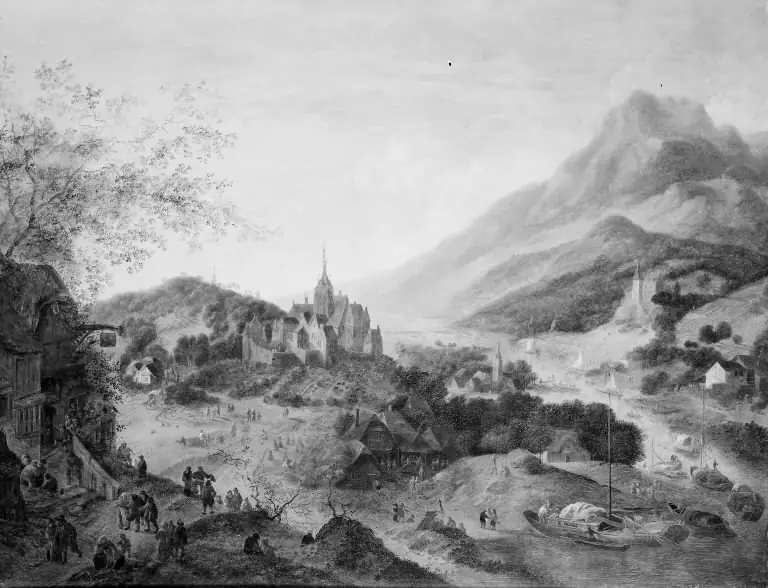
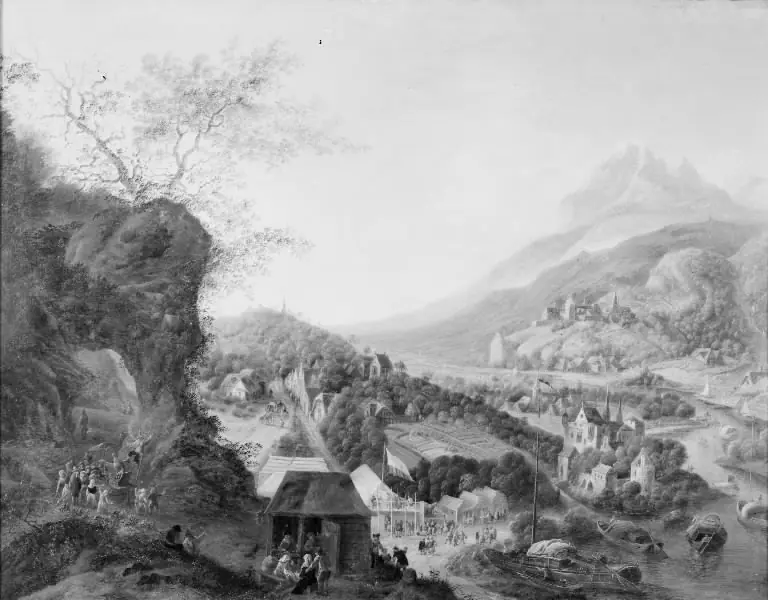
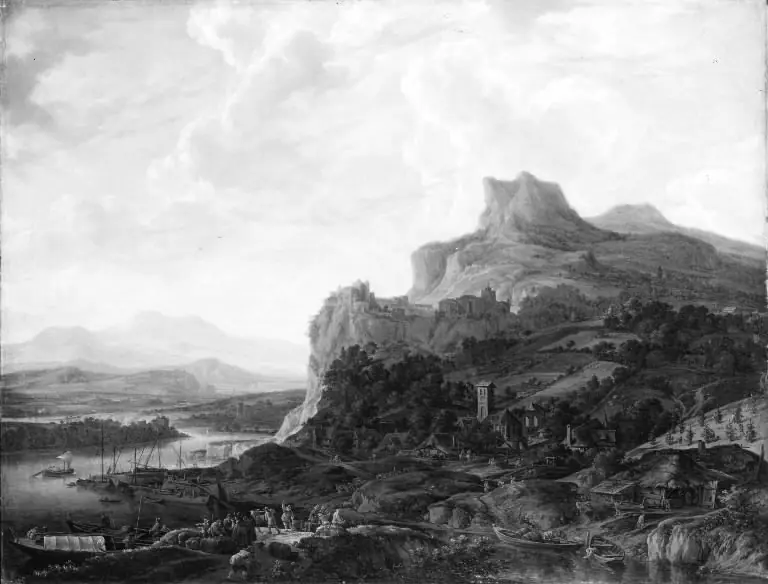
This landscape painting, dated around 1550, depicts a tranquil river flowing through a rural settlement nestled between rolling hills and steep cliffs. The composition emphasizes quietude, with minimal human presence and a focus on natural topography. It is currently held in the collection of the Museum of Ethnography, where it is studied for its early representation of European rural scenery.
Subject & Meaning
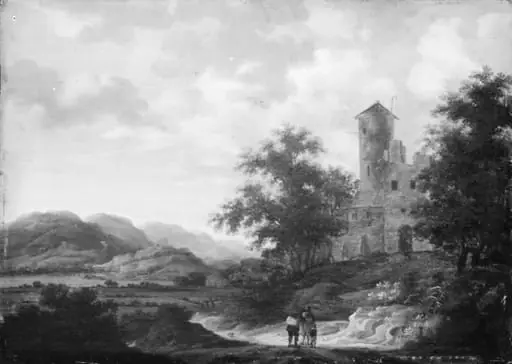
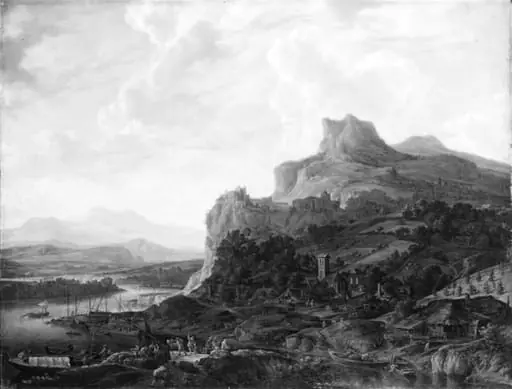
The scene portrays a modest village nestled along a winding river, with a lone figure crossing a small bridge and a distant castle perched on a rocky rise.
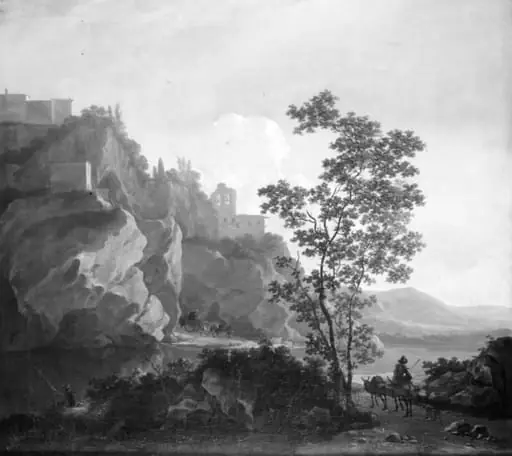
The scene portrays a modest village nestled along a winding river, with a lone figure crossing a small bridge and a distant castle perched on a rocky rise. These elements suggest a harmonious coexistence between human habitation and the natural environment. The absence of dramatic action or symbolic figures implies a contemplative, observational approach rather than a narrative or allegorical intent.
Technique & Style
The artist employs subtle gradations of tone to suggest atmospheric depth, particularly in the hazy hills and the shaded undergrowth along the riverbank. Soft transitions between light and dark areas create a sense of volume without harsh contrasts, reflecting an early use of chiaroscuro to model form and space. Brushwork is restrained, favoring smooth blending over detailed texture.
History & Provenance
The painting’s early provenance is undocumented, but it entered the Museum of Ethnography’s collection in the late 19th century. Its attribution to a specific artist from 1560 remains uncertain, and it is often grouped with anonymous Northern European landscape works of the mid-16th century. Its preservation suggests it was valued as a regional record rather than a celebrated artwork in its time.
Context
Created during a period when landscape painting was emerging as an independent genre in Northern Europe, this work reflects a growing interest in depicting everyday environments without religious or mythological themes. It aligns with regional traditions that favored quiet, observational scenes over grand narratives, possibly influenced by cartographic or topographical practices of the era.
Legacy
Though not widely exhibited or reproduced, the painting contributes to the understanding of early landscape conventions in pre-Baroque Europe. Its muted palette and emphasis on spatial depth influenced later regional artists who sought to capture the quiet character of rural life. It remains a quiet example of how nature was visually documented before the rise of Romanticism.
Artist & collection

 Domestic Scene
 Giacomo and Cardinal Marco, investing Andrea, Abbot of San Zeno, with his Benefice
 The Nymph of Fontainebleau
 Portrait of a Woman
 Madonna and Child with Saints in the Enclosed Garden
 Venus and Minerva
 Family Group of Four on Sofa
 Wall painting from Room H of the Villa of P. Fannius Synistor at Boscoreale