Artwork
Public House by the Rhine
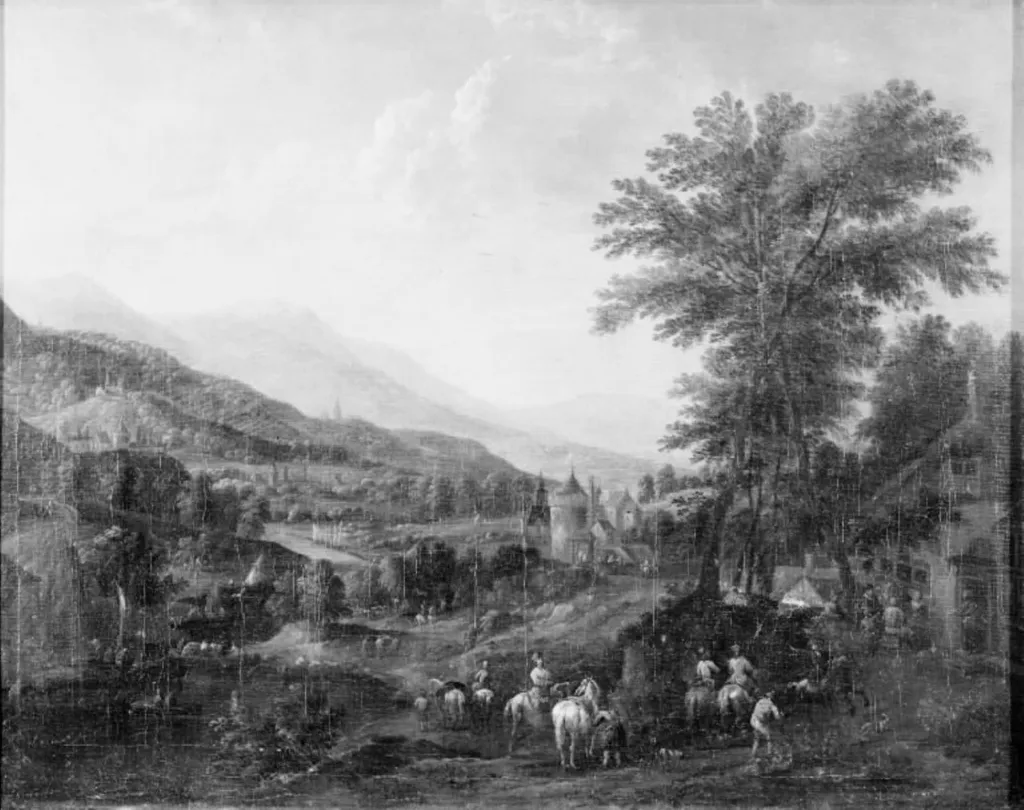
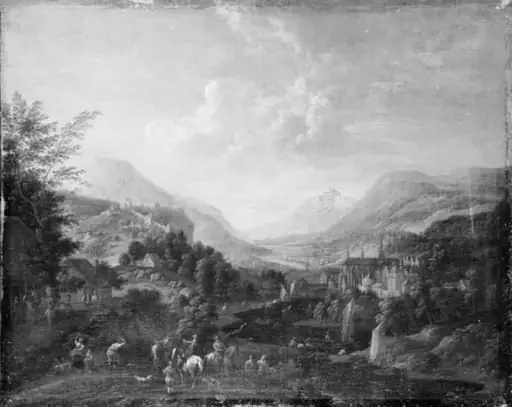
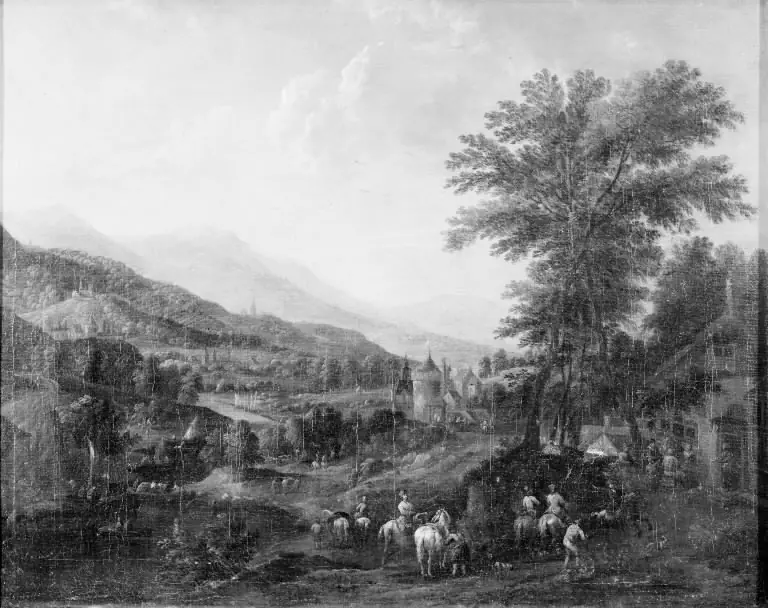
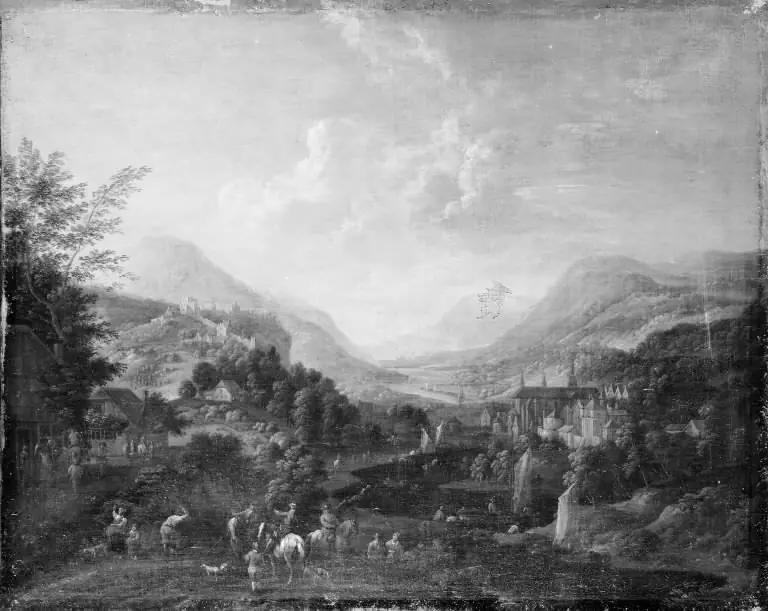
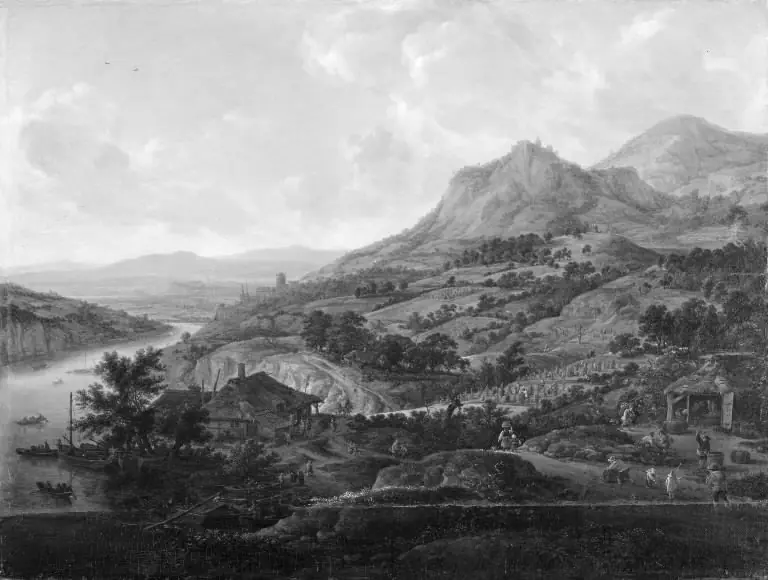
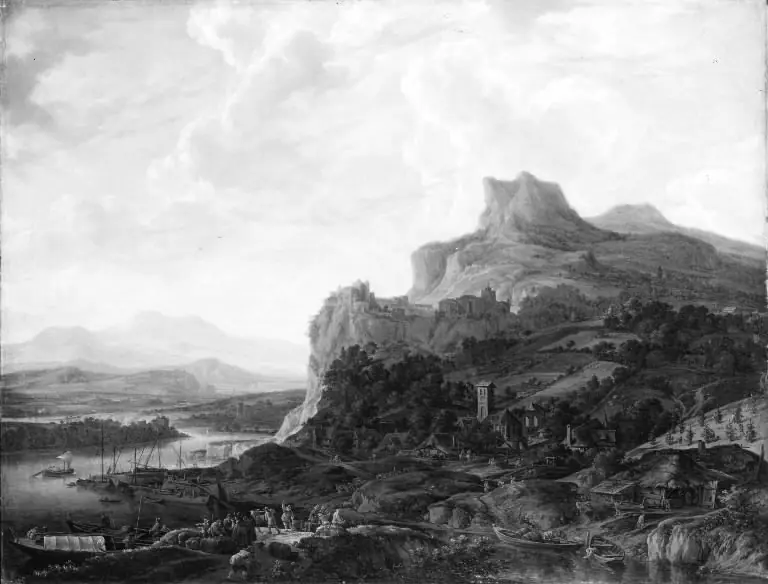
Public House by the Rhine is a photography by Unknown. It dates from 1750 and is held in the collection of the Statens Museum for Kunst. Created around 1750, this image depicts a tranquil riverside scene along the Rhine.
About this work
Overview
Though titled *Public House by the Rhine*, no structure clearly corresponds to such an establishment, leaving its function ambiguous.
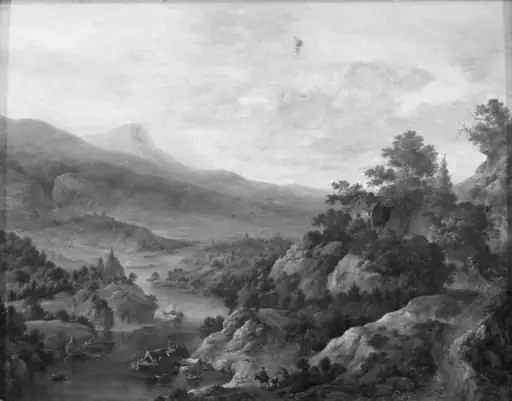
Created around 1750, this image depicts a tranquil riverside scene along the Rhine. A small group of riders approaches the water’s edge, while distant buildings and a church rise on a gently sloping hill. The composition emphasizes stillness, with soft atmospheric effects suggesting early morning or late afternoon light. Though titled *Public House by the Rhine*, no structure clearly corresponds to such an establishment, leaving its function ambiguous.
Subject & Meaning
The scene captures everyday rural life near a major European river, with travelers on horseback suggesting movement through a quiet landscape. The presence of a church implies a settled community, while the absence of overt activity reinforces a sense of solitude. The title’s reference to a public house may be symbolic or misleading, perhaps evoking the idea of hospitality in a remote setting rather than depicting a specific building.
Technique & Style
The image employs muted tones and diffused lighting to evoke a hazy, contemplative mood. Brushwork or tonal gradations suggest subtle shifts in atmosphere, with soft edges between land, sky, and water. The handling of light favors naturalism over drama, avoiding strong contrasts in favor of a gentle, enveloping luminosity that enhances the scene’s quietude.
History & Provenance
The work is held in the collection of the Museum of Ethnography, though its origin as a painting, drawing, or early photographic print is unspecified. Its attribution to an artist identified only as 3211_person suggests limited documentation. The piece likely entered the museum through colonial-era acquisitions or 19th-century ethnographic surveys, though its exact path of collection remains unclear.
Context
In mid-18th-century Europe, landscapes often served as records of place and social order. Scenes along the Rhine reflected regional identity and economic activity tied to river trade. The inclusion of a church and modest dwellings aligns with contemporary depictions of rural life, where architecture and topography conveyed stability and continuity amid changing political boundaries.
Legacy
This image contributes to a broader visual archive of European riverscapes from the period, valued for its understated observation rather than dramatic flair. It reflects a shift toward quiet, observational realism in regional art, influencing later topographical studies. Its preservation in an ethnographic context underscores its role as a cultural document, not merely an aesthetic object.
Artist & collection

 Domestic Scene
 Giacomo and Cardinal Marco, investing Andrea, Abbot of San Zeno, with his Benefice
 The Nymph of Fontainebleau
 Portrait of a Woman
 Madonna and Child with Saints in the Enclosed Garden
 Venus and Minerva
 Family Group of Four on Sofa
 Wall painting from Room H of the Villa of P. Fannius Synistor at Boscoreale