Artwork
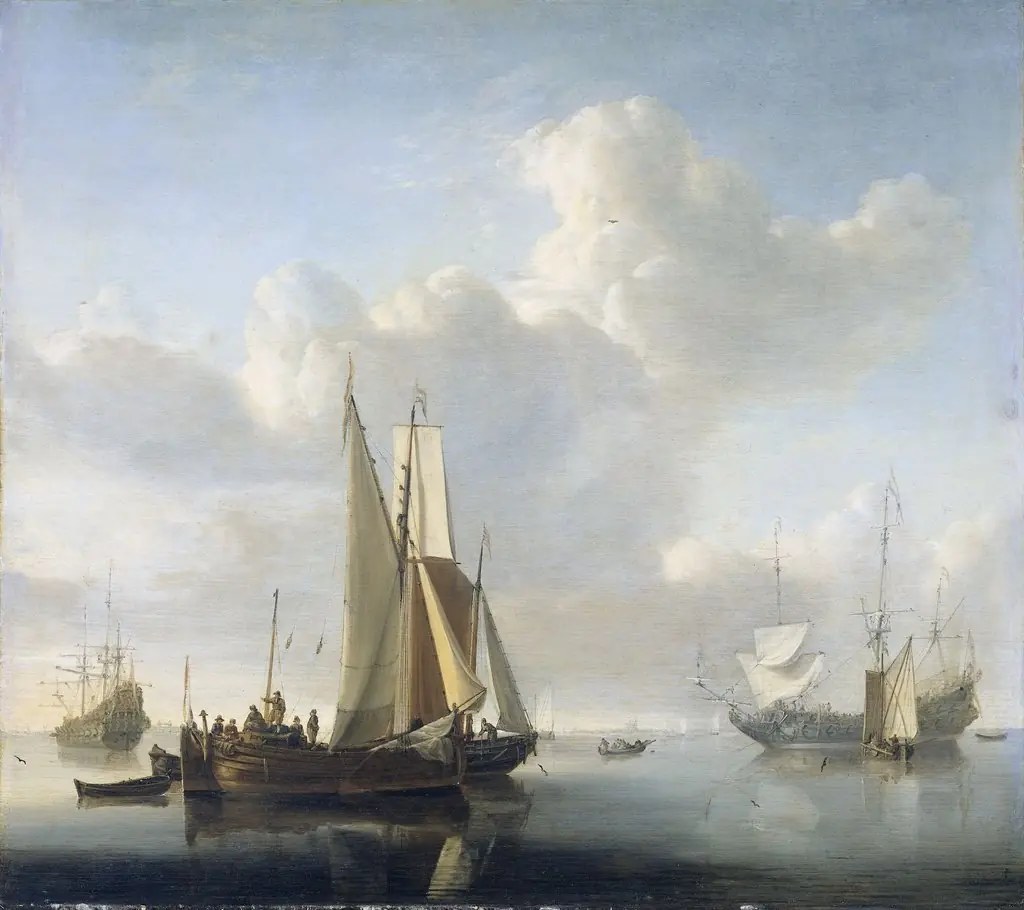
View of a Dutch Roadstead
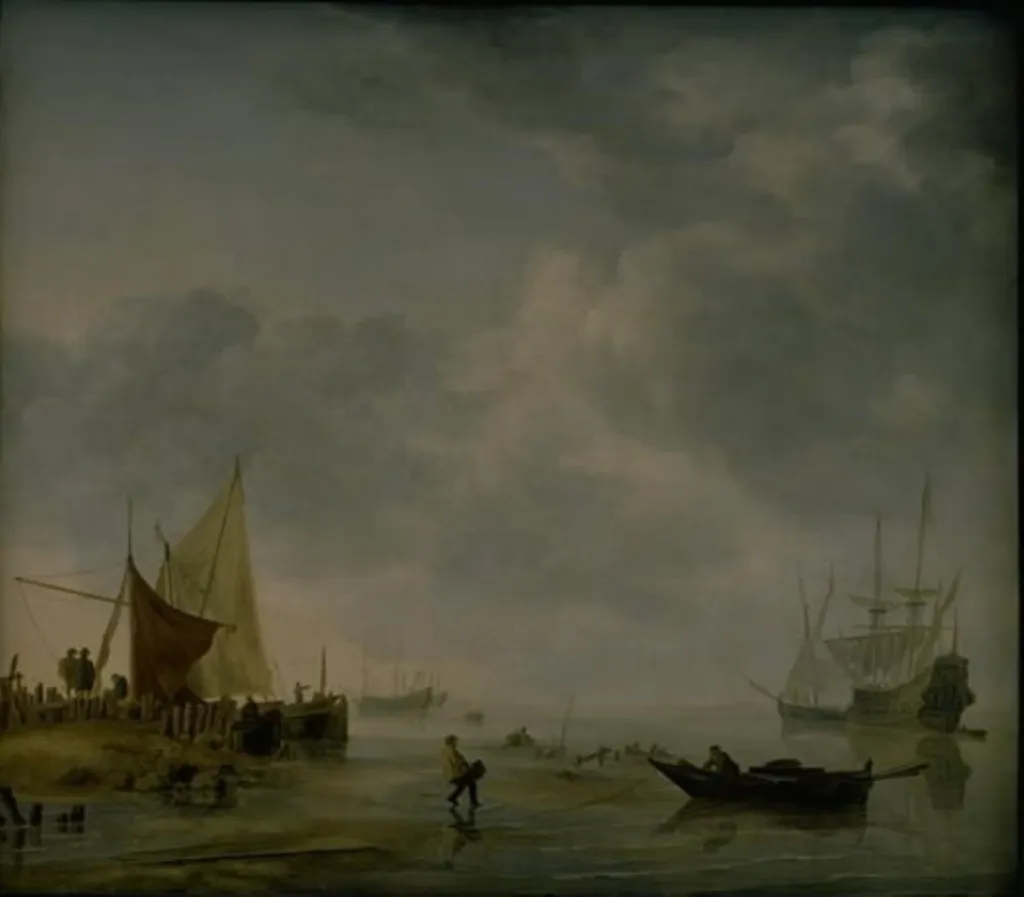
View of a Dutch Roadstead is a photography by Unknown. It dates from 1652 and is held in the collection of the Statens Museum for Kunst.
About this work
Overview
Though labeled as a cityscape, the focus is on the natural harbor rather than urban architecture, reflecting a broader Dutch tradition of maritime observation.
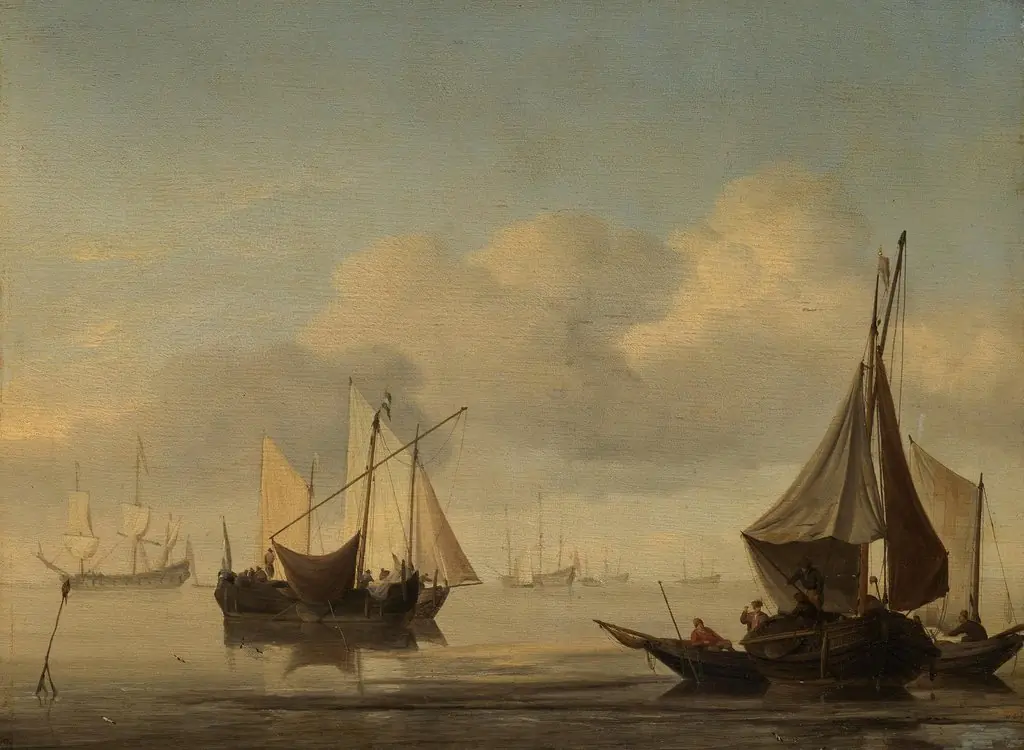
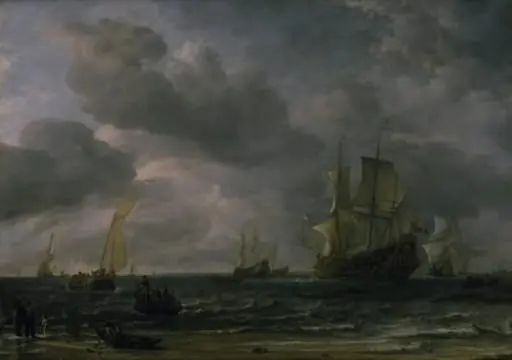
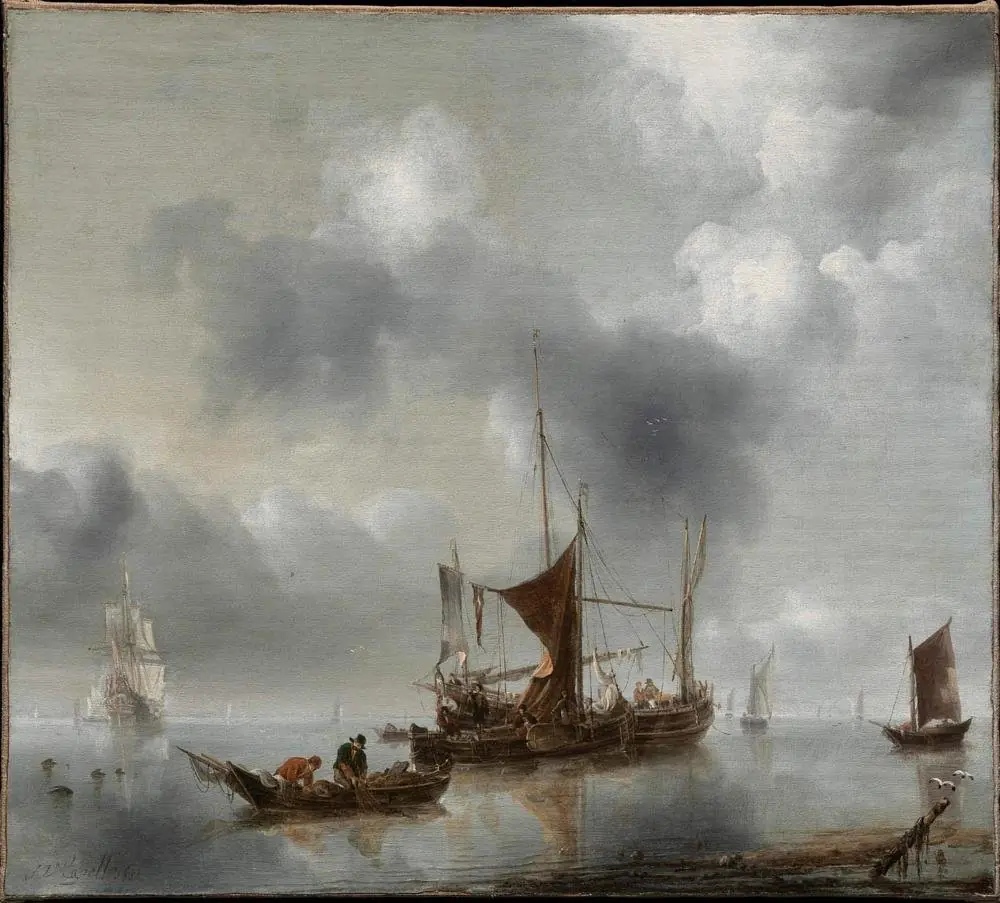
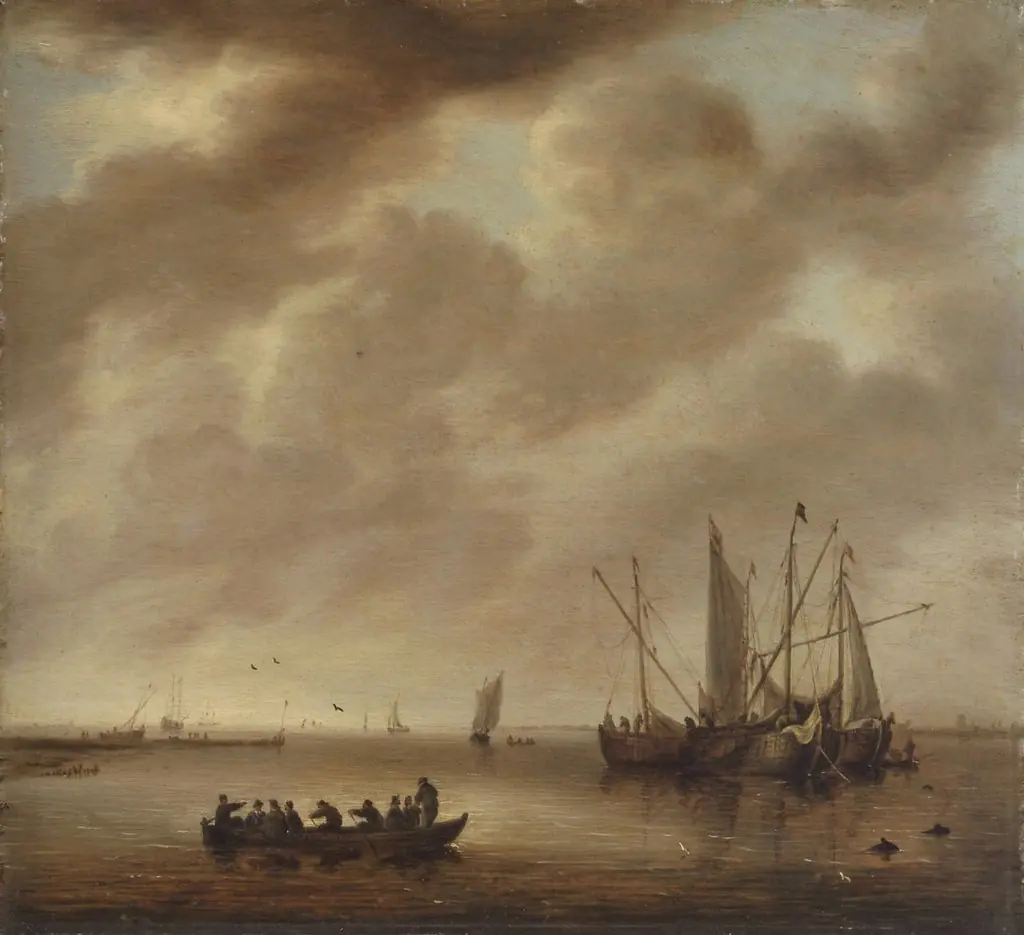
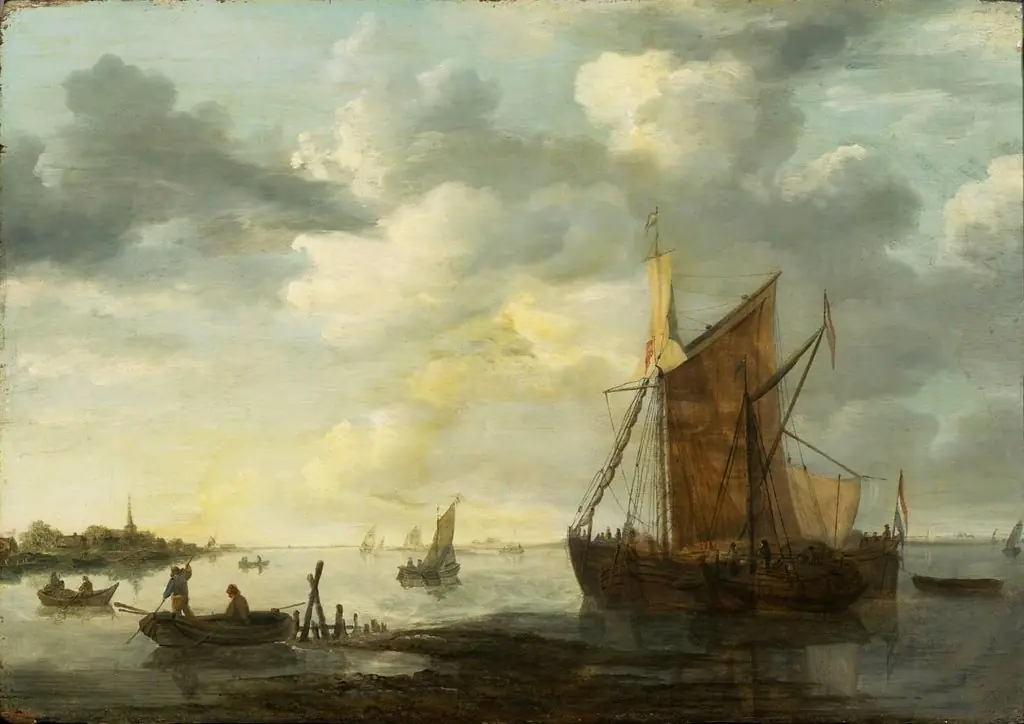
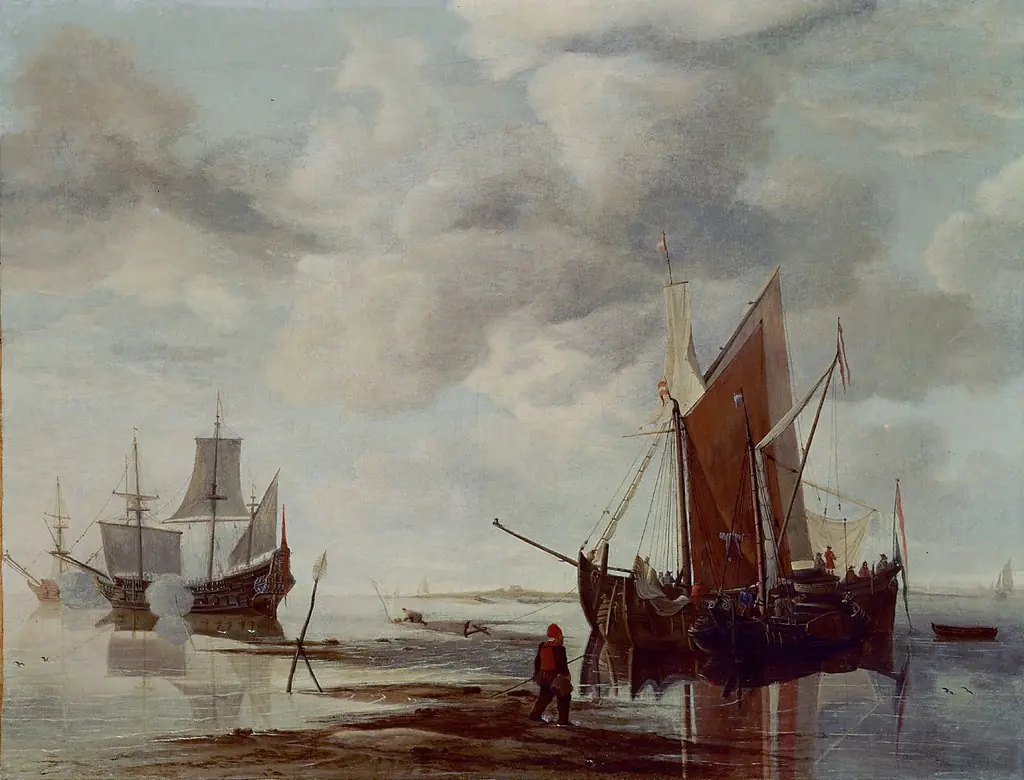
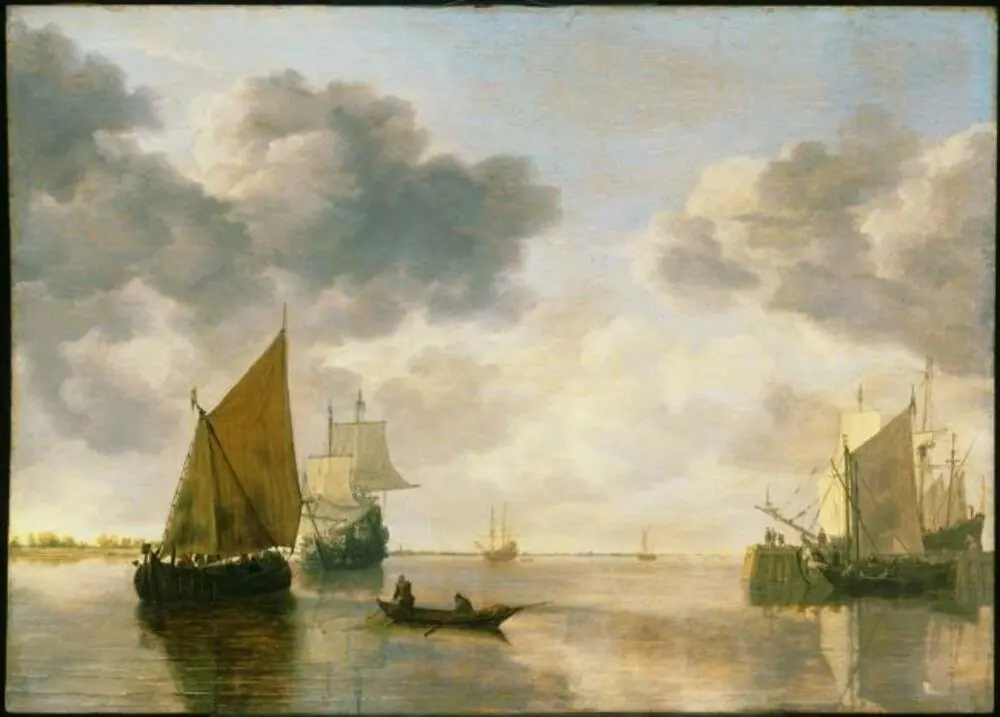
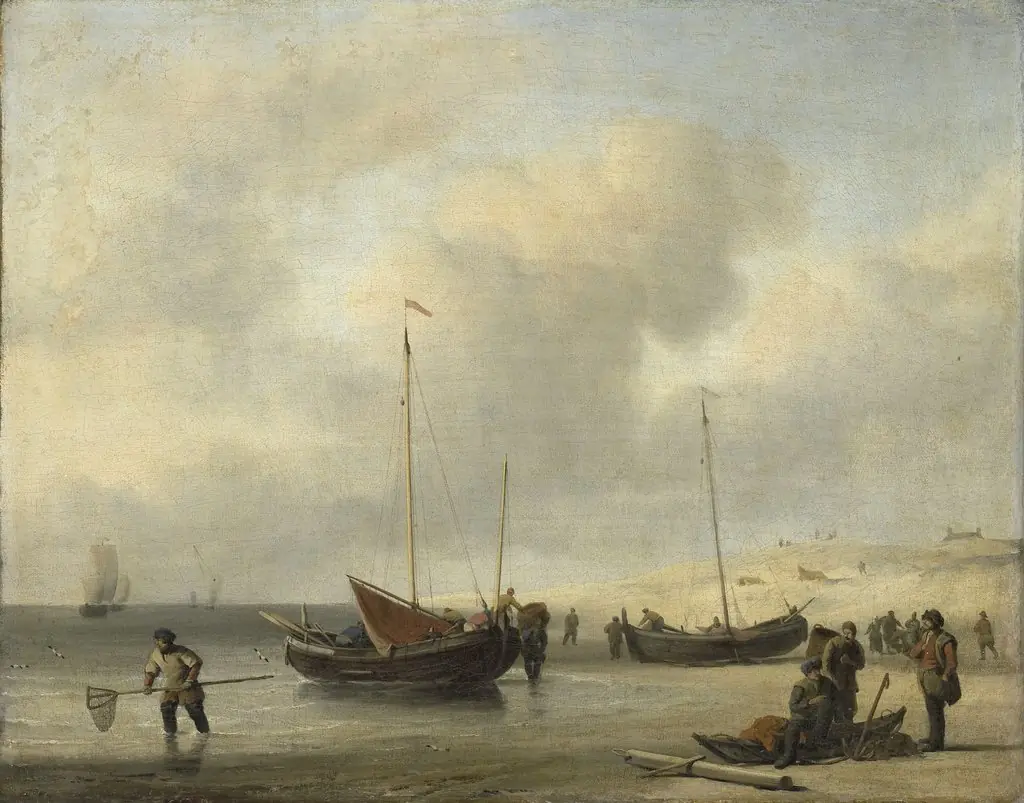
Painted around 1652, this work depicts a quiet coastal scene off the Dutch shore, featuring a calm sea dotted with small vessels and a hazy, overcast sky. The composition emphasizes stillness and spatial depth, with muted blues and grays dominating the palette. Though labeled as a cityscape, the focus is on the natural harbor rather than urban architecture, reflecting a broader Dutch tradition of maritime observation.
Subject & Meaning
The scene captures a roadstead—a sheltered anchorage used by merchant and fishing vessels—suggesting the quiet rhythm of maritime life. Figures in the foreground are indistinct, their activities ambiguous, reinforcing the painting’s emphasis on atmosphere over narrative. The absence of dramatic action or human drama underscores a contemplative view of daily coastal existence, aligned with Dutch values of restraint and quiet industry.
Technique & Style
The artist employs a restrained realism, with soft transitions between sky and sea, and delicate rendering of light on water. Brushwork is precise yet unobtrusive, avoiding overt texture to preserve the scene’s serenity. Color is limited to cool tones—slate blues, pale grays, and muted whites—enhancing the sense of atmospheric cohesion and subdued luminosity characteristic of mid-17th-century Dutch marine painting.
History & Provenance
The painting entered the collection of the Museum of Ethnography in the late 19th or early 20th century, though its earlier ownership remains undocumented. Its classification as an ethnographic object may reflect historical curatorial practices that treated everyday Dutch scenes as cultural artifacts rather than fine art. Its attribution to an artist active from 1639 is tentative, based on stylistic parallels rather than signed documentation.
Context
This work emerges from a period when Dutch painters increasingly turned to coastal and maritime subjects, driven by national pride in seafaring and trade. Unlike grand naval battles or bustling ports, this scene reflects the quieter, routine aspects of maritime life—anchored ships, weathered skies, and uneventful shores—aligning with a broader trend toward intimate, observational painting in the Dutch Golden Age.
Legacy
Though not widely exhibited or studied, the painting contributes to the understanding of how Dutch artists captured the subtleties of everyday maritime environments. Its quietude distinguishes it from more dramatic marine works of the era, offering a counterpoint to the era’s commercial and heroic narratives. It remains a quiet example of how ordinary scenes were rendered with deliberate calm and technical precision.
Artist & collection

 Domestic Scene
 Giacomo and Cardinal Marco, investing Andrea, Abbot of San Zeno, with his Benefice
 The Nymph of Fontainebleau
 Portrait of a Woman
 Madonna and Child with Saints in the Enclosed Garden
 Venus and Minerva
 Family Group of Four on Sofa
 Wall painting from Room H of the Villa of P. Fannius Synistor at Boscoreale