Artwork
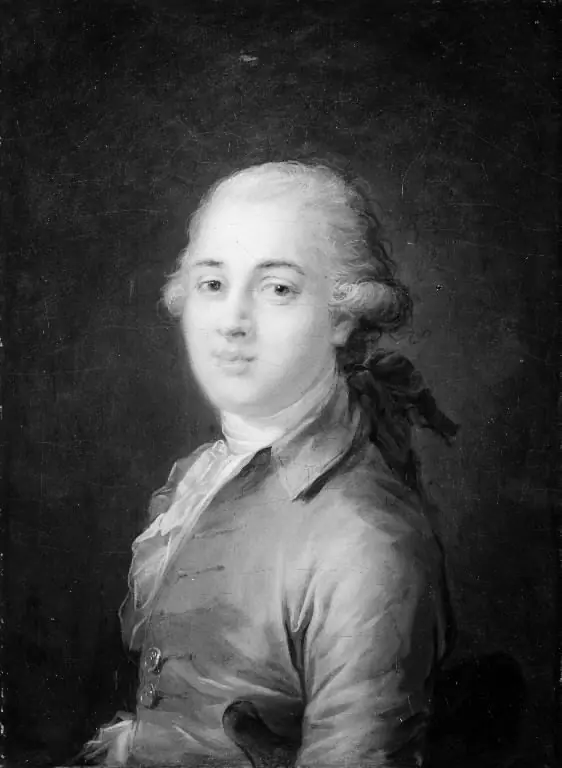
Portrait of Louis XVIII, when comte de Provence ?
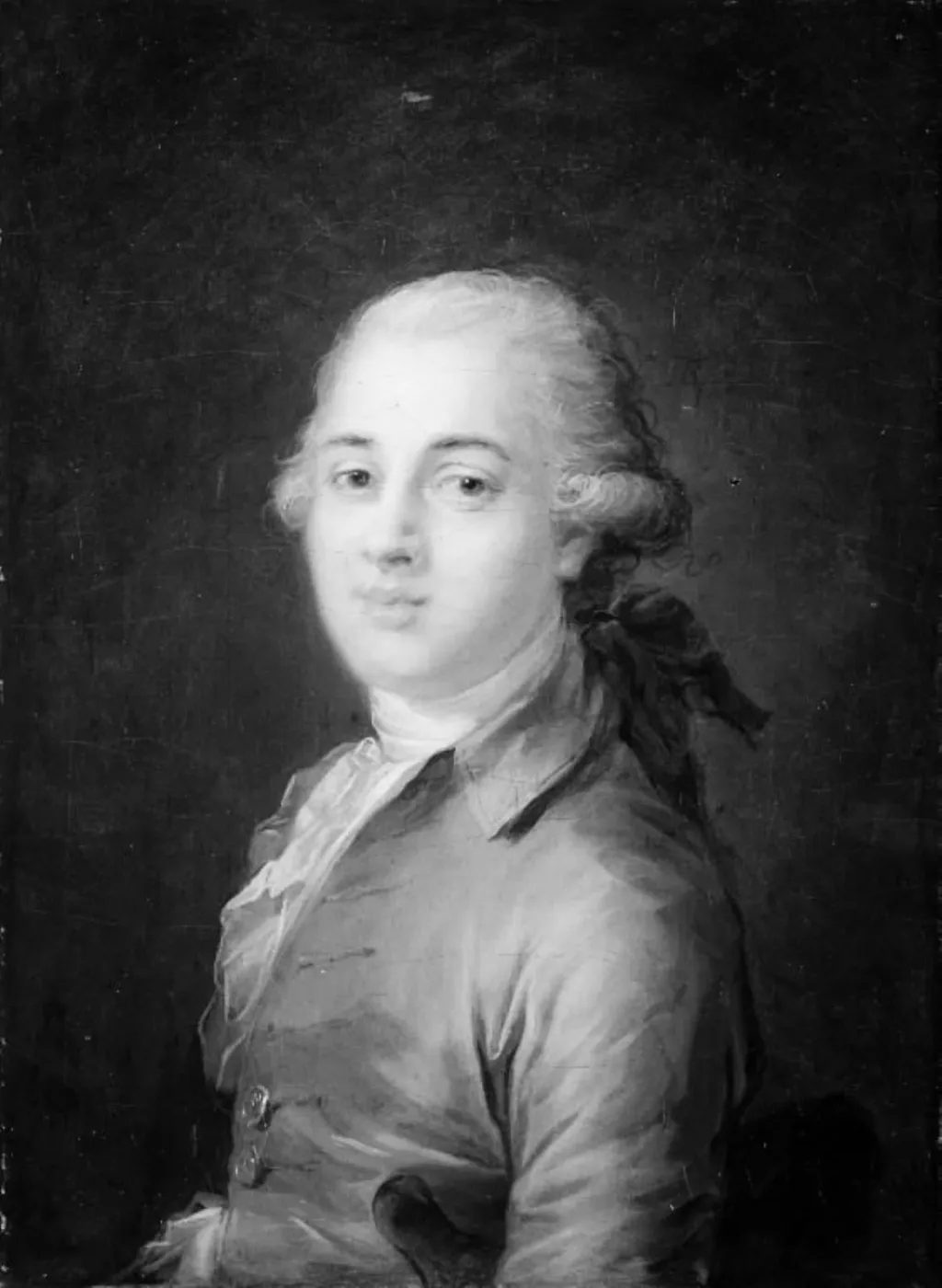
Portrait of Louis XVIII, when comte de Provence ? is an unspecified painting by Unknown. It dates from 1750 and is held in the collection of the Statens Museum for Kunst. This portrait depicts Louis XVIII in his earlier years as Count of Provence, painted around 1750.
About this work
Overview
The subject is rendered in formal court attire, with attention to the texture of his light-colored jacket and the precision of his grooming.
This portrait depicts Louis XVIII in his earlier years as Count of Provence, painted around 1750. The subject is rendered in formal court attire, with attention to the texture of his light-colored jacket and the precision of his grooming. The composition is restrained, emphasizing the sitter’s presence against a dark, unadorned background. The artist, though unnamed in the record, employs a method typical of mid-18th-century French portraiture.
Subject & Meaning
The subject, Louis XVIII before his reign, is portrayed as a nobleman of the Bourbon dynasty, dressed in the refined style of his station. His direct gaze and composed expression convey dignity and restraint, qualities expected of royal figures in an era of rigid social hierarchy. The absence of symbols of power suggests an intimate, rather than ceremonial, representation—perhaps intended for private circulation among court circles.
Technique & Style
The painting uses fine brushwork to capture the sheen of silk or satin on the jacket and the subtle modeling of the face. Hair is rendered with delicate strokes, tied neatly in a ponytail, reflecting contemporary aristocratic fashion. The dark background isolates the figure, focusing attention on facial expression and textile detail. Lighting is even and soft, avoiding dramatic contrast, in keeping with the restrained aesthetic of the period.
History & Provenance
The portrait is held in the collection of the Museum of Ethnography, an unusual placement given its subject’s royal status. Its acquisition likely occurred through a donation or transfer from a private collection, possibly linked to French émigré networks after the Revolution. The work’s presence there may reflect broader institutional efforts to document European aristocratic culture rather than its political significance.
Context
Painted around 1750, this portrait belongs to a period when the French court still upheld elaborate visual codes of nobility. Louis, as Count of Provence, was second in line to the throne and would later become king after the fall of Napoleon. The portrait’s quiet formality aligns with the pre-Revolutionary ideal of monarchy as a natural, unchallenged order, before the upheavals that would redefine French identity.
Legacy
Though not widely exhibited or reproduced, the portrait contributes to the visual record of the Bourbon family before their exile. It offers insight into how royal identity was cultivated through private imagery, distinct from official state portraits. Its preservation in an ethnographic context underscores shifting scholarly approaches to monarchy as a cultural phenomenon rather than merely a political one.
Artist & collection

 Domestic Scene
 Giacomo and Cardinal Marco, investing Andrea, Abbot of San Zeno, with his Benefice
 The Nymph of Fontainebleau
 Portrait of a Woman
 Madonna and Child with Saints in the Enclosed Garden
 Venus and Minerva
 Family Group of Four on Sofa
 Wall painting from Room H of the Villa of P. Fannius Synistor at Boscoreale
 Portrait of Claes Fredrik Horn
 Materialforvalter Bartholin (?)
 Portrait of Claes Fredrik Horn
 Materialforvalter Bartholin (?)
 Portrait of Prince Dmitry Mikhailovich Golitsyn
 Bildnis eines Ritters des Malteserordens
 Portrait of a man in armour
 Portrait of a Man
 Self-portrait of Bacciarelli in a redingote
 Portrait of a Man Wearing a Red Caftan
 Runoilija Gustaf Fredrik Gyllenborg
 Portrait of Louis XVIII, when comte de Provence ?