Artwork
Samson and Delilah
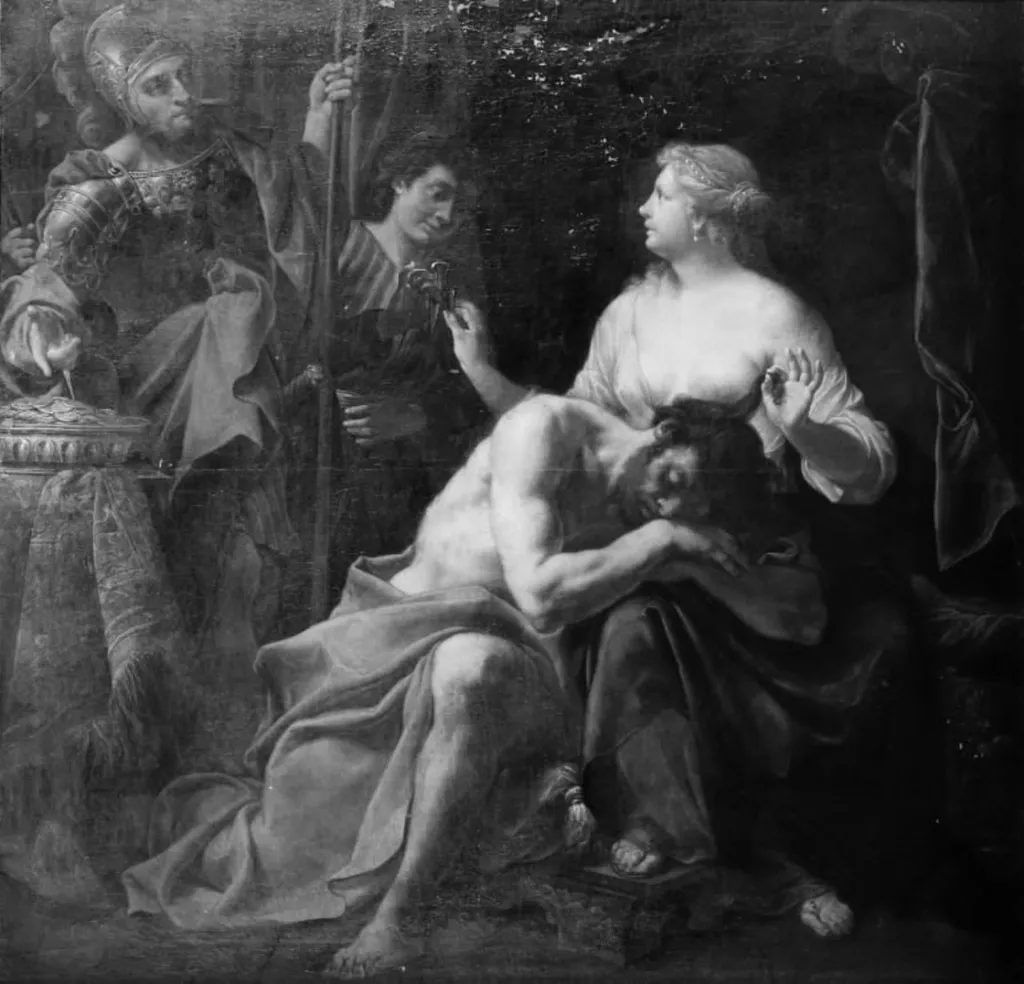
Samson and Delilah is a photography by Unknown. It dates from 1750 and is held in the collection of the Statens Museum for Kunst.
About this work
Overview
The painting resides in the Museum of Ethnography, where its narrative intensity and lighting draw attention despite its non-European provenance.
Painted around 1750, this work depicts a moment from the biblical story of Samson and Delilah. Though attributed to an artist active in 1679, the date of creation suggests a later execution, possibly by a follower or reinterpretation within a regional tradition. The painting resides in the Museum of Ethnography, where its narrative intensity and lighting draw attention despite its non-European provenance.
Subject & Meaning
The scene captures Delilah seated on the floor, her hair unbound, holding a pair of shears—symbolizing her betrayal. Samson, kneeling beside her, gazes with solemn recognition, unaware of his impending fate. A third figure, standing with a staff, observes silently, perhaps representing divine witness or the inevitability of consequence. The moment freezes before violence, emphasizing moral tension over action.
Technique & Style
The composition employs strong chiaroscuro to heighten emotional contrast: Delilah’s form is softly lit, while Samson and the observer are partially swallowed by shadow. Brushwork is restrained, favoring clarity of form over detail. The figures are arranged in a triangular dynamic, with the woman’s relaxed posture amplifying the stillness before betrayal, reinforcing the psychological weight of the scene.
History & Provenance
The painting’s origins are unclear, with no documented commission or early ownership records. Its presence in the Museum of Ethnography suggests it was acquired as part of a broader collection of narrative religious imagery from colonial or missionary contexts. The attribution to a 17th-century artist may reflect stylistic influence rather than direct authorship.
Context
Created during a period when biblical themes were widely reproduced across Europe and its colonies, this work reflects a transregional adaptation of Western iconography. Local artistic conventions may have shaped the figures’ gestures and dress, blending European compositional norms with regional visual languages, making it a hybrid artifact of cultural transmission.
Legacy
Though not widely published or studied in mainstream art history, the painting serves as an example of how biblical narratives were localized and reinterpreted beyond their original contexts. Its preservation in an ethnographic museum underscores its role as a cultural artifact, valued more for its transmission of imagery than for its authorship or stylistic innovation.
Artist & collection

 Domestic Scene
 Giacomo and Cardinal Marco, investing Andrea, Abbot of San Zeno, with his Benefice
 The Nymph of Fontainebleau
 Portrait of a Woman
 Madonna and Child with Saints in the Enclosed Garden
 Venus and Minerva
 Family Group of Four on Sofa
 Wall painting from Room H of the Villa of P. Fannius Synistor at Boscoreale
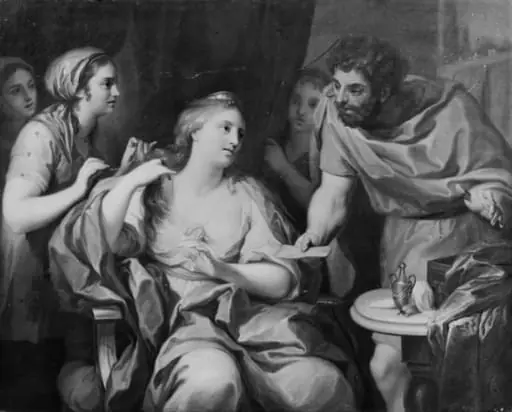 Dronning Semiramis som sværger ikke at ville rede sit hår før hun har underkuet et oprør
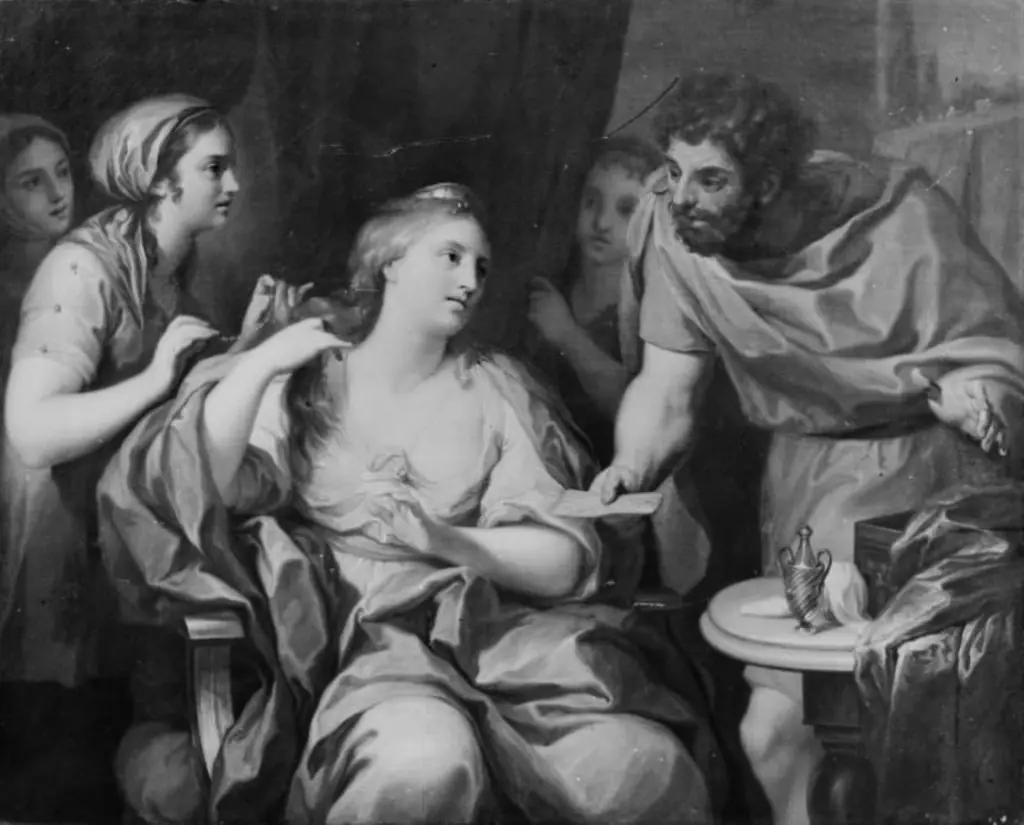 Dronning Semiramis som sværger ikke at ville rede sit hår før hun har underkuet et oprør
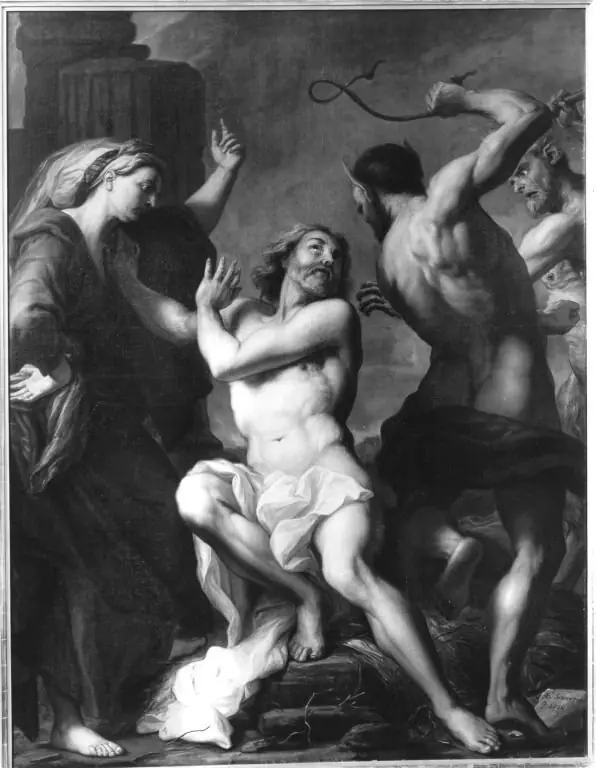 Hiobs Leiden
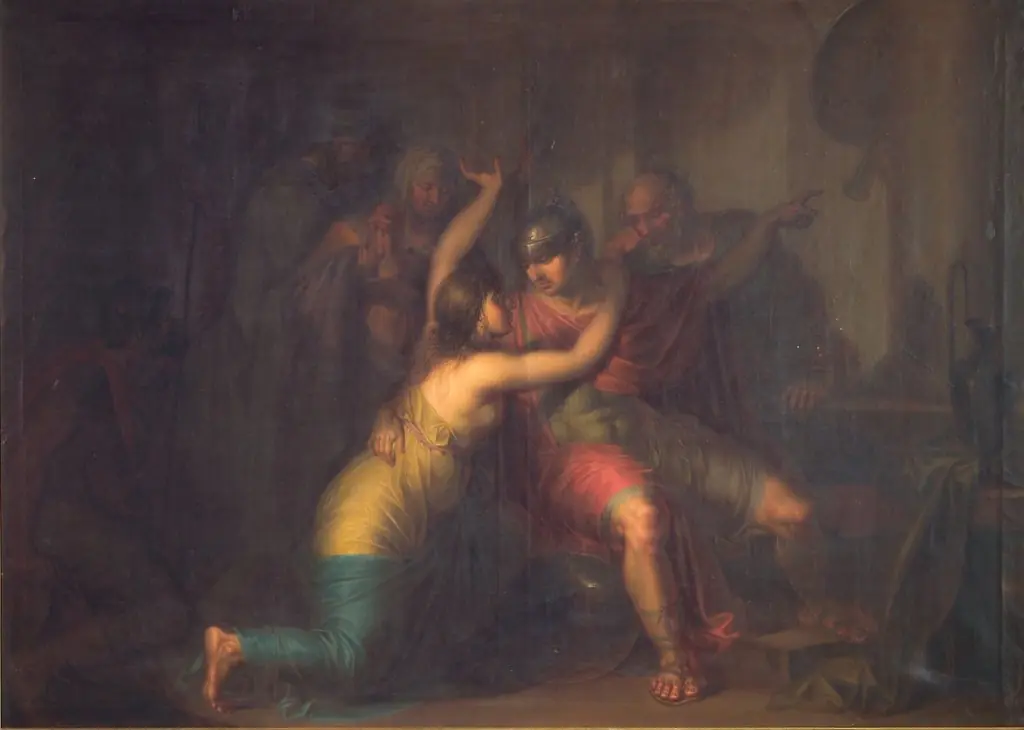 Et historisk stykke
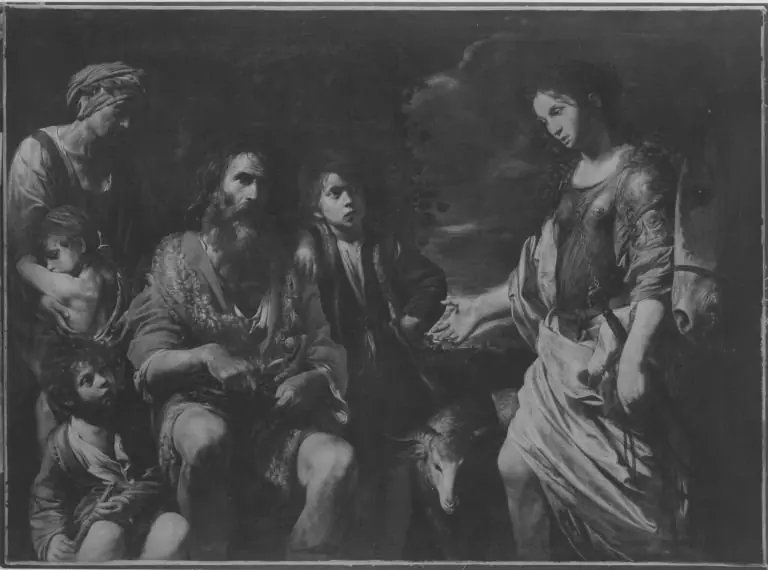 Erminia bei den Hirten
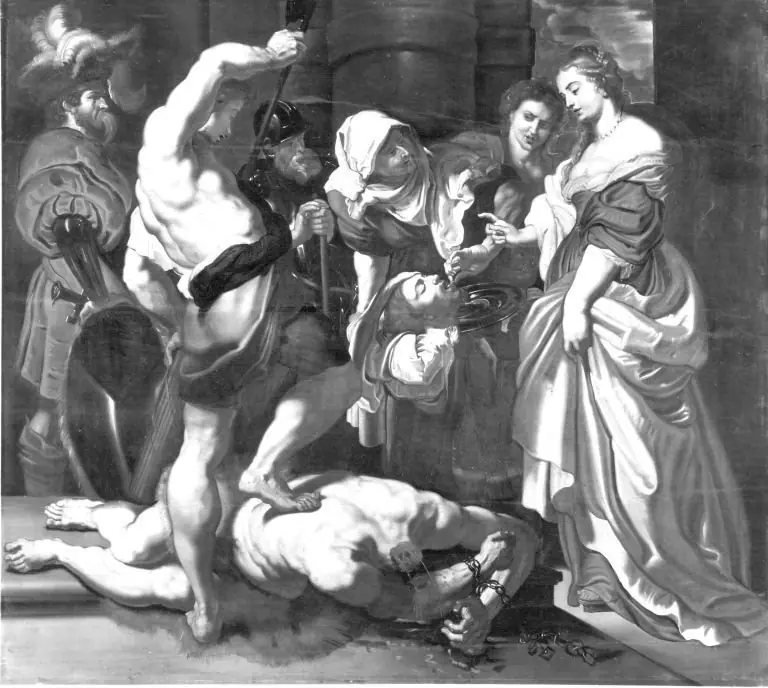 Salome is given the head of John the Baptist by the executioner
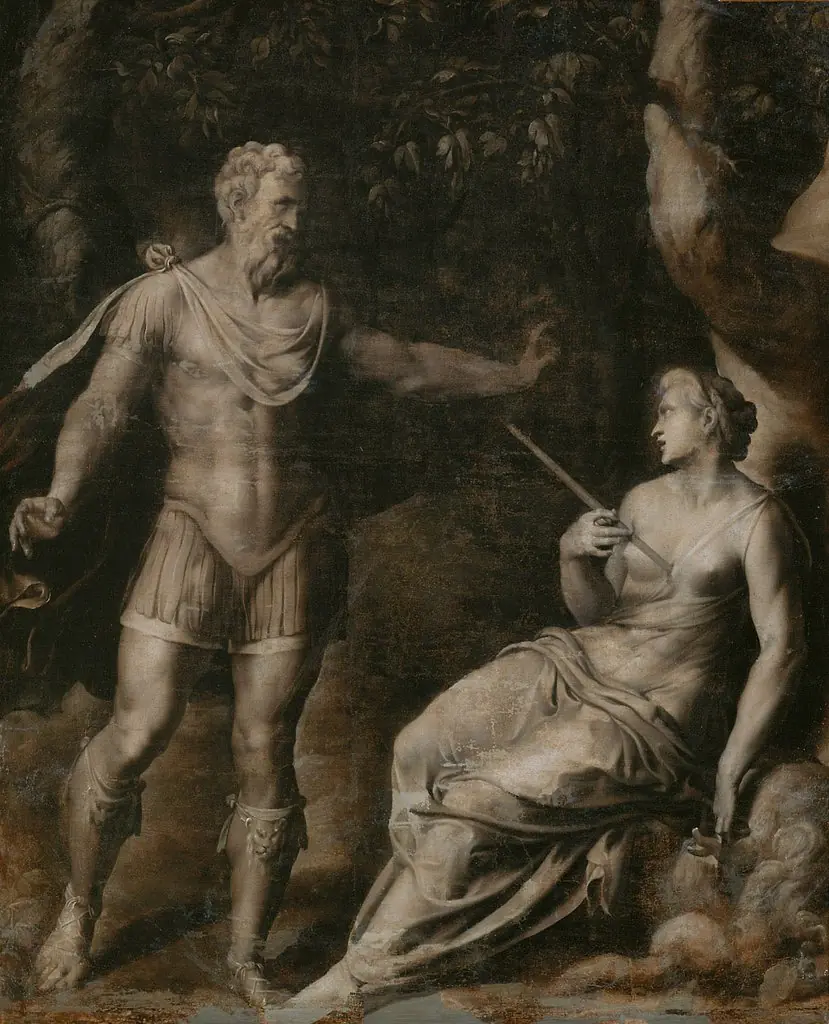 Cephalus und Procris
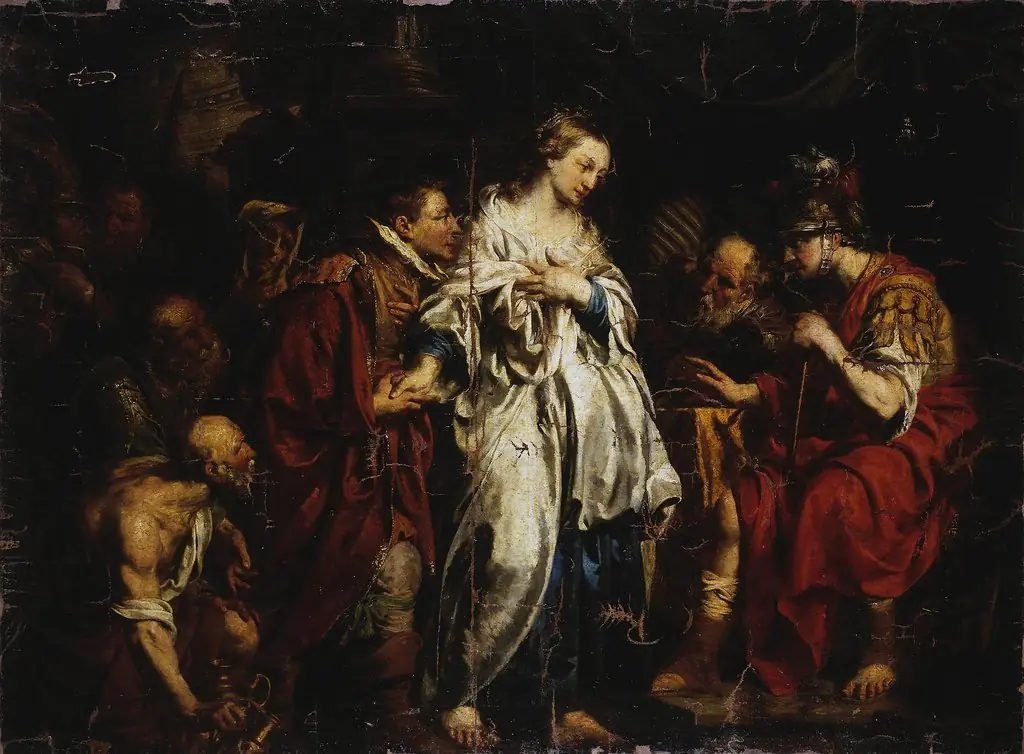 Magnanimity of Scipio Africanus
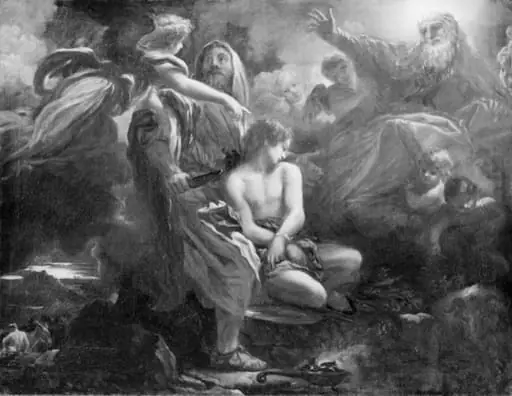 The Sacrifice of Isaac
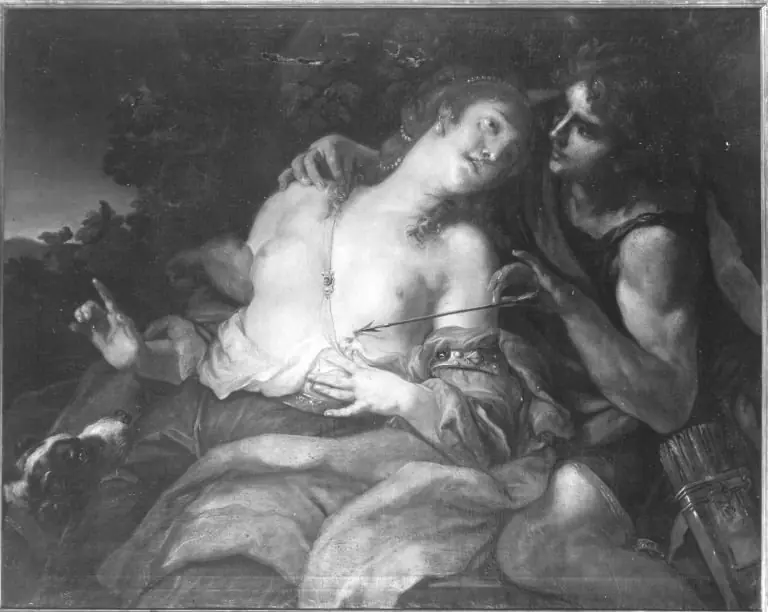 Cephalus und Procris