Artwork
The Old People by the Beach
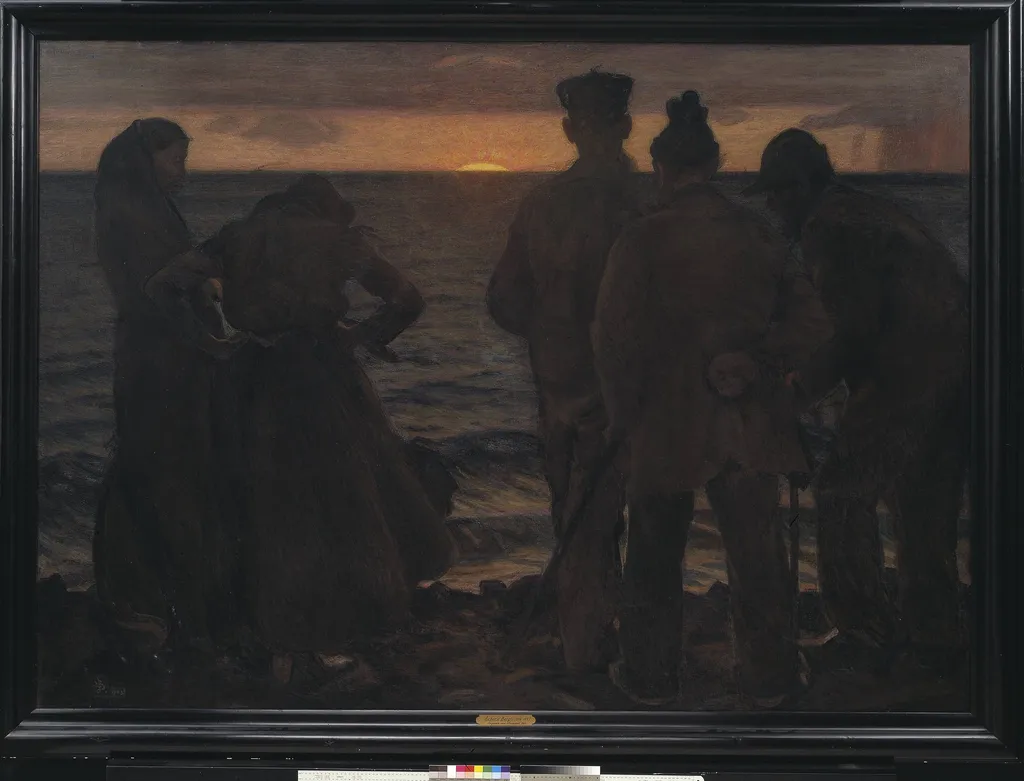
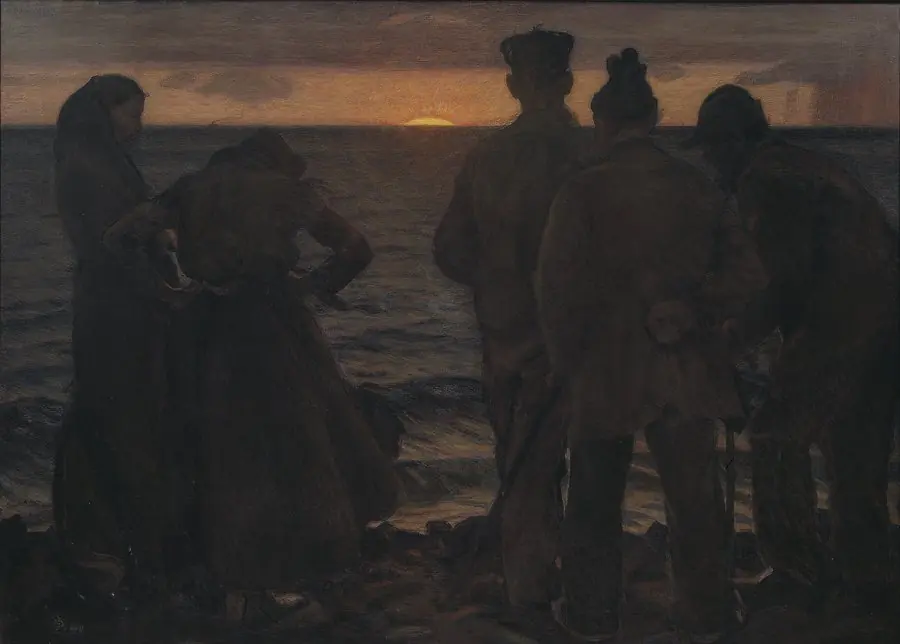
The Old People by the Beach is a photography by Unknown. It dates from 1903 and is held in the collection of the Statens Museum for Kunst. Created in 1903 by 1744_person, this photograph captures five figures on a shoreline at dusk.
About this work
Overview
The figures are rendered as silhouettes against a luminous sky, emphasizing atmosphere over individual detail.
Created in 1903 by 1744_person, this photograph captures five figures on a shoreline at dusk. The image is part of the Museum of Ethnography’s collection and presents a quiet, contemplative moment. The figures are rendered as silhouettes against a luminous sky, emphasizing atmosphere over individual detail. The composition relies on minimal elements to evoke a sense of solitude and passage of time.
Subject & Meaning
The five figures, dressed in long dark coats with faint stripes, stand in close proximity, their backs turned to the viewer. One holds a walking stick, suggesting age or fatigue. Their unified posture and stillness imply shared experience or ritual. The setting—dusk on a quiet beach—adds a tone of reflection, possibly alluding to mortality, memory, or the passage of generations.
Technique & Style
The artist employs strong tonal contrasts to define form, using the bright orange sky to isolate the figures as dark silhouettes. This technique, known as chiaroscuro, reduces detail to emphasize shape and mood. The dark sand and water anchor the composition, while the glowing horizon creates a sense of depth. The image avoids sharp focus, favoring atmospheric effect over documentary precision.
History & Provenance
The photograph was made in 1903 and entered the collection of the Museum of Ethnography shortly thereafter. Its origin as a personal or ethnographic study is not fully documented, but its composition suggests an intentional artistic approach rather than casual documentation. It has remained in the museum’s holdings without public exhibition for much of the 20th century.
Context
Produced during a period when photography was expanding beyond portraiture and reportage, this work aligns with emerging interest in mood and symbolism. Similar images from the era often used natural light and solitary figures to evoke emotional resonance. The beach as a liminal space—between land and sea, day and night—was a recurring motif in visual culture at the time.
Legacy
Though not widely reproduced, the photograph is recognized within academic circles for its restrained aesthetic and use of light. It contributes to discussions on early 20th-century photographic language, particularly how artists used darkness and silhouette to convey psychological depth. Its quiet presence continues to inform interpretations of human presence in landscape.
Artist & collection

 Domestic Scene
 Giacomo and Cardinal Marco, investing Andrea, Abbot of San Zeno, with his Benefice
 The Nymph of Fontainebleau
 Portrait of a Woman
 Madonna and Child with Saints in the Enclosed Garden
 Venus and Minerva
 Family Group of Four on Sofa
 Wall painting from Room H of the Villa of P. Fannius Synistor at Boscoreale
 Fishermen at Skagen Beach
 Fishermen at Skagen Beach
 The Lifeboat is Taken through the Dunes
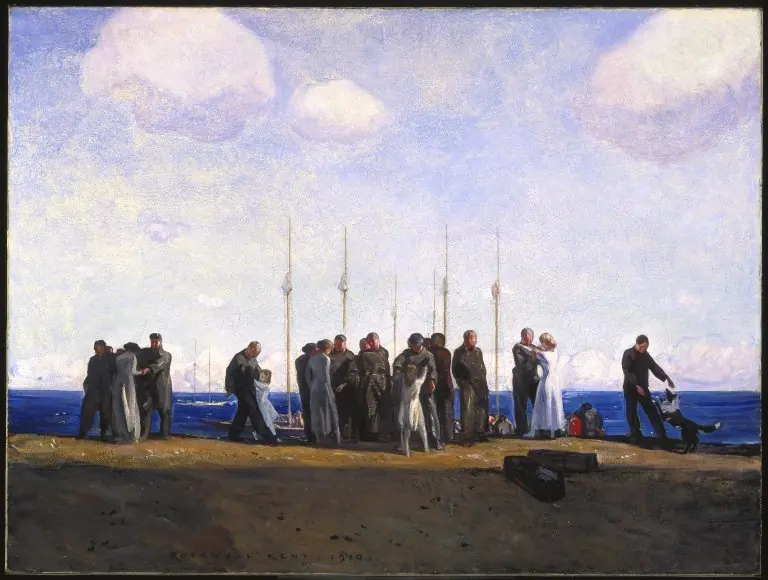 Down to the Sea
 Vestjyder uden for høkeren
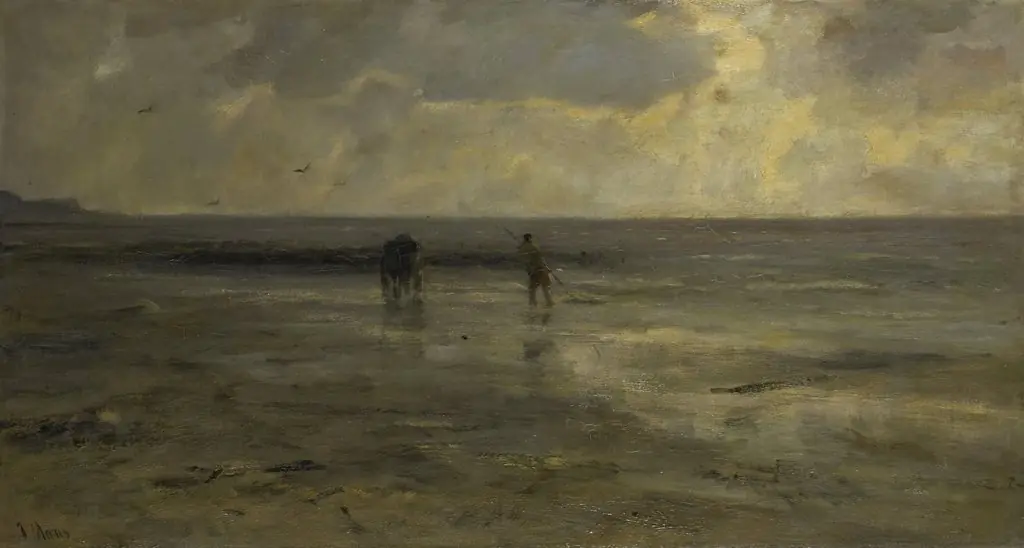 Beach at evening
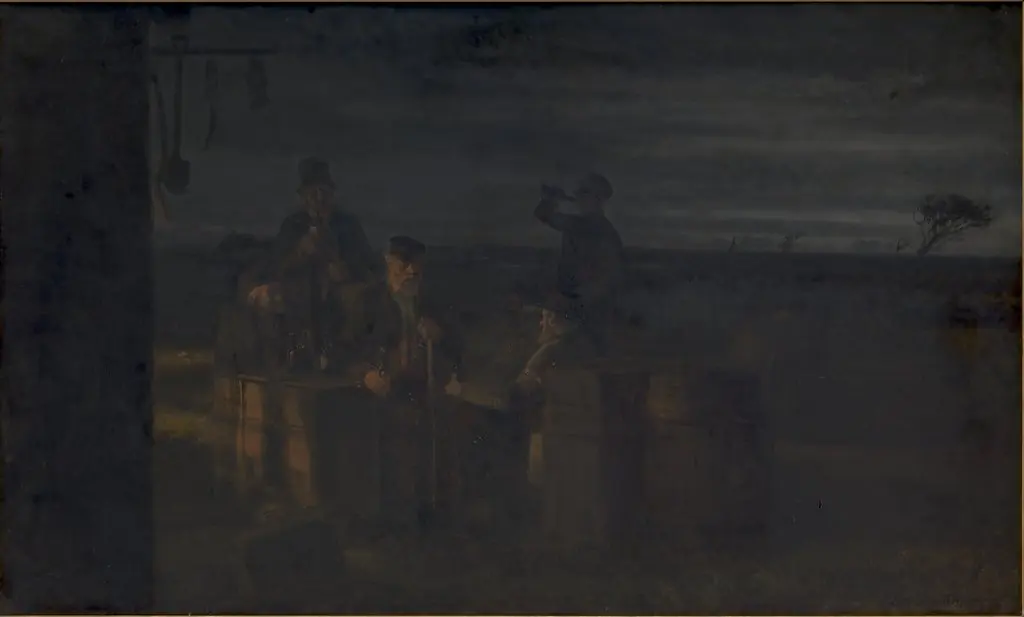 Vestjyder uden for høkeren
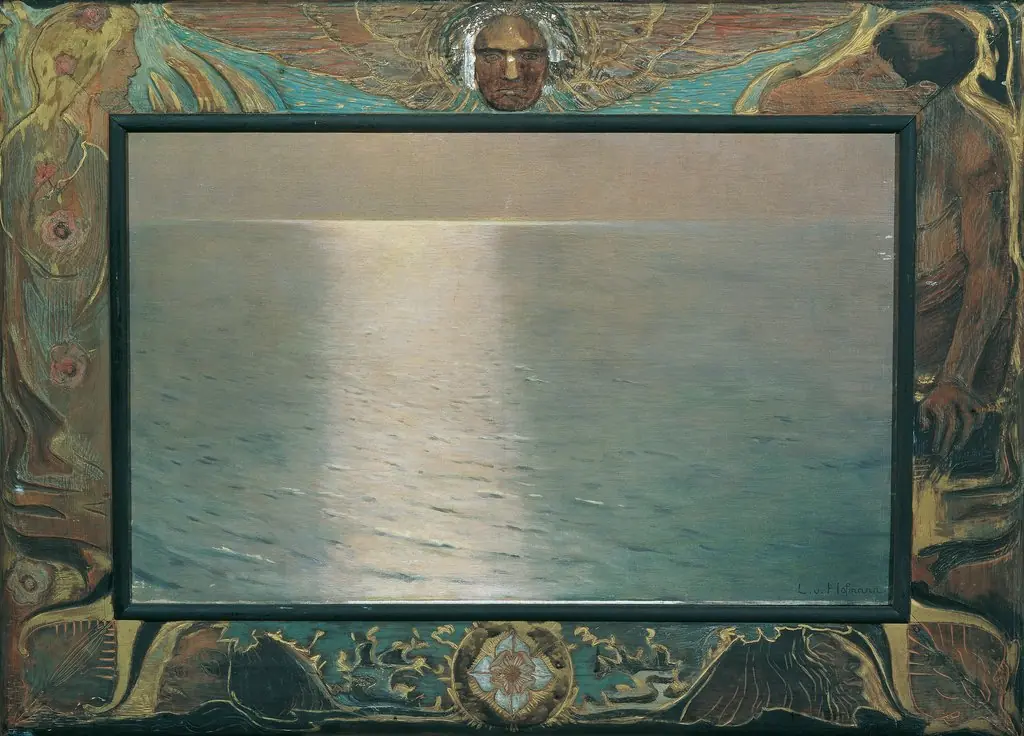 Largo (Sonnenuntergang)
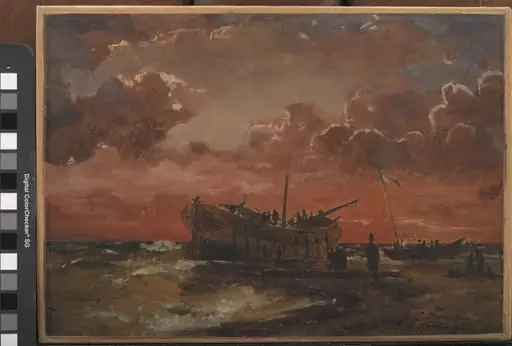 A Wreck on the West Coast of Jutland at Sunset
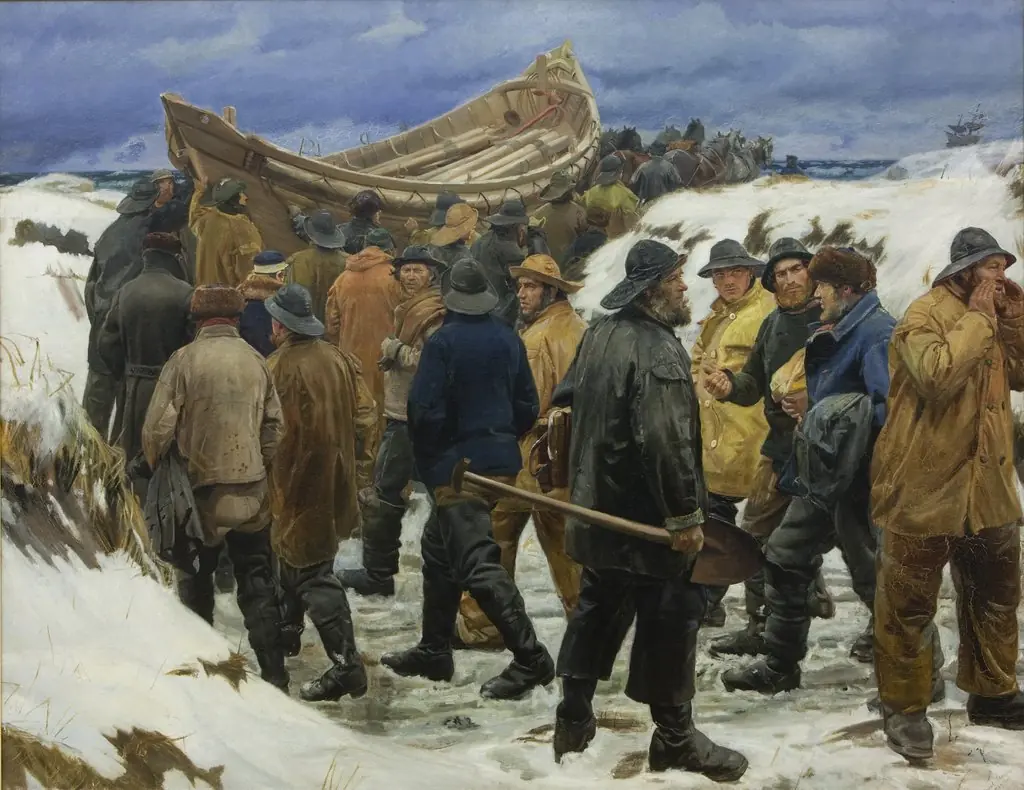 The Lifeboat is Taken through the Dunes
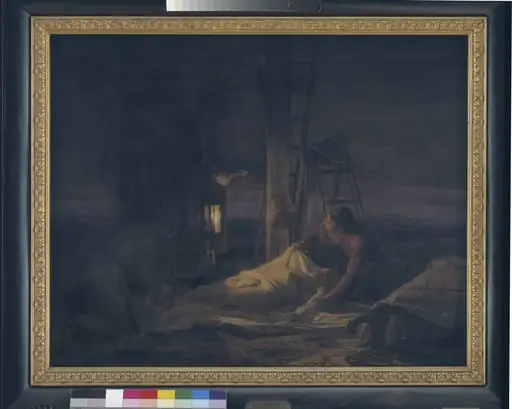 Descent from the Cross
 The Old People by the Beach