Artwork
The Lifeboat is Taken through the Dunes
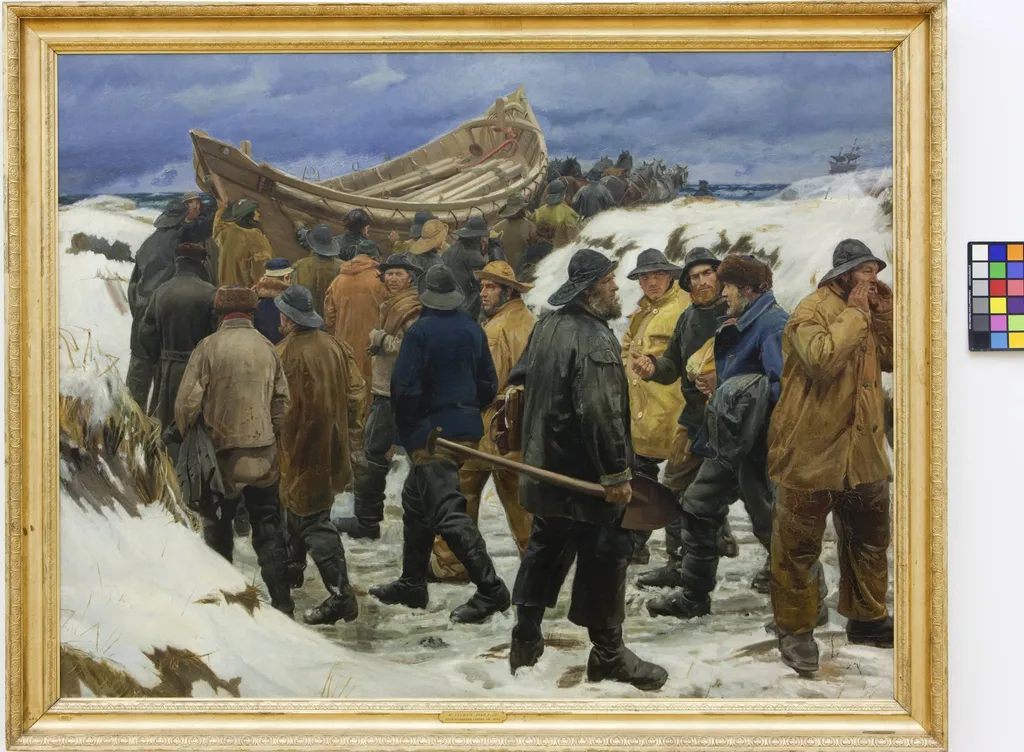
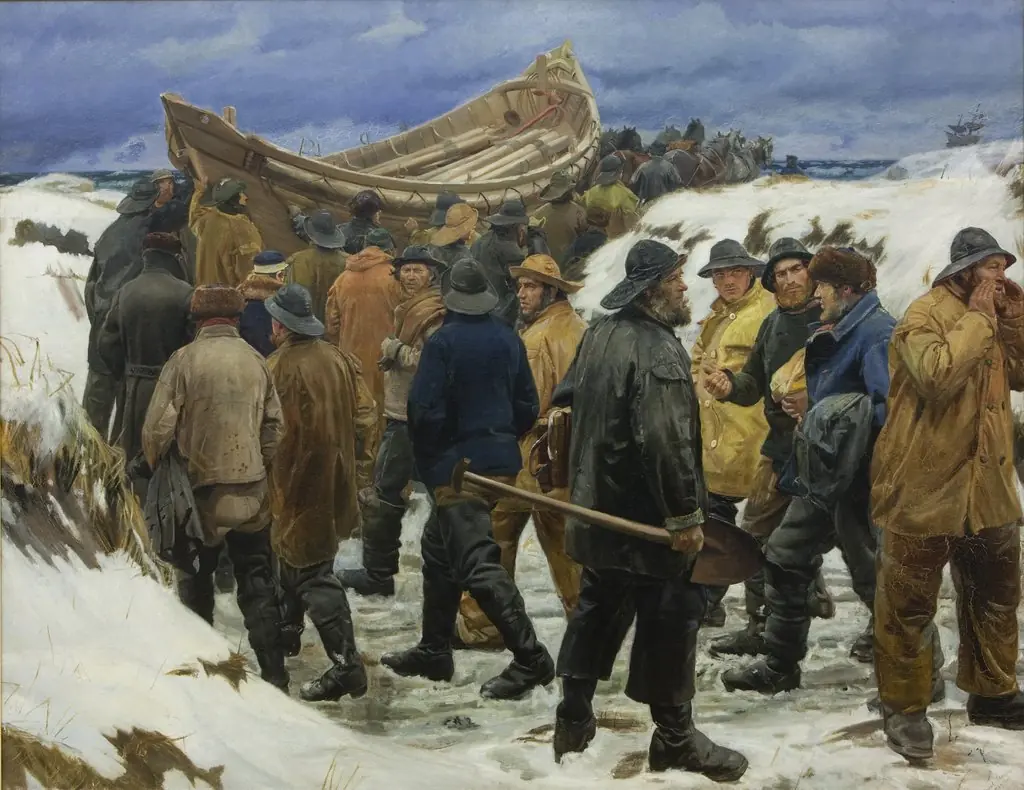
The Lifeboat is Taken through the Dunes is a photography by the Impressionist artist Unknown. It dates from 1883 and is held in the collection of the Statens Museum for Kunst. Created in 1883, this photograph depicts a coastal community navigating a severe winter storm.
About this work
Overview
It is held in the collection of the Museum of Ethnography, where it serves as a document of rural resilience in harsh environmental conditions.
Created in 1883, this photograph depicts a coastal community navigating a severe winter storm. A group of individuals, bundled against the cold, haul a wooden lifeboat across snow-laden dunes. The image records a moment of collective effort, emphasizing movement and urgency. It is held in the collection of the Museum of Ethnography, where it serves as a document of rural resilience in harsh environmental conditions.
Subject & Meaning
The scene captures a practical act of survival: transporting a lifeboat through treacherous terrain to prepare for potential maritime emergencies. The figures, uniformly focused and in motion, reflect communal responsibility. The boat, central and elevated, symbolizes protection against nature’s volatility. No individual stands apart; the group’s unity underscores interdependence in isolated coastal life.
Technique & Style
The photograph employs natural lighting and a low angle to emphasize the weight of the boat and the depth of the snow. Sharp contrasts between the dark sky, white dunes, and dark clothing heighten the sense of atmospheric tension. The composition avoids theatricality, favoring candid realism—each figure’s posture and action is rendered with unembellished clarity, characteristic of documentary photography of the period.
History & Provenance
The photograph was taken in 1883 by an unnamed photographer associated with regional coastal communities. It entered the Museum of Ethnography’s collection in the early 20th century as part of a broader effort to preserve visual records of vernacular labor and seasonal survival practices. Its origin remains tied to a specific coastal region, though the exact location is not documented in surviving records.
Context
In the late 19th century, many coastal villages relied on lifeboats for rescue operations during storms, often requiring manual transport over dunes or frozen ground. This image reflects a time before mechanized transport, when community labor was essential for safety. Similar practices were documented across northern Europe, where harsh winters and unpredictable seas demanded coordinated, physical responses.
Legacy
The photograph contributes to historical records of pre-industrial coastal life, illustrating how communities adapted to environmental challenges without technological aid. It is referenced in studies of vernacular material culture and collective labor practices. While not widely exhibited, it remains a quiet testament to the endurance of everyday resilience in marginalized coastal regions.
Artist & collection

 Domestic Scene
 Giacomo and Cardinal Marco, investing Andrea, Abbot of San Zeno, with his Benefice
 The Nymph of Fontainebleau
 Portrait of a Woman
 Madonna and Child with Saints in the Enclosed Garden
 Venus and Minerva
 Family Group of Four on Sofa
 Wall painting from Room H of the Villa of P. Fannius Synistor at Boscoreale
 A Crew Rescued
 Fishermen at Skagen Beach
 A Crew Rescued
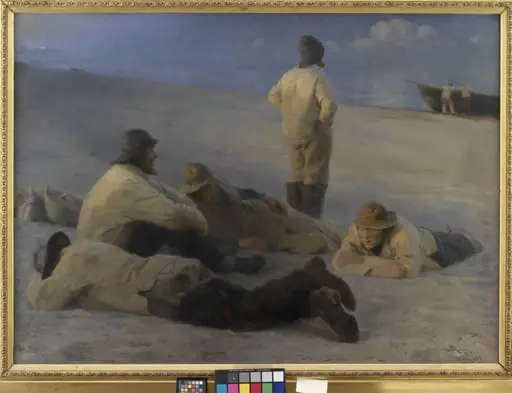 Fishermen at Skagen Beach
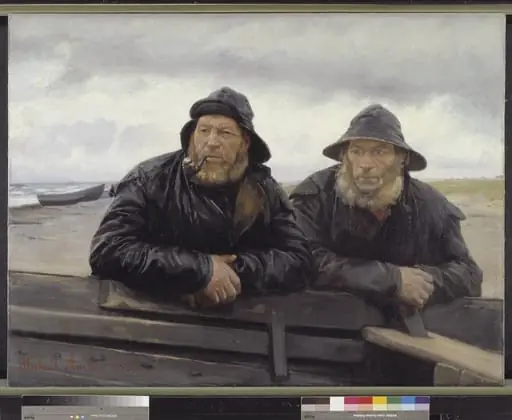 Two Fishermen beside a Boat
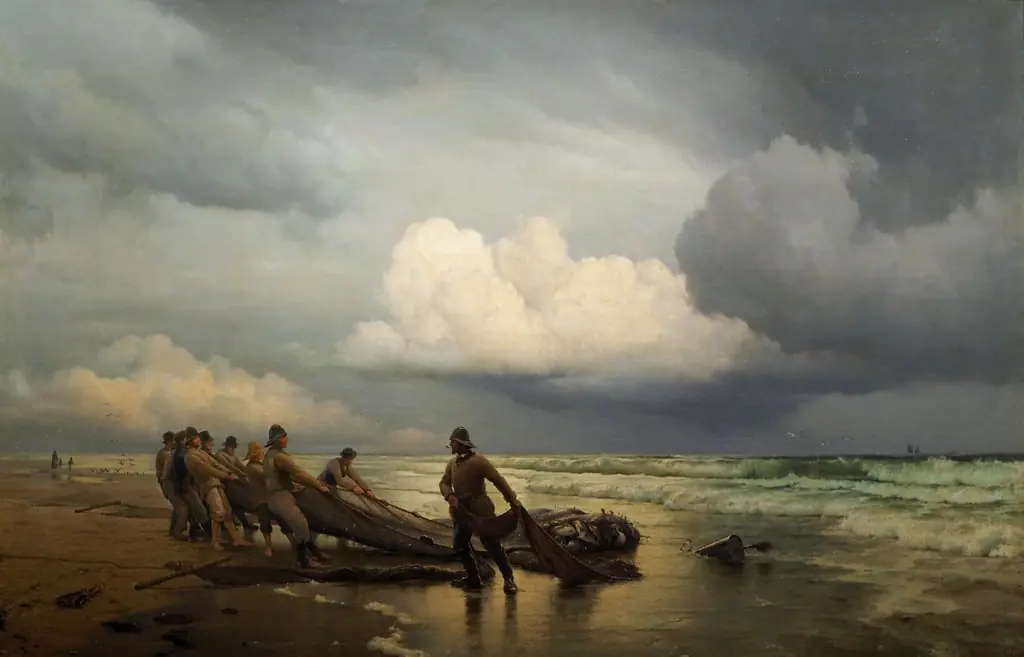 Fiskere trækker våd på Skagen Nordstrand
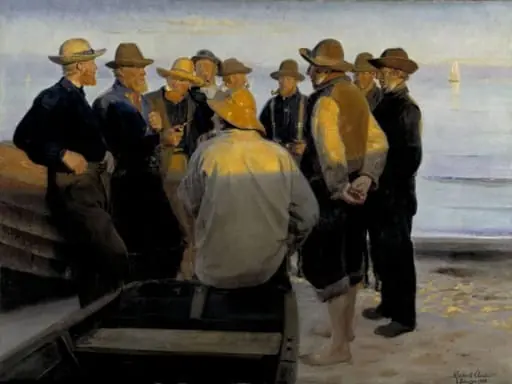 Fishermen by the Sea on a Summer's Evening
 Fishermen by the Sea on a Summer's Evening
 El pan nuestro de cada día
 Fiskere trækker våd på Skagen Nordstrand
 Boatmen of Barcelona
 The Lifeboat is Taken through the Dunes