Artwork
Lisbeth as the Evil Princess in the Fairy Tale "Fågel Blå" by P.D.A. Atterbom
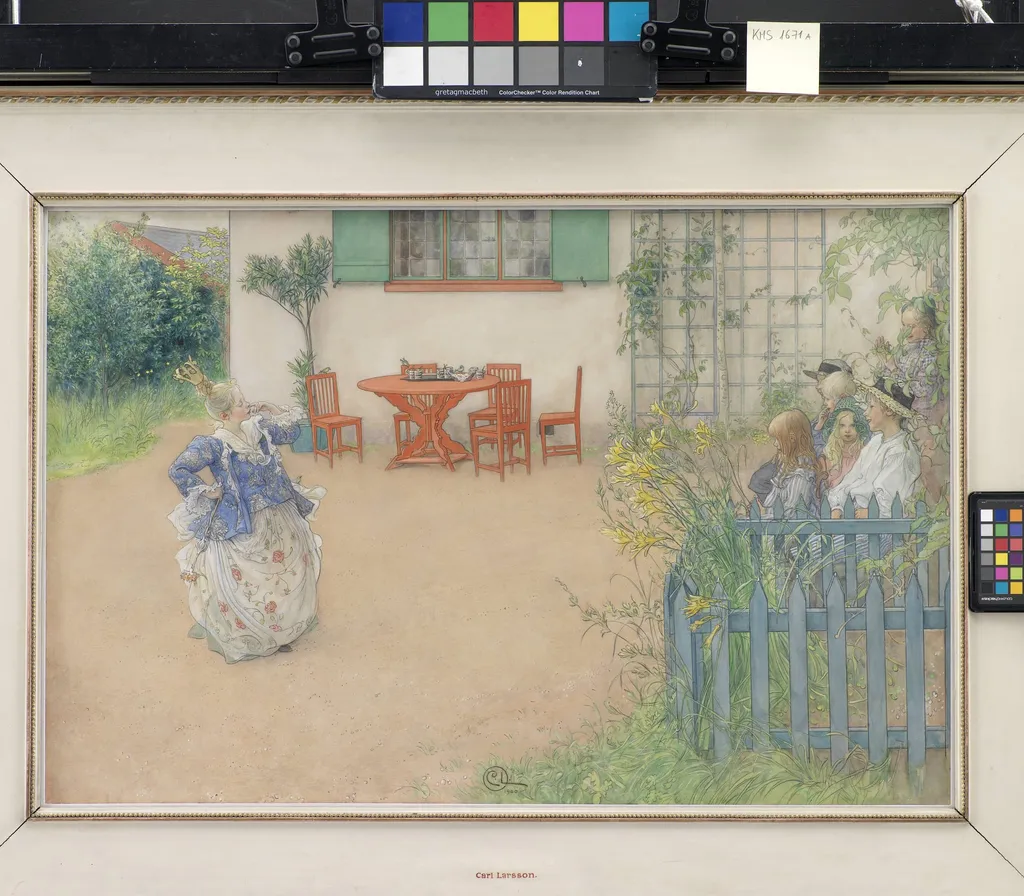
Lisbeth as the Evil Princess in the Fairy Tale "Fågel Blå" by P.D.A. Atterbom is an unspecified painting by Unknown. It dates from 1900 and is held in the collection of the Statens Museum for Kunst. This painting depicts a scene inspired by P.
About this work
Overview
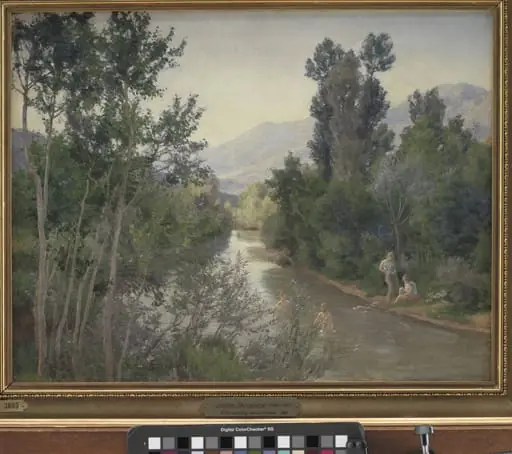
This painting depicts a scene inspired by P.D.A. Atterbom’s fairy tale 'Fågel Blå,' portraying a woman as the evil princess in a domestic setting. Created in 1900 by the Swedish artist, it blends literary fantasy with quiet realism. The work is part of the Museum of Ethnography’s collection, where it reflects early 20th-century interest in folklore as a lens for cultural identity.
Subject & Meaning
The central figure, a woman in a patterned blue dress, embodies the fairy tale’s antagonist, yet is rendered in an ordinary garden setting.
The central figure, a woman in a patterned blue dress, embodies the fairy tale’s antagonist, yet is rendered in an ordinary garden setting. Her presence among children and a bird suggests a tension between myth and daily life. The scene invites interpretation: is the princess a guardian, a threat, or a figure of faded magic? The narrative ambiguity reflects broader cultural efforts to reimagine folklore through intimate, human contexts.
Technique & Style
The artist employs soft brushwork and muted natural tones to create a tranquil, sunlit atmosphere. Details like the floral embroidery on the dress and the wooden picket fence are rendered with quiet precision, emphasizing texture over drama. The composition balances figures within a structured garden space, using light and foliage to guide the viewer’s eye without theatrical emphasis.
History & Provenance
Painted in 1900, the work entered the Museum of Ethnography’s collection in the early 20th century, likely as part of a broader effort to document Swedish cultural narratives. Its attribution to the artist, active around 1798, appears to be a misdating; the style and context align with turn-of-the-century Swedish realism. The painting’s origin remains tied to private commissions or literary illustration circles of the time.
Context
In early 1900s Sweden, folklore revival movements sought to reconnect national identity with traditional tales. Artists often translated these stories into domestic scenes to make them feel immediate and personal. This painting reflects that trend—using a fairy tale character not as a mythic figure, but as a woman embedded in the rhythms of everyday rural life.
Legacy
The painting contributes to a lesser-known strand of Swedish art that merged literary symbolism with genre painting. While not widely exhibited, it remains a quiet example of how folklore was visually reinterpreted during a period of national self-definition. Its preservation in an ethnographic museum underscores its role as a cultural artifact rather than a purely aesthetic object.
Artist & collection

 Domestic Scene
 Giacomo and Cardinal Marco, investing Andrea, Abbot of San Zeno, with his Benefice
 The Nymph of Fontainebleau
 Portrait of a Woman
 Madonna and Child with Saints in the Enclosed Garden
 Venus and Minerva
 Family Group of Four on Sofa
 Wall painting from Room H of the Villa of P. Fannius Synistor at Boscoreale
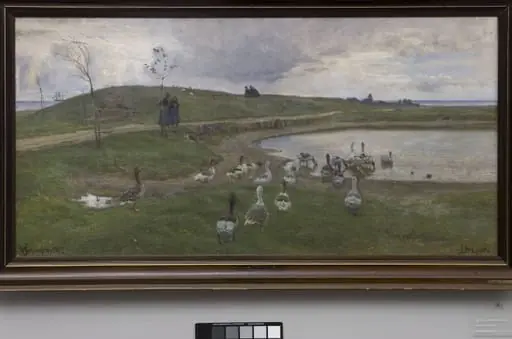 Gæs ved en sø. Mod uroligt vejr. Dragør
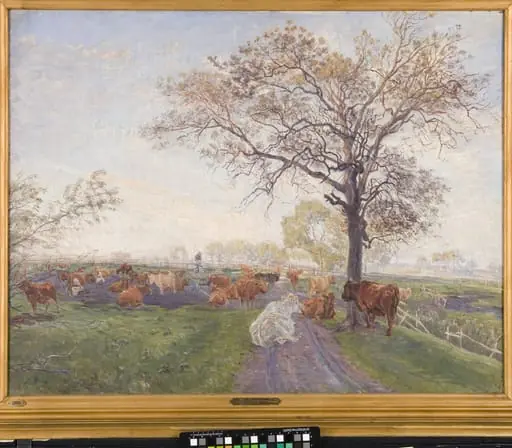 Malkepladsen ved Dyrehavegård
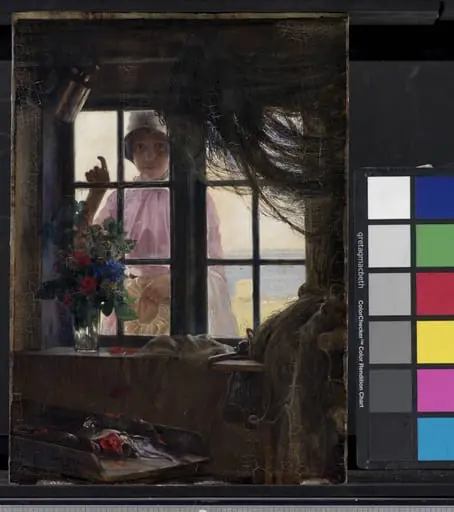 After the Bath. A Young Girl Knocking at the Fisherman's Window
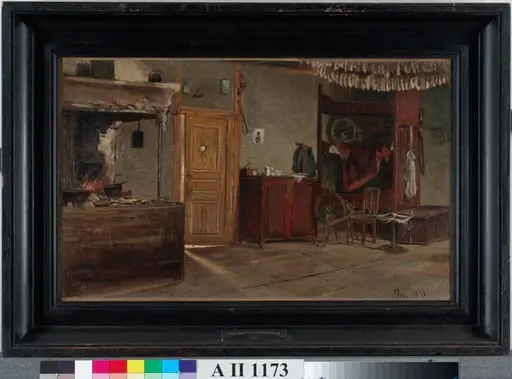 Tuvan sisäkuva
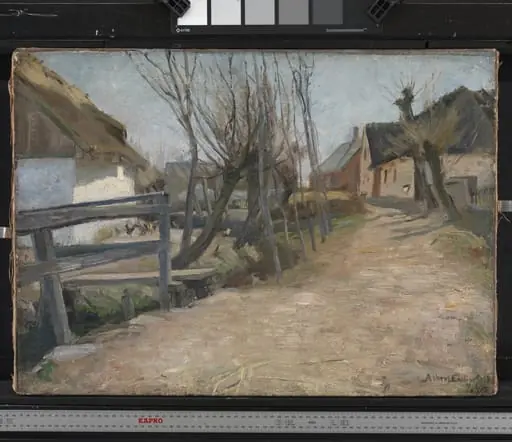 Tidlig forårsdag i Glostrup
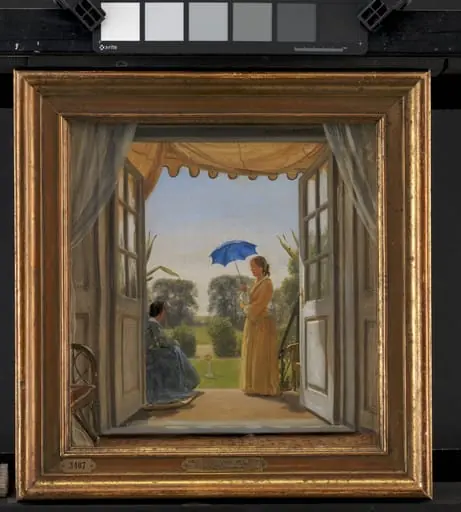 Caroline Dalgas og Jeanina Stampe på Nysø havetrappe
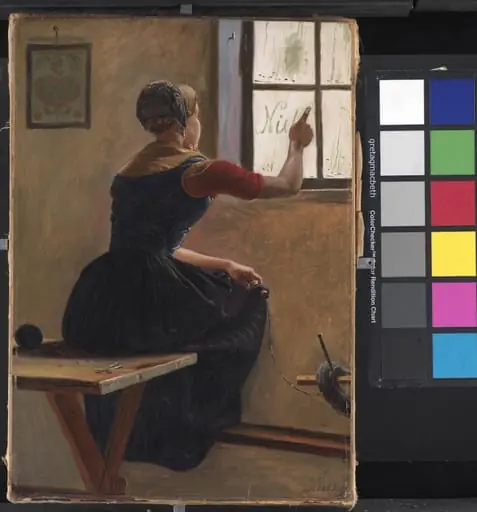 A Young Girl in Jutland Writing her Beloved's Name on a Misty Window
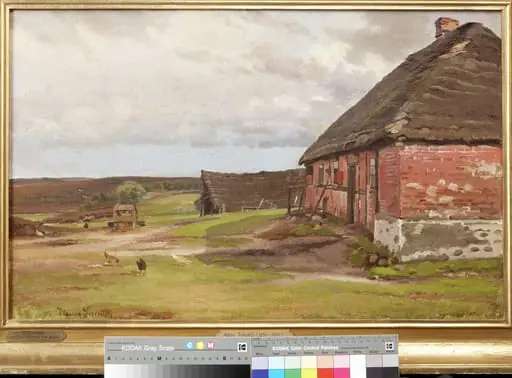 Et hus på Alheden
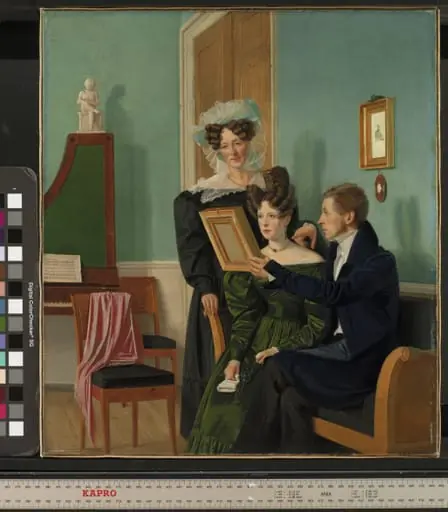 The Raffenberg Family
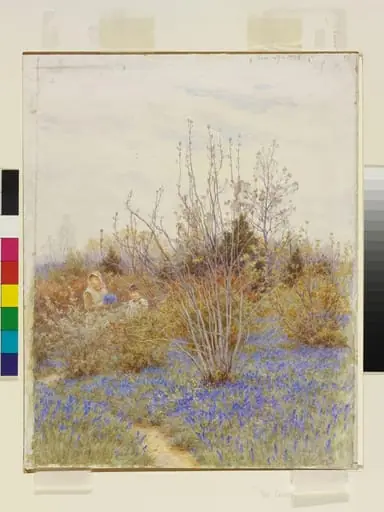 The Cuckoo
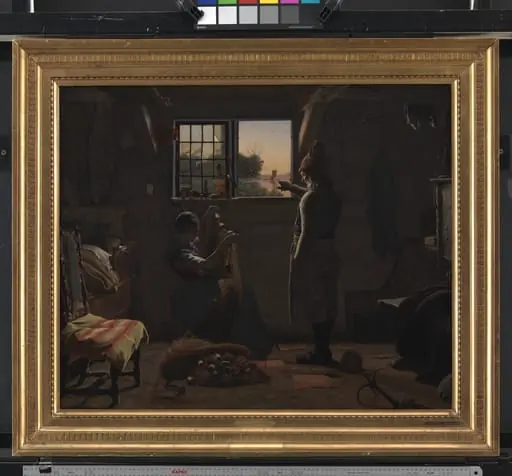 En fisker viser sin datter en bortsejlende båd
 Efterårsdag ved Lirifloden