Artwork
Wild Geese
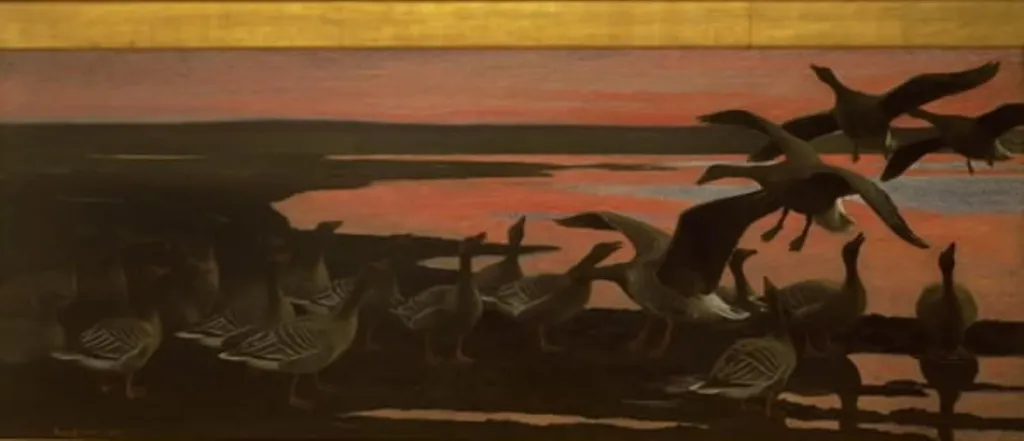
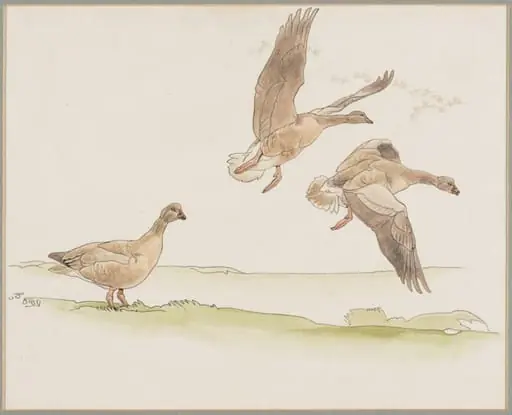
Wild Geese is a photography by the Impressionist artist Unknown. It dates from 1898 and is held in the collection of the Statens Museum for Kunst.
About this work
Overview
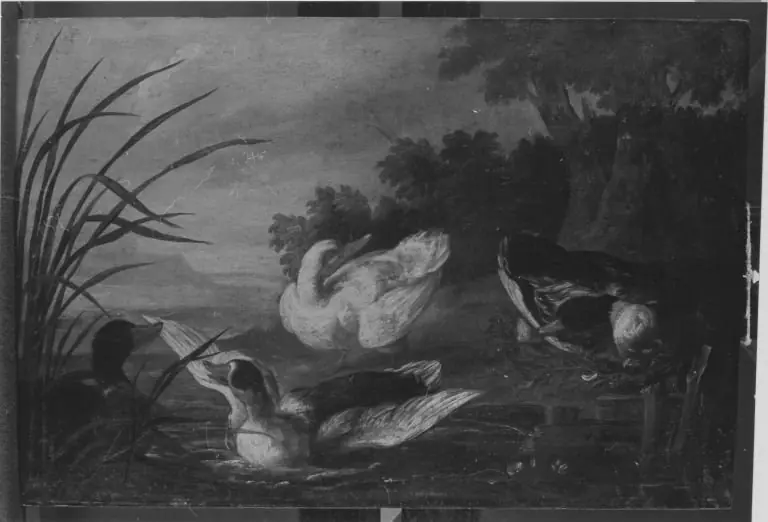
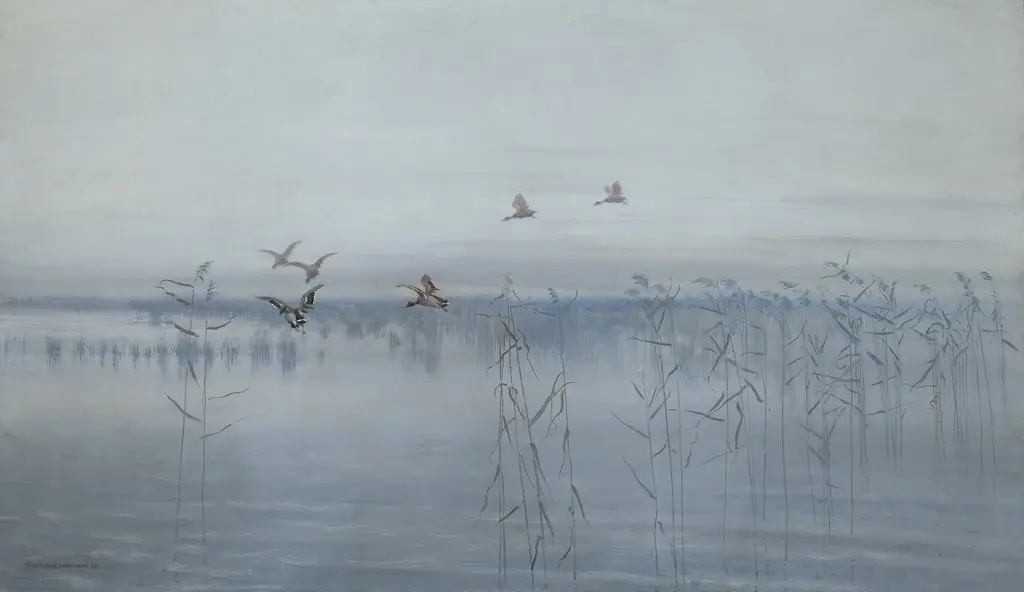
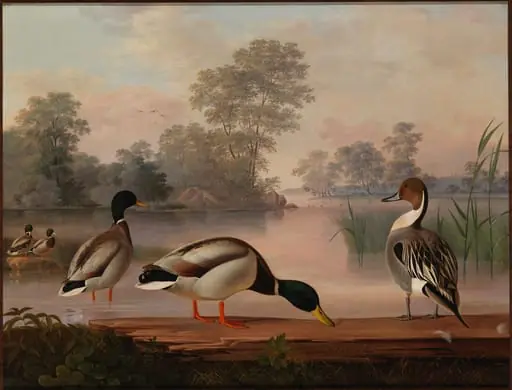
Created in 1898 by an artist associated with the Realist tradition, this image depicts a flock of wild geese in a natural wetland setting.
Created in 1898 by an artist associated with the Realist tradition, this image depicts a flock of wild geese in a natural wetland setting. It is held in the collection of the Museum of Ethnography. The composition captures the birds in varied states of motion—flying, standing, and wading—against a softly rendered sky and water. The work avoids dramatic staging, focusing instead on quiet, observed moments in nature.
Subject & Meaning
The geese are portrayed not as symbols but as living creatures engaged in routine behavior. Their presence in a muddy, shallow wetland suggests seasonal migration or rest. The absence of human figures or artificial elements reinforces a sense of autonomy in the natural world. The scene invites contemplation of animal life as it unfolds without narrative or allegory.
Technique & Style
The artist employs a muted palette of browns, grays, and warm ochres to reflect the tones of dawn or dusk. Soft, diffused lighting unifies the sky and water into a seamless backdrop, enhancing the sense of stillness amid movement. Brushwork or photographic rendering—depending on medium—prioritizes subtle gradations over sharp detail, emphasizing atmosphere over precision.
History & Provenance
The work entered the Museum of Ethnography’s collection shortly after its creation, likely as part of a broader effort to document natural life through visual means. Its acquisition reflects late 19th-century interests in recording indigenous and wild environments with scientific and aesthetic intent. No record of public exhibition prior to museum acquisition exists.
Context
Produced during a period when Realist artists sought to depict ordinary life without idealization, this image aligns with broader trends in nature observation. While not part of a formal movement, it shares affinities with contemporaneous studies of wildlife and landscape in Europe and North America, where photography and painting increasingly intersected in documenting the natural world.
Legacy
The image remains a quiet example of early documentation of avian behavior in a natural setting. It contributes to historical records of ecological observation before modern ornithology became institutionalized. Its preservation in an ethnographic museum underscores its role as both artistic and anthropological evidence of how nature was perceived at the turn of the century.
Artist & collection

 Domestic Scene
 Giacomo and Cardinal Marco, investing Andrea, Abbot of San Zeno, with his Benefice
 The Nymph of Fontainebleau
 Portrait of a Woman
 Madonna and Child with Saints in the Enclosed Garden
 Venus and Minerva
 Family Group of Four on Sofa
 Wall painting from Room H of the Villa of P. Fannius Synistor at Boscoreale