Artwork
Male Nude on Steps
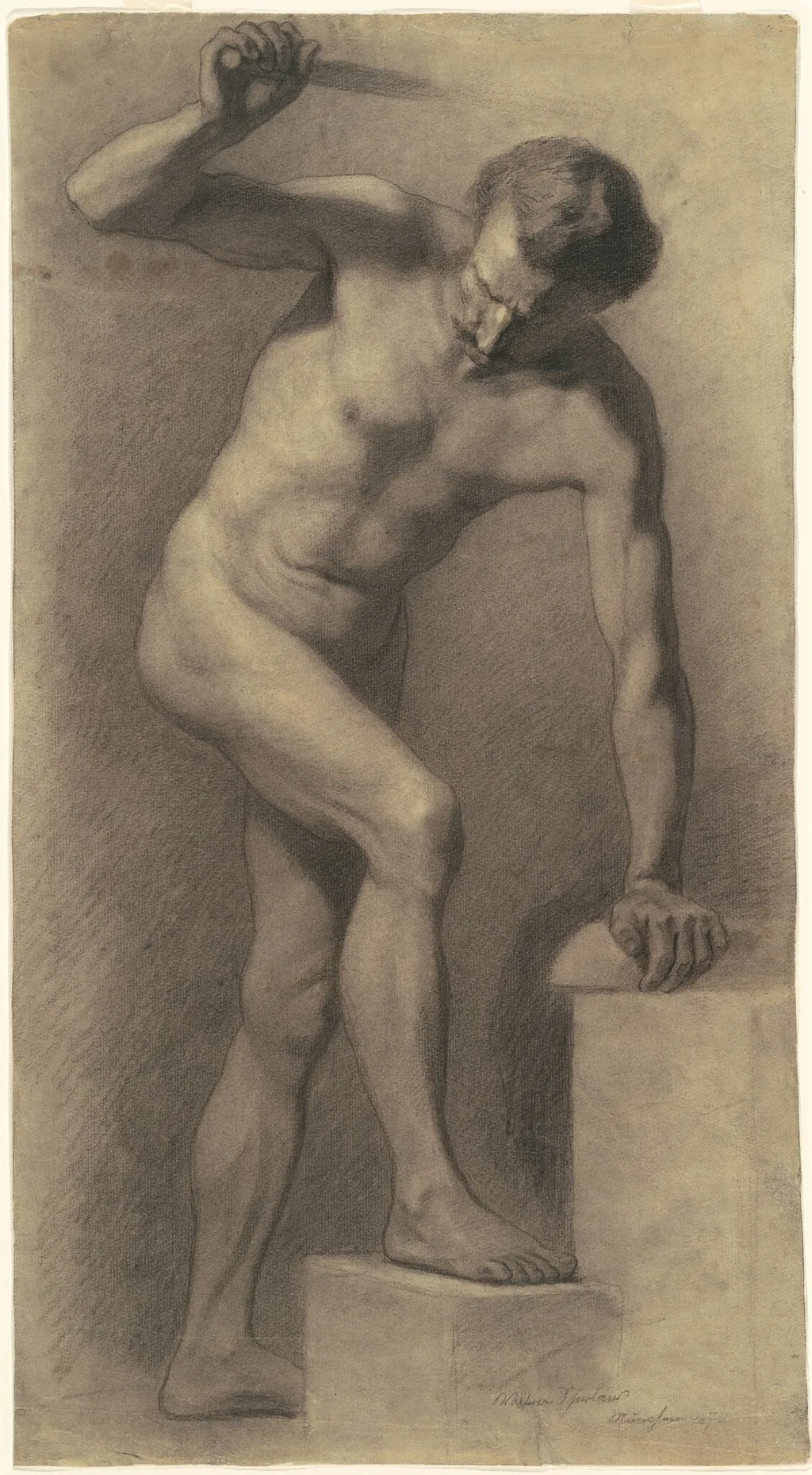
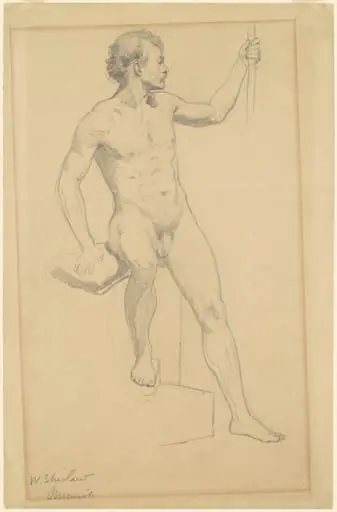
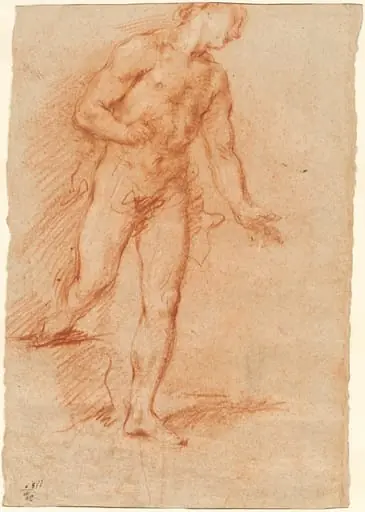
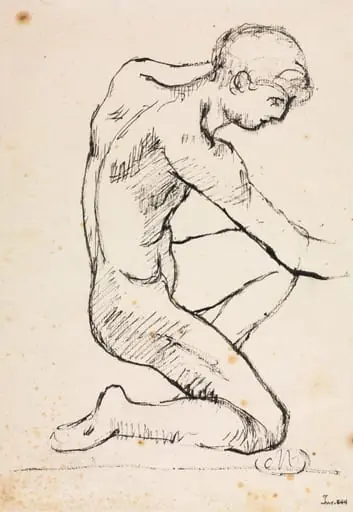
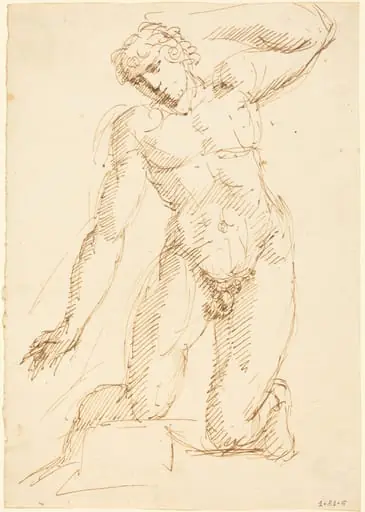
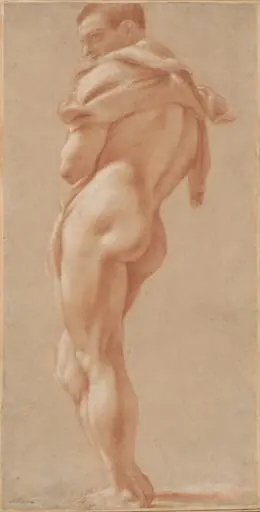
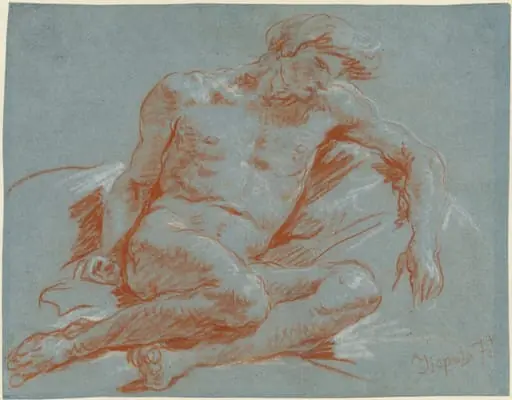
Male Nude on Steps is a charcoal drawing by the Impressionist artist Walter Shirlaw. It dates from 1872 and is held in the collection of the National Gallery of Art.
About this work
Overview
The medium’s versatility allows for deep shadows and subtle gradations, emphasizing anatomical structure without fine detail.
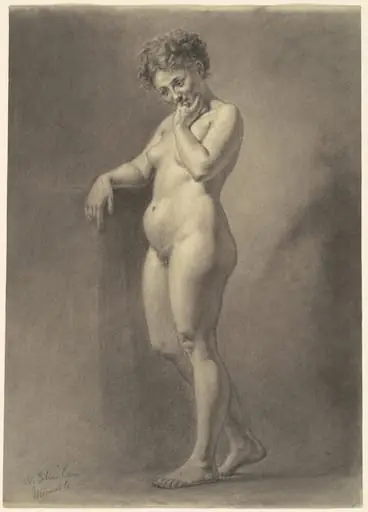
Created in 1872, this charcoal drawing by Walter Shirlaw depicts a standing male figure on a low step. Executed with bold, fluid strokes, the work captures the human form in a moment of stillness. The medium’s versatility allows for deep shadows and subtle gradations, emphasizing anatomical structure without fine detail. The sketch’s immediacy suggests an observational study, possibly from life, prioritizing form over narrative.
Subject & Meaning
The figure stands barefoot on a simple platform, one hand gripping a knife, the other resting on the hip. His torso twists slightly while his head faces forward, creating a subtle tension between movement and composure. The knife introduces an ambiguous element—neither clearly weapon nor tool—inviting interpretation without resolving it. The focus remains on the body’s presence, not its story, aligning with academic traditions of anatomical study.
Technique & Style
Shirlaw employs charcoal with energetic, unblended strokes, using scumbling to build texture across the skin’s surface. Dark, heavy lines define muscle groups, while lighter, smudged areas suggest the play of light on curved forms. The roughness of the marks conveys spontaneity, avoiding polish in favor of kinetic energy. The paper’s wove texture enhances the medium’s grain, reinforcing the drawing’s tactile quality and sense of direct observation.
History & Provenance
The drawing was made in 1872, during a period when academic training emphasized life drawing as foundational. Shirlaw, an American artist trained in Europe, likely produced this as part of his ongoing study of the human form. Its survival suggests it was retained as a working sketch rather than a finished piece, offering insight into his preparatory process and the pedagogical practices of the time.
Context
In the late 19th century, European and American art academies prioritized the nude as the highest subject for artistic training. Shirlaw’s drawing reflects this tradition, aligning with the rigorous study of anatomy and light. Unlike idealized classical nudes, this figure appears grounded in physical reality, revealing a shift toward naturalism in American art education during the post-Civil War era.
Legacy
This drawing exemplifies the enduring role of life study in artistic development. Though not widely exhibited, it contributes to understanding how 19th-century artists engaged with the body as both subject and discipline. Its unembellished approach underscores the value placed on direct observation, influencing later generations who valued process over presentation in figure drawing.
Artist & collection

![Polling [recto], by Walter Shirlaw](https://artifactworldgallery.com/img/walter-shirlaw--polling-recto--1044610bfaccebe0-w320.webp)