Artwork
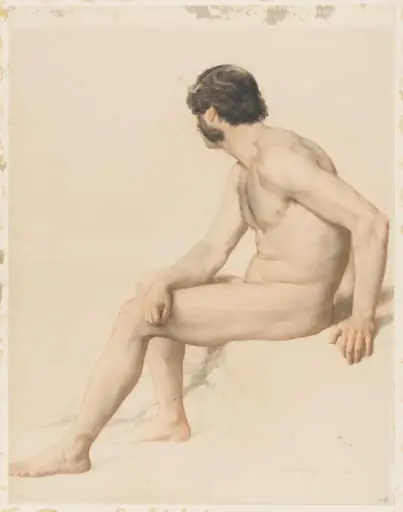
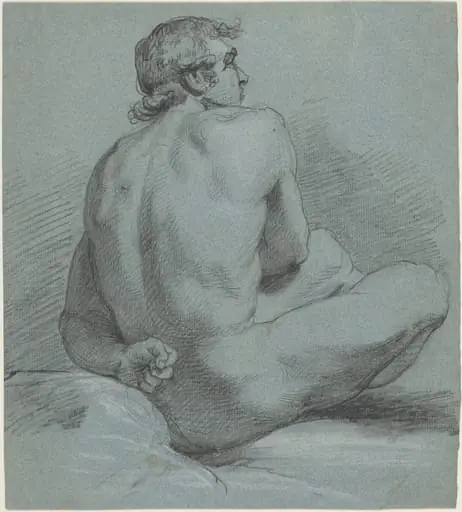
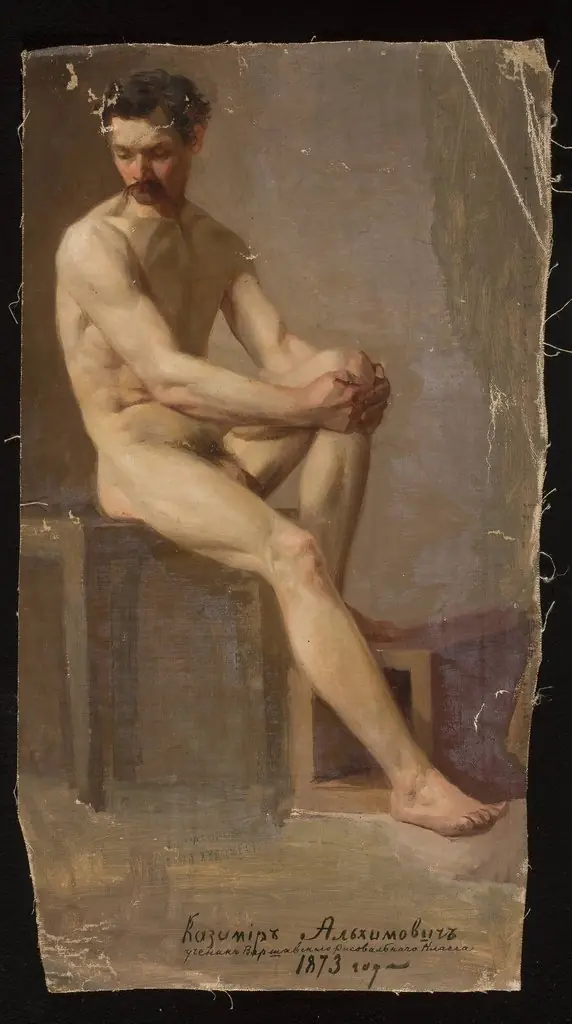
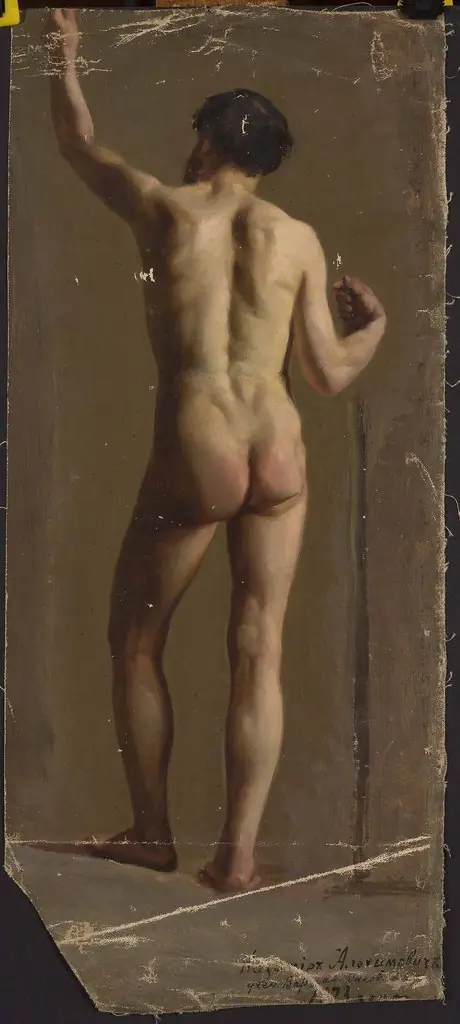
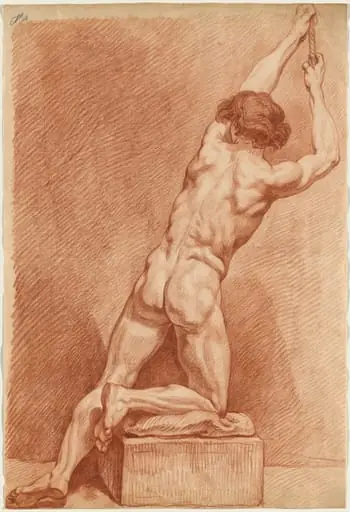
Male nude, seated, three-quarter view from back
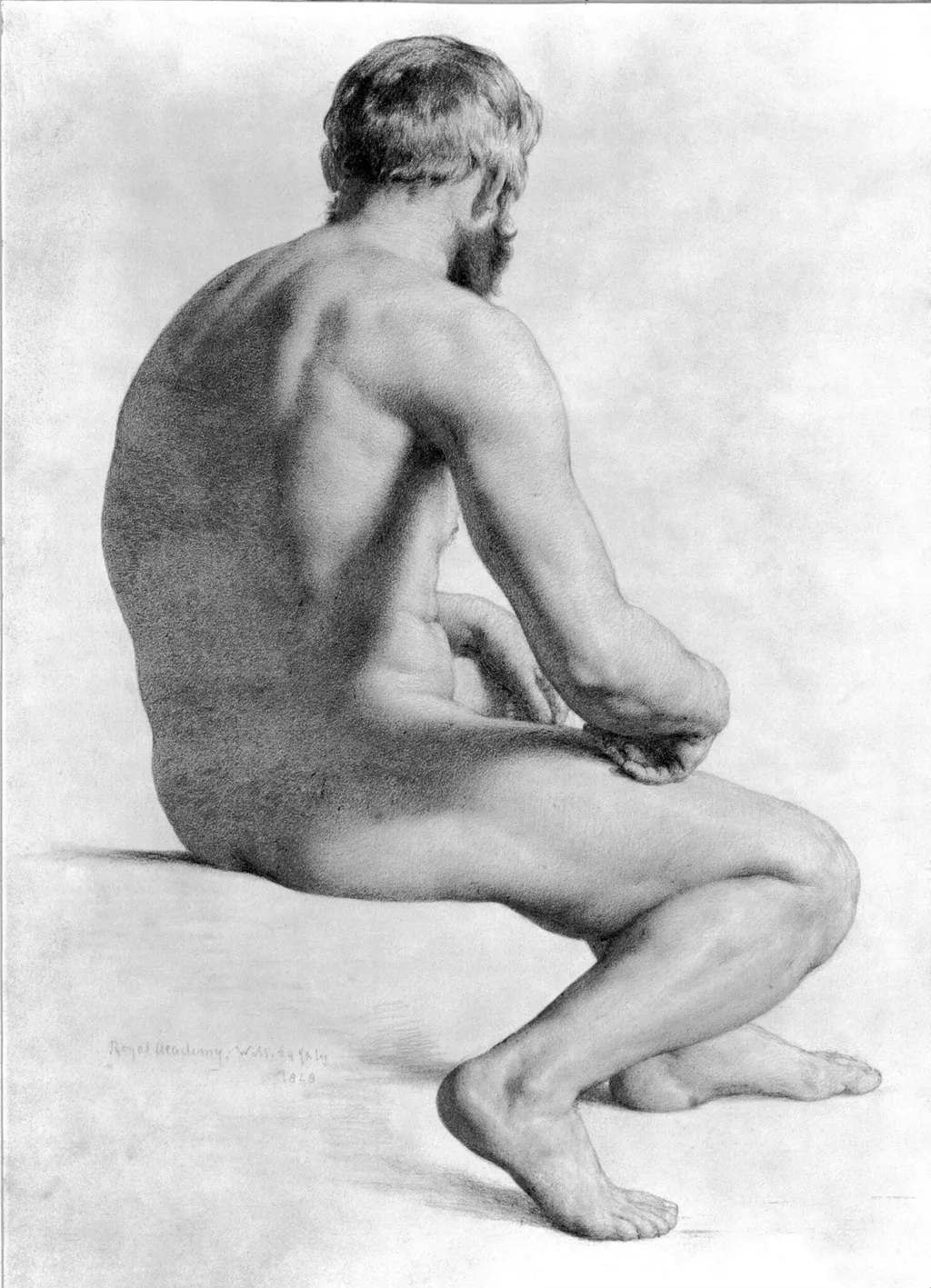
Male nude, seated, three-quarter view from back is a drawing by the Romanticist artist William Mulready. It dates from 1848 and is held in the collection of the Victoria and Albert Museum.
About this work
Overview
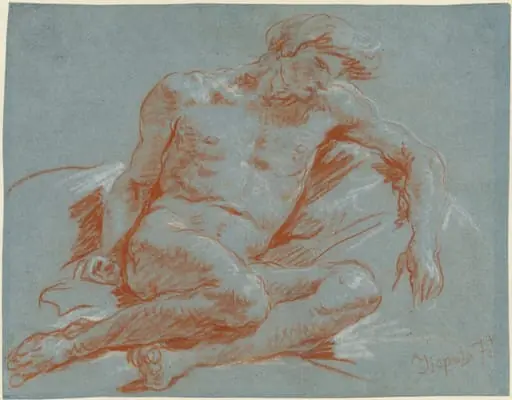
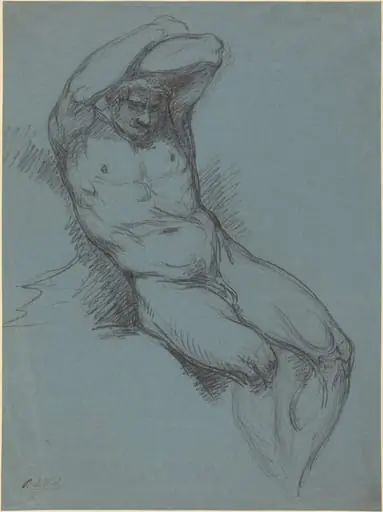
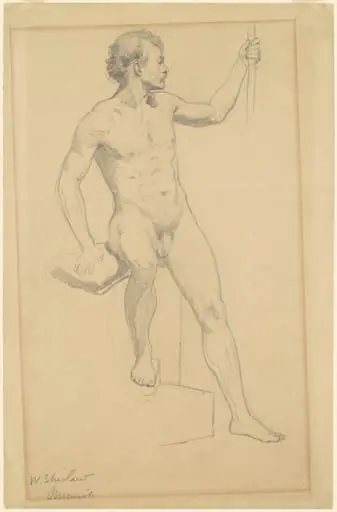
Created in 1848, this drawing by William Mulready is a study of a seated male nude viewed from behind in three-quarter profile. Executed in black and red chalk, it bears the artist’s initials and the year of completion. The composition is unadorned, focusing solely on the form and its subtle modeling, suggesting an exercise in anatomical observation rather than a finished work.
Subject & Meaning
The figure is a solitary male, seated with legs folded and hands resting on his knees, his posture relaxed yet controlled. There is no narrative context or symbolic element; the subject is the human body itself, rendered without idealization or embellishment. The pose invites quiet contemplation of natural form, emphasizing weight, balance, and the quiet dignity of the unposed figure.
Technique & Style
The absence of cross-hatching or detailed texture underscores a preference for fluid, atmospheric rendering over structural definition.
Mulready employed soft, blended chalk strokes to model the contours of the back, shoulders, and arms, avoiding sharp outlines in favor of gradual tonal transitions. The use of both black and red chalk allowed for nuanced shading, enhancing the sense of volume and light. The absence of cross-hatching or detailed texture underscores a preference for fluid, atmospheric rendering over structural definition.
History & Provenance
The drawing is dated and signed by the artist, indicating it was intended as a personal study or reference. No record of public exhibition or ownership prior to modern archival acquisition is documented. Its survival suggests it was preserved within Mulready’s private collection, valued for its technical clarity rather than its status as a public work.
Context
In mid-19th century Britain, life drawing was central to academic training, though public displays of nudity remained contentious. Mulready, known for genre scenes, engaged with anatomical study as part of professional discipline. This drawing reflects the quiet, private practice of artists refining their grasp of the human form outside the constraints of commissioned work.
Legacy
The drawing stands as an example of the quiet, disciplined tradition of academic figure study in Victorian art. While not widely exhibited, it contributes to understanding how artists like Mulready cultivated technical precision through direct observation. Its simplicity and focus continue to inform pedagogical approaches to anatomical drawing.
Own this work as a print
Artist & collection
Artist
William Mulready was an Irish genre painter living in London. He is best known for his romanticising depictions of rural scenes, and for creating Mulready stationery letter sheets, issued at the same time as the Penny Black postage stamp.