Artwork
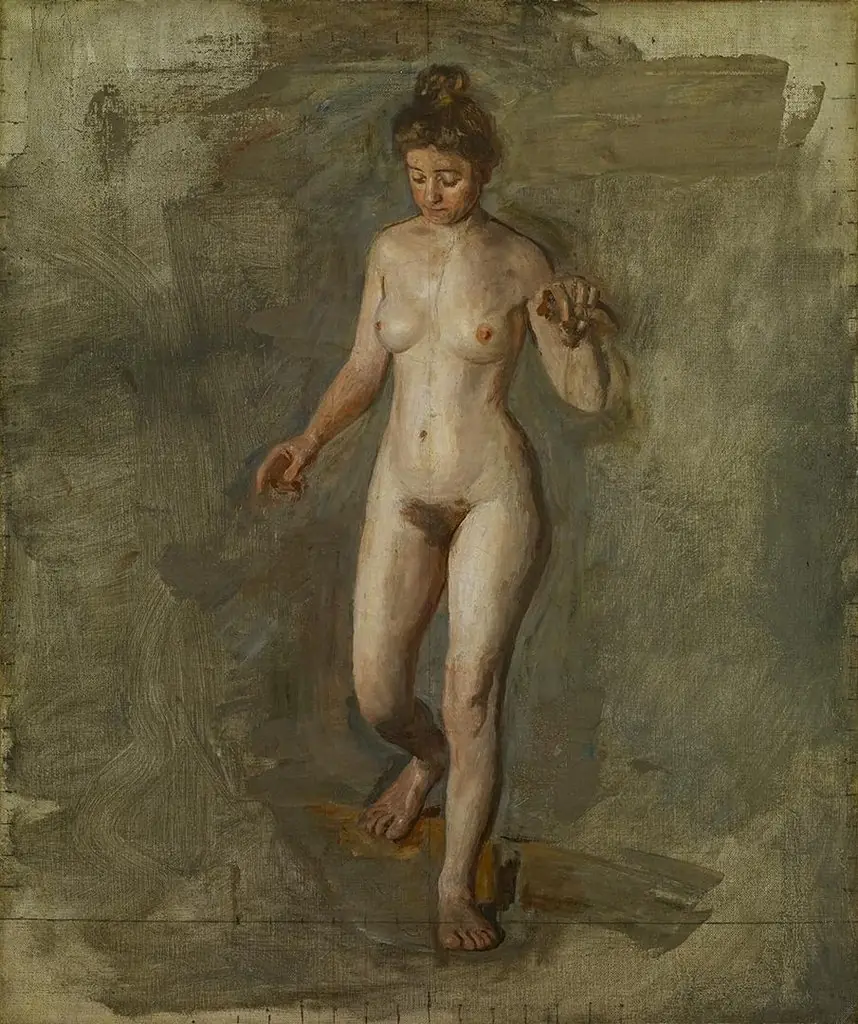
Stående nøgen kvindelig model
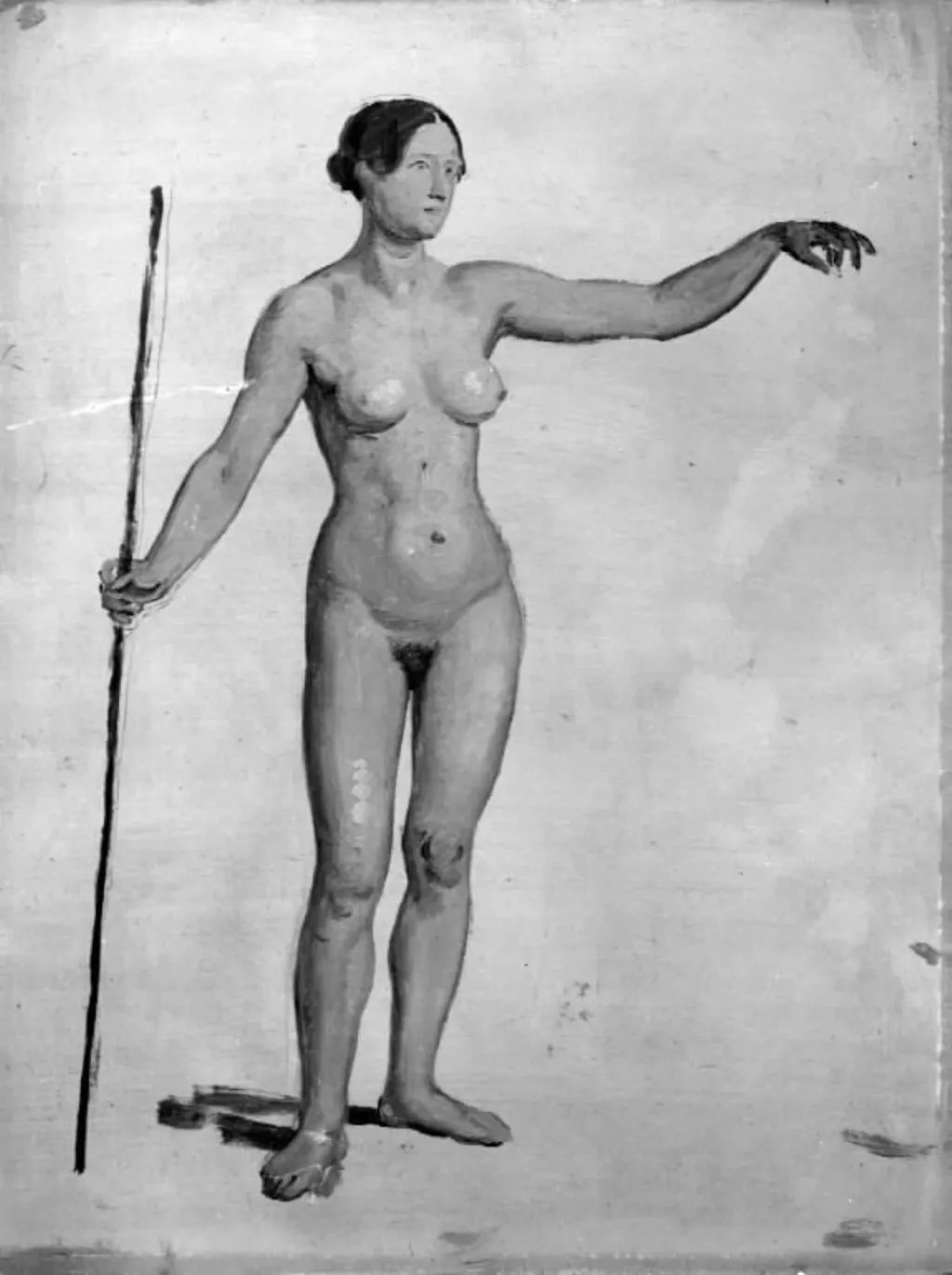
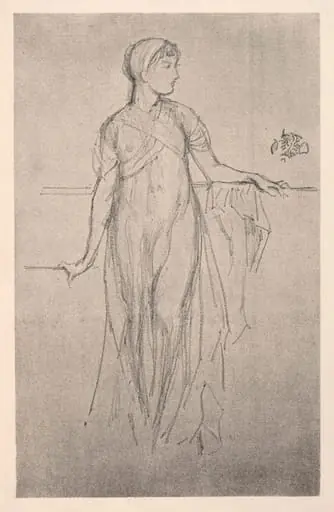
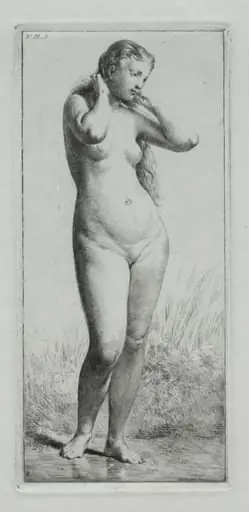
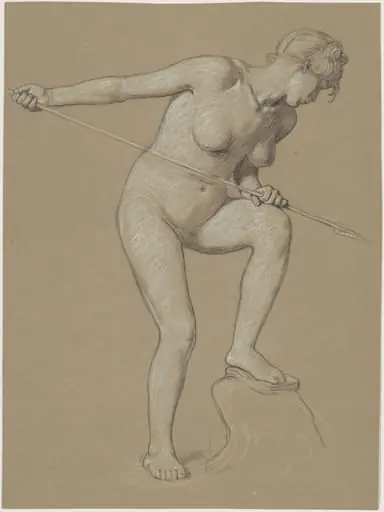
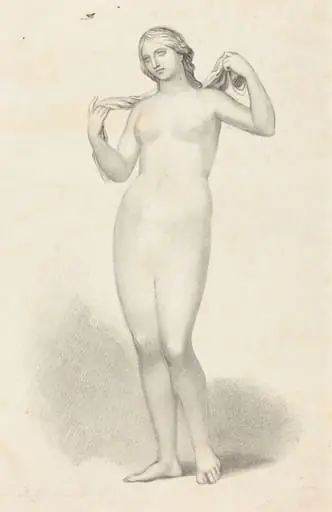
Stående nøgen kvindelig model is a photography by Unknown. It dates from 1849 and is held in the collection of the Statens Museum for Kunst. This undated figure study, attributed to an artist active around 1849, depicts a nude woman standing in a simple interior space.
About this work
Overview
This undated figure study, attributed to an artist active around 1849, depicts a nude woman standing in a simple interior space. Executed as a painted image, it is part of the collection at the Museum of Ethnography. The composition emphasizes stillness and direct engagement, with minimal environmental detail and a restrained palette that focuses attention on the figure’s posture and gaze.
Subject & Meaning
The work resists narrative or allegorical interpretation, presenting the body as a subject of observation rather than representation.
The subject is a woman in a natural, unidealized stance, confronting the viewer without overt emotion. Her posture—weight on one leg, arm extended palm-down—suggests neither invitation nor resistance. The stick she holds may imply utility or symbolic authority, though its exact significance remains ambiguous. The work resists narrative or allegorical interpretation, presenting the body as a subject of observation rather than representation.
Technique & Style
The painting employs a flat, even lighting and a muted background to isolate the figure. Brushwork is restrained, with soft transitions between tones and no visible texture or decorative detail. The figure’s form is rendered with anatomical accuracy but without idealization, reflecting a documentary approach. The lack of chiaroscuro and the frontal orientation align with observational studies common in 19th-century ethnographic and academic practice.
History & Provenance
The work entered the Museum of Ethnography’s collection in the mid-19th century, likely as part of a broader effort to document human forms across cultures. Its origin as a studio study or ethnographic record is unclear, but its inclusion in an ethnographic institution suggests it was valued for its perceived cultural or anthropological neutrality rather than artistic merit.
Context
Created during a period when European institutions increasingly collected images of non-Western and marginalized bodies, this work reflects the era’s interest in visual classification. Unlike mythological or idealized nudes, it presents the figure without narrative context, aligning with emerging scientific and ethnographic modes of representation that prioritized observation over aesthetics.
Legacy
The painting remains a quiet example of 19th-century figure studies used in anthropological contexts. It has not been widely exhibited outside ethnographic circles, and its artist remains obscure. Its significance lies in its unembellished presentation of the human form, offering insight into how bodies were visually cataloged during a time of shifting attitudes toward race, gender, and representation.
Artist & collection

 Domestic Scene
 Giacomo and Cardinal Marco, investing Andrea, Abbot of San Zeno, with his Benefice
 The Nymph of Fontainebleau
 Portrait of a Woman
 Madonna and Child with Saints in the Enclosed Garden
 Venus and Minerva
 Family Group of Four on Sofa
 Wall painting from Room H of the Villa of P. Fannius Synistor at Boscoreale