Artwork
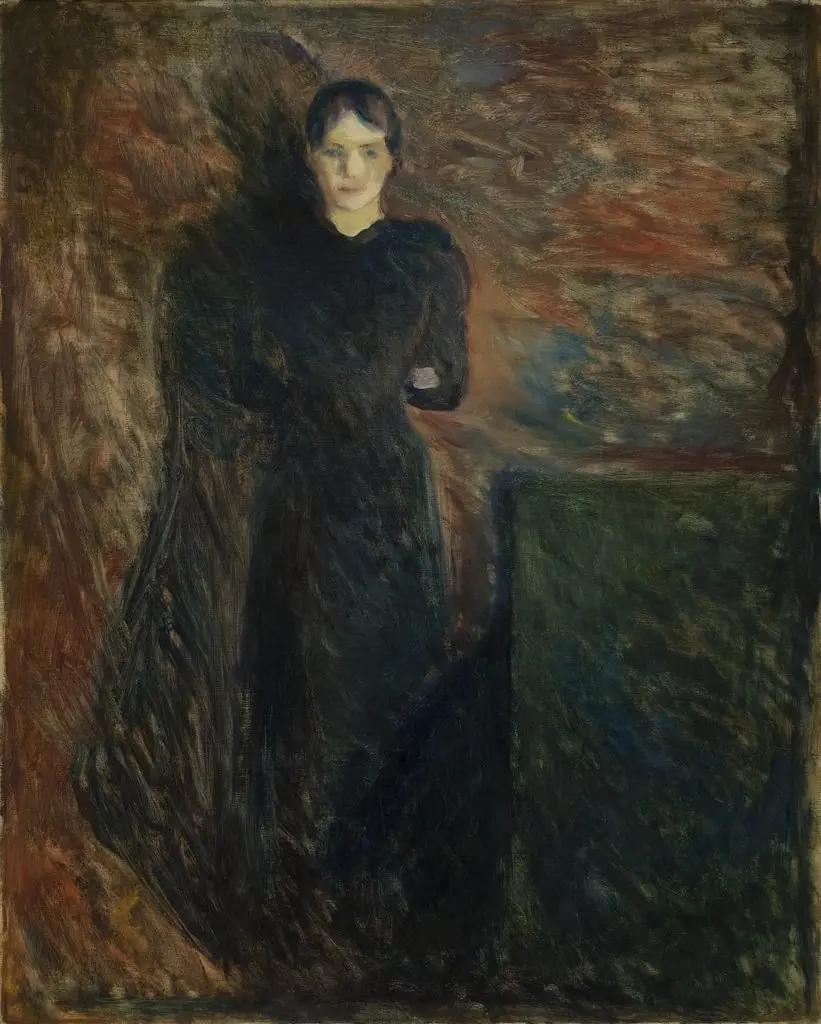
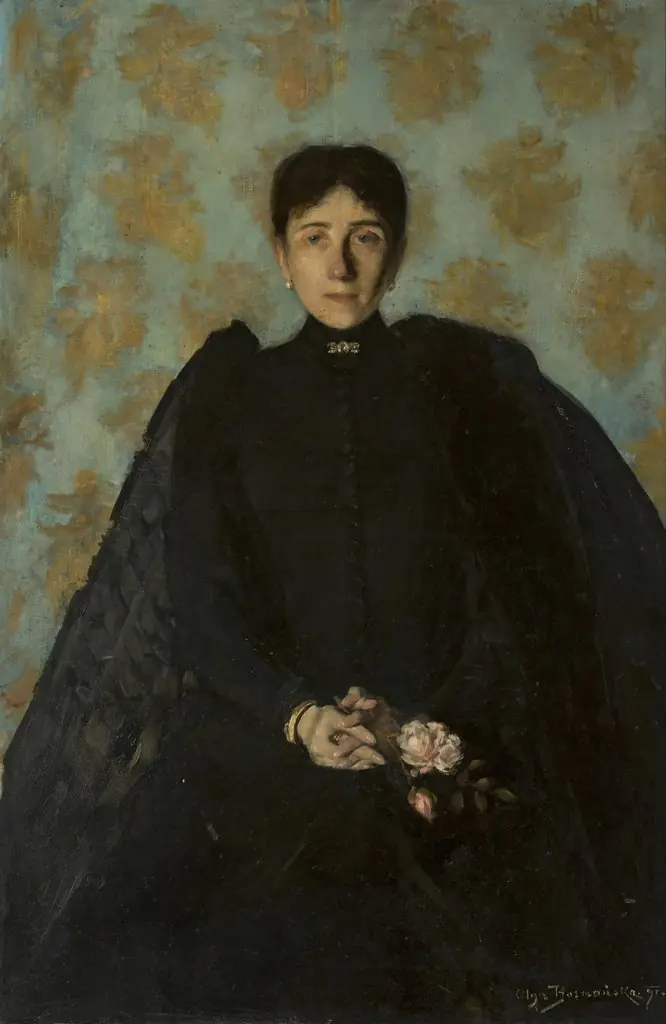
Lady in Black
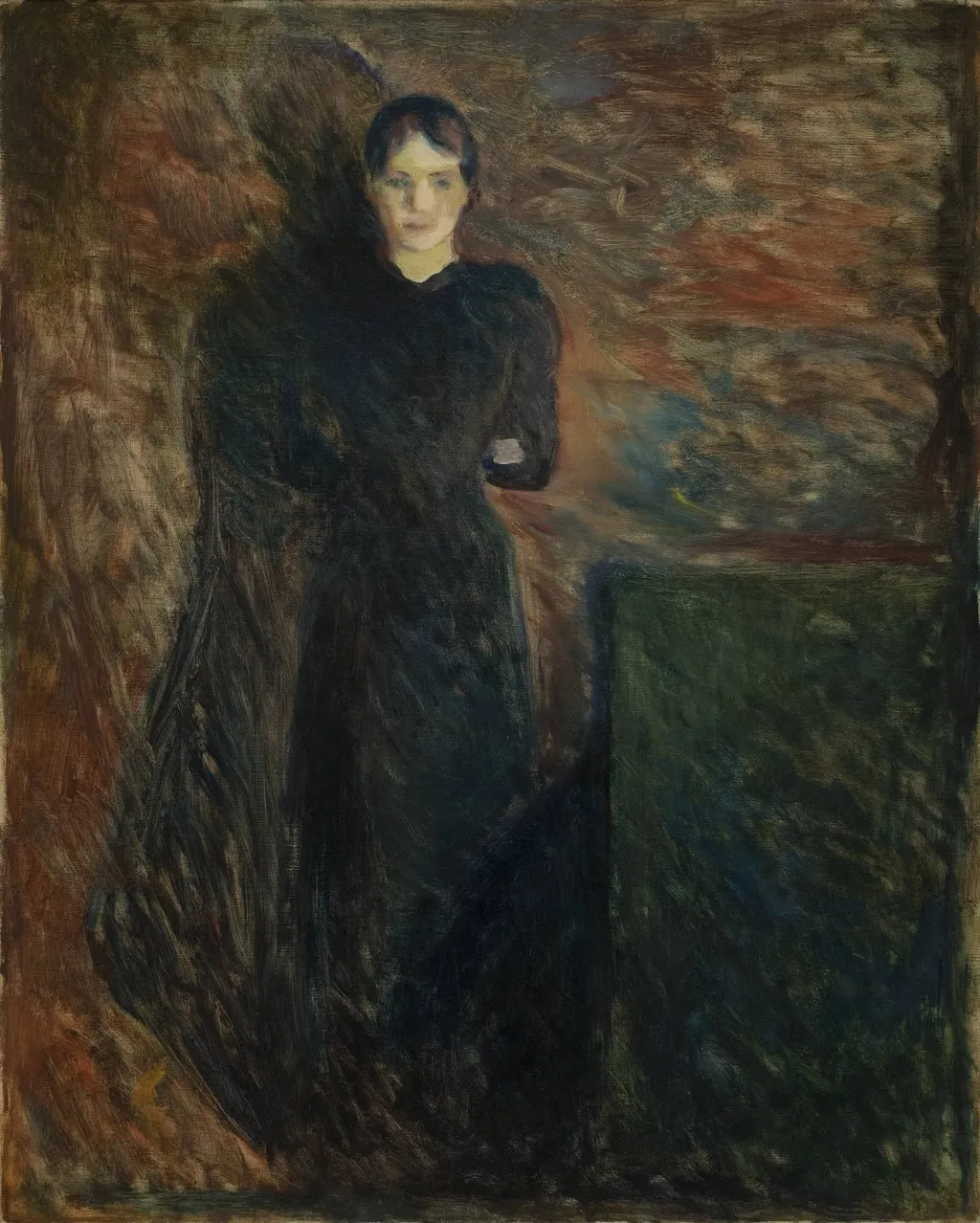
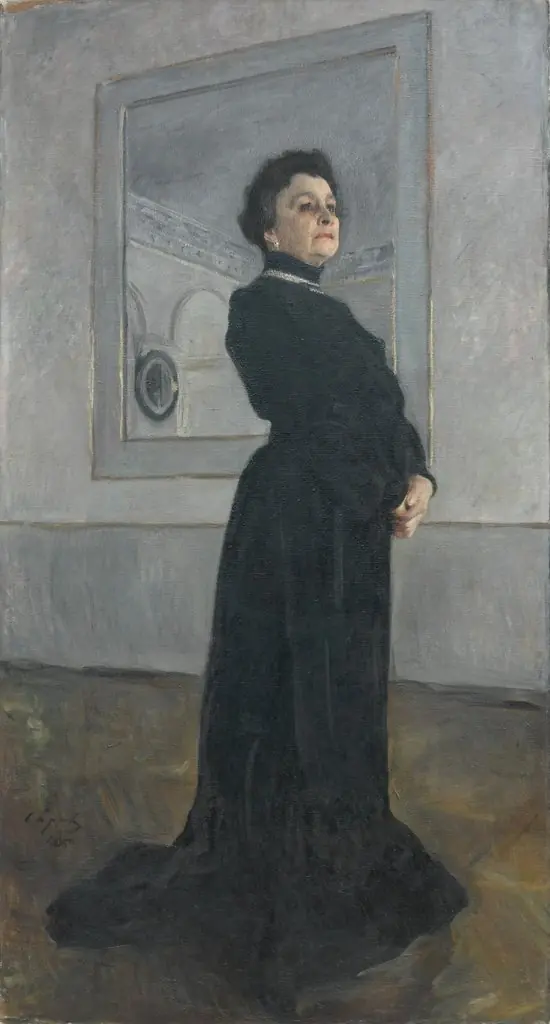
Lady in Black is a photography by the Impressionist artist Unknown. It dates from 1891 and is held in the collection of the Statens Museum for Kunst.
About this work
Overview
Painted in 1891, Lady in Black is a portrait by the artist 1810_person, currently held in the collection of the Museum of Ethnography. The work presents a solitary female figure in a dark, high-necked dress, positioned before a textured, muted wall. The composition emphasizes stillness and ambiguity, with the subject’s face rendered in soft, indistinct brushwork that resists clear identification.
Subject & Meaning
The figure’s identity remains unspecified, and her direct gaze toward the viewer invites contemplation without revelation. The absence of contextual details—no furnishings, no landscape—focuses attention on her presence alone. The somber attire and blurred features suggest introspection or anonymity, possibly reflecting broader themes of individuality within societal norms of the era.
Technique & Style
The painting merges observational realism with the loose, tactile brushwork characteristic of Impressionism. The woman’s form is defined with subtle tonal shifts, while the background is built from thick, uneven strokes that emphasize surface texture. This hybrid approach avoids both photographic precision and pure atmospheric dissolution, creating a quiet tension between clarity and obscurity.
History & Provenance
The painting entered the Museum of Ethnography’s collection in the early 20th century, though its earlier ownership is undocumented. It was not widely exhibited during the artist’s lifetime and remained relatively obscure until later scholarly interest in late 19th-century portraiture brought renewed attention to the work.
Context
Created during a period when artists were redefining portraiture beyond formal commissions, Lady in Black reflects a shift toward psychological depth and informal composition. While contemporaries like Sargent or Whistler pursued polished elegance, 1810_person opted for a more intimate, unresolved aesthetic, aligning with emerging interests in the inner life of the subject.
Legacy
Though not widely reproduced, the painting is recognized in academic circles as an example of stylistic experimentation in late 19th-century European painting. Its restrained palette and ambiguous expression have influenced later studies of gender, visibility, and the limits of representation in modern portraiture.
Artist & collection

 Domestic Scene
 Giacomo and Cardinal Marco, investing Andrea, Abbot of San Zeno, with his Benefice
 The Nymph of Fontainebleau
 Portrait of a Woman
 Madonna and Child with Saints in the Enclosed Garden
 Venus and Minerva
 Family Group of Four on Sofa
 Wall painting from Room H of the Villa of P. Fannius Synistor at Boscoreale