Artwork
Virgin and Child with the Infant St John
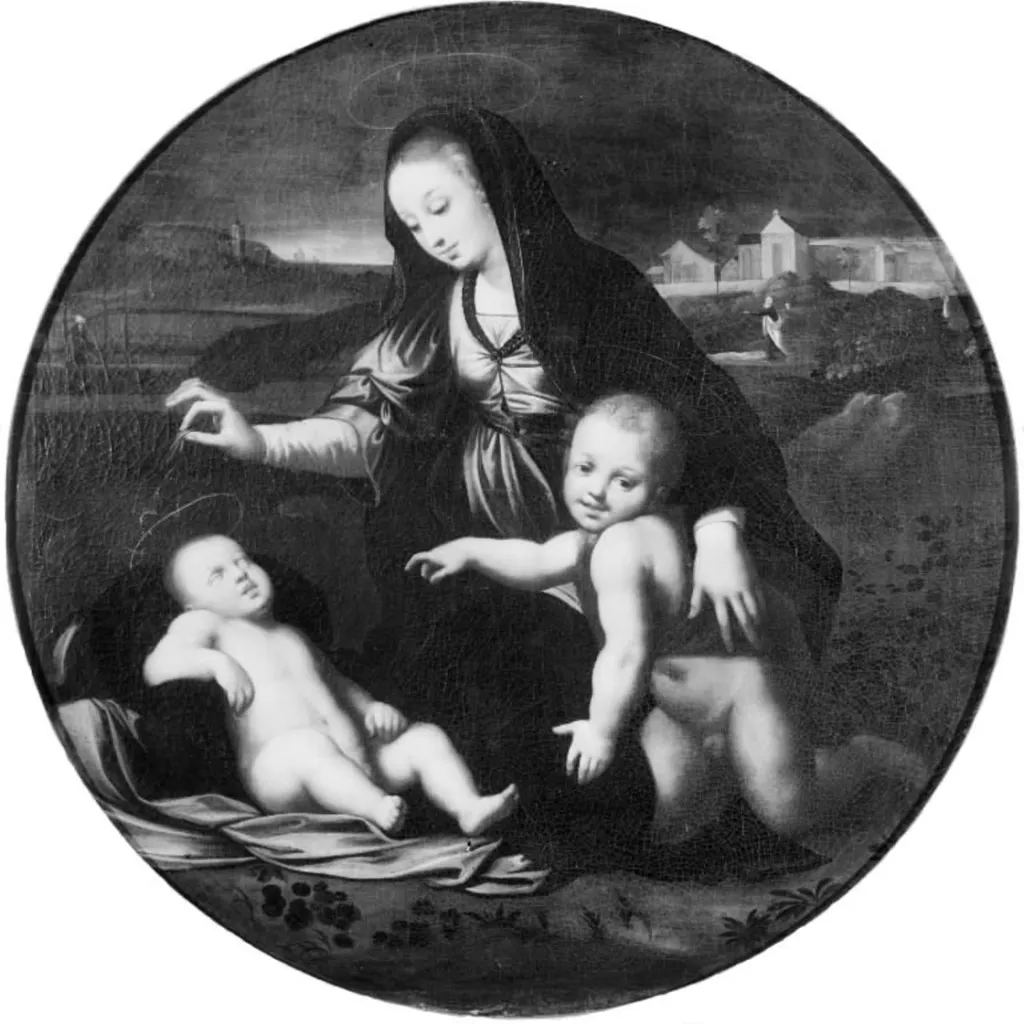
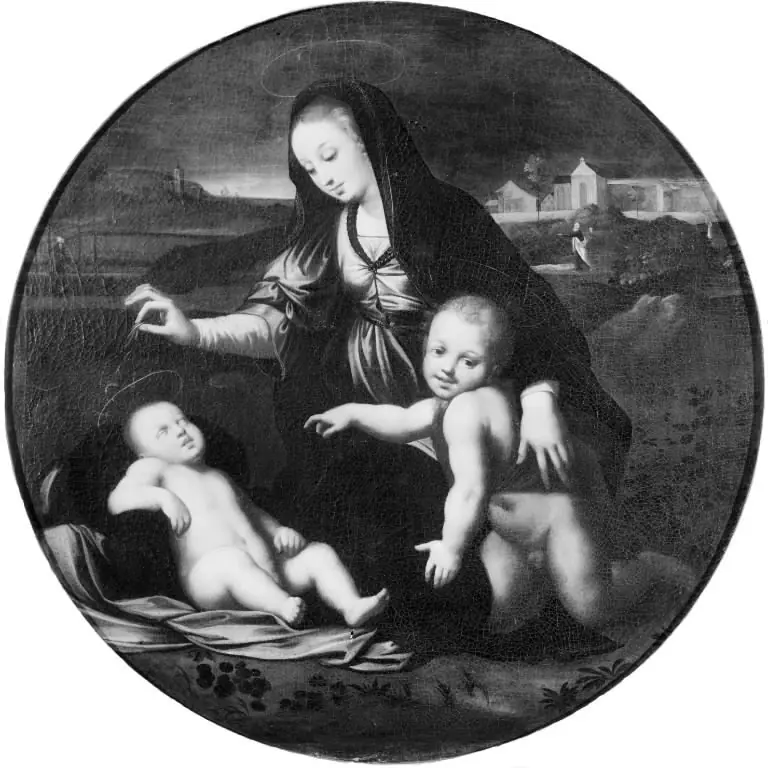
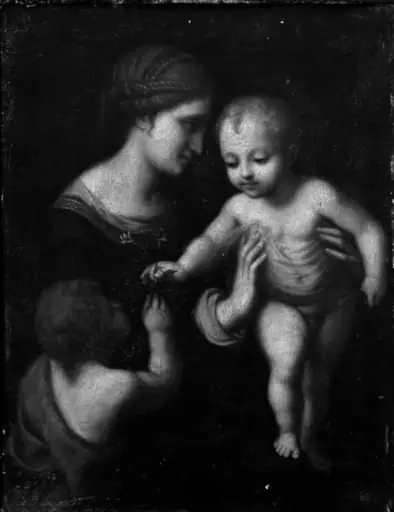
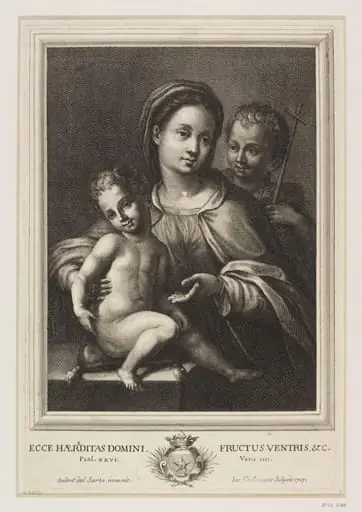
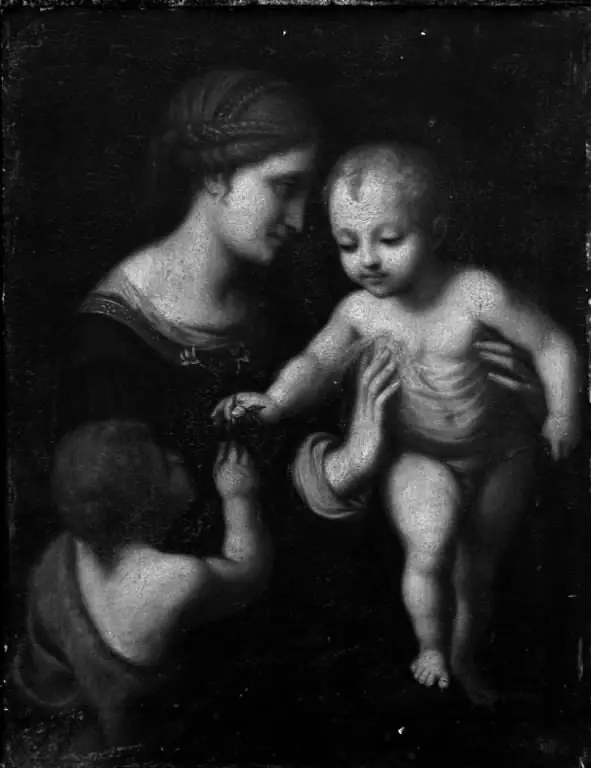
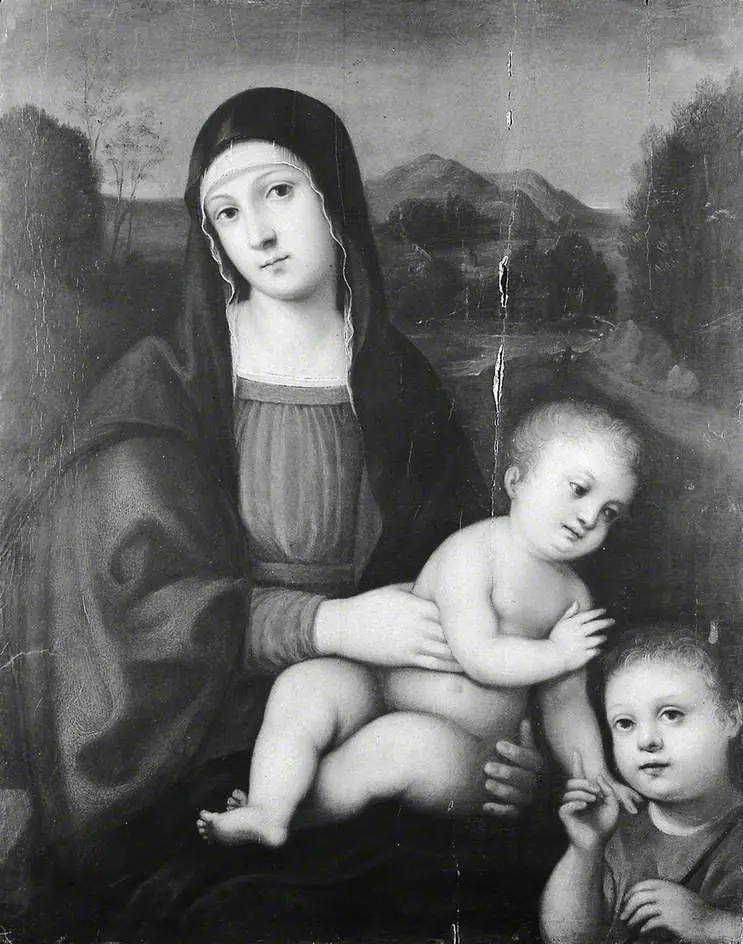
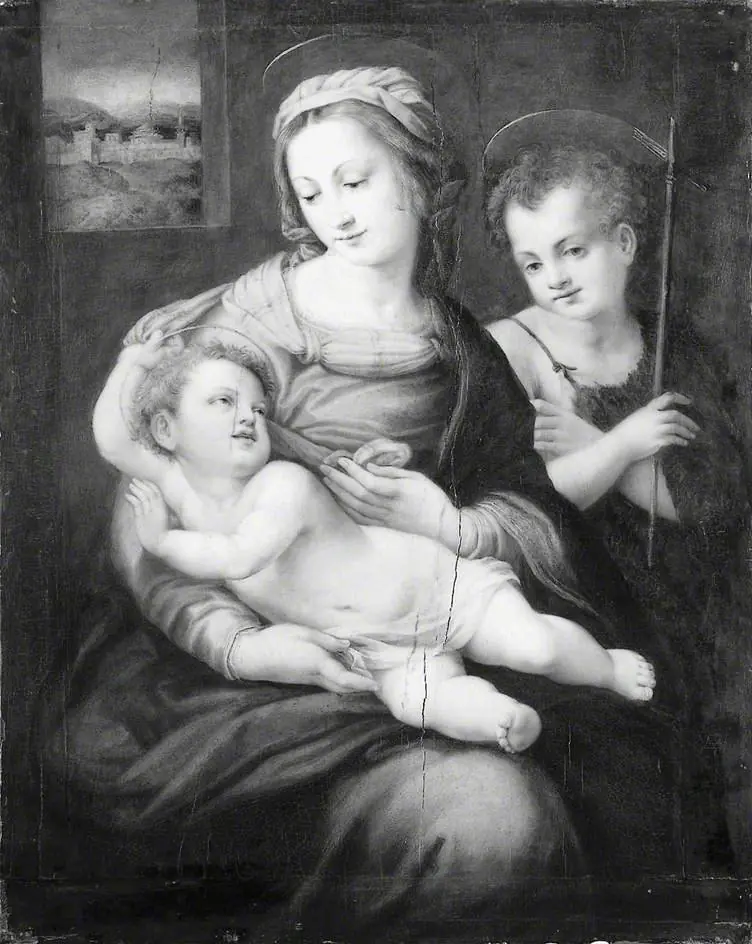
Virgin and Child with the Infant St John is a photography by Unknown. It dates from 1450 and is held in the collection of the Statens Museum for Kunst. This devotional image, dated around 1450, portrays the Virgin Mary with the infant Jesus and the young Saint John the Baptist.
About this work
Overview
This devotional image, dated around 1450, portrays the Virgin Mary with the infant Jesus and the young Saint John the Baptist.
This devotional image, dated around 1450, portrays the Virgin Mary with the infant Jesus and the young Saint John the Baptist. Though often attributed to a specific artist of the period, the work’s authorship remains unconfirmed. It is currently housed in the Museum of Ethnography, where its religious subject and early Renaissance style distinguish it from the institution’s broader ethnographic collections.
Subject & Meaning
The composition centers on a moment of quiet spiritual connection: Mary kneels, cradling Jesus with one arm while extending the other toward John, who stands beside her. This gesture suggests John’s future role as precursor to Christ. The intimate grouping reflects a devotional tradition emphasizing maternal tenderness and divine kinship, common in late medieval and early Renaissance religious imagery.
Technique & Style
The painting employs chiaroscuro to model forms with subtle gradations of light and shadow, enhancing the three-dimensionality of the figures. Robes are rendered with layered pigments to suggest fabric weight and texture. The background, though simplified, includes distant architecture and foliage, grounding the sacred scene in a naturalistic yet symbolic landscape typical of 15th-century Italian panel painting.
History & Provenance
The work entered the Museum of Ethnography’s collection in the late 19th century, likely through a private donation or acquisition. Its presence in an ethnographic institution, rather than a fine arts museum, suggests an early 20th-century curatorial approach that grouped religious artifacts by cultural context rather than artistic lineage. Its original commission and early ownership remain undocumented.
Context
Created during the early Renaissance, the image aligns with devotional practices in Tuscany and Umbria, where intimate Virgin-and-Child scenes were popular among private patrons. The kneeling posture of Mary, uncommon in earlier icons, reflects a growing emphasis on human emotion and physical presence in religious art. Similar compositions appear in works by artists such as Fra Angelico and Domenico Ghirlandaio.
Legacy
Though not widely reproduced or studied in mainstream art history, the painting offers insight into regional devotional aesthetics of the mid-15th century. Its preservation in an ethnographic setting highlights shifting museum priorities over time, and it continues to serve as a quiet example of how religious imagery was adapted for personal contemplation in pre-modern Europe.
Artist & collection

 Domestic Scene
 Giacomo and Cardinal Marco, investing Andrea, Abbot of San Zeno, with his Benefice
 The Nymph of Fontainebleau
 Portrait of a Woman
 Madonna and Child with Saints in the Enclosed Garden
 Venus and Minerva
 Family Group of Four on Sofa
 Wall painting from Room H of the Villa of P. Fannius Synistor at Boscoreale