Artwork
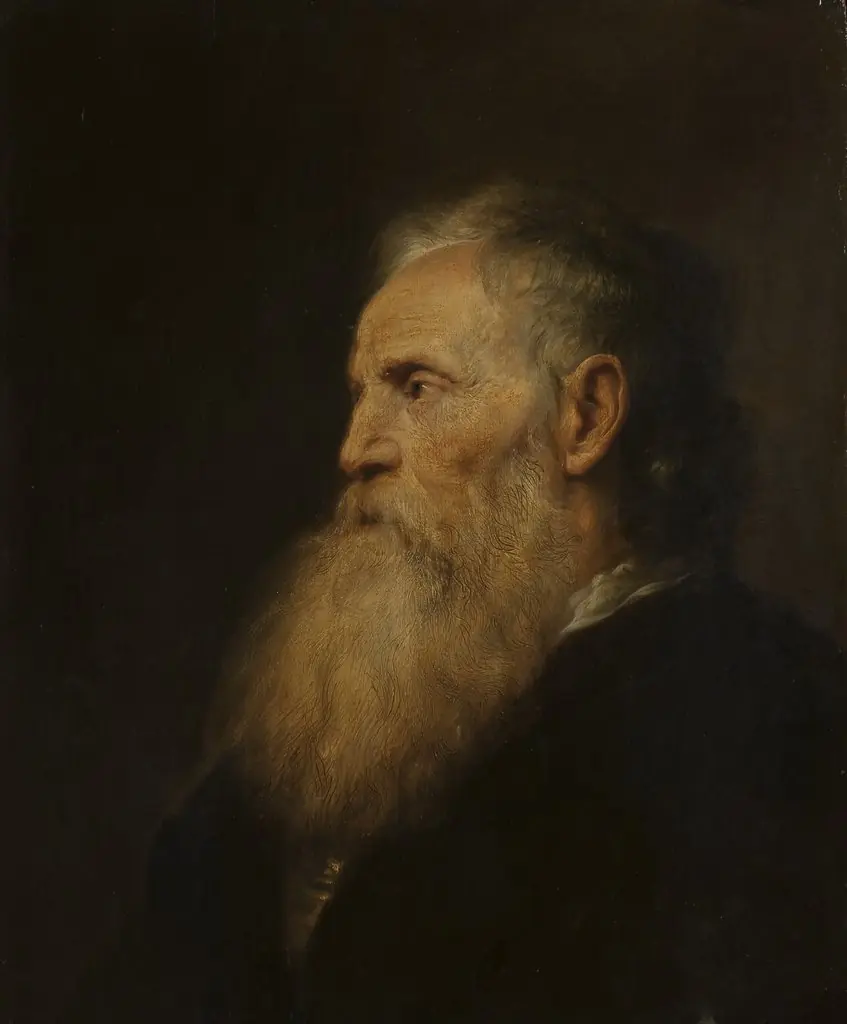
Study of an Old Man in Profile
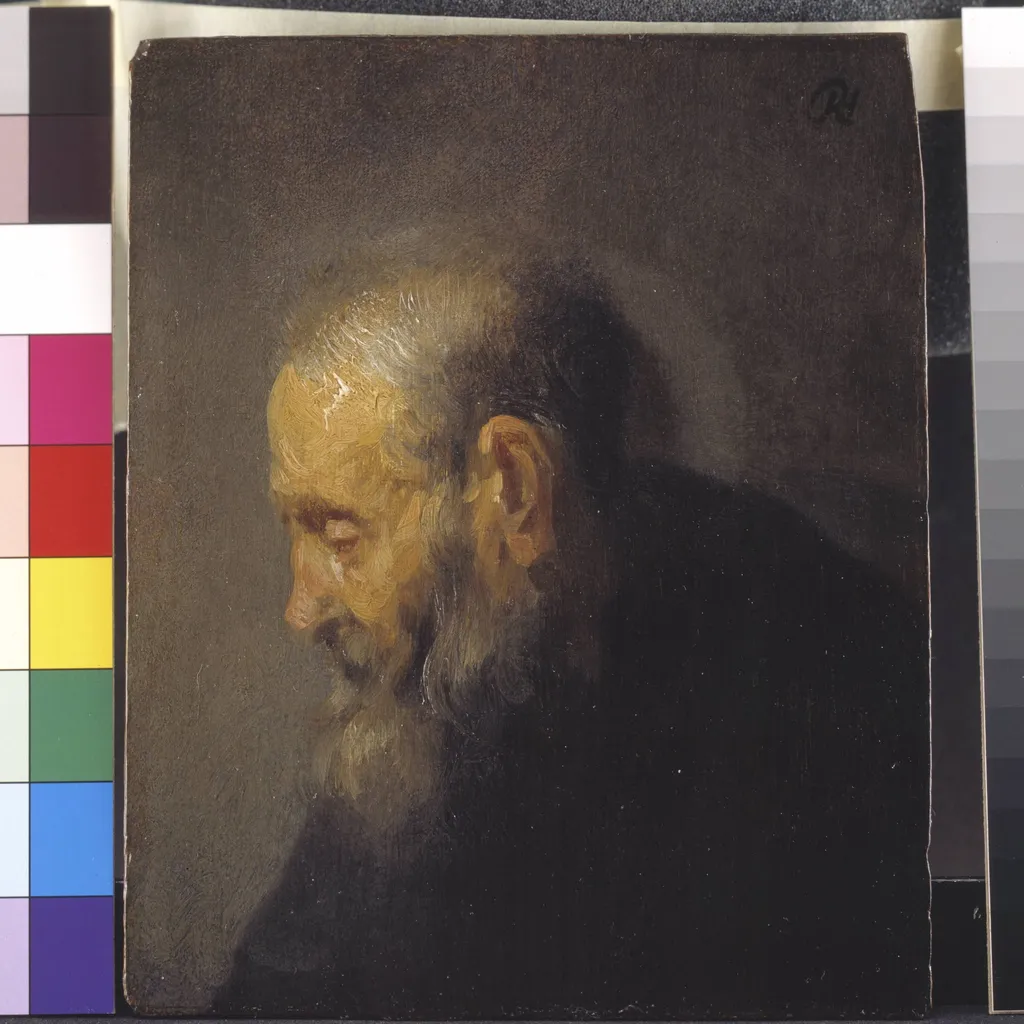
Study of an Old Man in Profile is a drawing by Unknown. It dates from 1650 and is held in the collection of the Statens Museum for Kunst. Created around 1650, this ink or chalk drawing depicts an elderly man viewed in profile.
About this work
Overview
The piece is part of the collection at the Museum of Ethnography, where it is preserved as an example of observational drawing from the period.
Created around 1650, this ink or chalk drawing depicts an elderly man viewed in profile. The work is attributed to a 17th-century artist, though the specific hand remains unconfirmed. Executed with minimal strokes, it functions as a preparatory study rather than a completed portrait. The piece is part of the collection at the Museum of Ethnography, where it is preserved as an example of observational drawing from the period.
Subject & Meaning
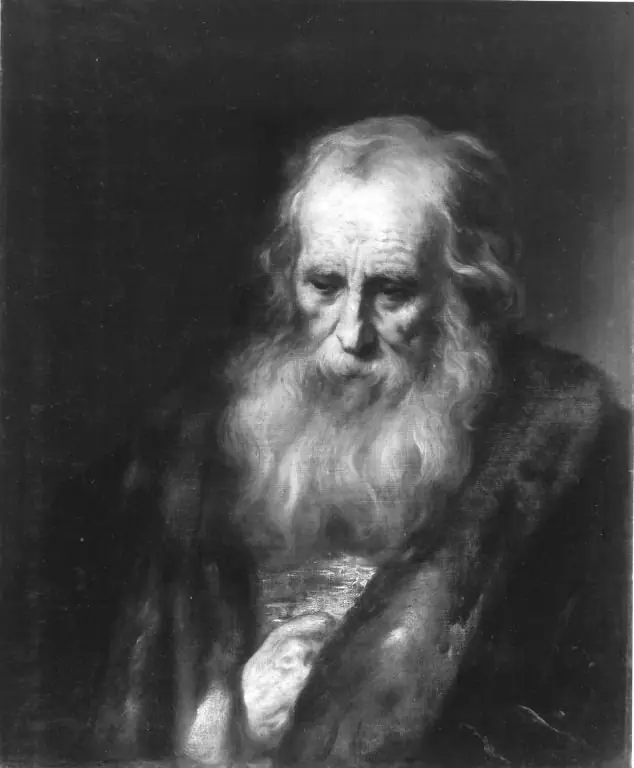
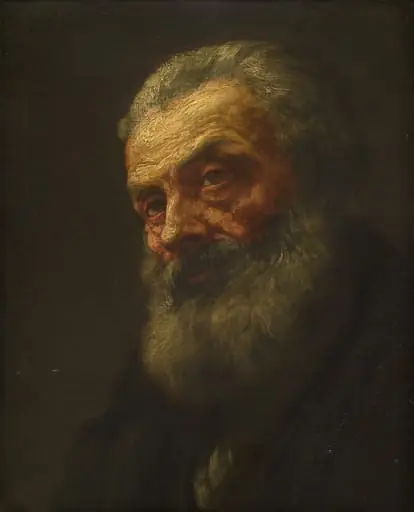
The subject is an aging man with a thick, curly gray beard and receding hair, his gaze lowered in quiet contemplation. No identity is recorded, and the figure lacks symbolic attributes, suggesting the artist sought to capture the physical reality of age rather than convey status or narrative. The stillness and intimacy of the pose imply a focus on human presence over social role.
Technique & Style
The artist employed light, fluid lines and subtle shading to suggest volume and texture. Hair and skin are rendered with soft, broken strokes rather than defined contours. A dark, unmodeled background isolates the face, enhancing its three-dimensionality. Delicate stippling appears in areas of shadow, building tone through clustered marks rather than hatching, reflecting a methodical approach to capturing light and form.
History & Provenance
The drawing entered the Museum of Ethnography’s collection in the late 19th century, though its earlier ownership is undocumented. It was likely produced during the artist’s routine practice, possibly as part of a larger set of studies. Its survival suggests it was valued for its technical insight, even if not intended as a public work.
Context
In mid-17th-century Europe, artists often made quick studies of faces to refine their understanding of anatomy and expression. This drawing aligns with a broader tradition of observational sketches used in training and preparation. Unlike formal portraits, such works prioritized direct observation over idealization, reflecting a growing interest in naturalism among practitioners.
Legacy
Though unsigned and unattributed with certainty, the drawing remains a quiet testament to the discipline of observational drawing in the Baroque era. It continues to serve as an educational reference for students of technique, illustrating how minimal means can convey depth and character without embellishment.
Artist & collection

 Domestic Scene
 Giacomo and Cardinal Marco, investing Andrea, Abbot of San Zeno, with his Benefice
 The Nymph of Fontainebleau
 Portrait of a Woman
 Madonna and Child with Saints in the Enclosed Garden
 Venus and Minerva
 Family Group of Four on Sofa
 Wall painting from Room H of the Villa of P. Fannius Synistor at Boscoreale