Artwork
Grevens Fejde
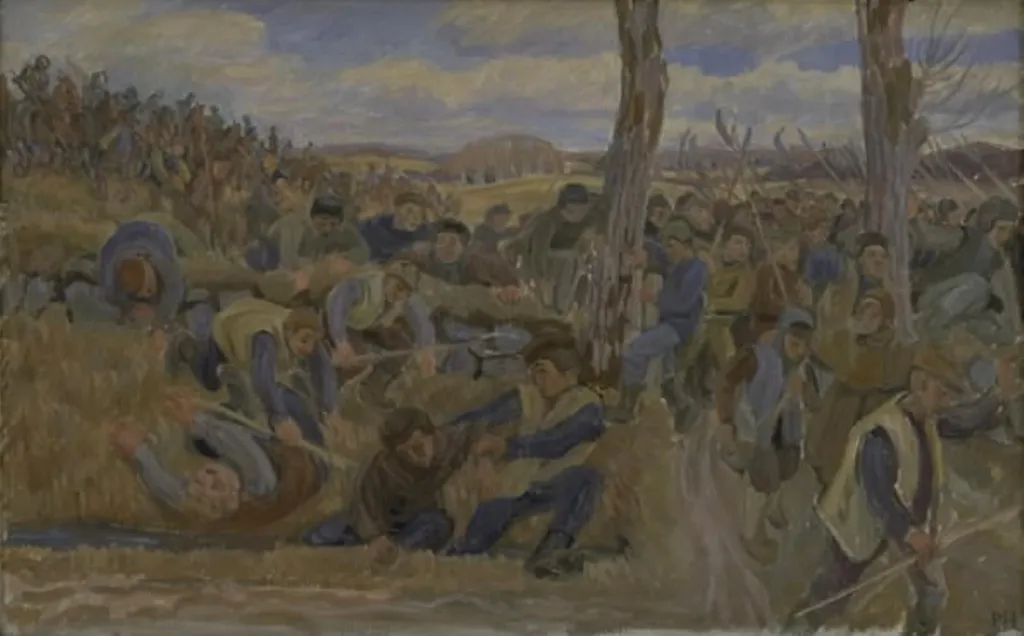
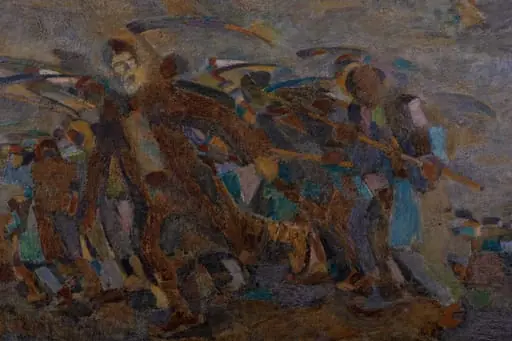
Grevens Fejde is a photography by Unknown. It dates from 1918 and is held in the collection of the Statens Museum for Kunst.
About this work
Overview
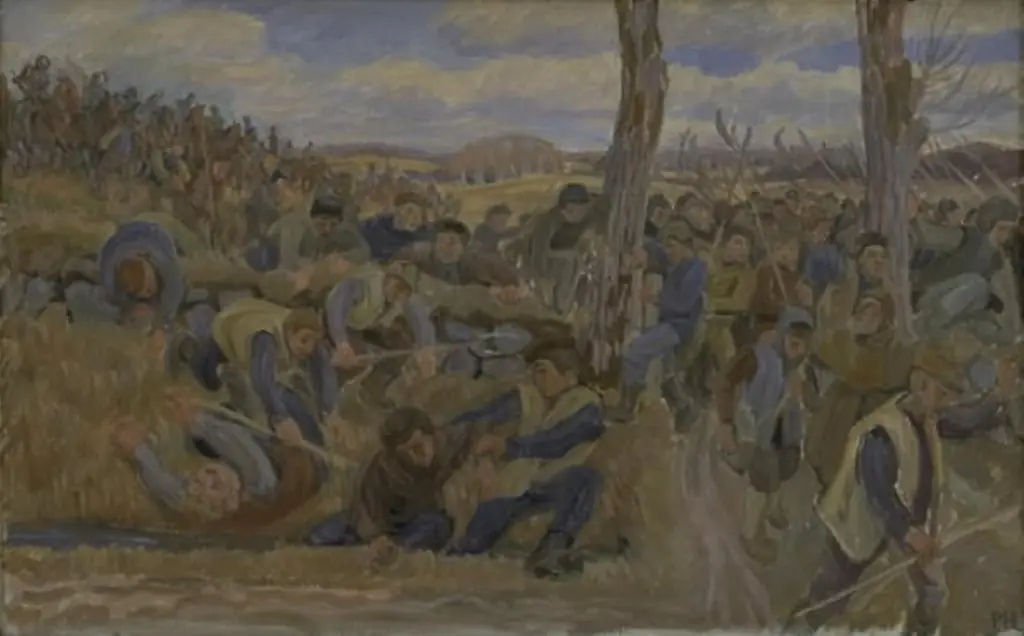
The work captures a moment of disorder among a dense group of figures, rendered with a focus on movement and spatial layering.
Grevens Fejde, dated around 1918, is a painted scene of communal unrest, attributed to the Danish artist 188_person. It resides in the collection of the Museum of Ethnography. The work captures a moment of disorder among a dense group of figures, rendered with a focus on movement and spatial layering. Its subject matter suggests a historical or folkloric conflict, though no specific event is documented.
Subject & Meaning
The painting portrays a crowd in motion, suggesting a local dispute or uprising, possibly rooted in rural Danish tradition. Figures are arranged in overlapping planes, with no clear central authority, emphasizing collective action over individual heroism. The absence of identifiable leaders or symbols leaves the nature of the conflict ambiguous, inviting interpretation as a generalized representation of social tension.
Technique & Style
Brushwork is loose and expressive, with muted earth tones dominating the palette. Clothing and skin are suggested rather than meticulously detailed, prioritizing emotional resonance over realism. The background merges trees and sky into a hazy atmosphere, reinforcing the sense of chaos. Composition directs the eye through diagonal groupings, enhancing the feeling of uncontrolled motion.
History & Provenance
The painting entered the Museum of Ethnography’s collection in the early 20th century, likely acquired as part of an effort to document Nordic folk life. Its origin as a studio work rather than a commissioned piece suggests personal interest in regional history. No records of public exhibition prior to its museum acquisition are known, and its title may have been assigned later by curators.
Context
Created in the aftermath of World War I, the work reflects broader European interest in collective identity and social upheaval. In Denmark, this period saw renewed attention to rural customs and historical conflicts, often romanticized in art. Grevens Fejde aligns with this trend, drawing on oral traditions rather than documented events to evoke a sense of shared cultural memory.
Legacy
The painting remains a minor but notable example of early 20th-century Danish genre painting. It has not been widely reproduced or studied outside institutional circles, yet it contributes to understanding how artists of the time engaged with folklore and social unrest. Its preservation in an ethnographic museum underscores its role as a cultural artifact rather than a fine art novelty.
Artist & collection

 Domestic Scene
 Giacomo and Cardinal Marco, investing Andrea, Abbot of San Zeno, with his Benefice
 The Nymph of Fontainebleau
 Portrait of a Woman
 Madonna and Child with Saints in the Enclosed Garden
 Venus and Minerva
 Family Group of Four on Sofa
 Wall painting from Room H of the Villa of P. Fannius Synistor at Boscoreale
 Lupta de la Mărășești
 Soldați la instrucție
 Interior of the Redan Battery after the Fall of Sebastopol, 1855
 1907
1907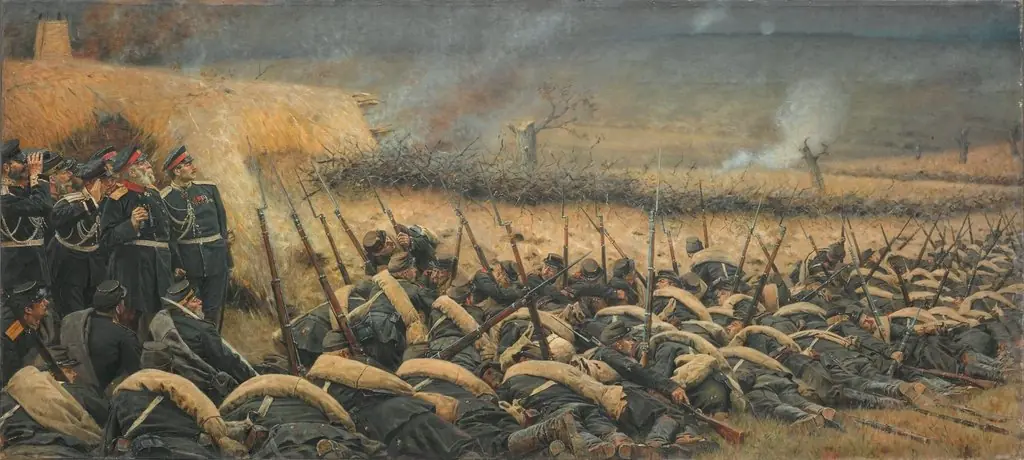 Before the attack. At Plevna
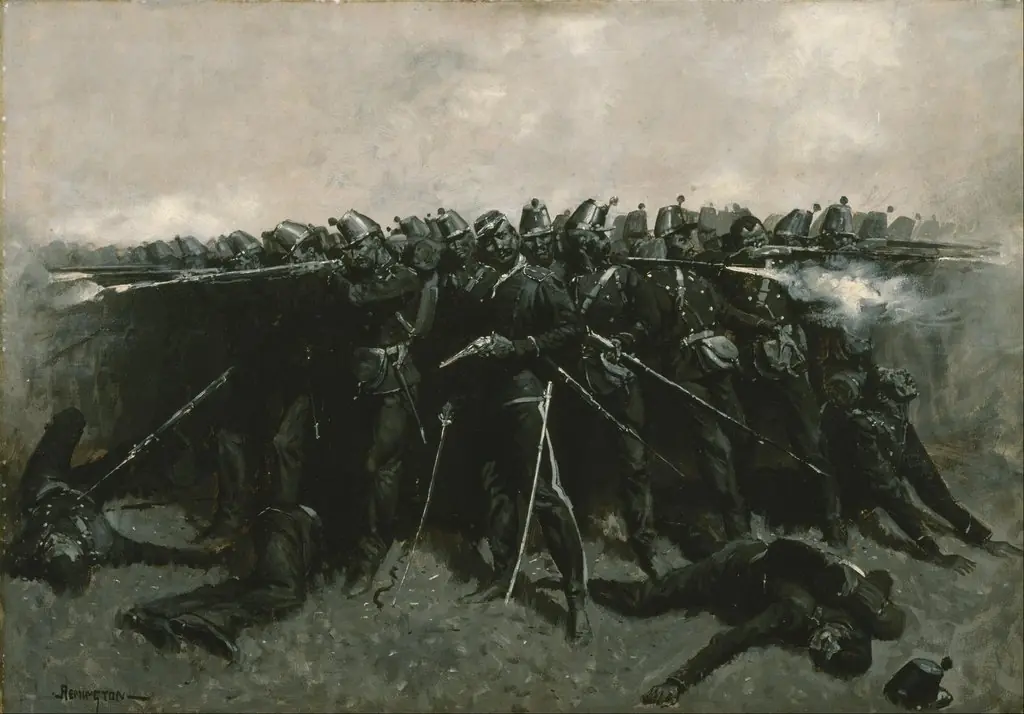 The Infantry Square
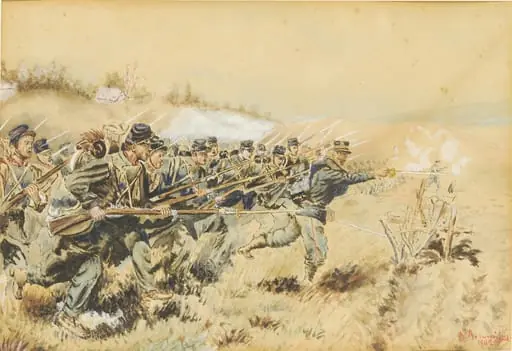 Υδατογραφία του ελληνικού στρατού κατά τον Ελληνοτουρκικό πόλεμο του 1897
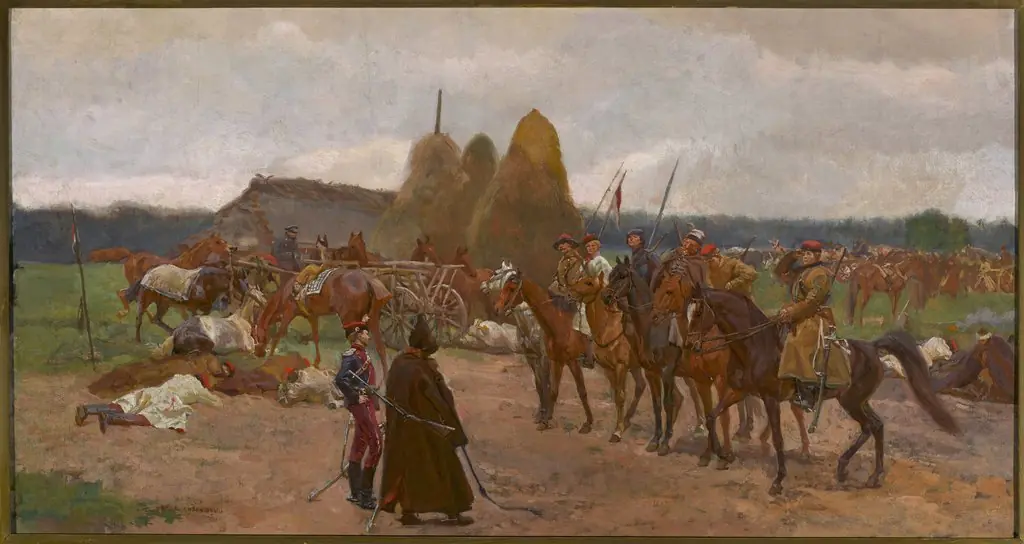 Insurrection episode
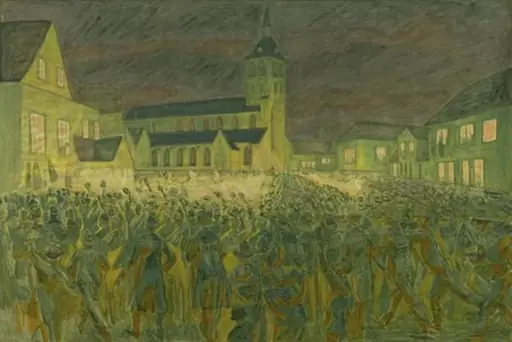 Fakkeltoget 1867 for H.C. Andersen i Odense
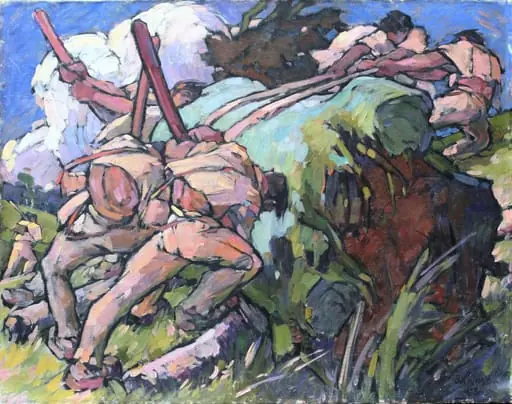 Tăietori de lemne
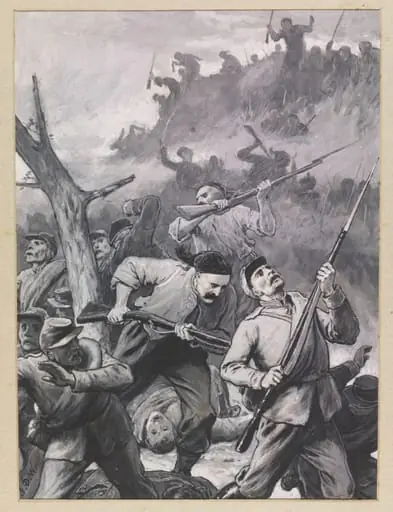 With the Turks at Shipka - Allah! Allah! A Turkish charge after an unsuccessful assault by the Russians
 Grevens Fejde