Artwork
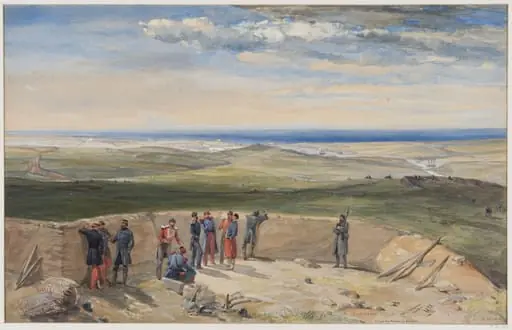
Interior of the Redan Battery after the Fall of Sebastopol, 1855
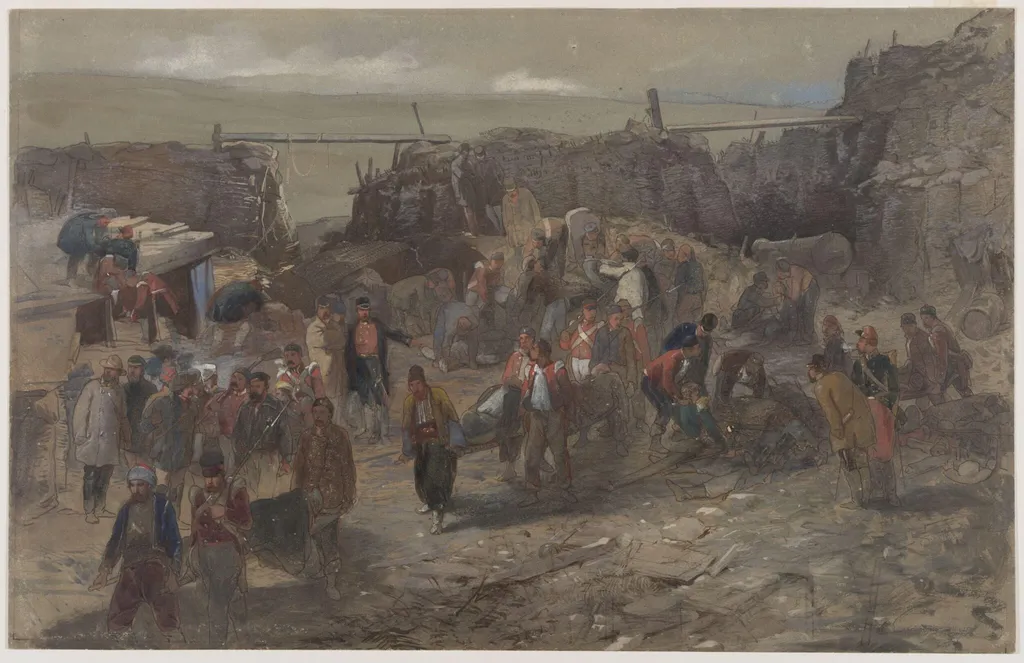
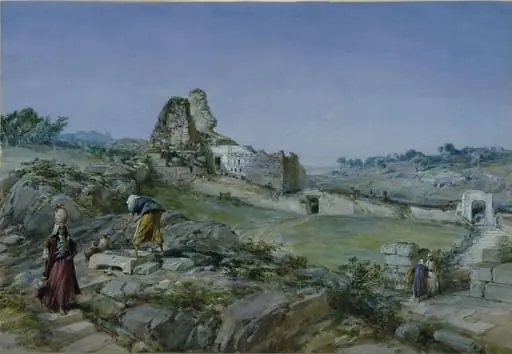
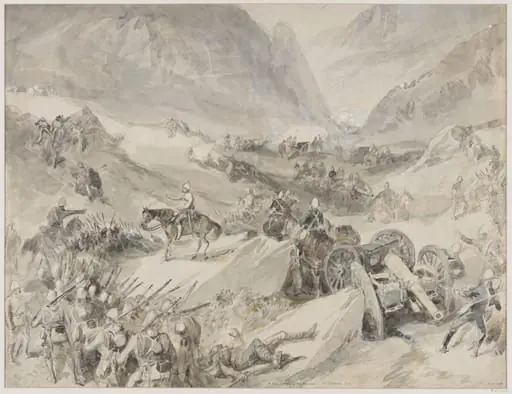
Interior of the Redan Battery after the Fall of Sebastopol, 1855 is a watercolor work on paper by the Impressionist artist William R.I. F.R.G.S. Simpson. It dates from 1855 and is held in the collection of the Victoria and Albert Museum. This watercolour captures the immediate aftermath of the Redan Battery’s capture during the Siege of Sebastopol in September 1855.
About this work
Overview
This watercolour captures the immediate aftermath of the Redan Battery’s capture during the Siege of Sebastopol in September 1855.
This watercolour captures the immediate aftermath of the Redan Battery’s capture during the Siege of Sebastopol in September 1855. Executed shortly after the battle, it reflects the chaotic state of the fortified position following Russian withdrawal. The work is grounded in direct observation, aligning closely with photographic records from the scene, and serves as a visual document of wartime occupation rather than a celebratory tableau.
Subject & Meaning
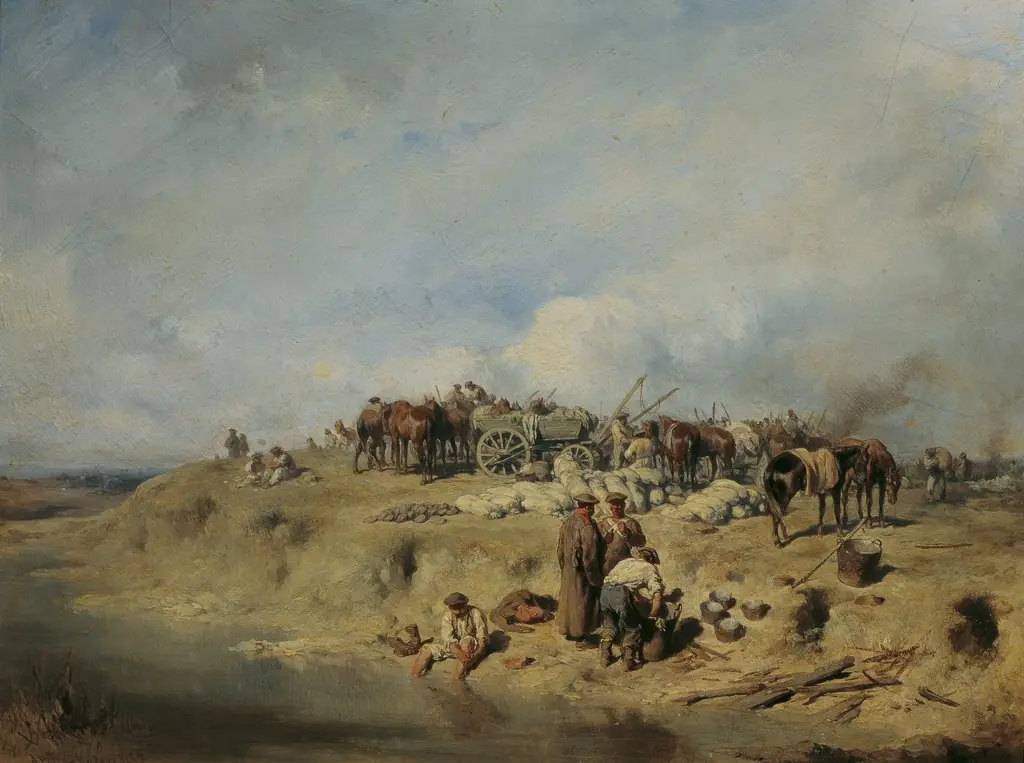
The scene portrays soldiers and laborers moving through a devastated landscape, engaged in routine tasks amid ruin. Figures are scattered without hierarchy—some resting, others hauling equipment—emphasizing the mundane reality of post-battle occupation. The absence of grandeur or heroism underscores the exhaustion and disorder that followed the assault, shifting focus from victory to the physical and human toll of war.
Technique & Style
The artist employs loose, unrefined brushwork, preserving the immediacy of the moment. Dull earth tones dominate, punctuated only by the muted reds and blues of uniforms, reinforcing the bleakness of the environment. Textural roughness in the rock and debris, along with minimal detail in distant structures, suggests rapid execution, likely from on-site sketches, prioritizing authenticity over polish.
History & Provenance
Created in late 1855, the work stems from the British military’s effort to visually record the Crimean War. It likely originated from an artist accompanying the forces, possibly influenced by James Robertson’s photographs taken days after the fall of Sebastopol. The piece entered institutional collections in the decades following, reflecting growing interest in war documentation as historical record.
Context
The Crimean War marked one of the first conflicts extensively documented through photography and sketching. This watercolour emerges from a period when visual media began to replace romanticized battle paintings with more factual depictions. The Redan Battery, a key Russian stronghold, had been the focus of heavy Allied assaults; its capture signaled a turning point in the siege.
Legacy
The work contributes to a broader archive of wartime visual records that shaped public perception of conflict in the mid-19th century. Its unembellished style influenced later military artists and documentarians who sought to convey the physical reality of war. Today, it remains a reference for understanding how early photo-realistic art intersected with journalistic practice.
Artist & collection
Artist
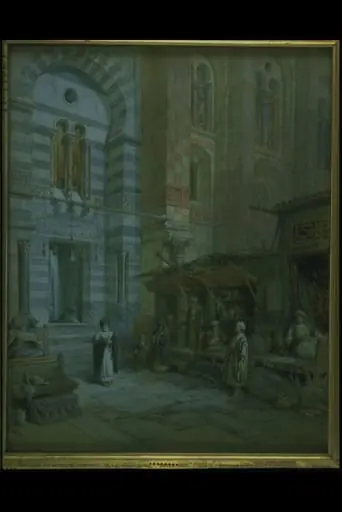
William Simpson drew travel scenes in watercolor and pencil during the 1800s. He sketched A Doorway in Cairo in 1884, showing arched doorways and sunlight on stone. His 1855 Sebastopol: View from the Victoria Redoubt…