Artwork
Fakkeltoget 1867 for H.C. Andersen i Odense
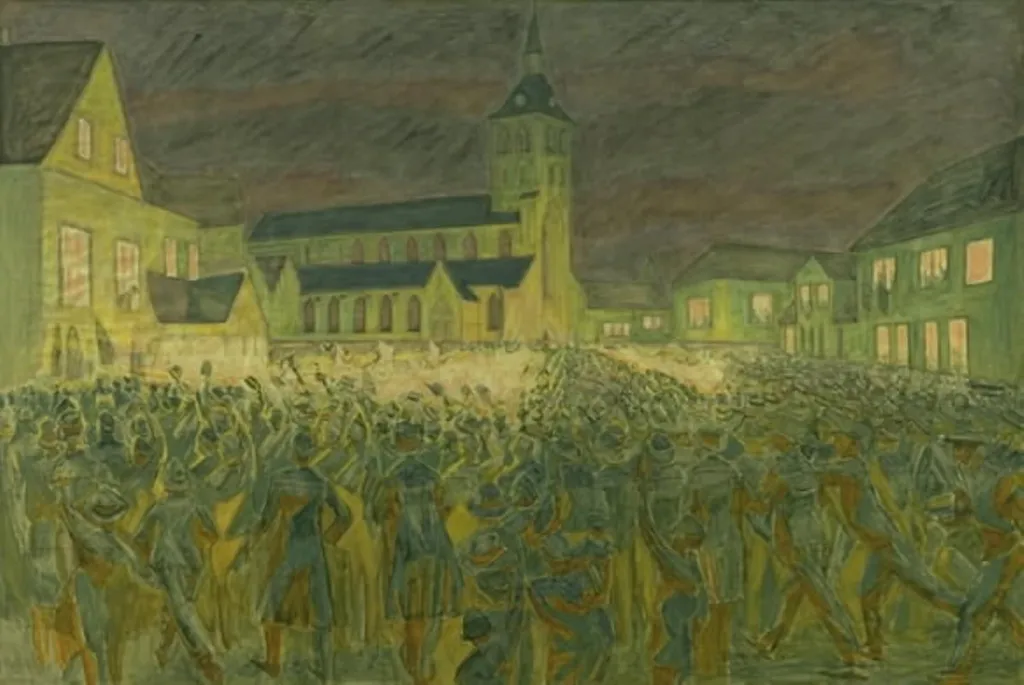
Fakkeltoget 1867 for H.C. Andersen i Odense is an unspecified painting by Unknown. It dates from 1931 and is held in the collection of the Statens Museum for Kunst.
About this work
Overview
Created in 1931 by an artist associated with the number 397_person, this image depicts a torchlit procession in Odense honoring Hans Christian Andersen.
Created in 1931 by an artist associated with the number 397_person, this image depicts a torchlit procession in Odense honoring Hans Christian Andersen. The scene captures a dense assembly of figures beneath a shadowed wooden ceiling, rendered with vigorous brushwork. It is held in the collection of the Museum of Ethnography, where it serves as a visual record of a local commemorative event from decades earlier.
Subject & Meaning
The painting illustrates a 1867 torchlight procession held in Odense to honor the writer Hans Christian Andersen on his return to his hometown. The tightly packed crowd reflects communal reverence, while the illuminated building in the background likely represents a civic or cultural landmark. The scene conveys collective memory rather than individual portraiture, emphasizing public sentiment over personal identity.
Technique & Style
Thick, textured brushstrokes create a sense of movement and mass, giving the crowd a turbulent, almost organic quality. The uneven lighting—some faces lit from below, others lost in shadow—heightens the drama of the moment. The use of impasto adds physical depth, reinforcing the emotional weight of the gathering. The palette is muted, with the yellow building serving as the sole point of luminous contrast.
History & Provenance
The work was painted in 1931, more than six decades after the event it portrays, suggesting it was commissioned or created as a retrospective tribute. It entered the collection of the Museum of Ethnography, where it remains today. Its origins as a commemorative piece reflect early 20th-century efforts to visually anchor national cultural narratives through historical reimagining.
Context
The procession of 1867 was a significant civic event in Denmark, marking Andersen’s celebrated return to Odense after years abroad. By the 1930s, such events had become symbols of Danish cultural identity. This painting, though not contemporary to the event, aligns with a broader trend of using art to reinforce national heritage during a period of renewed interest in folk traditions and literary legacy.
Legacy
The painting endures as a document of how historical memory was visually constructed in the early 20th century. Its expressive technique and emotional tone distinguish it from more formal portraits of the era. While not widely reproduced, it holds value within institutional collections as an example of how cultural figures were honored through collective imagery rather than individual representation.
Artist & collection

 Domestic Scene
 Giacomo and Cardinal Marco, investing Andrea, Abbot of San Zeno, with his Benefice
 The Nymph of Fontainebleau
 Portrait of a Woman
 Madonna and Child with Saints in the Enclosed Garden
 Venus and Minerva
 Family Group of Four on Sofa
 Wall painting from Room H of the Villa of P. Fannius Synistor at Boscoreale
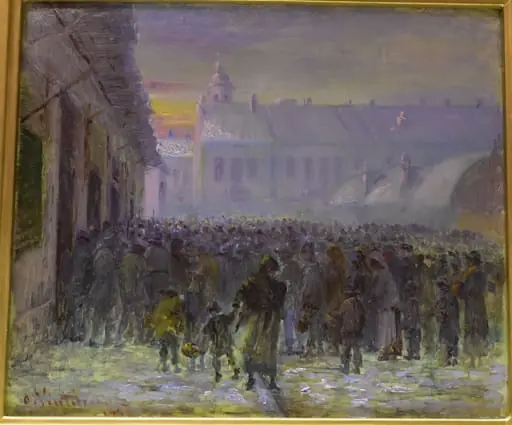 Piața în Iași (Manifestație Piața Spiridon)
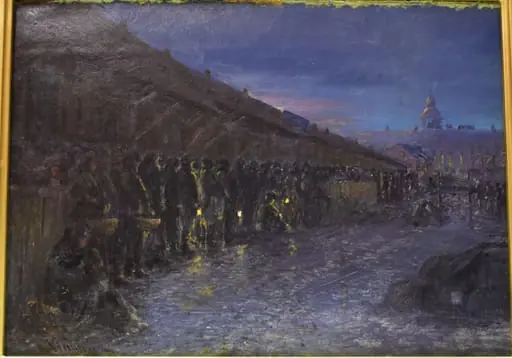 Manifestație (Piața Sf. Spiridon)
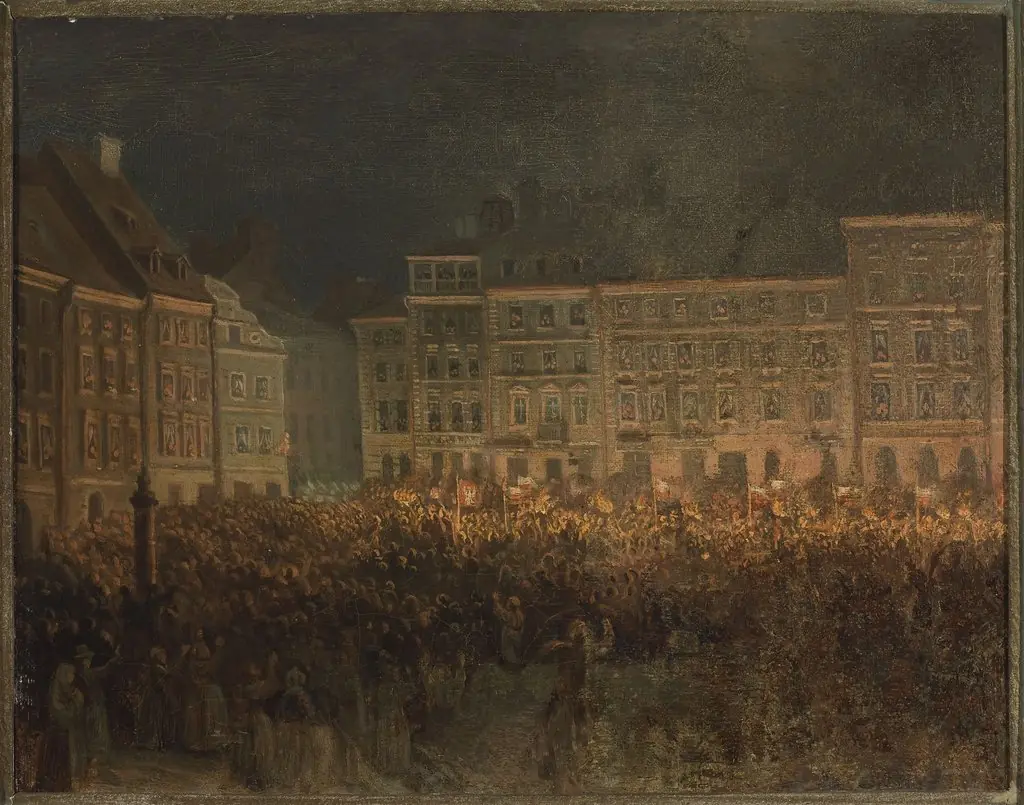 Patriotic manifestation at the square of the Old Town in 1861
 Grevens Fejde
 Grevens Fejde
 Harvests: The Pillage
 Untitled
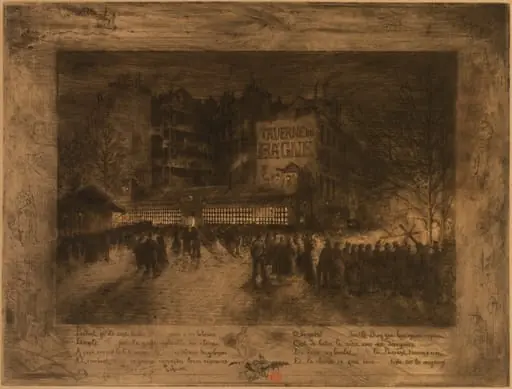 La Place des Martyrs et la Taverne du Bagne
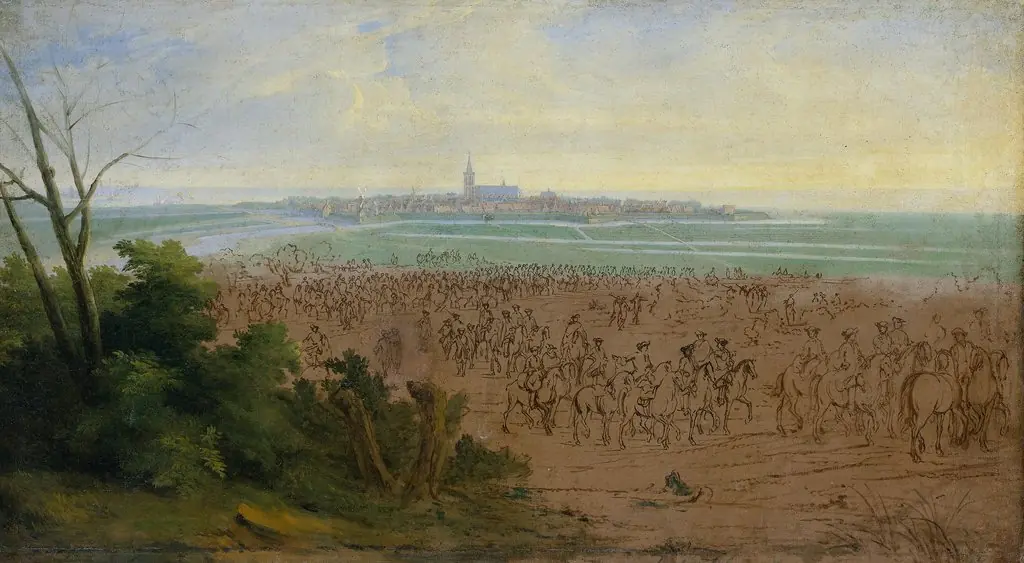 The French army at Naarden, 20 July 1672
 Distributing Bread to the Poor
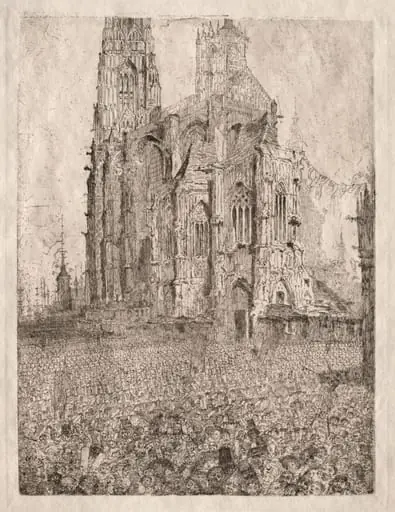 The Cathedral
 Main Market Square in Krakow – Fragment of a Street