Artwork
Landscape with Cattle, the Shepherdess Milking the Cow
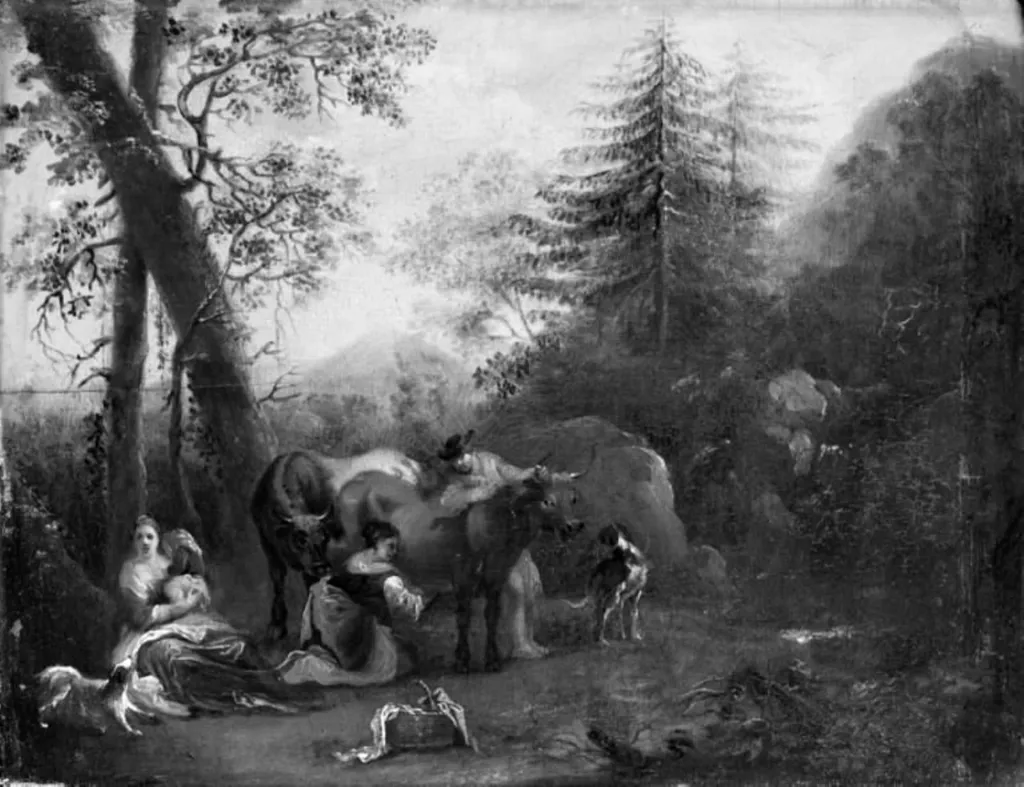
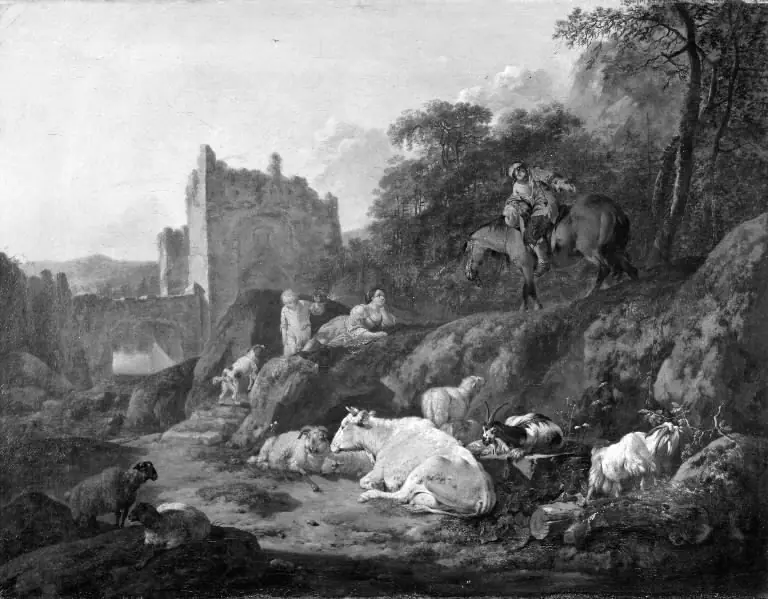
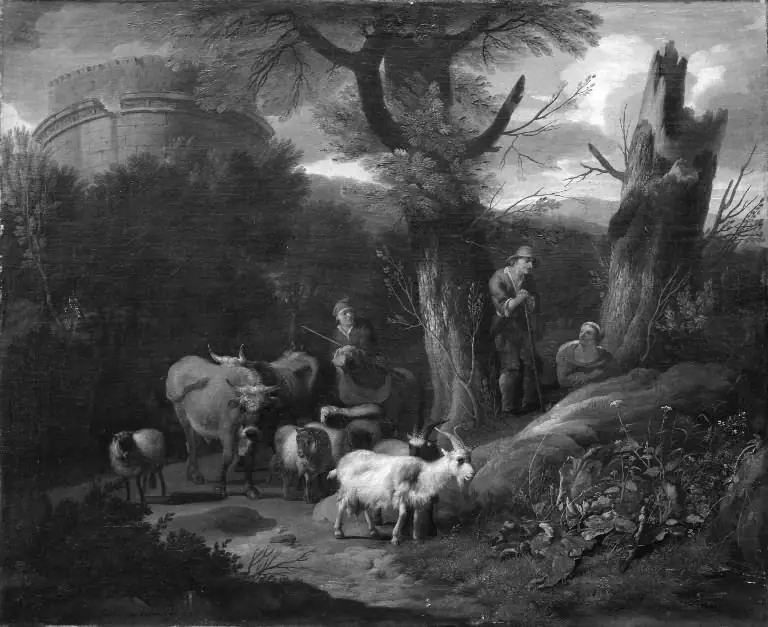
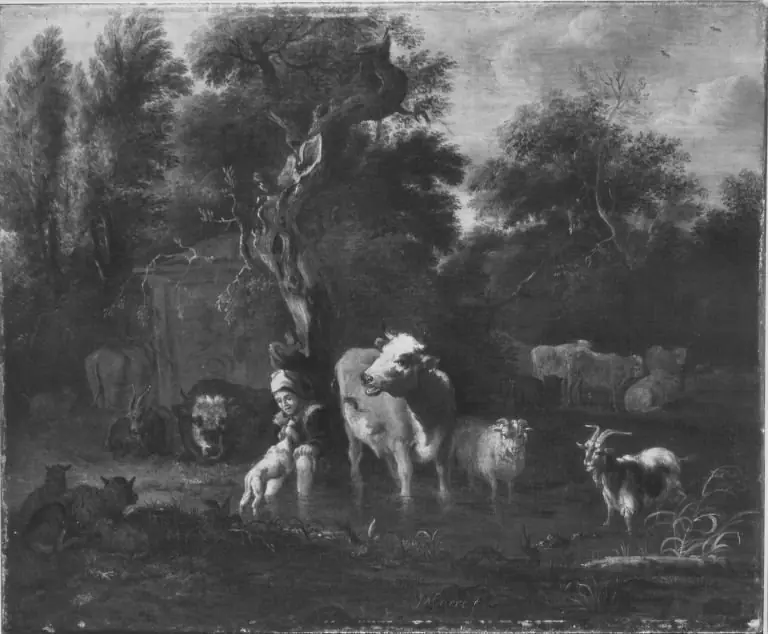
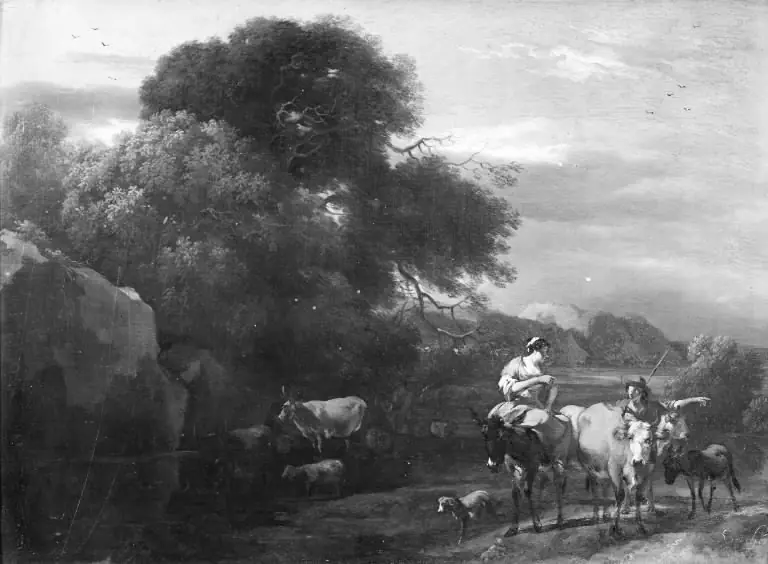
Landscape with Cattle, the Shepherdess Milking the Cow is an unspecified painting by Unknown. It dates from 1750 and is held in the collection of the Statens Museum for Kunst. This landscape painting, dated around 1750, depicts a quiet rural scene centered on the act of milking.
About this work
Overview
The composition emphasizes harmony between human activity and the natural environment, rendered in muted earth tones and soft atmospheric hues.
This landscape painting, dated around 1750, depicts a quiet rural scene centered on the act of milking. A shepherdess tends to a cow, while a man stands nearby, possibly assisting or observing. A woman seated beneath a tree in the foreground adds a sense of stillness. The composition emphasizes harmony between human activity and the natural environment, rendered in muted earth tones and soft atmospheric hues.
Subject & Meaning
The scene captures an ordinary moment of pastoral labor, free from idealization or narrative drama. Milking, a daily rural task, is presented without symbolism, suggesting an emphasis on authenticity over allegory. The presence of multiple figures implies a community context, yet each remains absorbed in their own quiet activity, reinforcing a tone of unobtrusive daily life.
Technique & Style
The artist employs a restrained palette of browns, greens, and blues to evoke the natural world. Brushwork is subdued, with soft transitions between light and shadow, avoiding dramatic contrasts. Forms are rendered with gentle precision, prioritizing atmospheric cohesion over detailed realism. The spatial depth is suggested through layered planes rather than linear perspective.
History & Provenance
The painting is attributed to an artist active in the mid-18th century, though their identity remains uncertain. It entered the collection of the Museum of Ethnography at an unknown date, likely through acquisition of regional folk or rural art. Its preservation suggests it was valued for its depiction of everyday life rather than its artistic pedigree.
Context
Created during a period when rural life was increasingly romanticized in European art, this work avoids grandeur. It reflects a regional tradition of observational painting, possibly linked to local artisans or minor academies. Unlike contemporary pastoral scenes by more famous painters, it lacks mythological or aristocratic references, grounding itself in the mundane.
Legacy
The painting contributes to a modest but persistent genre of 18th-century rural imagery, valued for its unembellished portrayal of labor. It remains a reference point for studies of non-elite visual culture, offering insight into how ordinary life was recorded outside the dominant artistic centers of the time.
Artist & collection

 Domestic Scene
 Giacomo and Cardinal Marco, investing Andrea, Abbot of San Zeno, with his Benefice
 The Nymph of Fontainebleau
 Portrait of a Woman
 Madonna and Child with Saints in the Enclosed Garden
 Venus and Minerva
 Family Group of Four on Sofa
 Wall painting from Room H of the Villa of P. Fannius Synistor at Boscoreale