Artwork
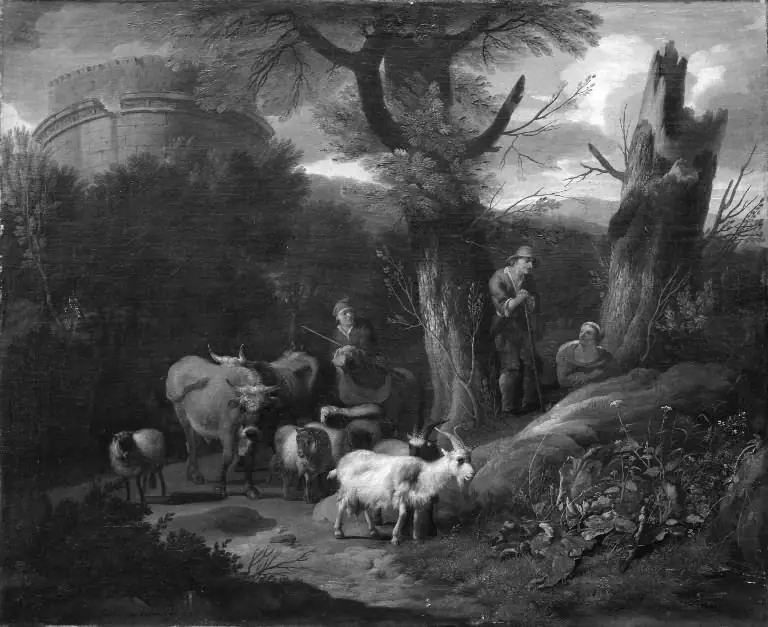
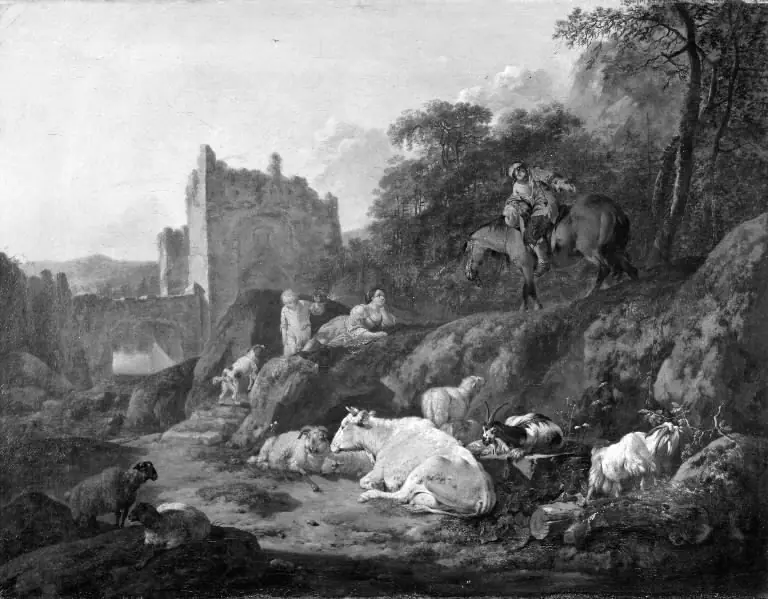
Italian Scenery with Cattle
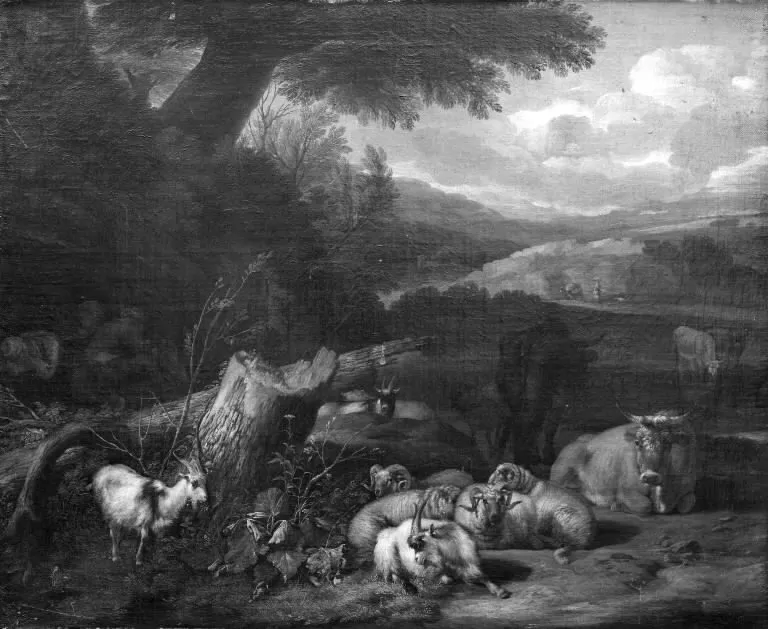
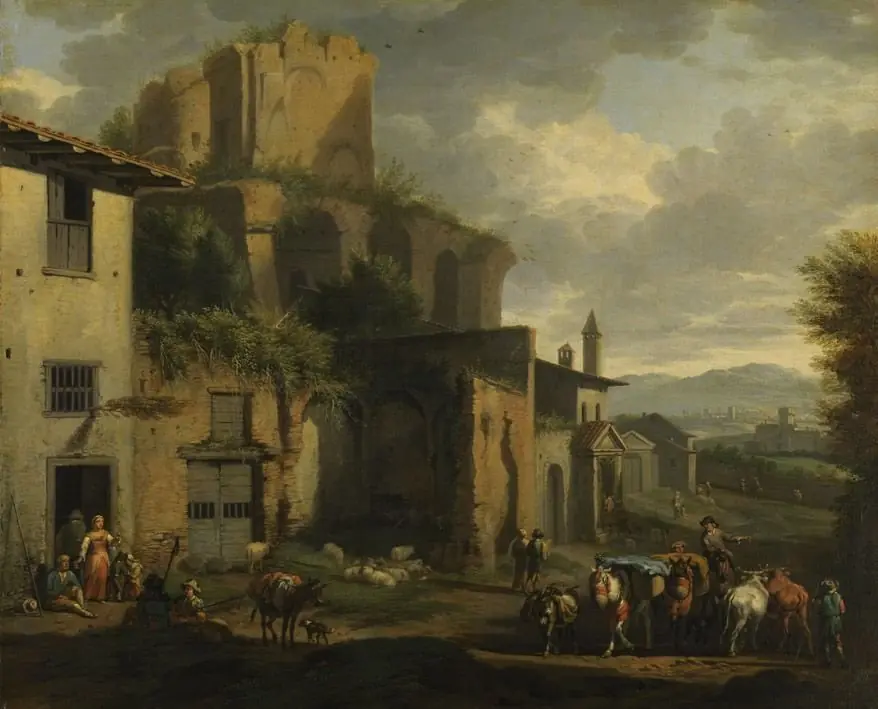
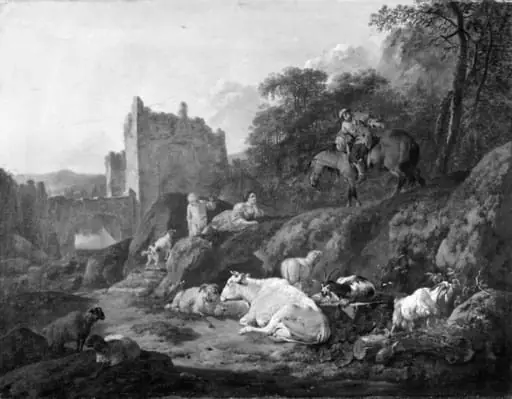
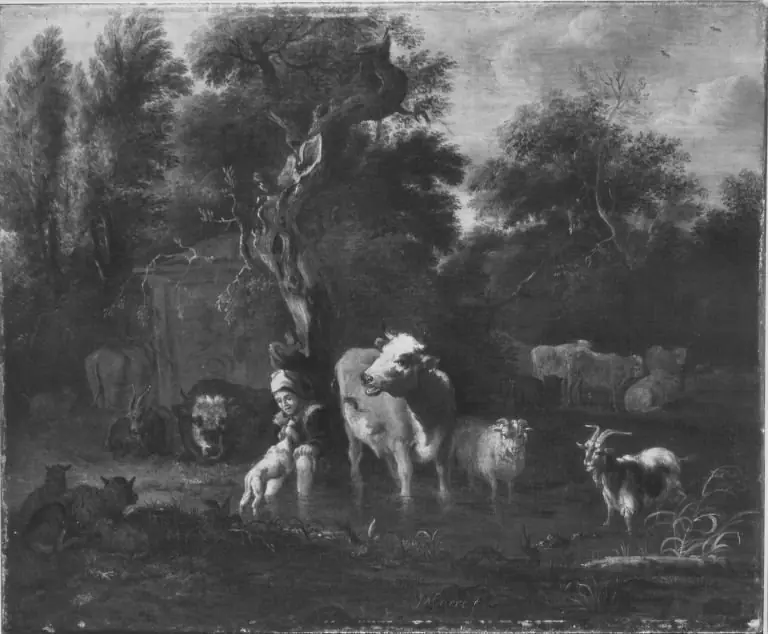
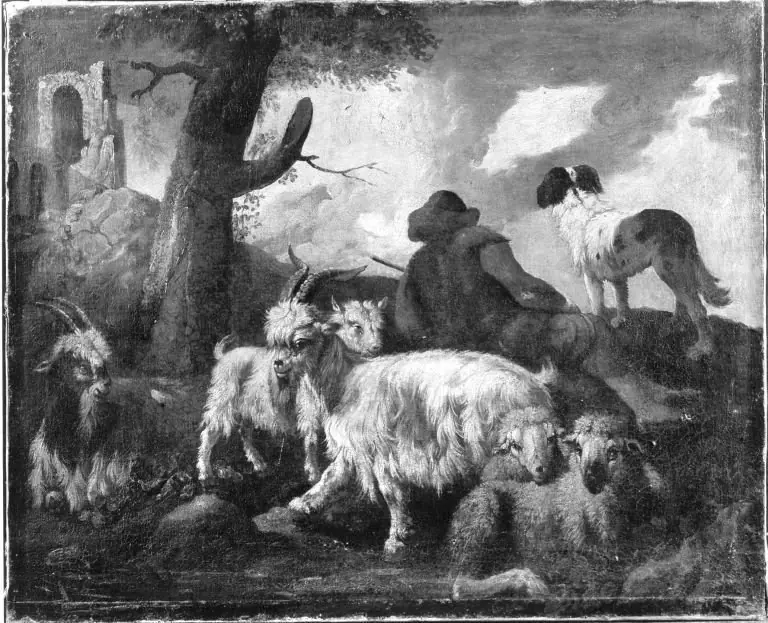
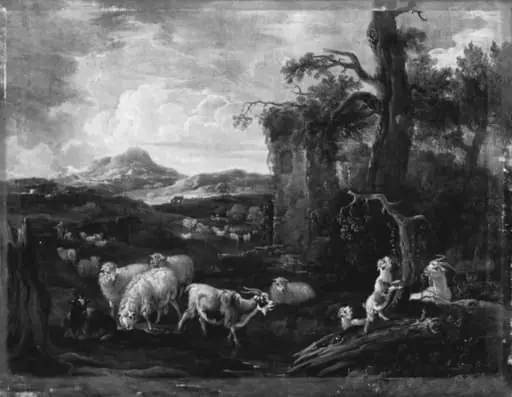
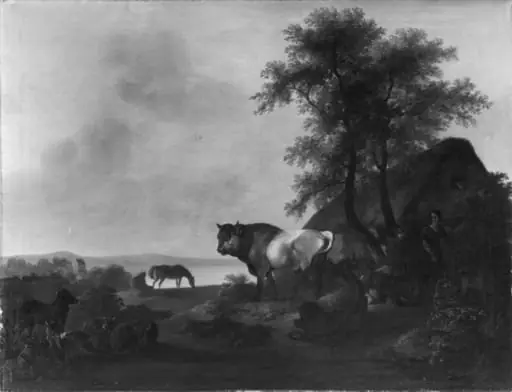
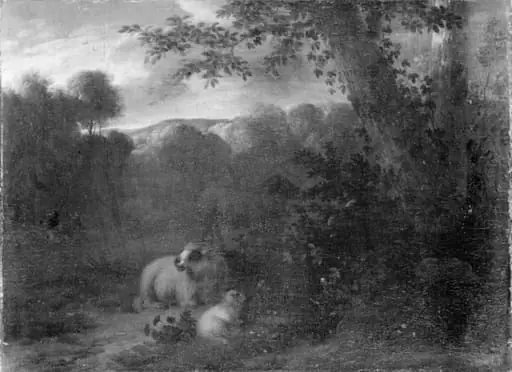
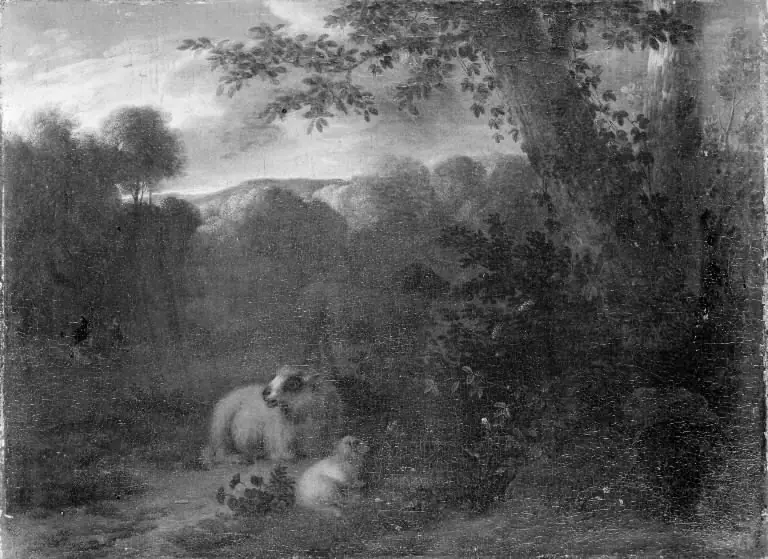
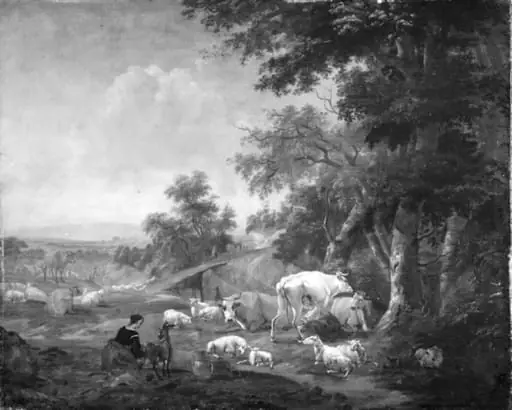
Italian Scenery with Cattle is an oil painting by the Dutch Golden Age artist Jacob van Huchtenburg. It dates from 1670 and is held in the collection of the Statens Museum for Kunst.
About this work
Overview
Though Dutch by birth and training, van Huchtenburg drew inspiration from his travels in Italy, blending Northern European technique with Southern scenery.
Painted in 1670 by Jacob van Huchtenburg, this oil-on-canvas work presents a tranquil Italianate landscape populated by grazing cattle. Though Dutch by birth and training, van Huchtenburg drew inspiration from his travels in Italy, blending Northern European technique with Southern scenery. The painting is part of the Statens Museum for Kunst’s collection and reflects the Dutch Golden Age’s interest in idealized natural settings.
Subject & Meaning
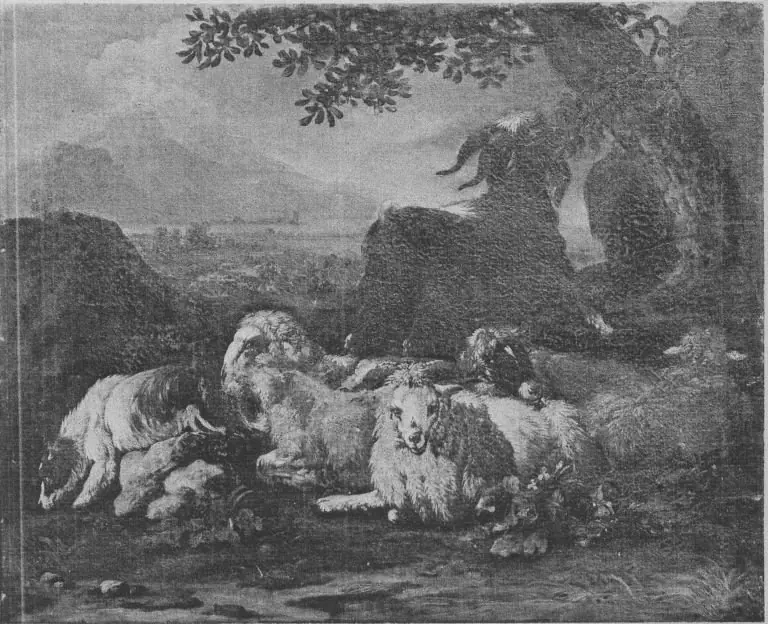
The scene centers on a quiet herd of sheep resting in a sunlit meadow, their varied postures suggesting natural behavior rather than staged composition. The absence of human figures emphasizes solitude and harmony with nature. Rather than depicting a specific location, the landscape evokes an imagined Italy—calm, timeless, and pastoral—aligned with contemporary European tastes for idealized rural life.
Technique & Style
Van Huchtenburg employed subtle gradations of light and soft atmospheric perspective to create depth, guiding the eye from the foreground flock to the hazy hills beyond. The wool of the sheep is rendered with delicate, textured brushwork, while the foliage and sky are handled with looser, more suggestive strokes. His palette favors muted earth tones, enhancing the quiet mood without dramatic contrast.
History & Provenance
Born in Haarlem in 1647, van Huchtenburg studied under Nicolaes Berchem and traveled through Italy and Paris before settling in Amsterdam. He died in 1675 and was buried there. The painting entered the collection of Statens Museum for Kunst in Denmark, where it remains today. Its journey from Dutch studio to Danish museum reflects broader 18th- and 19th-century European collecting patterns of Northern landscape art.
Context
During the Dutch Golden Age, landscape painting flourished as a genre distinct from religious or historical themes. Artists like van Huchtenburg catered to a market that valued serene, idealized nature. Italianate scenes, though not based on direct observation, were popular for their association with classical antiquity and pastoral poetry, offering viewers a refuge from urban life.
Legacy
Van Huchtenburg’s work contributed to the tradition of Dutch Italianate landscapes, influencing later generations of landscape painters who blended observation with imagination. Though not widely known today, his careful rendering of animals and atmosphere exemplifies the quiet precision valued in 17th-century Dutch art. His paintings remain studied for their nuanced treatment of light and naturalism.
Artist & collection
Artist
J(oh)an and Jacob van Huchtenburg (also known as Hughtenburg or Hugtenburg(h)) were two Dutch Golden Age painters in the second half of the seventeenth century.