Artwork
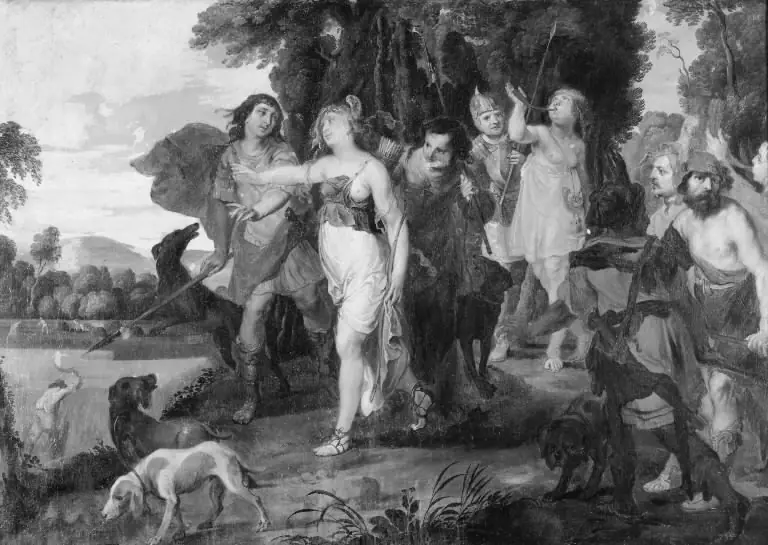
Hunting Party with Diana
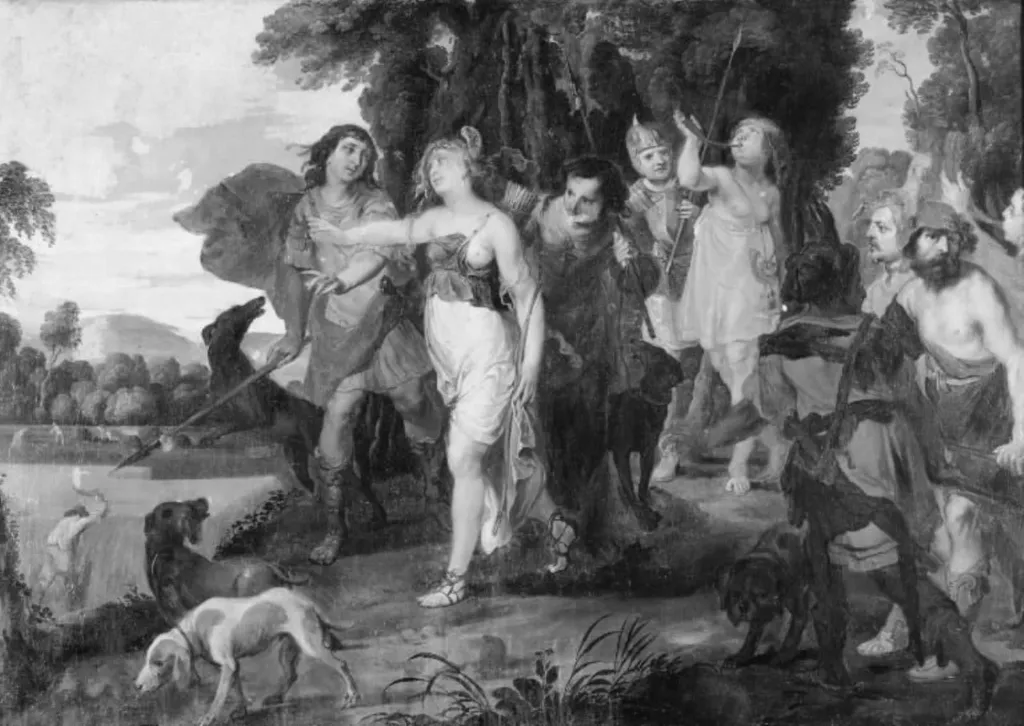
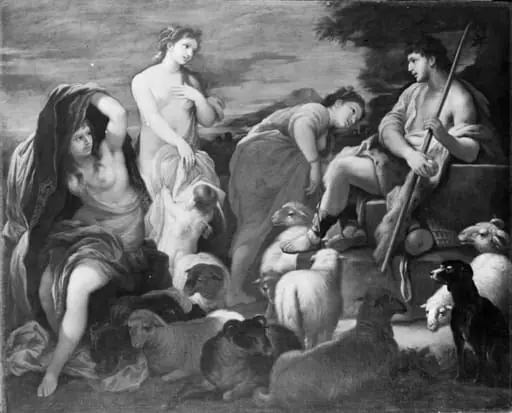
Hunting Party with Diana is a photography by Unknown. It dates from 1550 and is held in the collection of the Statens Museum for Kunst. Painted around 1550, this work depicts a mythological hunting scene centered on the goddess Diana.
About this work
Overview
Executed in oil on panel, it captures a moment of stillness amid activity, with figures arranged in a naturalistic forest setting.
Painted around 1550, this work depicts a mythological hunting scene centered on the goddess Diana. Executed in oil on panel, it captures a moment of stillness amid activity, with figures arranged in a naturalistic forest setting. The composition emphasizes hierarchy through posture and attire, with Diana as the focal point. The piece is currently held in the collection of the Museum of Ethnography, though its original context remains uncertain.
Subject & Meaning
The scene illustrates Diana, Roman goddess of the hunt, surrounded by attendants in varied garb—armor, animal hides, and bare skin—suggesting a mix of divine authority and earthly followers. The presence of dogs and birds reinforces the theme of the hunt, while Diana’s poised stance and drawn bow signal leadership and control. The imagery aligns with Renaissance interpretations of classical mythology, emphasizing nature, power, and ritual.
Technique & Style
The artist employs subtle contrasts of light and shadow to model forms and suggest depth, a technique associated with chiaroscuro. Figures are rendered with restrained detail, favoring atmospheric cohesion over individualized features. The forest background recedes softly, using tonal gradations rather than sharp perspective. Clothing and skin are differentiated through texture and tone, enhancing the sense of varied social or symbolic roles within the group.
History & Provenance
The painting’s early ownership is undocumented, but it entered the Museum of Ethnography in the late 19th century. Its attribution to a specific artist remains unconfirmed, though stylistic elements suggest a Northern Italian or Flemish origin. The work was likely collected as an example of mythological imagery rather than for religious or courtly use, reflecting 19th-century interests in classical themes as cultural artifacts.
Context
Created during the High Renaissance, the painting reflects enduring fascination with classical mythology among European elites. While religious subjects dominated ecclesiastical commissions, secular mythological scenes like this one appealed to private collectors seeking intellectual and aesthetic refinement. The depiction of Diana as both hunter and leader aligns with humanist ideals of order, nature, and feminine authority.
Legacy
Though not widely exhibited or reproduced, the painting contributes to the broader understanding of how Renaissance artists interpreted mythological narratives in intimate, non-idealized settings. Its presence in an ethnographic museum underscores shifting scholarly priorities in the 19th century, where myth and ritual were studied as cultural expressions rather than purely artistic achievements.
Artist & collection

 Domestic Scene
 Giacomo and Cardinal Marco, investing Andrea, Abbot of San Zeno, with his Benefice
 The Nymph of Fontainebleau
 Portrait of a Woman
 Madonna and Child with Saints in the Enclosed Garden
 Venus and Minerva
 Family Group of Four on Sofa
 Wall painting from Room H of the Villa of P. Fannius Synistor at Boscoreale
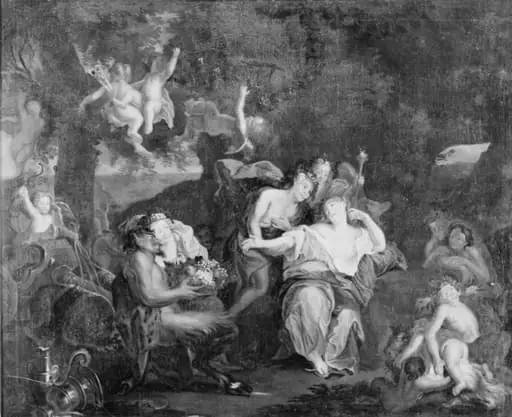 Bacchus og Ariadne sidder sammen i et landskab omgivne af amoriner, bacchantinder og satyrer
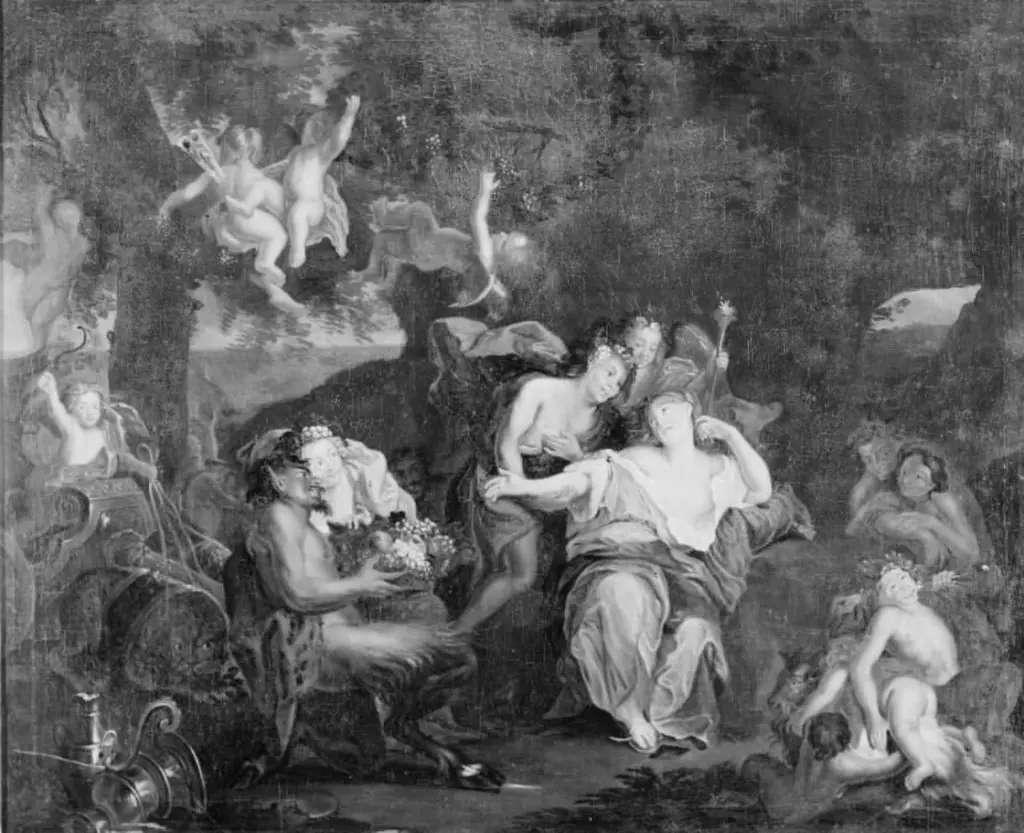 Bacchus og Ariadne sidder sammen i et landskab omgivne af amoriner, bacchantinder og satyrer
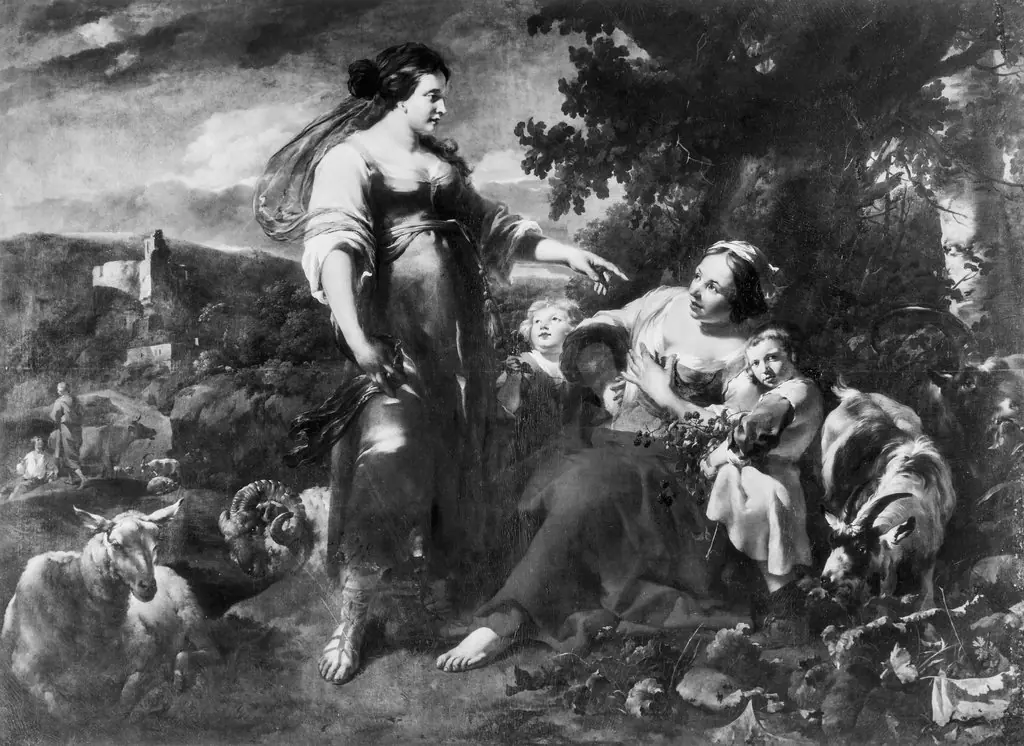 Rachel and Leah fighting over the Dudaim berries found by Ruben, Lea's son
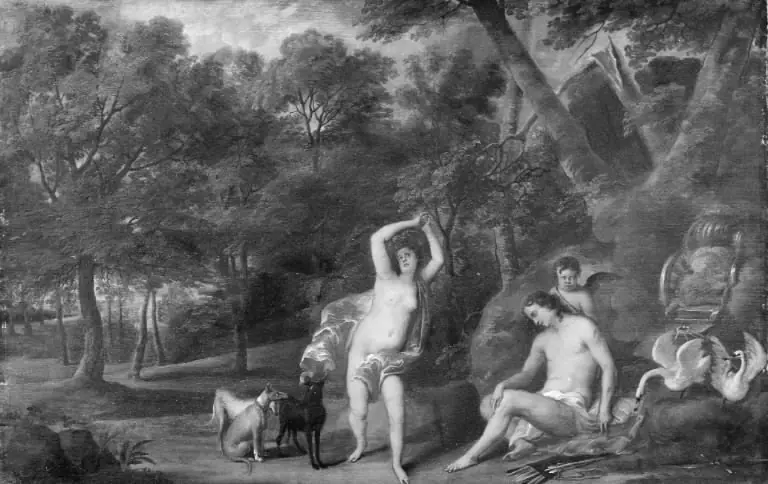 Venus Bewailing the Slain Adonis
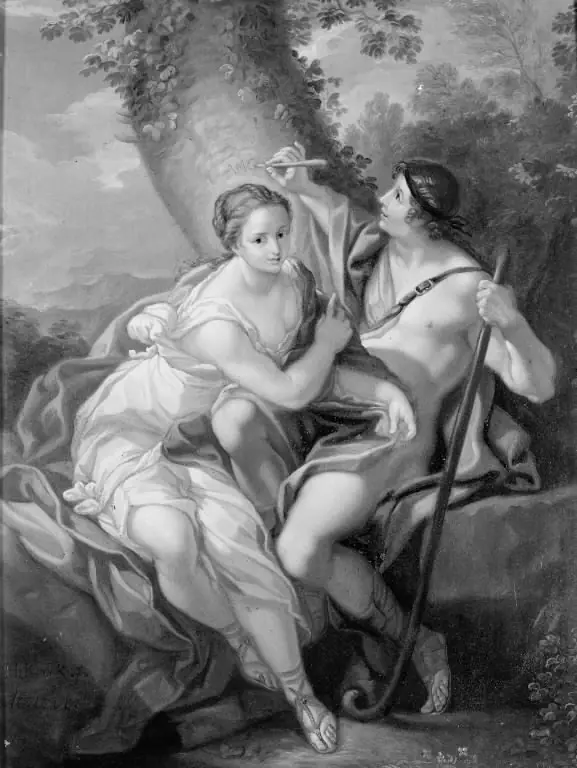 Medos og Angelica
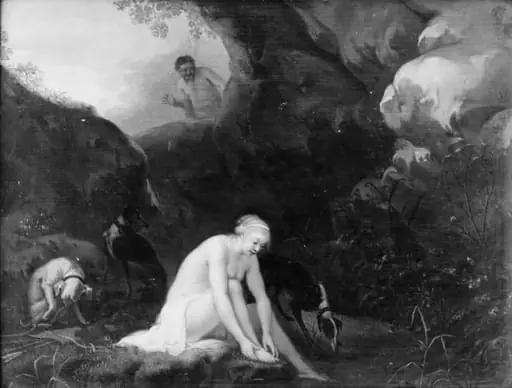 Bathing Nymph
 Medos og Angelica
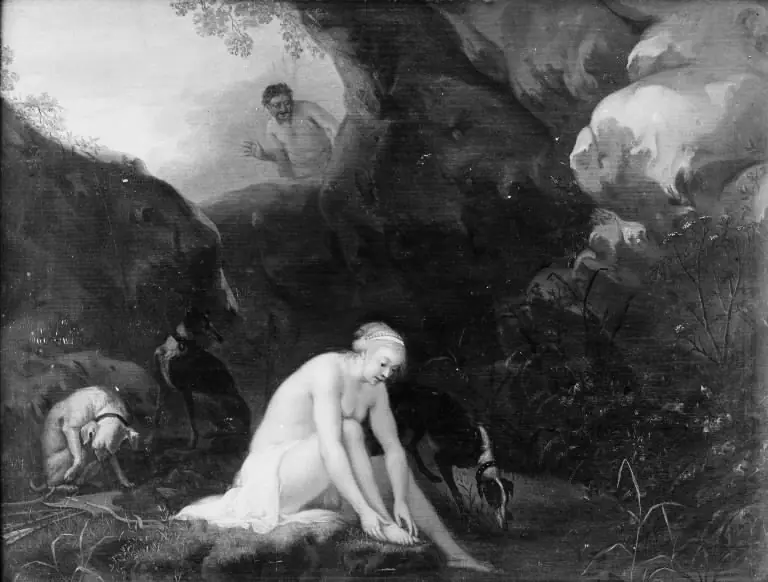 Bathing Nymph
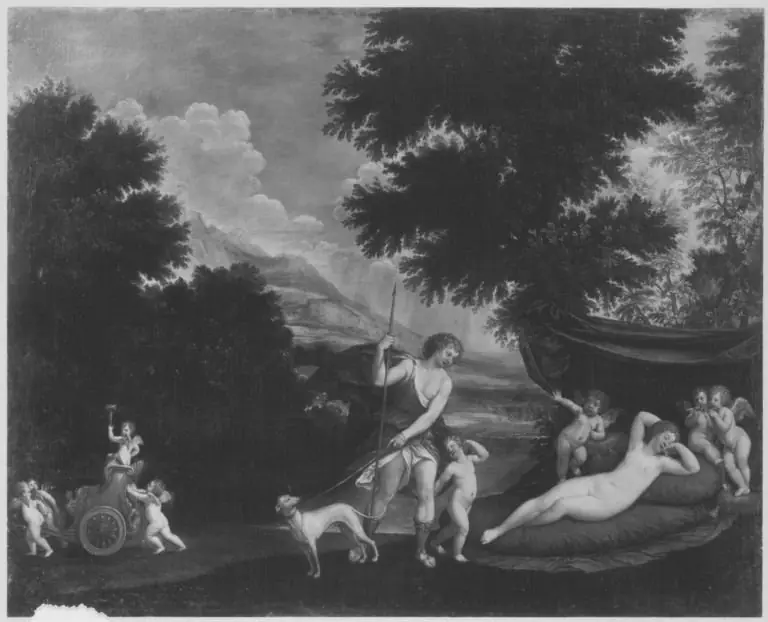 Venus and Adonis
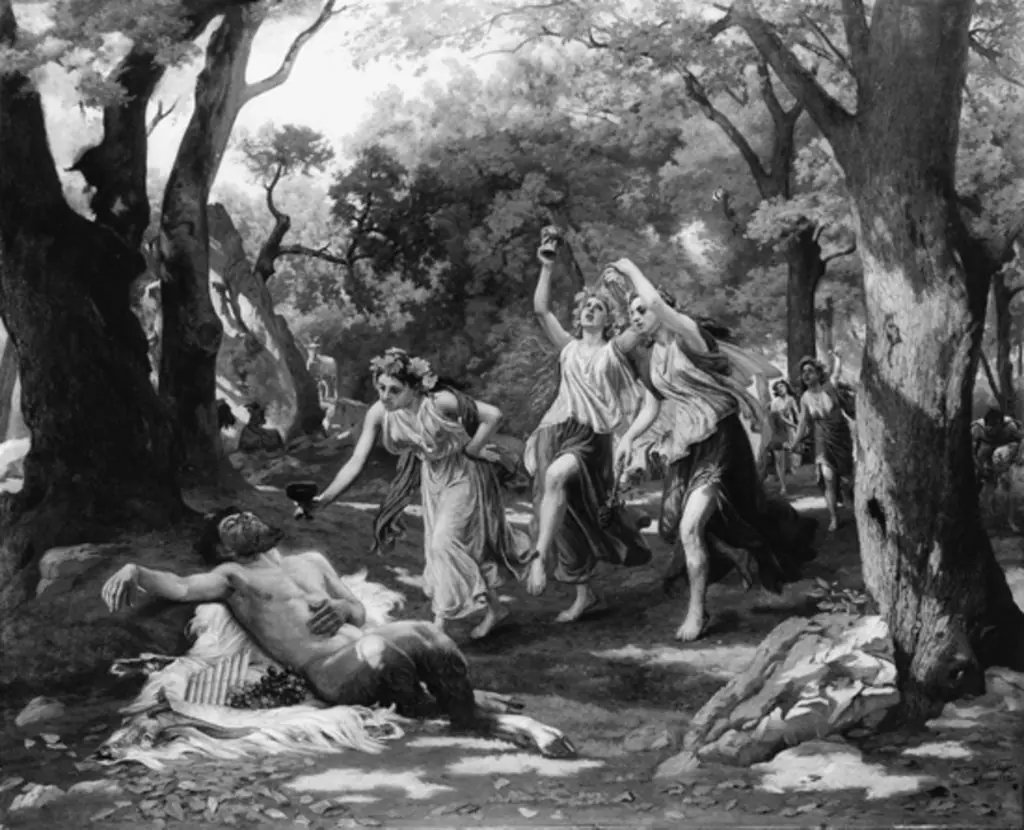 Pan und Bacchantinnen
 Hunting Party with Diana
 The Judgment of Paris