Artwork
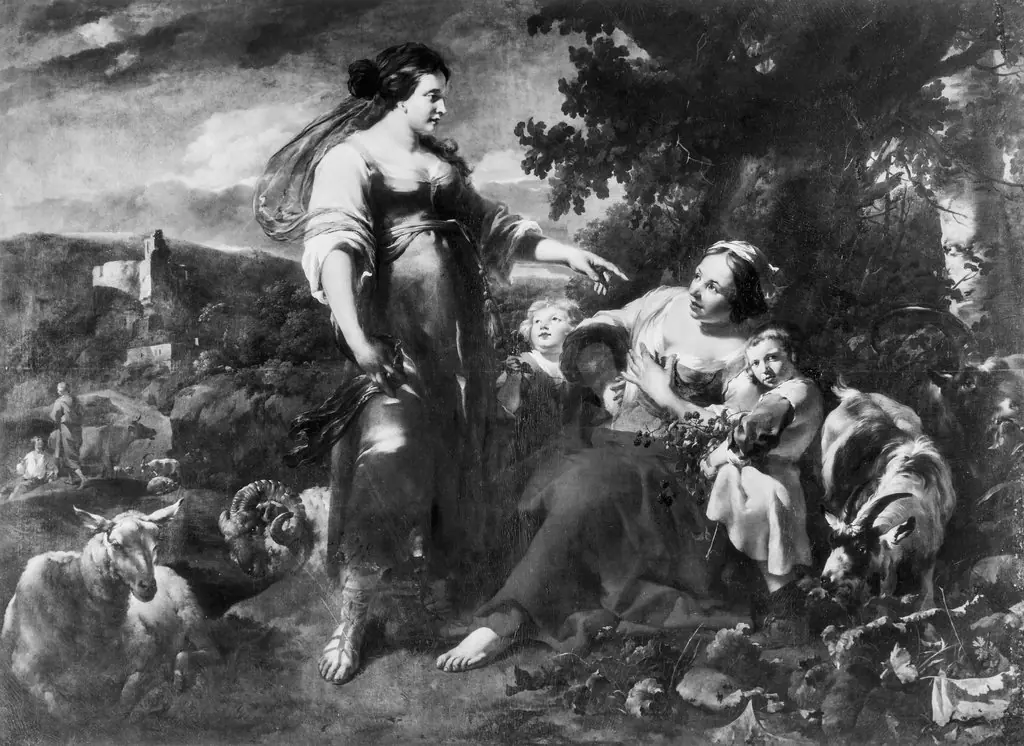
Bacchus og Ariadne sidder sammen i et landskab omgivne af amoriner, bacchantinder og satyrer
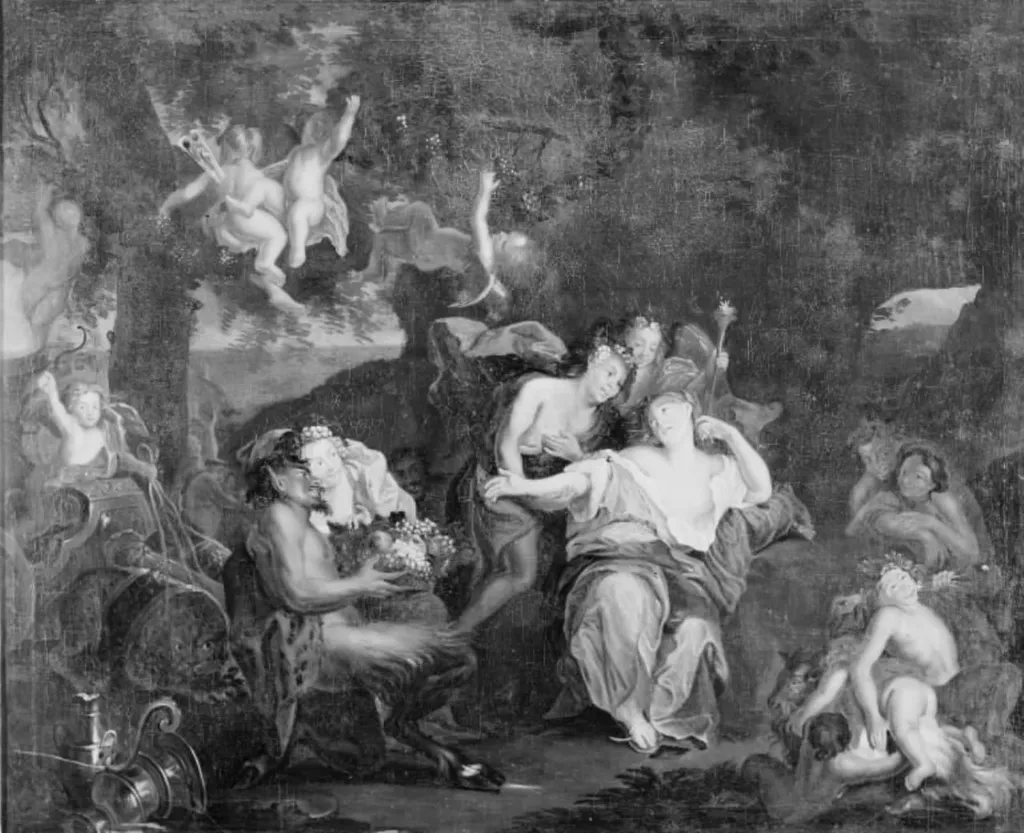
Bacchus og Ariadne sidder sammen i et landskab omgivne af amoriner, bacchantinder og satyrer is a photography by Unknown. It dates from 1750 and is held in the collection of the Statens Museum for Kunst. Created around 1750, this mythological composition depicts the encounter of Bacchus and Ariadne within a pastoral setting.
About this work
Overview
Created around 1750, this mythological composition depicts the encounter of Bacchus and Ariadne within a pastoral setting. Executed as an image, the work is part of the collection of the Museum of Ethnography. The central figures are framed by a lively entourage of cupids, bacchantes, and satyrs, generating a dynamic tableau that reflects the artist’s interest in classical narratives.
Subject & Meaning
The painting illustrates the moment when the god of wine, Bacchus, meets the abandoned princess Ariadne. Their seated pose suggests a moment of recognition and union, while the surrounding figures—winged cupids, revelers, and satyrs—underscore themes of love, celebration, and the transformative power of divine intervention in human affairs.
Technique & Style
Rendered with pronounced chiaroscuro, the image employs strong contrasts of light and shadow to model the figures and landscape. The brushwork emphasizes the fluidity of drapery and the kinetic energy of the surrounding crowd, while the composition balances a central focal pair with a bustling periphery, characteristic of mid‑18th‑century mythological genre painting.
History & Provenance
Attributed to the artist identified as 37255_person, the work dates to the mid‑18th century. It entered the Museum of Ethnography’s holdings at an unspecified date, where it remains part of the institution’s representation of European mythological art within its broader ethnographic context.
Context
During the 1750s, European art frequently revisited classical myths, using them to explore contemporary ideas of emotion and virtue. This piece aligns with that trend, integrating allegorical figures such as cupids and satyrs to amplify the narrative’s celebratory tone, while the pastoral backdrop reflects the era’s idealized vision of nature.
Artist & collection

 Domestic Scene
 Giacomo and Cardinal Marco, investing Andrea, Abbot of San Zeno, with his Benefice
 The Nymph of Fontainebleau
 Portrait of a Woman
 Madonna and Child with Saints in the Enclosed Garden
 Venus and Minerva
 Family Group of Four on Sofa
 Wall painting from Room H of the Villa of P. Fannius Synistor at Boscoreale
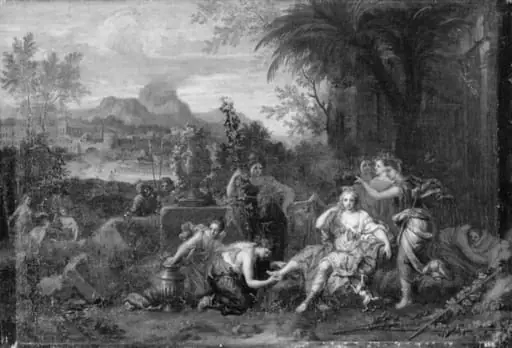 Landscape with Messalina's Wedding
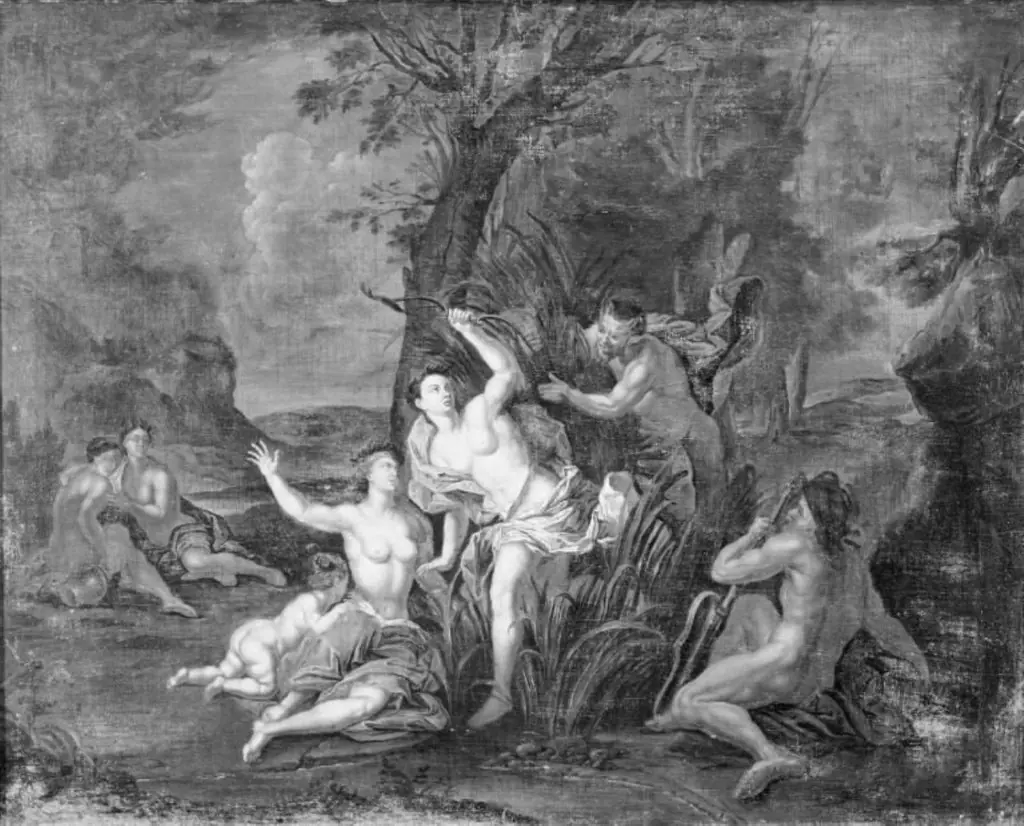 Nogle nymfer overraskes af en satyr. Ved siden sidder en flodgud
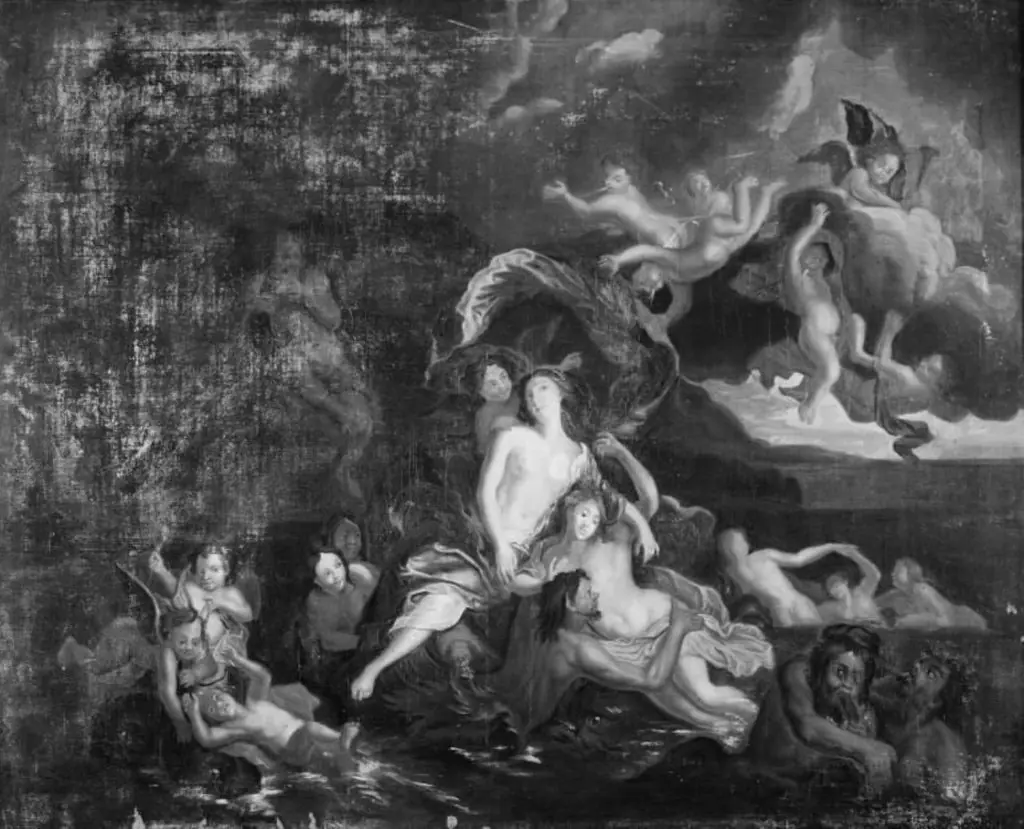 Galathea føres over havet, ledsaget af nymfer, tritoner og amoriner
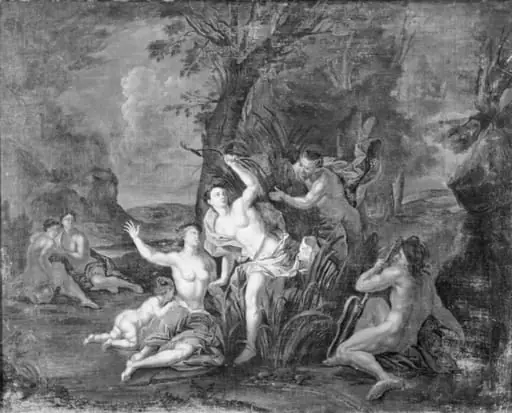 Nogle nymfer overraskes af en satyr. Ved siden sidder en flodgud
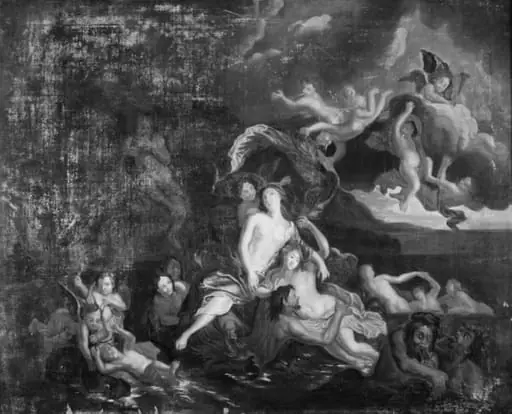 Galathea føres over havet, ledsaget af nymfer, tritoner og amoriner
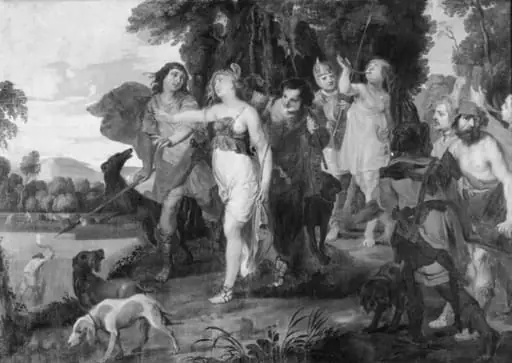 Hunting Party with Diana
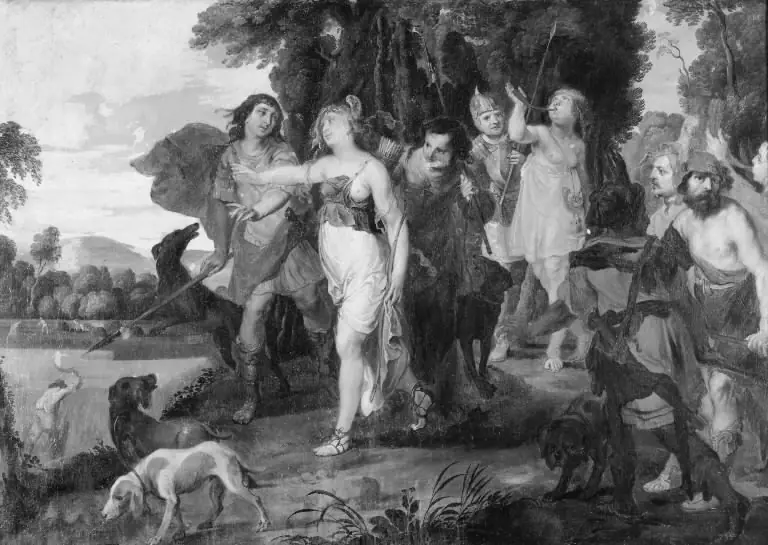 Hunting Party with Diana
 Rachel and Leah fighting over the Dudaim berries found by Ruben, Lea's son