Artwork
Italian Landscape with Classical Ruins
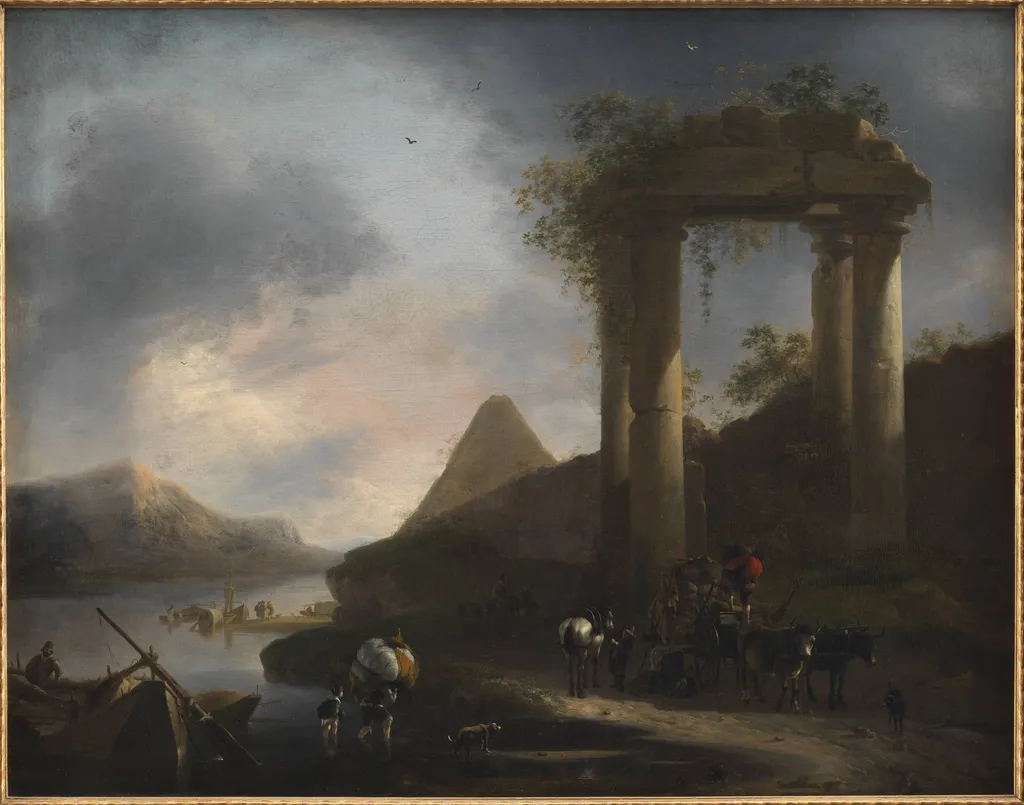
Italian Landscape with Classical Ruins is an unspecified painting by Unknown. It dates from 1660 and is held in the collection of the Statens Museum for Kunst.
About this work
Overview
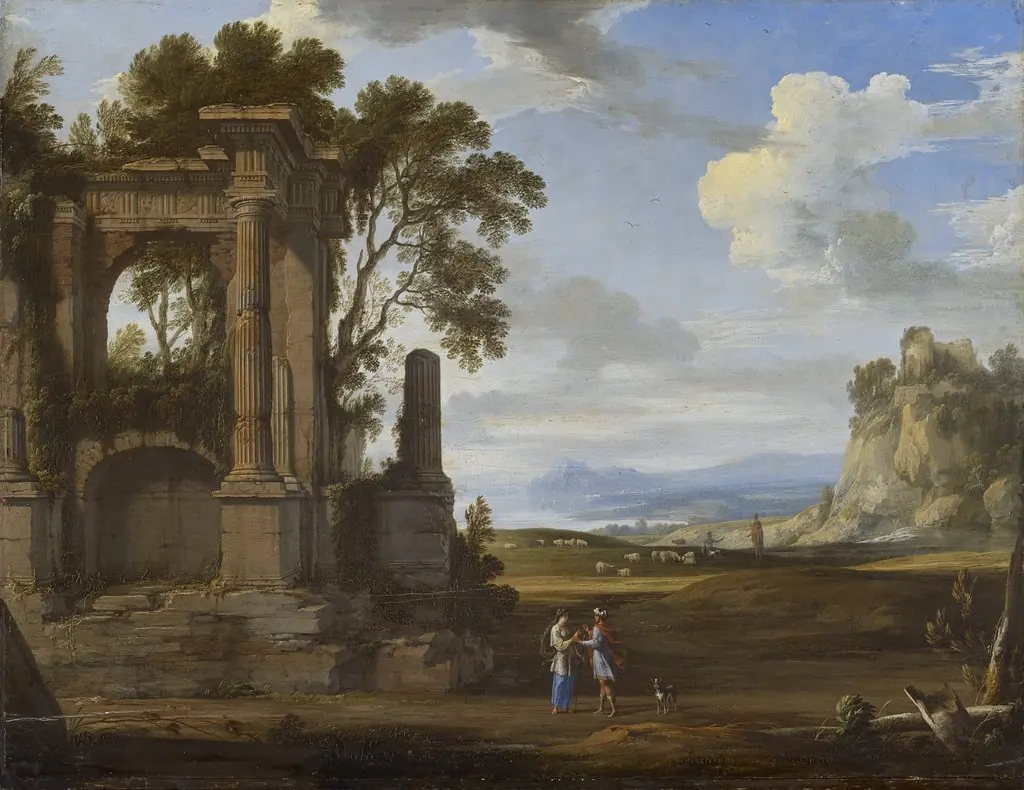
Distant, mist‑shrouded mountains complete the composition under a gently clouded sky.
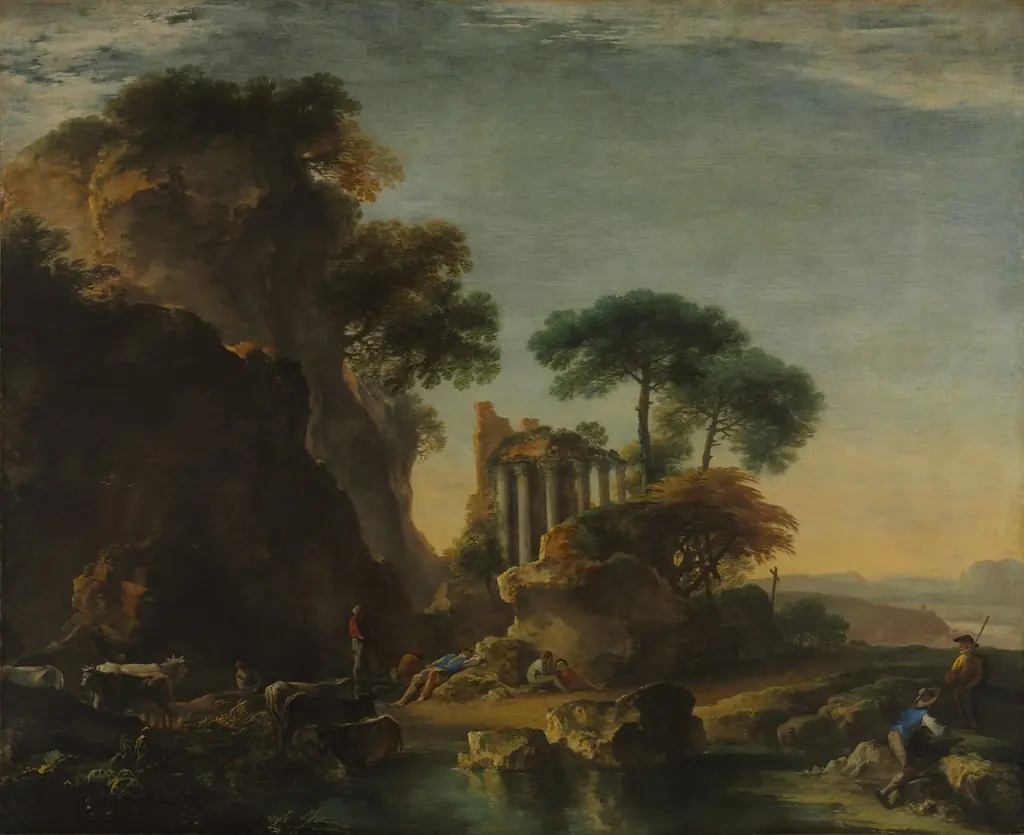
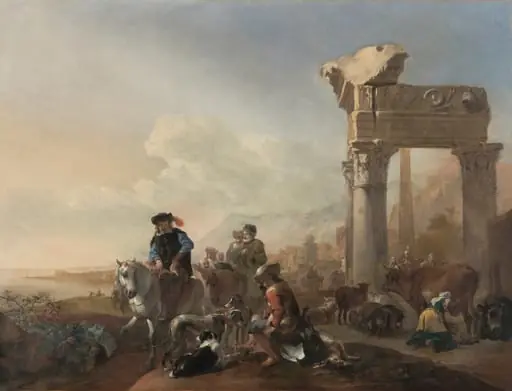
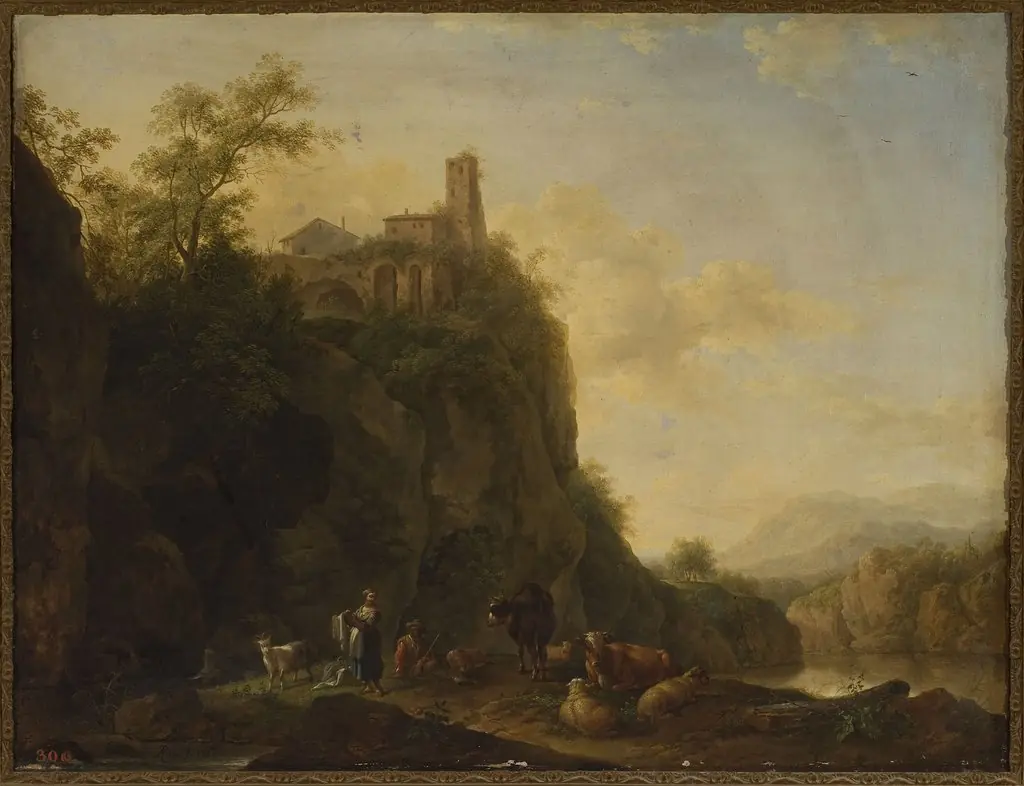
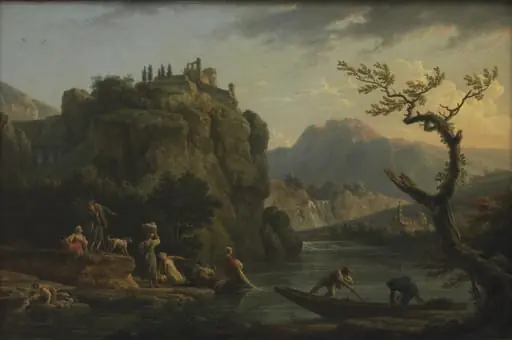
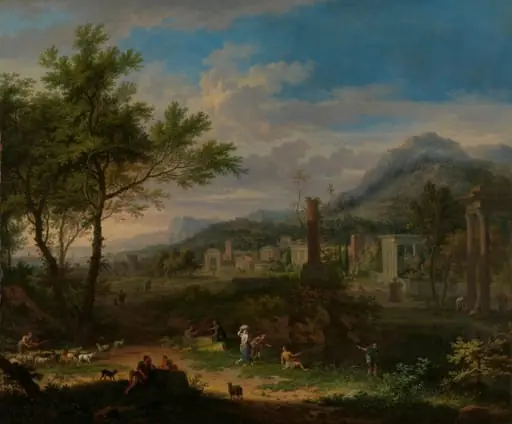
Italian Landscape with Classical Ruins, attributed to the artist known as 1922_person, dates to around 1660 and is part of the collection of the Museum of Ethnography. The canvas presents a tranquil riverbank where a dilapidated stone arch frames the foreground, while figures and livestock animate the banks and small boats drift nearby. Distant, mist‑shrouded mountains complete the composition under a gently clouded sky.
Subject & Meaning
The work juxtaposes a serene pastoral setting with the suggestion of antiquity through the ruined arch, inviting contemplation of the passage of time and the coexistence of nature and human history. The gathered people—some attending to horses or mules, others near the water—suggest everyday activity, while the architectural fragment hints at a lost civilization, adding a subtle narrative layer to the landscape.
Technique & Style
The painter employs a chiaroscuro approach, using contrasts of light and shadow to model forms and create depth, particularly evident in the illuminated figures against darker ground. Soft, atmospheric perspective renders the distant mountains hazy, while the careful rendering of textures—from the weathered stone to the animal fur—demonstrates a meticulous handling of oil paint typical of mid‑17th‑century landscape traditions.
History & Provenance
Created circa 1660, the canvas entered the Museum of Ethnography’s holdings at an unspecified date, where it remains on display. Its attribution to 1922_person reflects scholarly consensus based on stylistic analysis, though documentation of its early ownership is limited, leaving gaps in its provenance prior to museum acquisition.
Context
During the mid‑1600s, European artists often incorporated classical ruins into bucolic scenes to evoke nostalgia for antiquity and to provide compositional balance. This painting aligns with that trend, merging a realistic depiction of rural life with idealized architectural fragments, a practice that resonated with contemporary tastes for both naturalism and historic reference.
Artist & collection

 Domestic Scene
 Giacomo and Cardinal Marco, investing Andrea, Abbot of San Zeno, with his Benefice
 The Nymph of Fontainebleau
 Portrait of a Woman
 Madonna and Child with Saints in the Enclosed Garden
 Venus and Minerva
 Family Group of Four on Sofa
 Wall painting from Room H of the Villa of P. Fannius Synistor at Boscoreale