Artwork
A Classical Landscape with Judah and Tamar
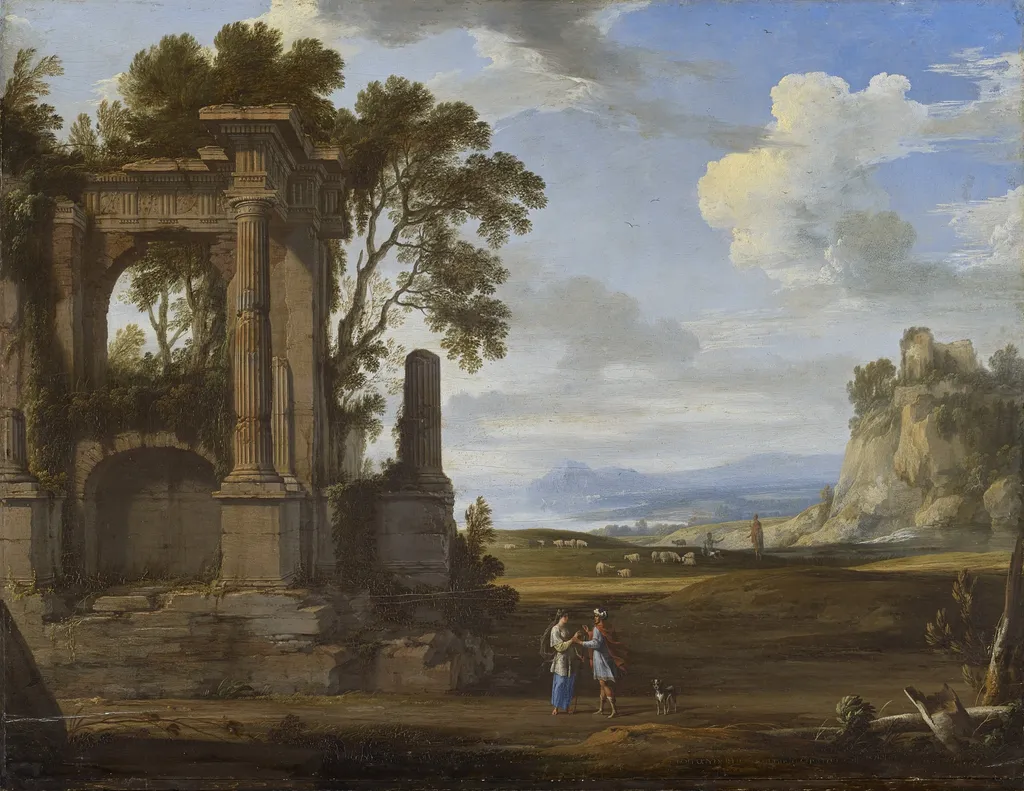
A Classical Landscape with Judah and Tamar is an oil painting by Pierre-Antoine Patel. It dates from 1687 and is held in the collection of the National Galleries Scotland.
About this work
Overview
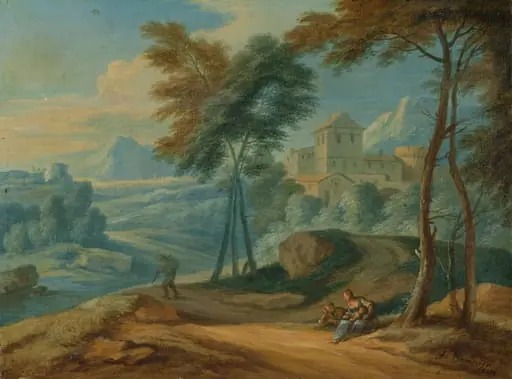
Painted around 1687 by Pierre-Antoine Patel the Younger, this oil-on-canvas work presents a quiet, idealized landscape infused with classical allusion.
Painted around 1687 by Pierre-Antoine Patel the Younger, this oil-on-canvas work presents a quiet, idealized landscape infused with classical allusion. Though Patel was known for gouache, this piece reflects his adaptation to oil, retaining his signature attention to detail and atmospheric precision. It resides in the Scottish National Gallery, part of a small body of work that bridges French landscape tradition with biblical narrative.
Subject & Meaning
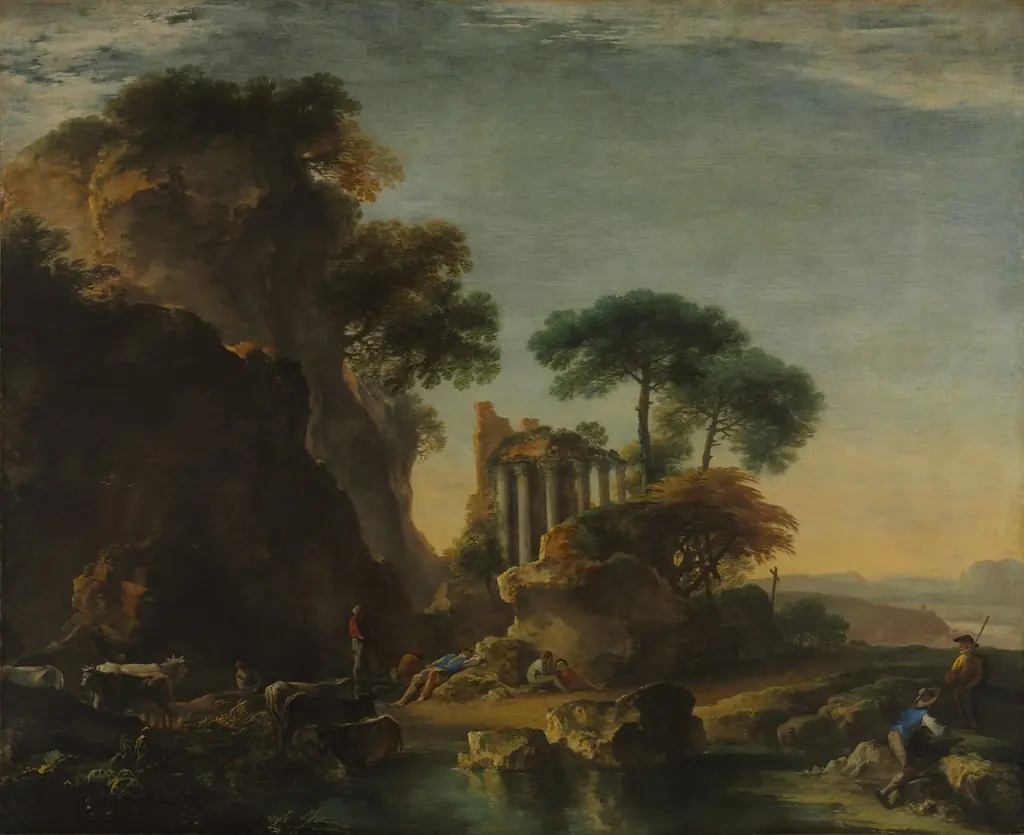
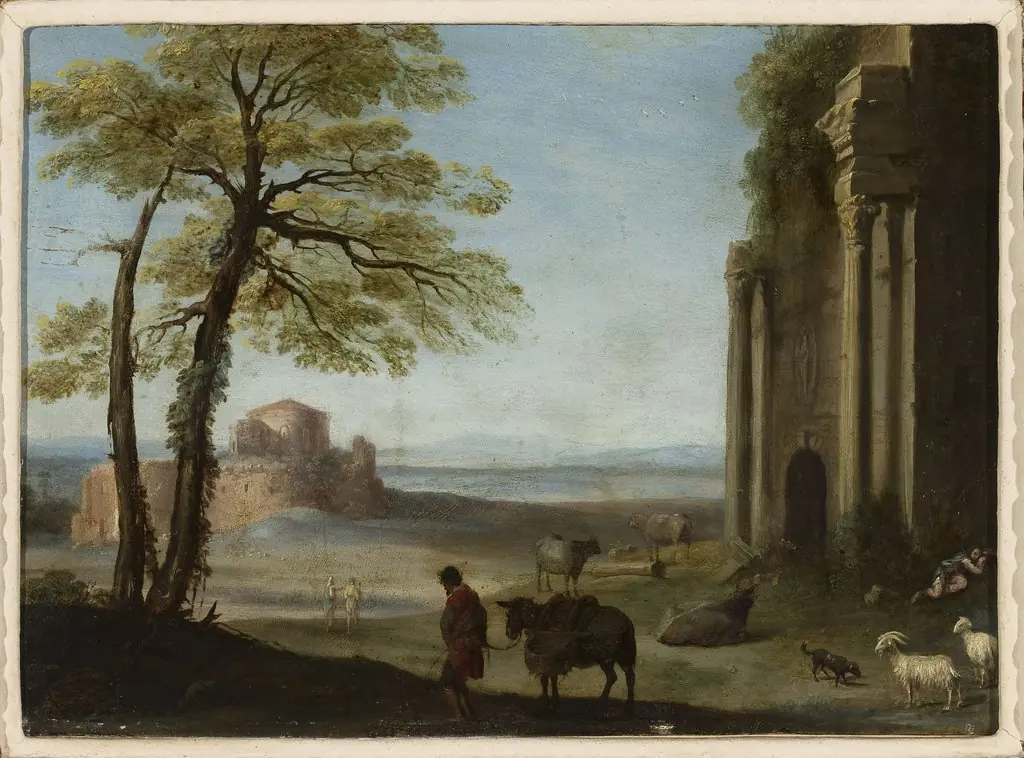
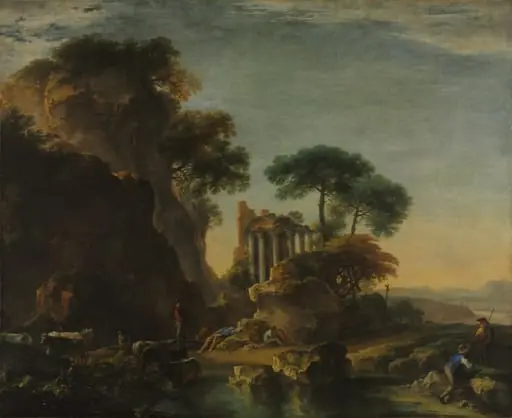
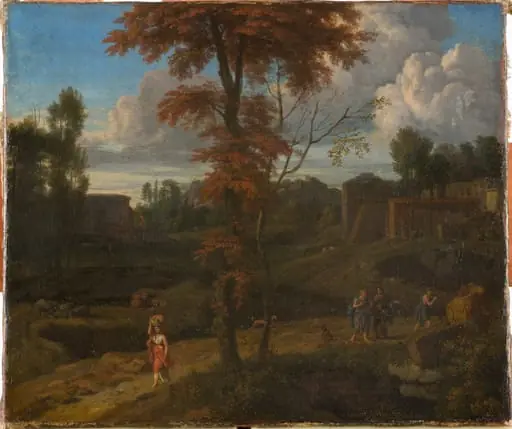
The scene illustrates the biblical story of Judah and Tamar from Genesis 38, where Tamar, disguised as a prostitute, encounters Judah at a crossroads. The figures in the foreground—one in blue, the other in white—suggest their roles without overt drama. The tranquil setting softens the moral complexity of the tale, transforming it into a contemplative moment within a timeless, pastoral world.
Technique & Style
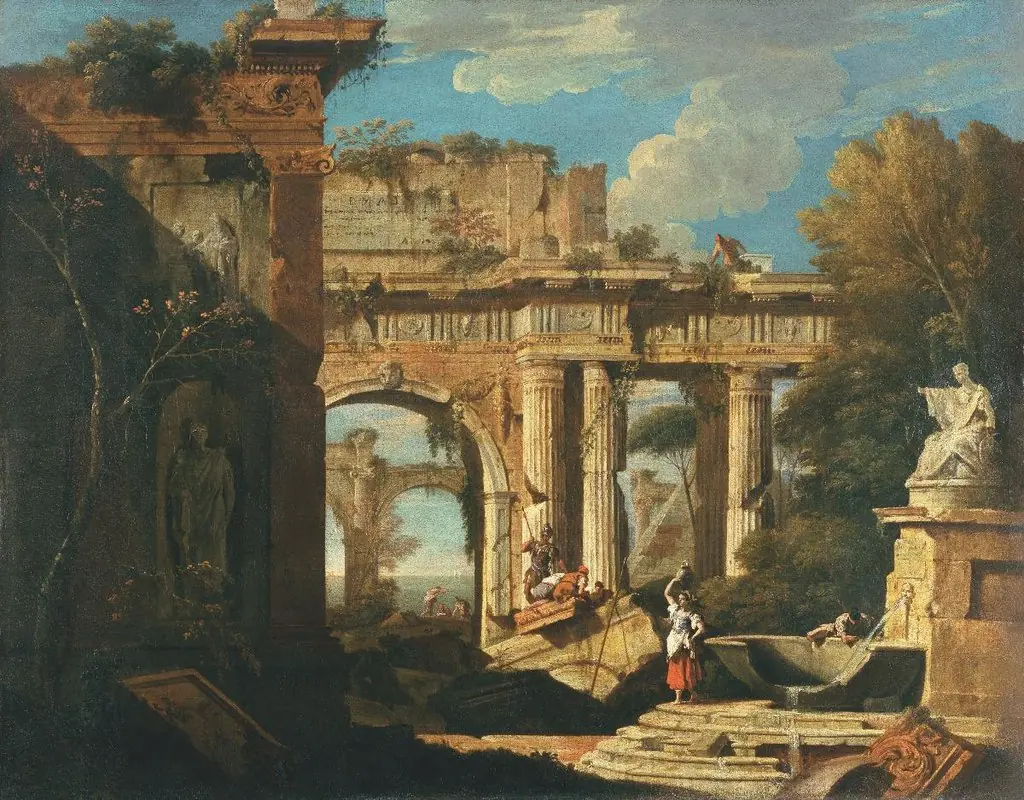
Patel employs a restrained palette and careful modeling to evoke soft daylight filtering through trees and stone. The architecture on the left, partially veiled by foliage, suggests ancient ruins, a recurring motif in his work. Brushwork is precise but unobtrusive, favoring clarity over texture. Light falls gently across surfaces, creating subtle contrasts that guide the eye without dramatic emphasis.
History & Provenance
Created during Patel’s mature period, the painting reflects his continued engagement with classical themes after inheriting his father’s studio. It entered the Scottish National Gallery’s collection in the 19th century, likely through a private acquisition. Its survival in relatively intact condition is notable, given the fragility of many 17th-century oil landscapes.
Context
In late 17th-century France, landscape painting was increasingly valued as a vehicle for moral and intellectual reflection. Patel’s work aligns with the tradition of Claude Lorrain and Nicolas Poussin, who embedded narrative within serene natural settings. His focus on ruins and subdued light reflects broader tastes among collectors favoring antiquity and calm over theatricality.
Legacy
Though Patel’s oeuvre remains modest in scale, his integration of biblical subjects into tranquil landscapes influenced minor French painters of the early 18th century. His ability to convey narrative through atmosphere rather than gesture contributed to the evolution of the poetic landscape. Today, the painting stands as a quiet example of how religious stories were domesticated within the aesthetics of harmony.
Own this work as a print
Artist & collection
Artist
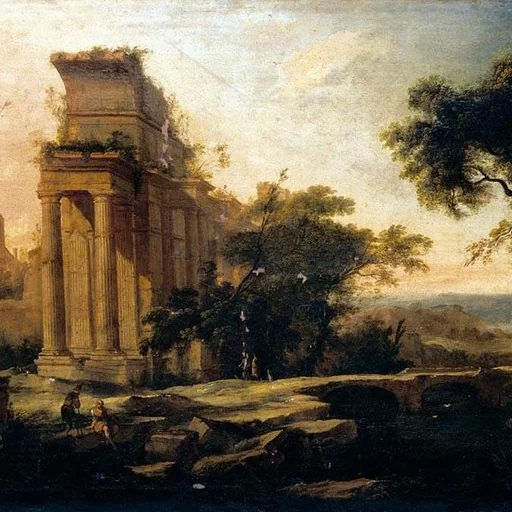
Pierre-Antoine Patel (November 22, 1648 – March 17, 1707), also known as Patel the Younger, was a French landscape painter.