Artwork
The Y off Amsterdam
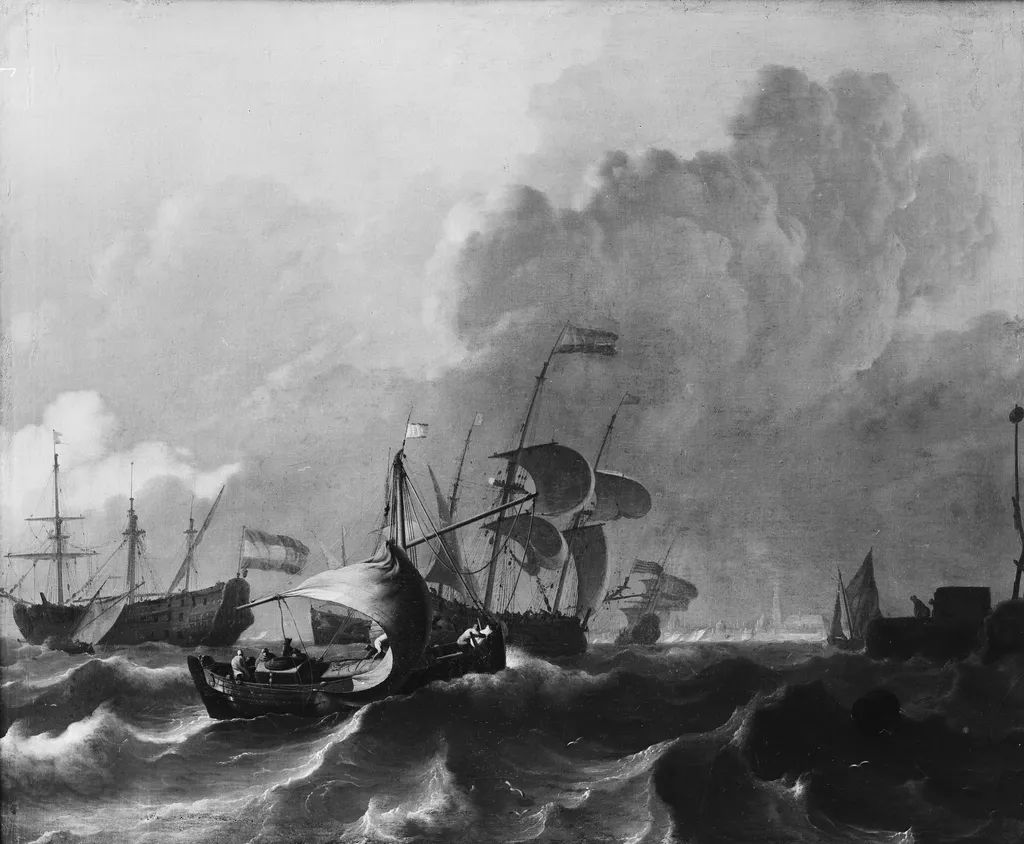
The Y off Amsterdam is an oil painting by the Rococo painting artist Ludolf Bakhuizen. It dates from 1700 and is held in the collection of the Rijksmuseum.
About this work
Overview
Ludolf Bakhuizen, born in Germany but active in the Netherlands, painted *The Y off Amsterdam* around 1700. The work belongs to the marine painting tradition and is now part of the Rijksmuseum collection in Amsterdam. Bakhuizen established himself as a leading practitioner of seascapes after the van de Velde family, his predecessors in the genre, relocated to England.
Subject & Meaning
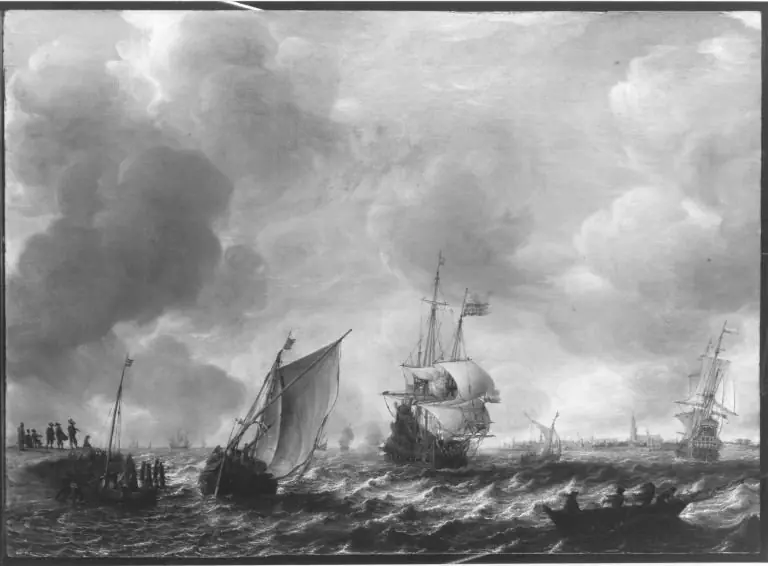
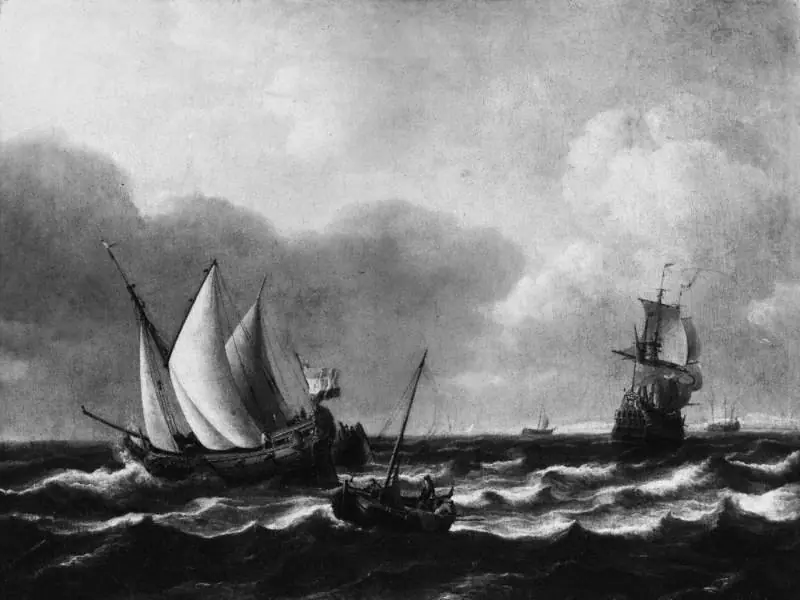
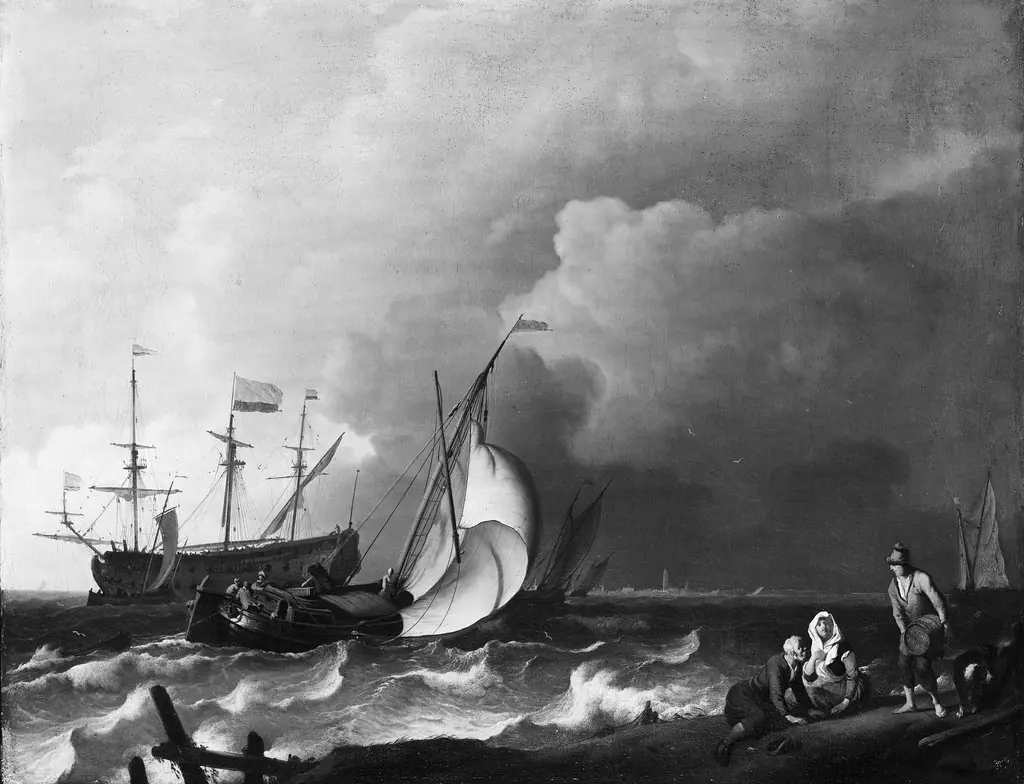
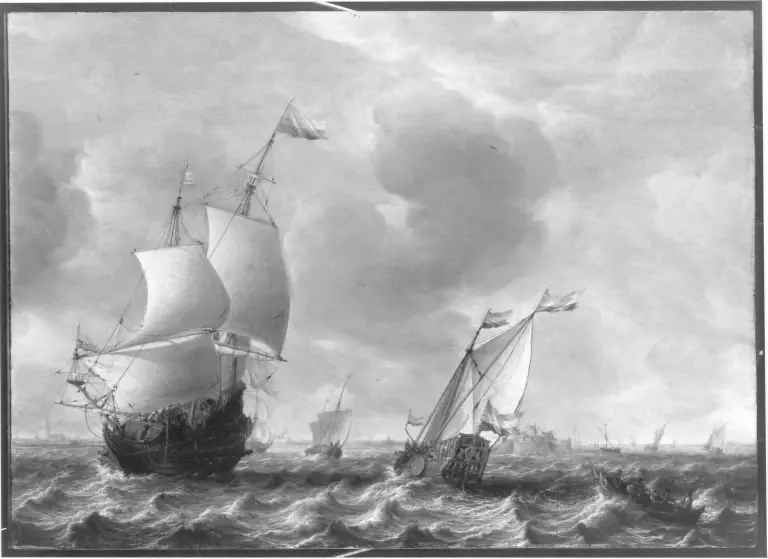
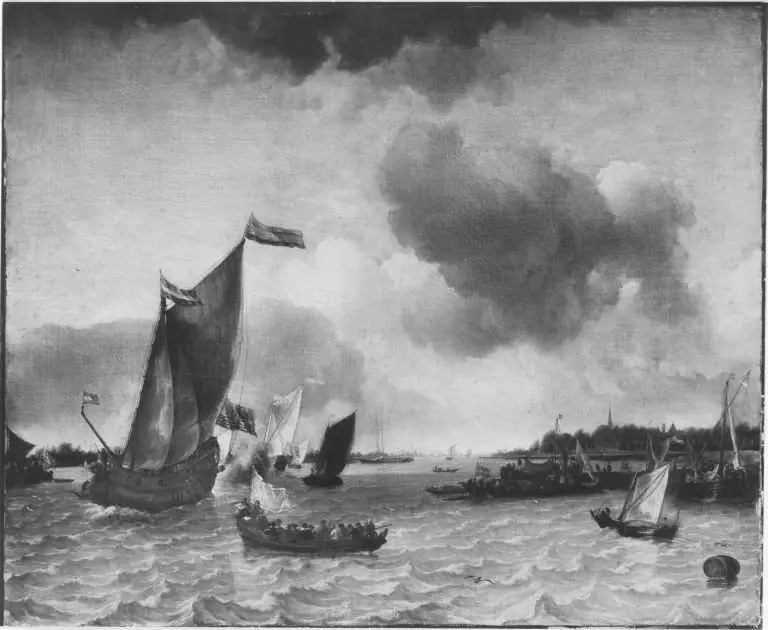
The scene depicts vessels caught in turbulent conditions on the waterway known as the IJ, the body of water near Amsterdam. A small rowboat with two figures occupies the foreground, pulling against the swell, while larger ships with visible flags labor in the background. The composition suggests human vulnerability against natural forces rather than tranquil maritime commerce.
Technique & Style
Painted in oil, the work employs dramatic contrasts between light and shadow to heighten the sense of danger and movement. Dark, heavy clouds dominate the sky, while foaming waves break across the surface. This chiaroscuro technique intensifies the emotional register of the scene, a method common in Dutch marine painting of this period.
History & Provenance
The painting entered the collection of the Rijksmuseum, where it remains today. Bakhuizen produced the work during the late phase of his career, by which time he had fully absorbed and developed the Dutch tradition of marine art that he inherited from earlier specialists in the field.
Own this work as a print
Artist & collection
Artist
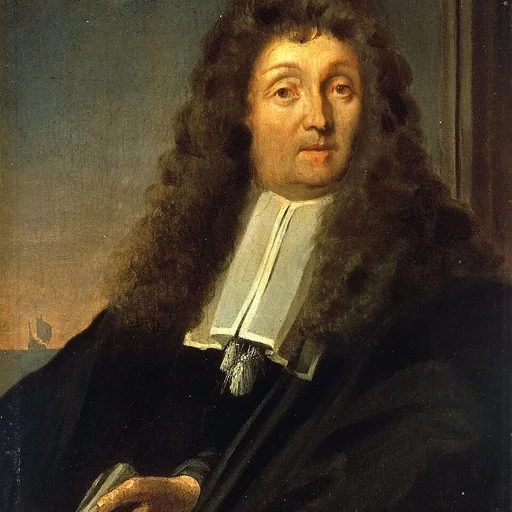
Ludolf Bakhuizen (28 December 1630 or 1632 – 7 November 1708) was a German-born Dutch painter, draughtsman, calligrapher and printmaker.

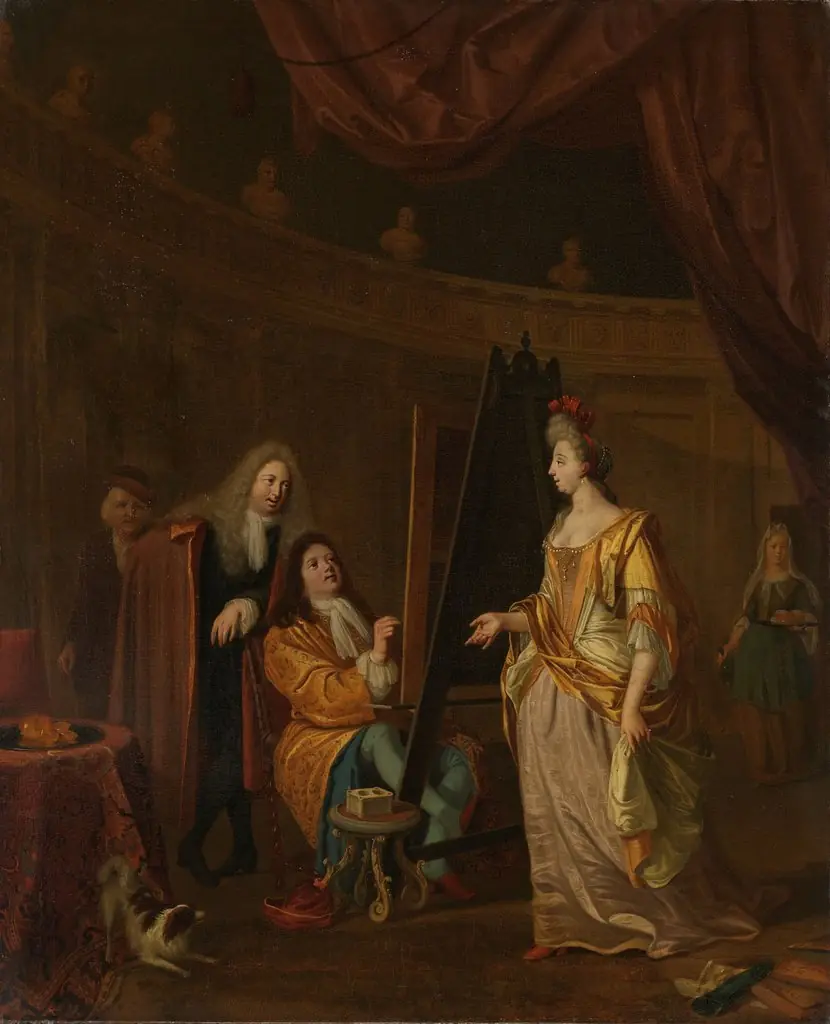 An artist in his studio, painting the portrait of a lady
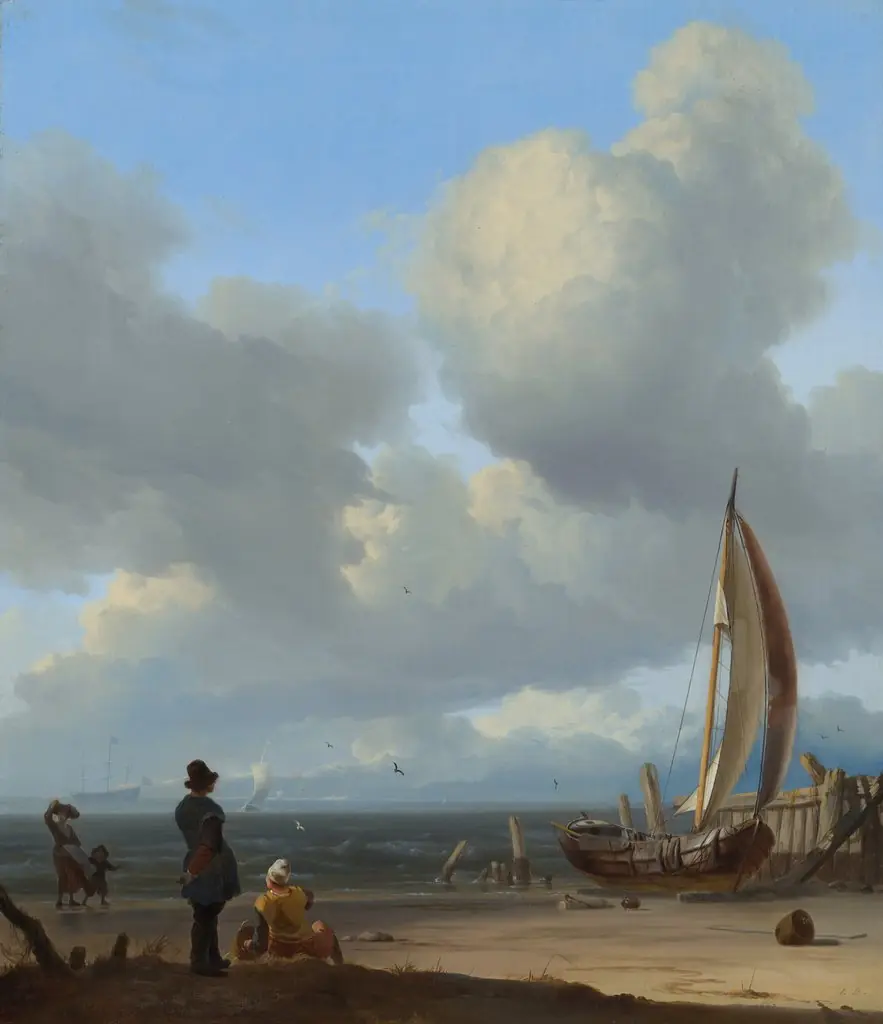 An extensive seascape with figures by a boat on a shore near Huisduinen
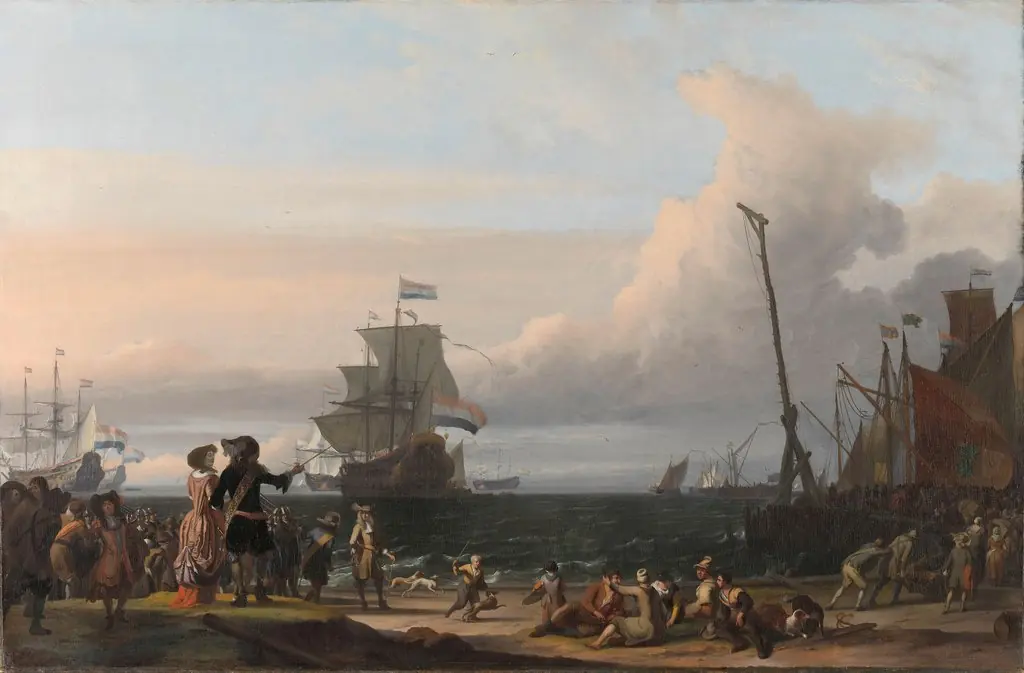 Dutch ships in the roads of Texel; in the middle the 'Gouden Leeuw,' the flagship of Cornelis Tromp
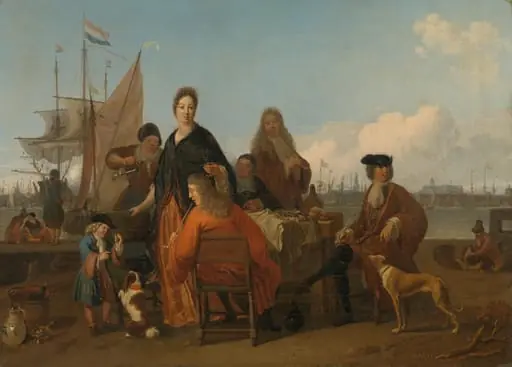 The Bakhuysen and de Hooghe Families dining at the Mosselsteiger (Mussel Pier) on the Y, Amsterdam
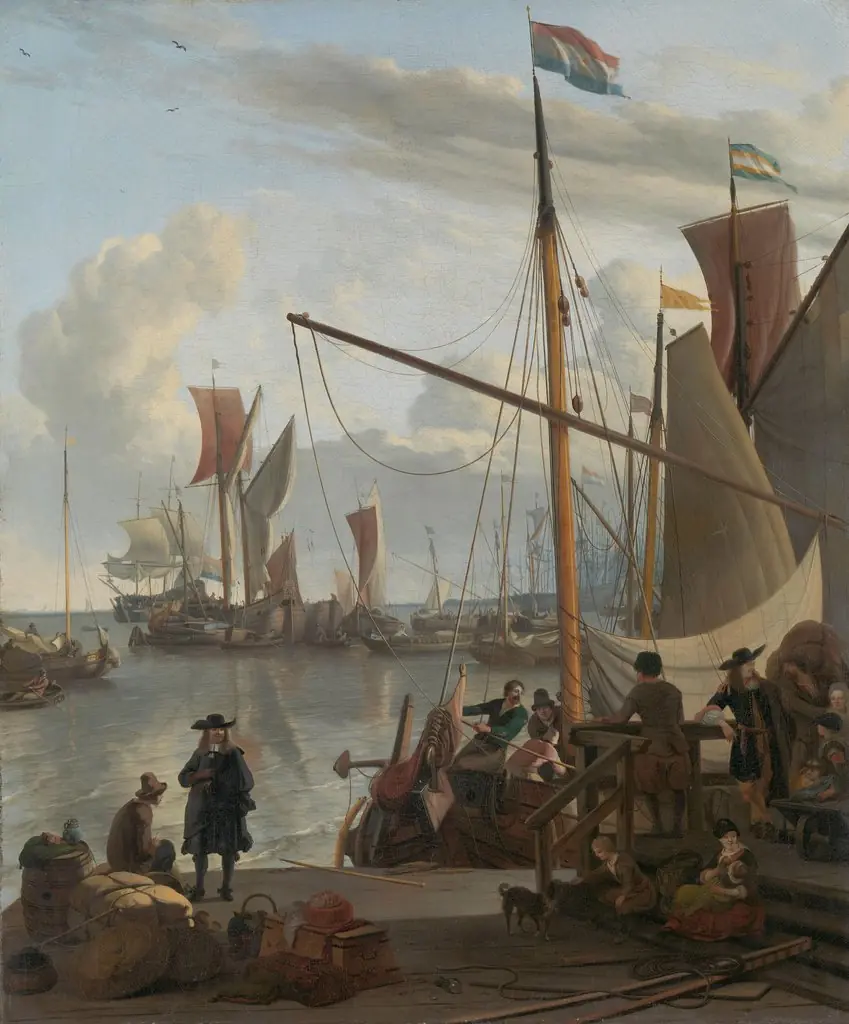 The Y at Amsterdam, seen from the Mosselsteiger (mussel pier)
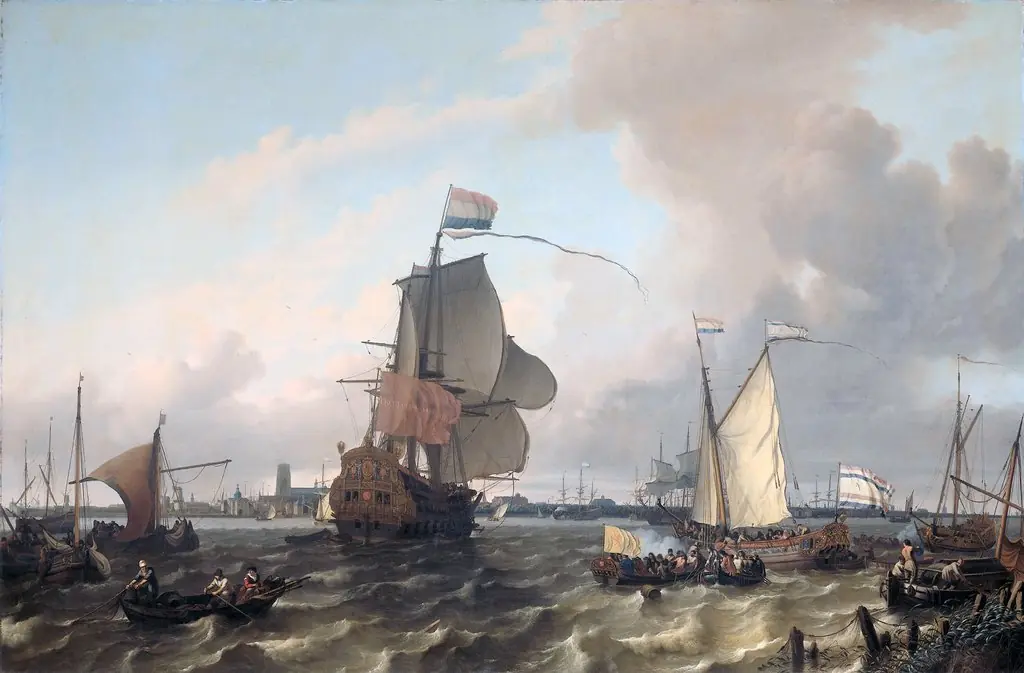 The Man-of-War Brielle on the River Maas off Rotterdam
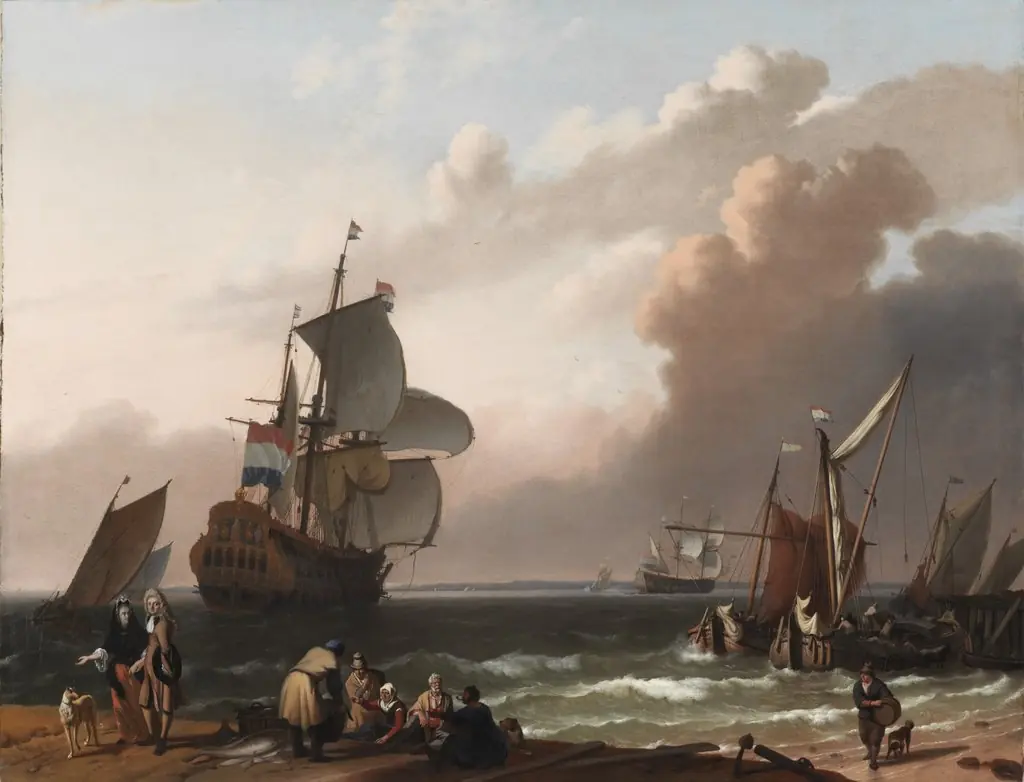 Warship and Dutch Sailboats near the Shore
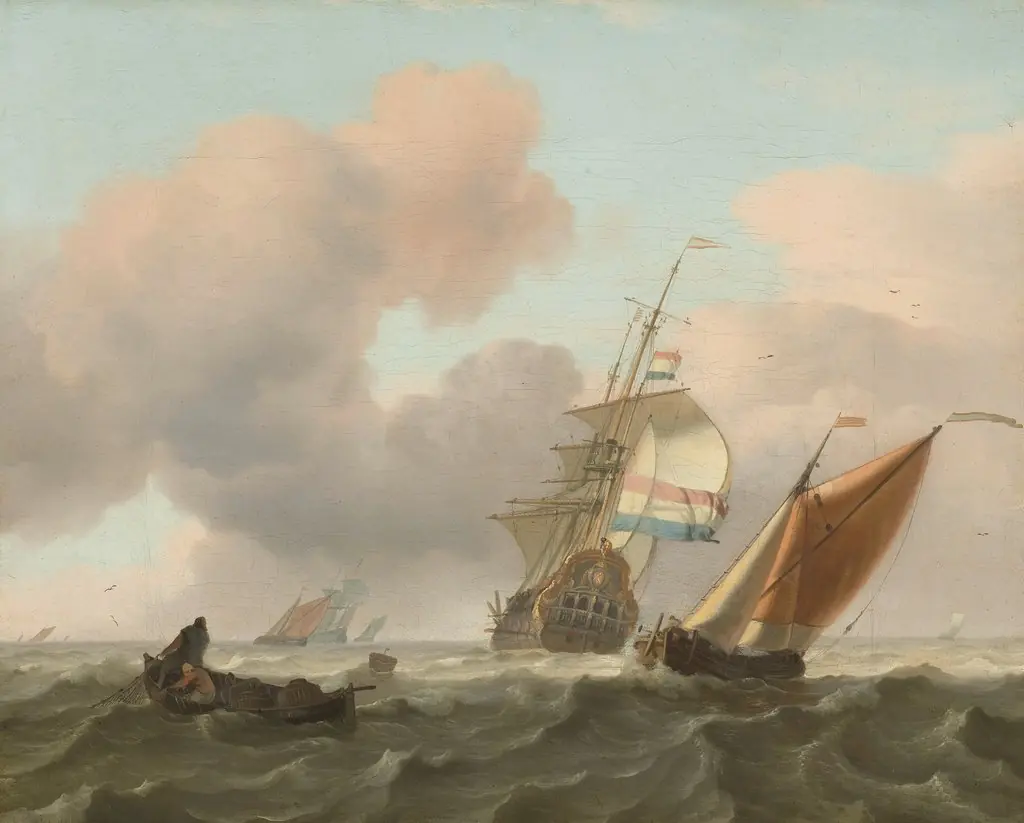 Rough sea with Ships