Artwork
Havn med skibe for sejl
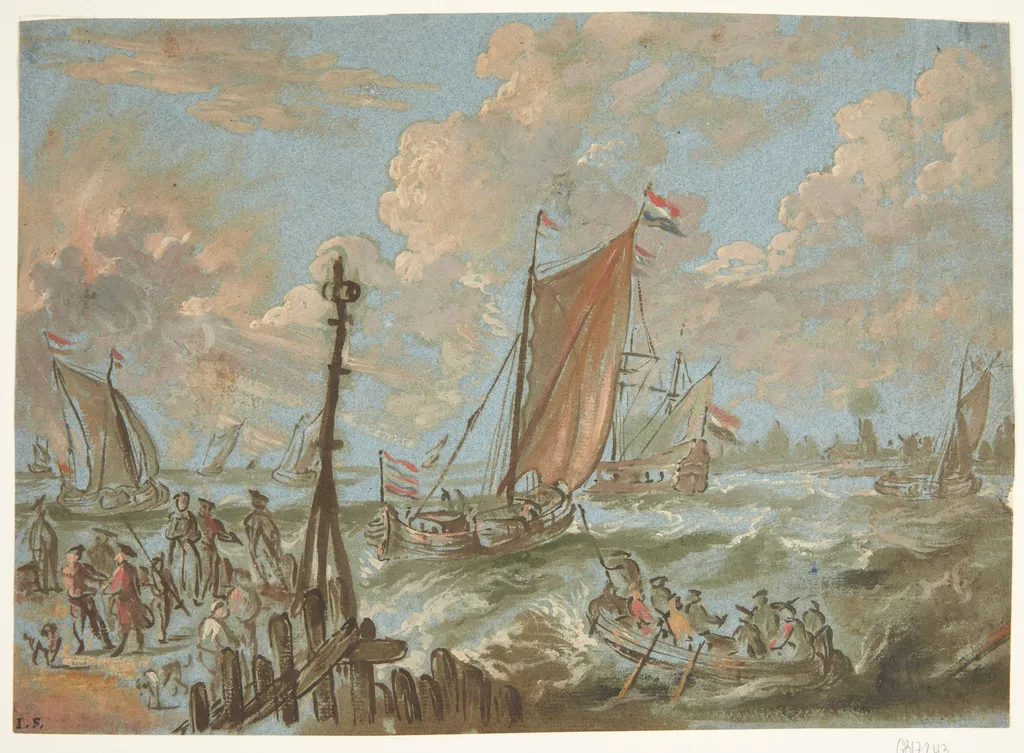
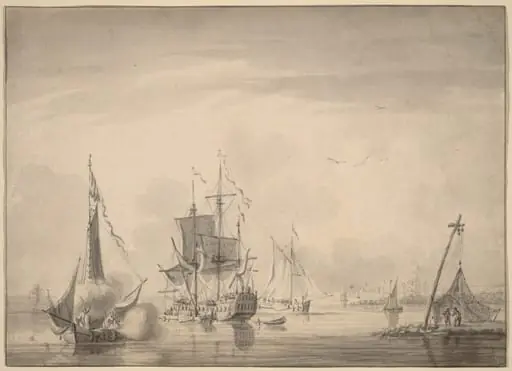
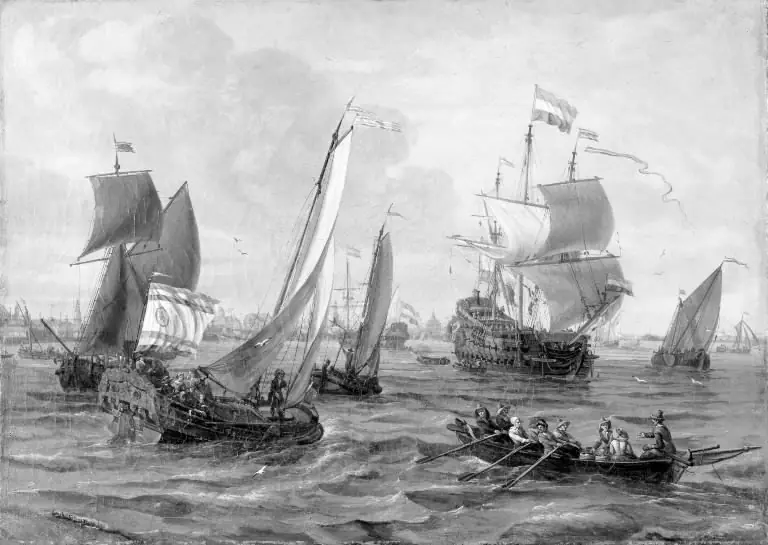
Havn med skibe for sejl is an unspecified work on paper by Unknown. It dates from 1650 and is held in the collection of the Statens Museum for Kunst. Created around 1650, this watercolor depicts a quiet yet active harbor with multiple vessels at rest or preparing to sail.
About this work
Overview
Created around 1650, this watercolor depicts a quiet yet active harbor with multiple vessels at rest or preparing to sail. The work is attributed to an artist active in the mid-17th century, though the name remains unverified. It resides in the collection of the Museum of Ethnography, where it is valued for its atmospheric rendering of maritime life rather than its historical specificity.
Subject & Meaning
The scene captures a moment of everyday harbor activity: ships with red sails and flags anchor near the shore, while smaller boats cluster closer to land.
The scene captures a moment of everyday harbor activity: ships with red sails and flags anchor near the shore, while smaller boats cluster closer to land. A group of figures in period attire observes the scene from the waterfront, suggesting a civilian presence rather than official or military function. The composition conveys routine maritime life, emphasizing observation over narrative or symbolism.
Technique & Style
Executed in watercolor, the painting employs loose, fluid brushwork to suggest movement in the water and sky. The clouds and waves are rendered with rapid, sketch-like strokes, avoiding sharp definition. Soft, warm tones dominate—blues and reds are muted yet distinct against pale backgrounds—creating a sense of light and air without heavy detail or contrast.
History & Provenance
The work’s early ownership is undocumented, but it entered the Museum of Ethnography’s collection in the late 19th or early 20th century. Its attribution to a specific artist remains uncertain, and it was likely acquired as part of a broader collection of Nordic or Northern European maritime studies. No significant exhibitions or records of its pre-museum history are known.
Context
This piece reflects a tradition of Nordic watercolor studies from the 17th century, where artists recorded coastal life with observational precision rather than grandeur. While not tied to a major artistic movement, it aligns with regional practices of documenting harbor activity, trade, and seafaring communities—often for private or scholarly use rather than public display.
Legacy
Though not widely reproduced or studied, the painting contributes to the understanding of early modern Nordic visual culture. Its modest scale and informal style offer insight into how everyday maritime scenes were recorded outside formal commissions. It remains a quiet example of watercolor’s capacity to capture transient light and motion in pre-industrial coastal life.
Artist & collection

 Domestic Scene
 Giacomo and Cardinal Marco, investing Andrea, Abbot of San Zeno, with his Benefice
 The Nymph of Fontainebleau
 Portrait of a Woman
 Madonna and Child with Saints in the Enclosed Garden
 Venus and Minerva
 Family Group of Four on Sofa
 Wall painting from Room H of the Villa of P. Fannius Synistor at Boscoreale
 Amsterdam, Ships at the IJ on Choppy Water
 Amsterdam, Ships at the IJ on Choppy Waters
 Ships in a Gale
 Harbor Scene
 Seascape
 A Storm (Ships in the Harbor in a Stiff Breeze)
 The Herring Bark
 The Home Fleet Saluting the State Barge
 The prince's yacht and the sate yacht leaving Moerdijk with Charles II of England on board, 1660
 Shipping: Sunset
 Dutch Fishing Boats
 Skibe og robåde på havet ud for Amsterdam