Artwork
Saint Peter Penitent
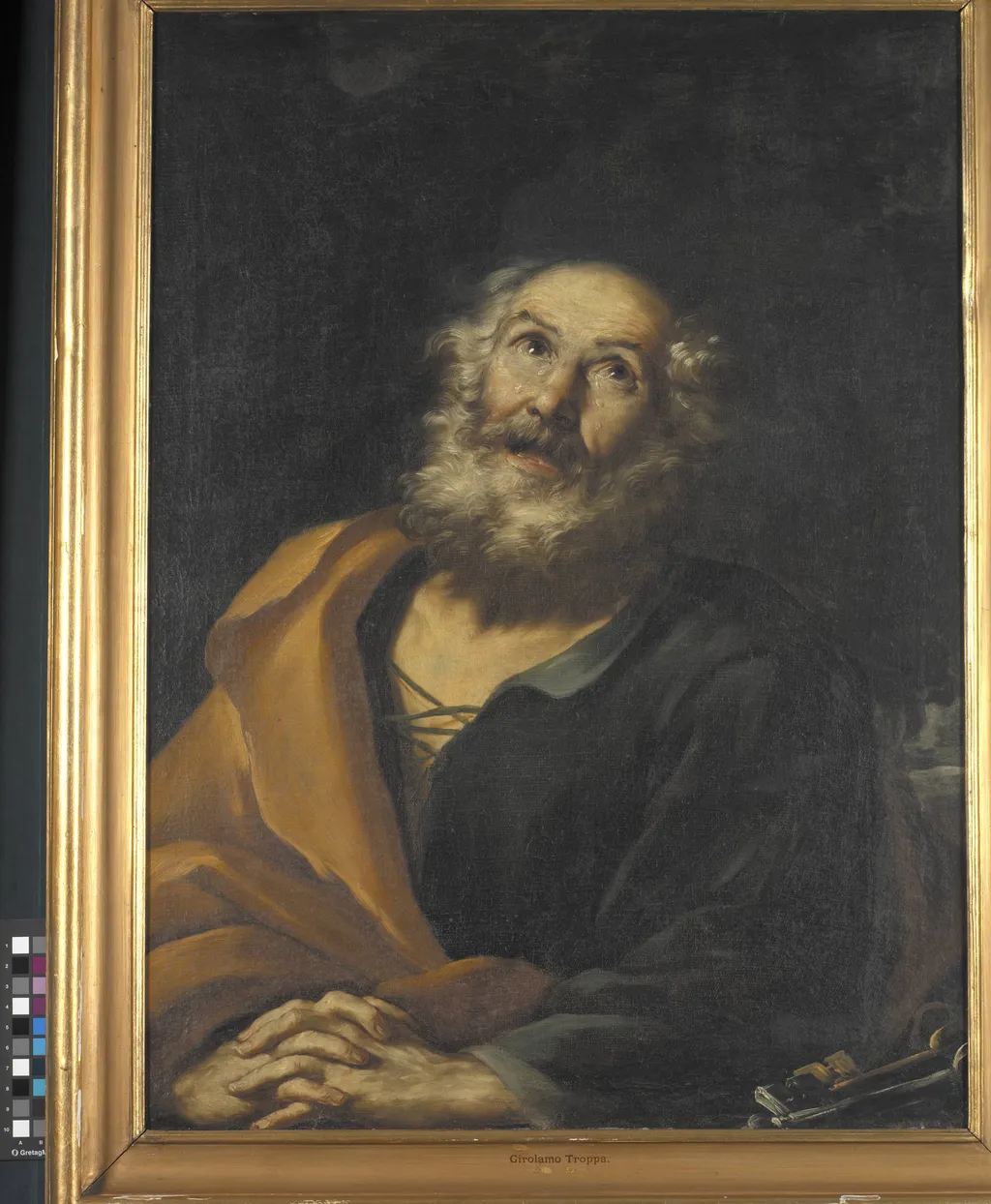
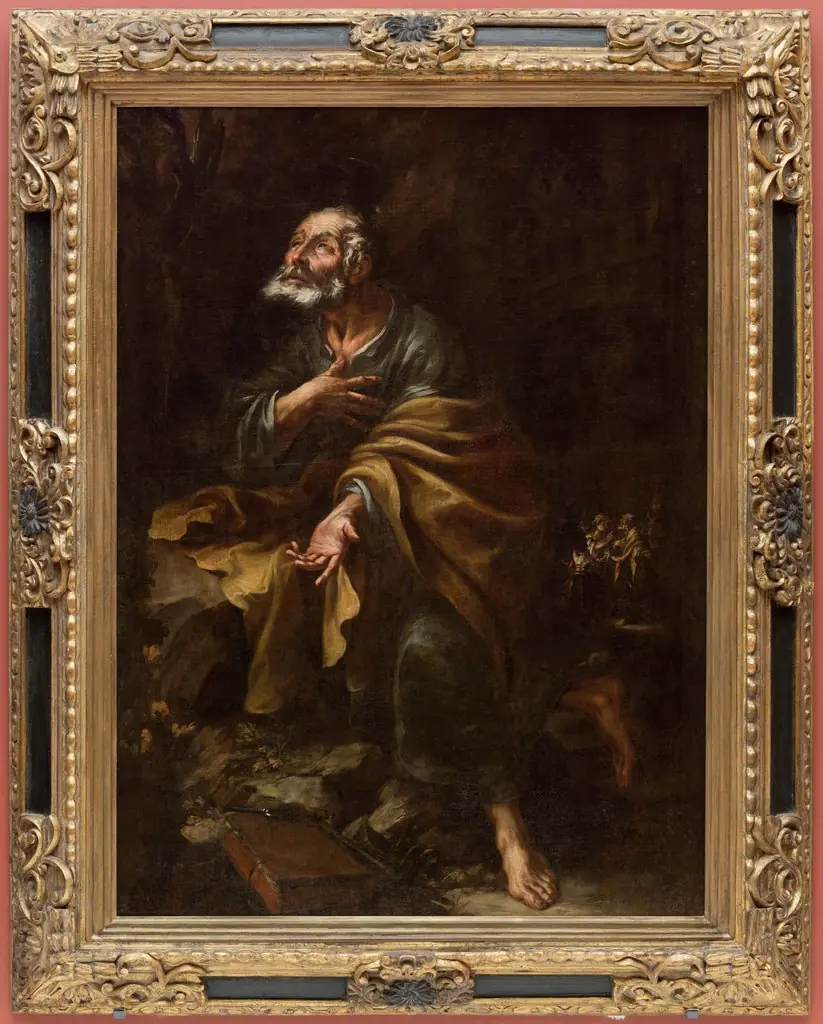
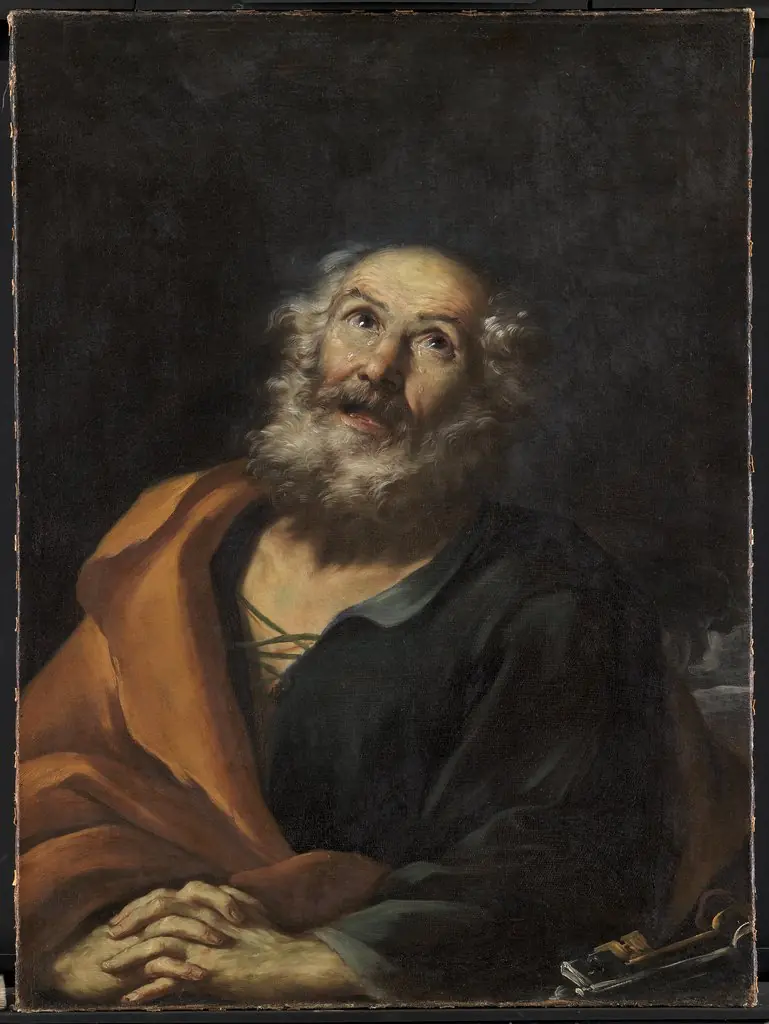
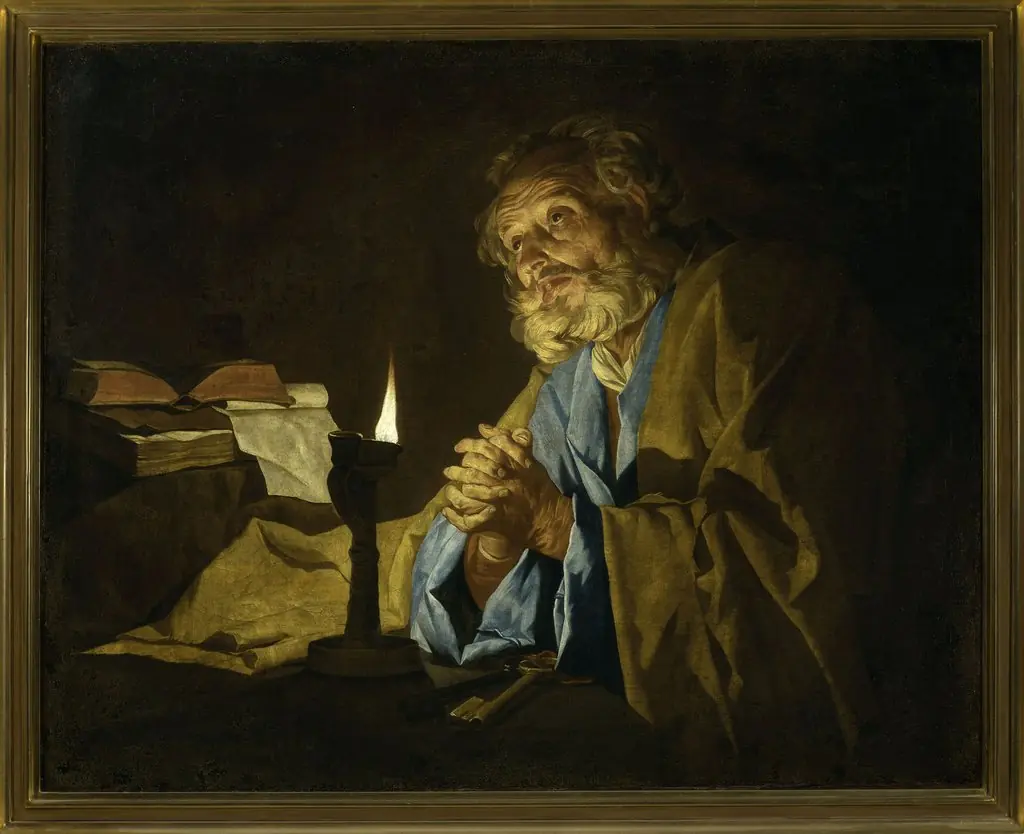
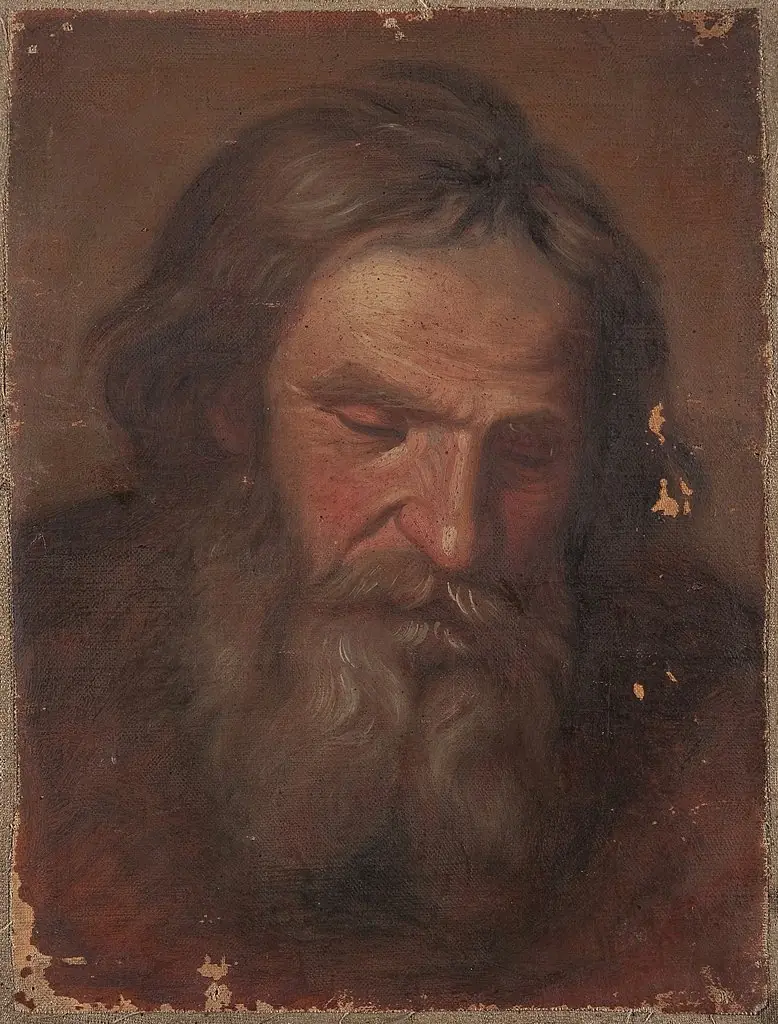
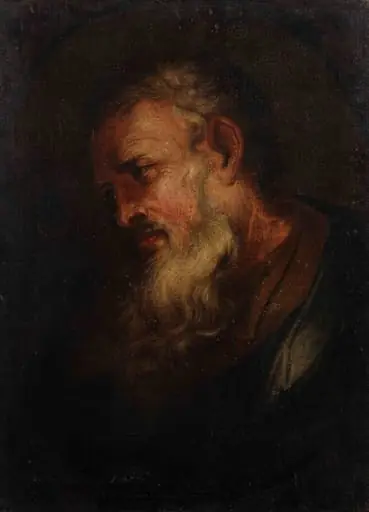
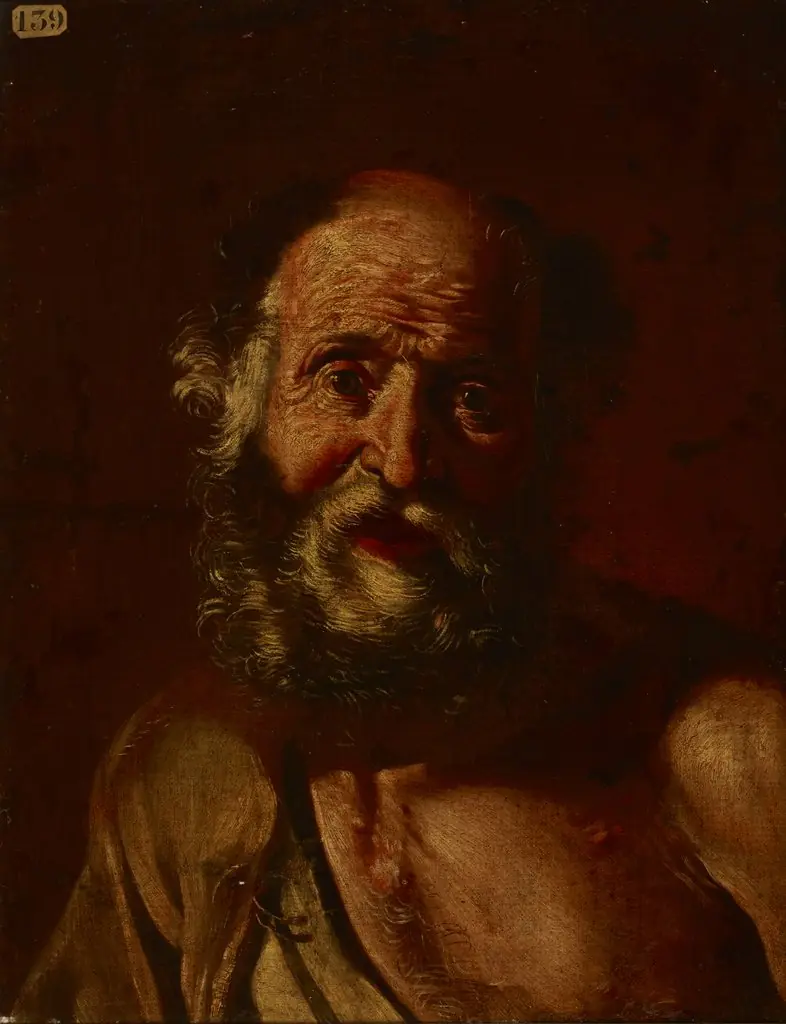
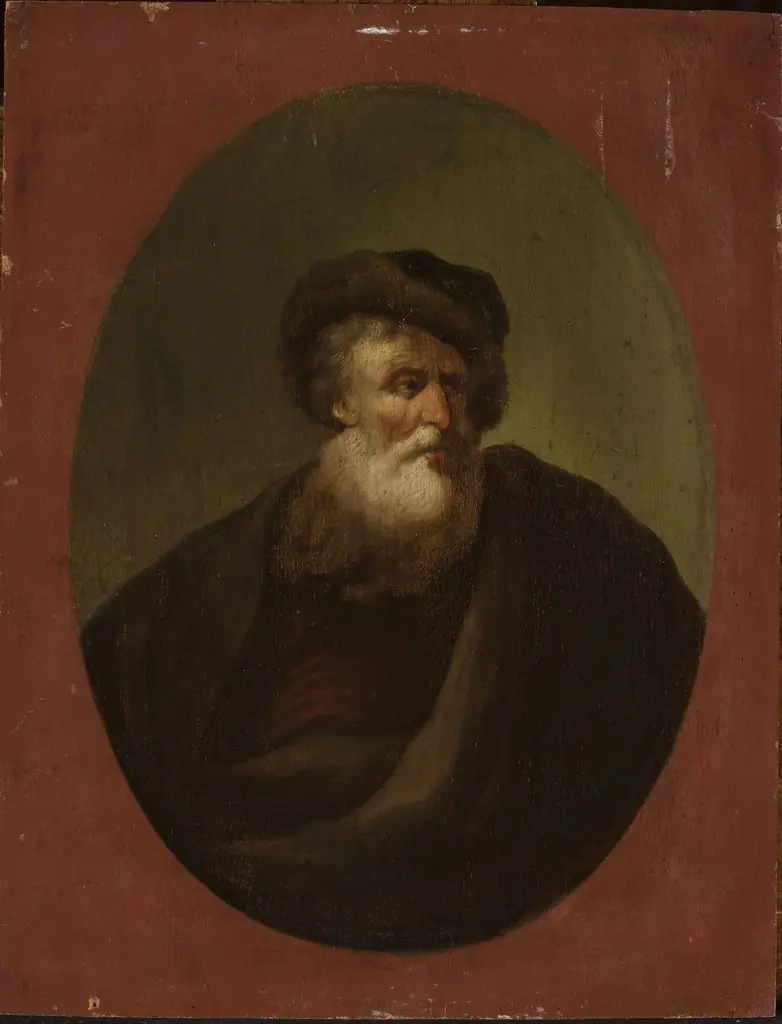
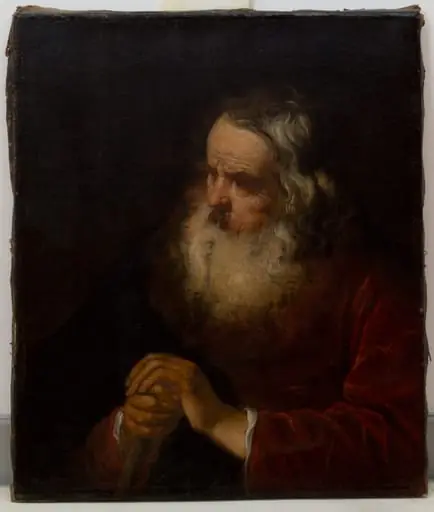
Saint Peter Penitent is a photography by Unknown. It dates from 1650 and is held in the collection of the Statens Museum for Kunst. Painted around 1650, this work depicts Saint Peter in a moment of quiet contrition.
About this work
Overview
The artist’s focus on facial expression and tactile detail reflects a devotional approach common in mid-seventeenth-century religious imagery.
Painted around 1650, this work depicts Saint Peter in a moment of quiet contrition. Executed in oil on panel, it is currently housed in the Museum of Ethnography. The composition isolates the figure against a deep, unmodulated background, emphasizing emotional intensity over narrative context. The artist’s focus on facial expression and tactile detail reflects a devotional approach common in mid-seventeenth-century religious imagery.
Subject & Meaning
The figure is Saint Peter, identified by the keys and scroll at right—symbols of his apostolic authority and the written word of the Gospel. His bowed head and clasped hands convey penitence, recalling his denial of Christ before the rooster’s crow. The absence of overt drama or celestial elements directs attention inward, toward personal remorse and spiritual reckoning, aligning with Counter-Reformation ideals of introspection.
Technique & Style
The painting employs chiaroscuro to model form through stark contrasts of light and shadow. The face and hands are illuminated as if by a single source, heightening the texture of skin, beard, and coarse fabric. Backgrounds are rendered in near-black tones, eliminating spatial distraction. This selective illumination enhances the psychological gravity of the scene, prioritizing emotional resonance over environmental detail.
History & Provenance
The painting entered the Museum of Ethnography’s collection in the early twentieth century, though its earlier ownership remains undocumented. Its attribution to a specific artist from 1993 is unverified; stylistic analysis suggests a regional Italian or Spanish workshop active in the mid-1600s. No archival records confirm its original commission or devotional context prior to museum acquisition.
Context
Created during a period when Catholic reformers encouraged personal piety, such images served as aids for meditation. Simplicity in dress and setting was intentional, rejecting ornate altarpieces in favor of intimate, human-scale devotion. Comparable works by Caravaggio and his followers used similar lighting and psychological focus, though this piece lacks the theatricality often found in Roman Baroque painting.
Legacy
Though not widely exhibited, the painting contributes to scholarly understanding of vernacular religious art in early modern Europe. Its restrained aesthetic and emphasis on inner state reflect a broader trend away from spectacle toward contemplative imagery. It remains a quiet example of how faith was visualized in private, rather than public, spheres during the Baroque era.
Artist & collection

 Domestic Scene
 Giacomo and Cardinal Marco, investing Andrea, Abbot of San Zeno, with his Benefice
 The Nymph of Fontainebleau
 Portrait of a Woman
 Madonna and Child with Saints in the Enclosed Garden
 Venus and Minerva
 Family Group of Four on Sofa
 Wall painting from Room H of the Villa of P. Fannius Synistor at Boscoreale