Artwork
Bust of an Old Man (Head of a Beggar)
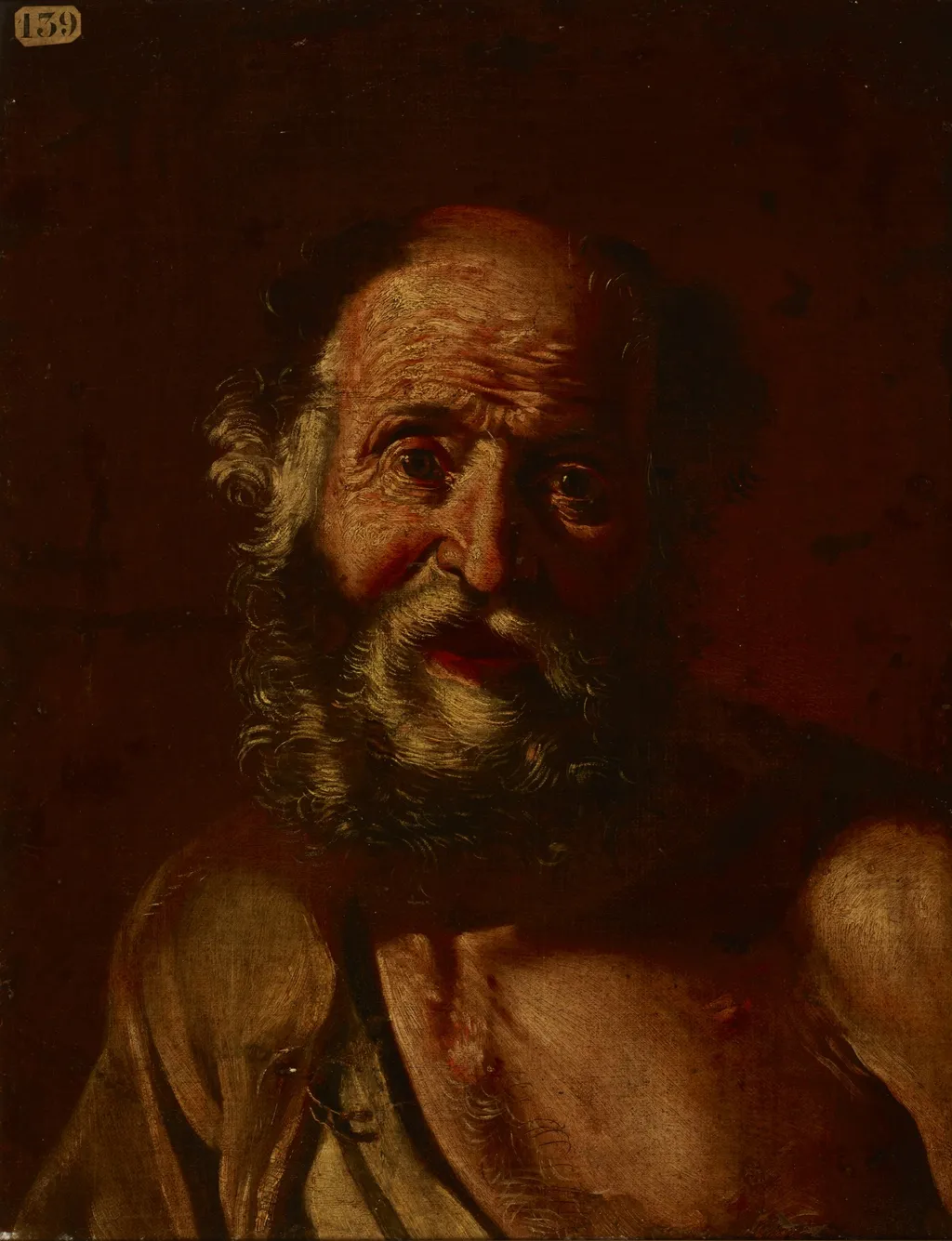
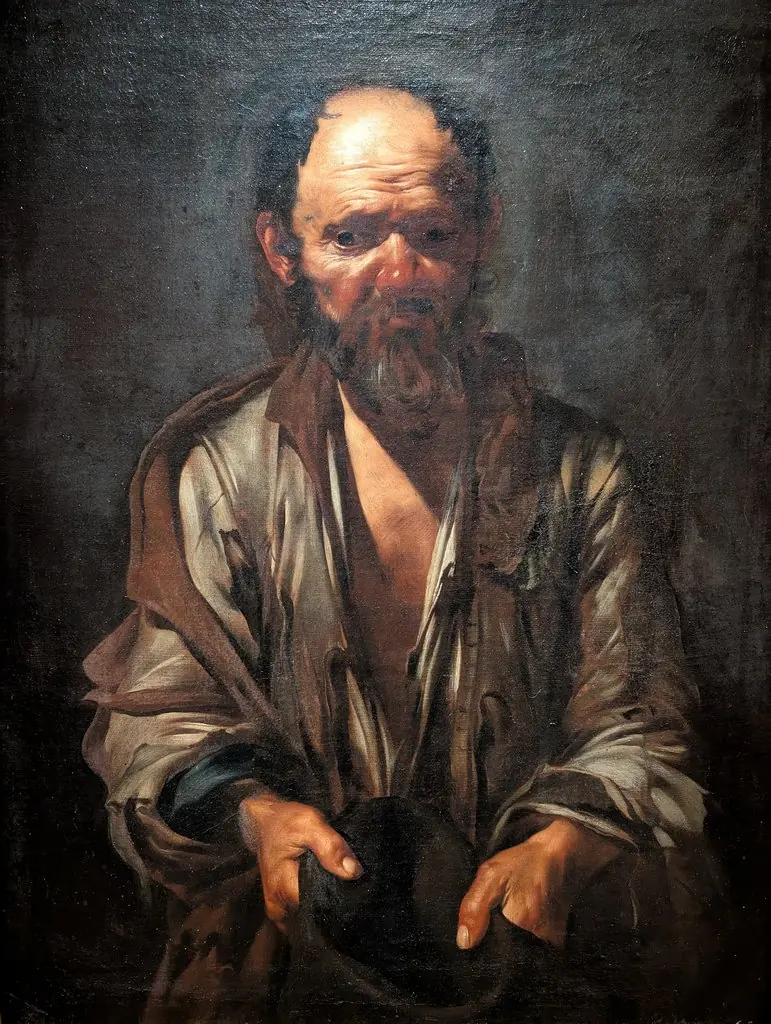
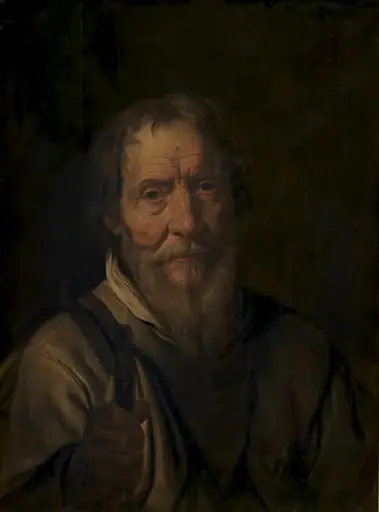
Bust of an Old Man (Head of a Beggar) is an oil painting by Pietro Bellotti. It dates from 1672 and is held in the collection of the National Museum in Kraków.
About this work
Overview
The painting’s modest scale and unadorned presentation reflect a quiet realism common in late 17th-century Northern Italian portraiture.
Painted around 1672 by Pietro Bellotti, this oil-on-canvas work presents a tightly framed portrait of an elderly man, likely a beggar, rendered with intimate immediacy. The composition focuses on the head and upper torso, set against a deep brown background that isolates the figure and heightens the emotional weight of the subject. The painting’s modest scale and unadorned presentation reflect a quiet realism common in late 17th-century Northern Italian portraiture.
Subject & Meaning
The subject is an aging man with a weathered face, unkempt white curls, and a long, unkempt beard, dressed in a simple, loosely fastened shirt. His downward gaze and worn appearance suggest hardship and solitude. Rather than idealizing age, Bellotti presents dignity in vulnerability, capturing a moment of quiet introspection. The absence of symbolic objects or context invites viewers to confront the humanity of the individual without narrative embellishment.
Technique & Style
Bellotti employs chiaroscuro to model the face and beard with pronounced light and shadow, lending three-dimensionality to the features. Thick, textured brushwork defines the coarse hair and beard, contrasting with smoother applications on the skin. The dark, unmodulated background enhances the figure’s presence, drawing attention to the tactile quality of the skin and fabric. This method prioritizes physical presence over decorative detail, aligning with Caravaggesque traditions of naturalism.
History & Provenance
The painting entered the collection of the National Museum in Kraków in the early 20th century, though its earlier ownership remains undocumented. It was likely acquired as part of a broader effort to expand the museum’s holdings of Italian Baroque works. No records of its commission or original patron exist, suggesting it may have been a private study or genre piece rather than a commissioned portrait.
Context
Bellotti, active in northern Italy during the late Baroque period, was influenced by the realism of Caravaggio and his followers. This work aligns with a trend among regional painters to depict ordinary, often marginalized figures with psychological depth. While not part of a larger series, the portrait reflects a broader cultural interest in the dignity of the poor, emerging in both religious and secular art of the era.
Legacy
Though not widely reproduced or studied, the painting contributes to the understanding of Bellotti’s engagement with humanist portraiture. Its preservation in Kraków underscores the transnational circulation of Italian artworks in Central Europe. The work remains a quiet example of how minor artists captured the emotional texture of everyday life, offering a counterpoint to the grandeur of courtly portraiture of the time.
Own this work as a print
Artist & collection