Artwork
Ritual Slave Party on a Sugar Plantation in Surinam
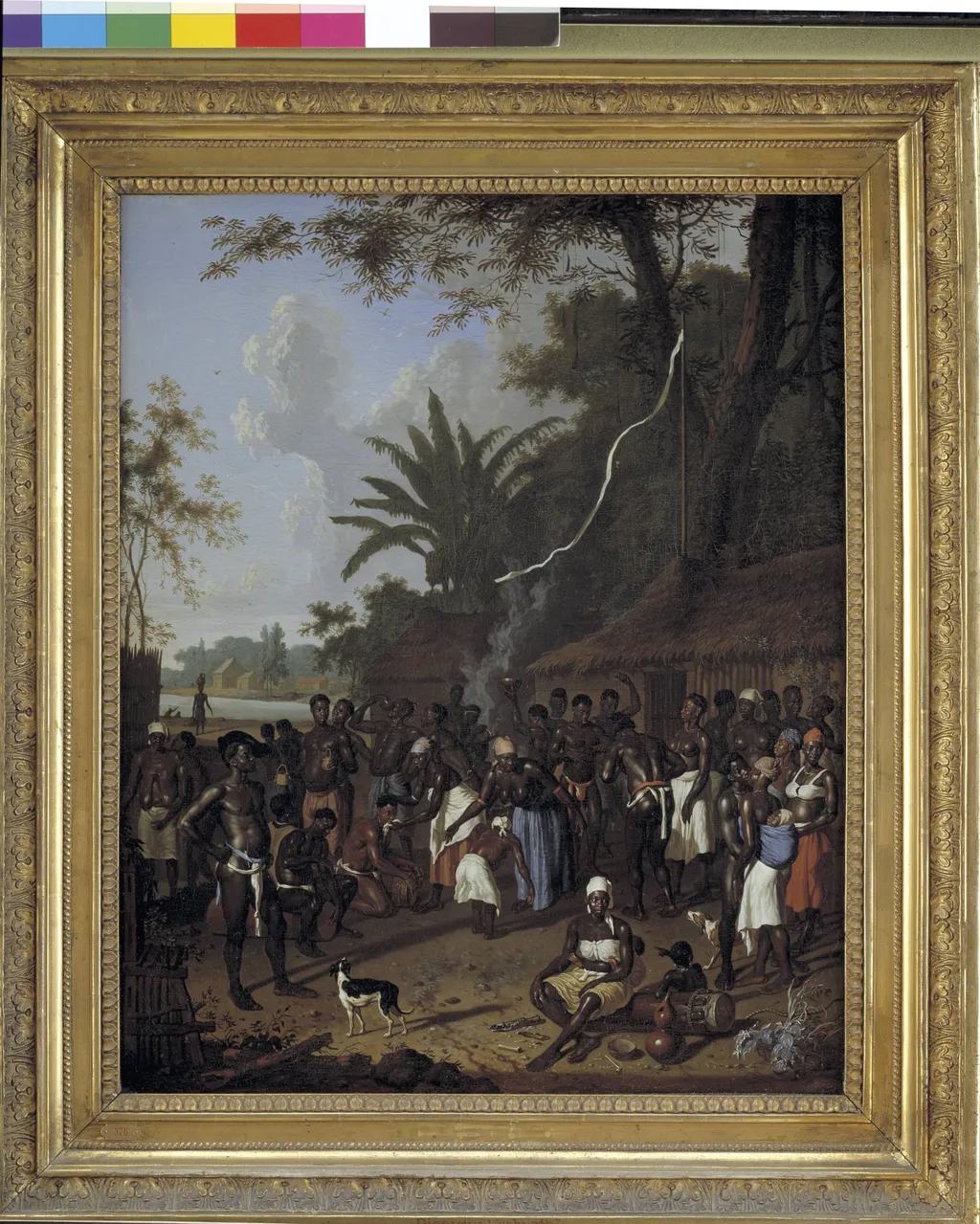
Ritual Slave Party on a Sugar Plantation in Surinam is a photography by Unknown. It dates from 1750 and is held in the collection of the Statens Museum for Kunst. This image depicts a gathering of enslaved people on a sugar plantation in Surinam, likely recorded in the mid-18th century.
About this work
Overview
The setting—a rural compound with a thatched hut, open fire, and surrounding vegetation—reflects the material conditions of plantation life.
This image depicts a gathering of enslaved people on a sugar plantation in Surinam, likely recorded in the mid-18th century. Though the photograph itself is modern, it captures a scene reconstructed or documented from historical accounts. The setting—a rural compound with a thatched hut, open fire, and surrounding vegetation—reflects the material conditions of plantation life. The image serves as a visual record of cultural practices preserved under duress.
Subject & Meaning
The gathering appears to be a communal ritual, possibly tied to African-derived spiritual or social traditions. Figures are arranged in informal groupings, with a pot suspended over fire suggesting preparation of food or ceremonial drink. Children and a dog in the foreground indicate domestic continuity. Such events, though regulated by enslavers, often functioned as spaces for cultural retention, resistance, and community bonding among the enslaved.
Technique & Style
The photograph employs natural lighting and a candid composition, emphasizing authenticity over staging. The misty atmosphere and dappled shadows from tall trees lend a quiet, contemplative tone. Details like clothing textures, the positioning of the fire, and the placement of figures suggest careful observation. The image avoids dramatic emphasis, instead favoring documentary clarity to preserve the scene’s historical integrity.
History & Provenance
The image is held by the Museum of Ethnography, which acquired it as part of a broader collection documenting colonial-era life in the Dutch Caribbean. Though the original photographer is unknown, the work likely stems from 19th- or 20th-century ethnographic expeditions seeking to record surviving cultural practices. Its preservation reflects institutional efforts to archive marginalized histories, even when the exact circumstances of its creation remain unclear.
Context
Surinam’s sugar plantations, under Dutch colonial rule, relied on forced labor from West and Central Africa. Enslaved communities maintained cultural traditions despite repression, often blending African rituals with local influences. Gatherings like this one, though permitted or overlooked by overseers, were acts of cultural resilience. The image situates itself within a broader archive of plantation life, where daily existence and spiritual practice coexisted under extreme constraint.
Legacy
This photograph contributes to ongoing efforts to visualize the lived experiences of the enslaved beyond official records. It offers a rare glimpse into informal social spaces where identity, memory, and resistance were sustained. As part of the Museum of Ethnography’s holdings, it supports scholarly and public engagement with histories often excluded from mainstream narratives, encouraging deeper reflection on cultural endurance under oppression.
Artist & collection

 Domestic Scene
 Giacomo and Cardinal Marco, investing Andrea, Abbot of San Zeno, with his Benefice
 The Nymph of Fontainebleau
 Portrait of a Woman
 Madonna and Child with Saints in the Enclosed Garden
 Venus and Minerva
 Family Group of Four on Sofa
 Wall painting from Room H of the Villa of P. Fannius Synistor at Boscoreale
 Dutch Merchant with Slaves in a West Indies Hills
 Africa
 The Landing of Columbus
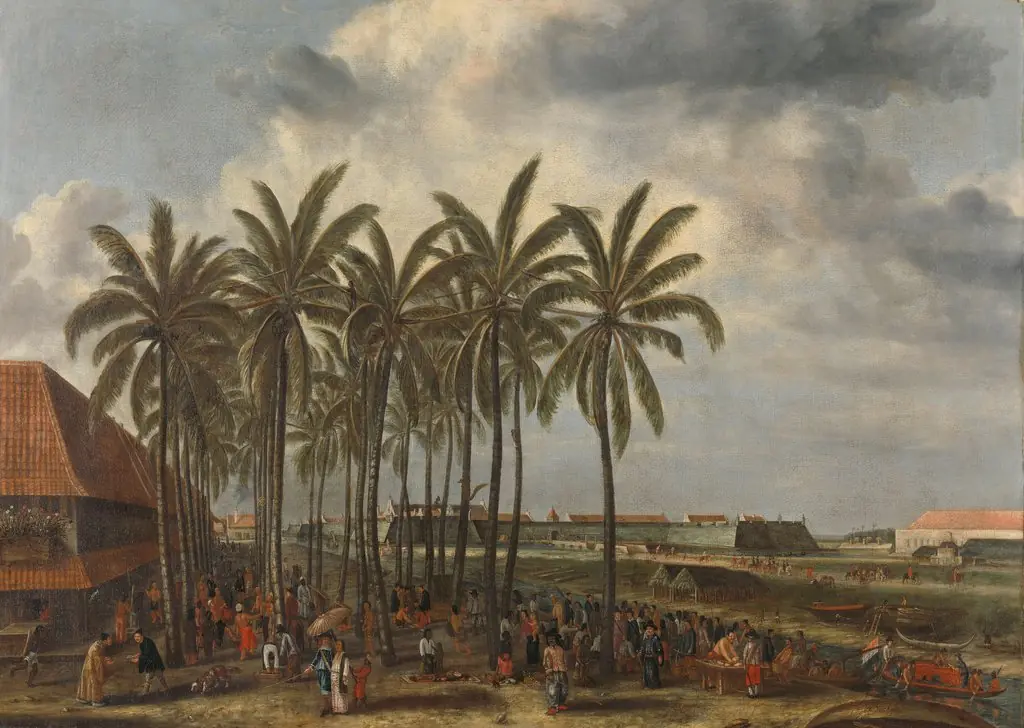 The Castle of Batavia
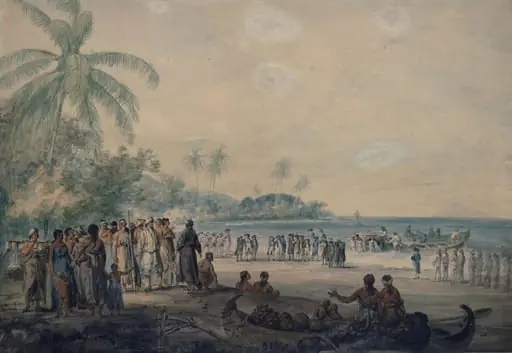 The Landing of the Remains of the Honourable Col. Cathcart for interment at Anger(e) Point in the Island of Java
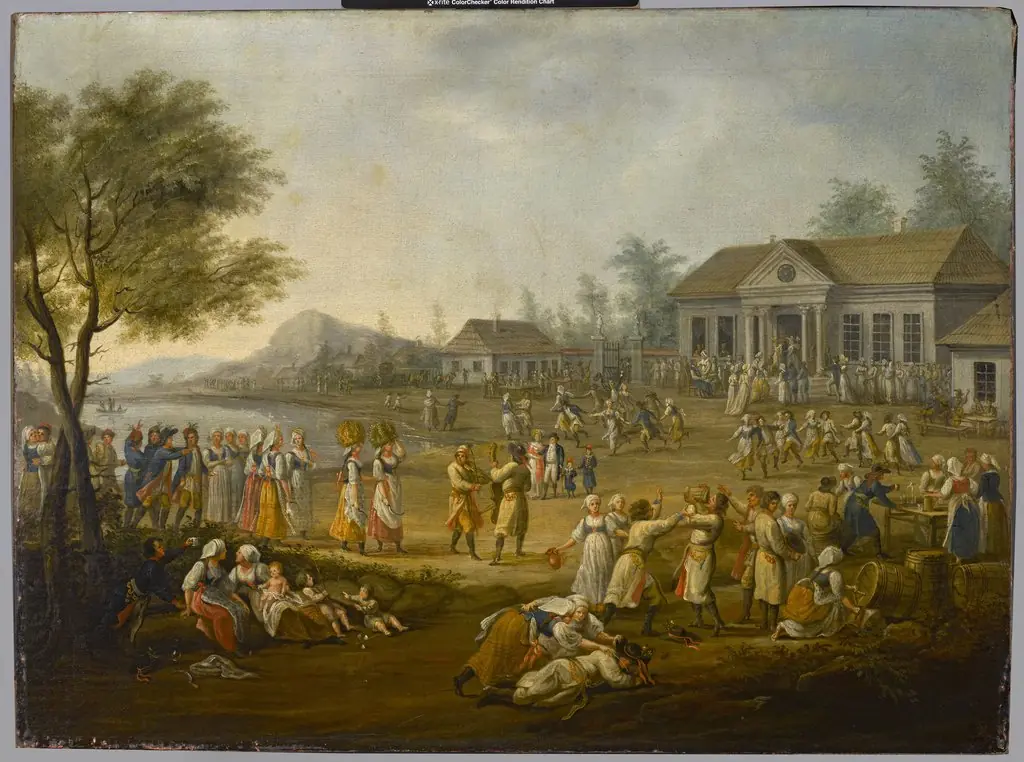 Dożynki (harvest festival)
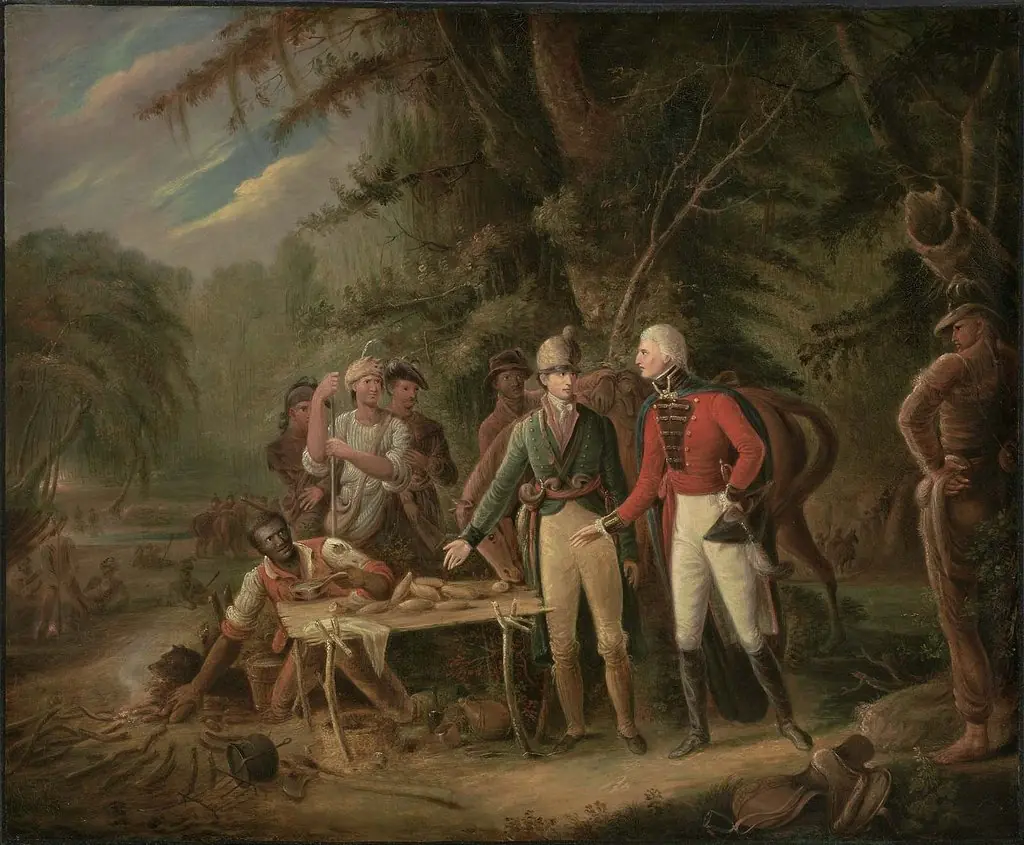 General Francis Marion Inviting A British Officer to Share His Meal or The Swamp Fox